Downloaded 38 times

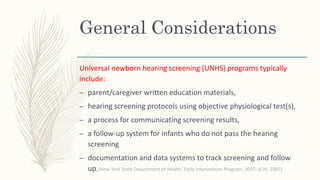
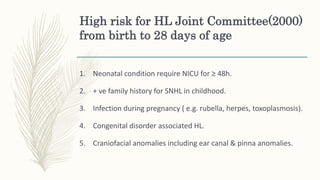


This document provides information about newborn hearing screening. It discusses why screening is important, as untreated hearing loss can cause delays in speech, language, and learning. The screening can detect hearing loss at birth but not losses that develop later. It outlines best practices for screening programs, including educating parents, using objective physiological tests, and having follow-up for babies who do not pass. Screening should be done before hospital discharge using auditory brainstem response or otoacoustic emission tests in a quiet room. Protocols vary but include screening both ears and rescreening any ear that does not pass initially.


![PERI-PROSTHETIC FRACTURE NAIL-PLATE CONSTRUCT [NPC].pptx](https://cdn.slidesharecdn.com/ss_thumbnails/drarunkumardrmohamedashrafperiprostheticfrasturenail-plateconstructnpc-260209164459-7e9d15a1-thumbnail.jpg?width=640&height=640&fit=bounds)


