
Making smart food choices
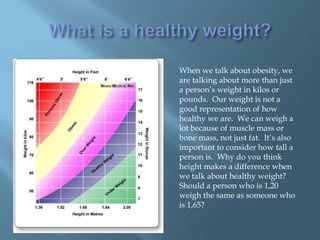
When we talk about obesity, we
are talking about more than just
a person’s weight in kilos or
pounds. Our weight is not a
good representation of how
healthy we are. We can weigh a
lot because of muscle mass or
bone mass, not just fat. It’s also
important to consider how tall a
person is. Why do you think
height makes a difference when
we talk about healthy weight?
Should a person who is 1,20
weigh the same as someone who
is 1,65?
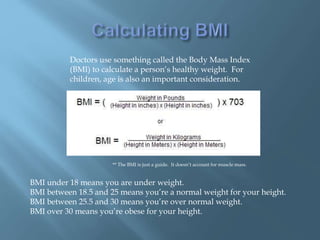
Doctors use something called the Body Mass Index
(BMI) to calculate a person’s healthy weight. For
children, age is also an important consideration.
BMI under 18 means you are under weight.
BMI between 18.5 and 25 means you’re a normal weight for your height.
BMI between 25.5 and 30 means you’re over normal weight.
BMI over 30 means you’re obese for your height.
** The BMI is just a guide. It doesn’t account for muscle mass.
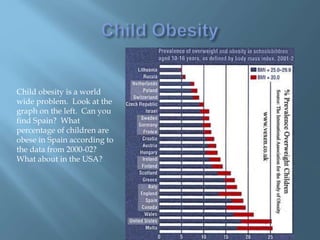
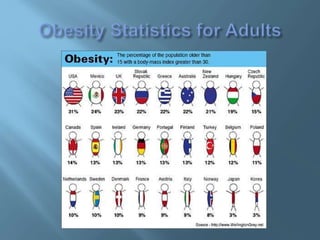
Child obesity is a world
wide problem. Look at the
graph on the left. Can you
find Spain? What
percentage of children are
obese in Spain according to
the data from 2000-02?
What about in the USA?
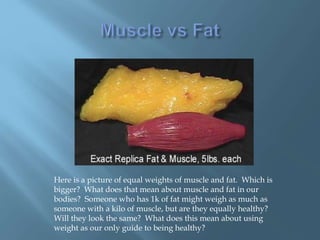
Here is a picture of equal weights of muscle and fat. Which is
bigger? What does that mean about muscle and fat in our
bodies? Someone who has 1k of fat might weigh as much as
someone with a kilo of muscle, but are they equally healthy?
Will they look the same? What does this mean about using
weight as our only guide to being healthy?
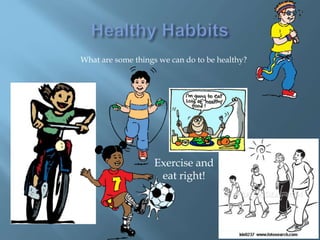
What are some things we can do to be healthy?
Exercise and
eat right!
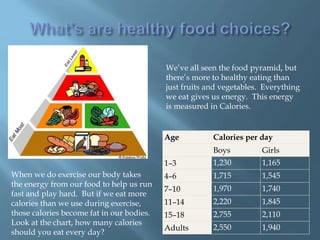
Age Calories per day
Boys Girls
1–3 1,230 1,165
4–6 1,715 1,545
7–10 1,970 1,740
11–14 2,220 1,845
15–18 2,755 2,110
Adults 2,550 1,940
We’ve all seen the food pyramid, but
there’s more to healthy eating than
just fruits and vegetables. Everything
we eat gives us energy. This energy
is measured in Calories.
When we do exercise our body takes
the energy from our food to help us run
fast and play hard. But if we eat more
calories than we use during exercise,
those calories become fat in our bodies.
Look at the chart, how many calories
should you eat every day?
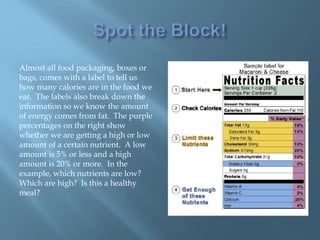
Almost all food packaging, boxes or
bags, comes with a label to tell us
how many calories are in the food we
eat. The labels also break down the
information so we know the amount
of energy comes from fat. The purple
percentages on the right show
whether we are getting a high or low
amount of a certain nutrient. A low
amount is 5% or less and a high
amount is 20% or more. In the
example, which nutrients are low?
Which are high? Is this a healthy
meal?
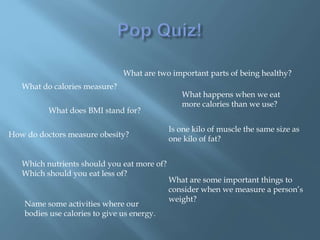
What are two important parts of being healthy?
What do calories measure?
What happens when we eat
more calories than we use?
How do doctors measure obesity?
What does BMI stand for?
Is one kilo of muscle the same size as
one kilo of fat?
Which nutrients should you eat more of?
Which should you eat less of?
What are some important things to
consider when we measure a person’s
weight?
Name some activities where our
bodies use calories to give us energy.

Healthy habbits

  • 1.
  • 2.
    When we talkabout obesity, we are talking about more than just a person’s weight in kilos or pounds. Our weight is not a good representation of how healthy we are. We can weigh a lot because of muscle mass or bone mass, not just fat. It’s also important to consider how tall a person is. Why do you think height makes a difference when we talk about healthy weight? Should a person who is 1,20 weigh the same as someone who is 1,65?
  • 3.
    Doctors use somethingcalled the Body Mass Index (BMI) to calculate a person’s healthy weight. For children, age is also an important consideration. BMI under 18 means you are under weight. BMI between 18.5 and 25 means you’re a normal weight for your height. BMI between 25.5 and 30 means you’re over normal weight. BMI over 30 means you’re obese for your height. ** The BMI is just a guide. It doesn’t account for muscle mass.
  • 5.
    Child obesity isa world wide problem. Look at the graph on the left. Can you find Spain? What percentage of children are obese in Spain according to the data from 2000-02? What about in the USA?
  • 7.
    Here is apicture of equal weights of muscle and fat. Which is bigger? What does that mean about muscle and fat in our bodies? Someone who has 1k of fat might weigh as much as someone with a kilo of muscle, but are they equally healthy? Will they look the same? What does this mean about using weight as our only guide to being healthy?
  • 8.
    What are somethings we can do to be healthy? Exercise and eat right!
  • 9.
    Age Calories perday Boys Girls 1–3 1,230 1,165 4–6 1,715 1,545 7–10 1,970 1,740 11–14 2,220 1,845 15–18 2,755 2,110 Adults 2,550 1,940 We’ve all seen the food pyramid, but there’s more to healthy eating than just fruits and vegetables. Everything we eat gives us energy. This energy is measured in Calories. When we do exercise our body takes the energy from our food to help us run fast and play hard. But if we eat more calories than we use during exercise, those calories become fat in our bodies. Look at the chart, how many calories should you eat every day?
  • 10.
    Almost all foodpackaging, boxes or bags, comes with a label to tell us how many calories are in the food we eat. The labels also break down the information so we know the amount of energy comes from fat. The purple percentages on the right show whether we are getting a high or low amount of a certain nutrient. A low amount is 5% or less and a high amount is 20% or more. In the example, which nutrients are low? Which are high? Is this a healthy meal?
  • 11.
    What are twoimportant parts of being healthy? What do calories measure? What happens when we eat more calories than we use? How do doctors measure obesity? What does BMI stand for? Is one kilo of muscle the same size as one kilo of fat? Which nutrients should you eat more of? Which should you eat less of? What are some important things to consider when we measure a person’s weight? Name some activities where our bodies use calories to give us energy.