technology in the public sector
week 3: health and human services IT


         Northwestern University MPPA 490

             Summer 2012 - Greg Wass


                                            1
1. Affordable Care Act: Health Insurance Exchanges

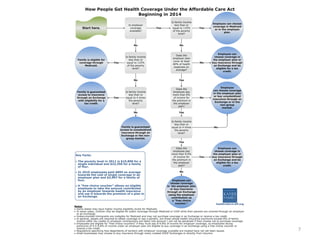
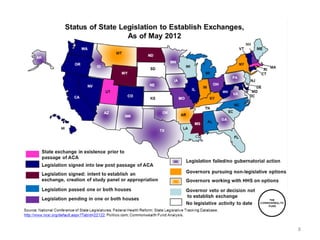
The Affordable Care Act requires states to provide
statewide health insurance exchanges--marketplaces
that allow families to qualify themselves by income and
status to determine what kind of insurance they are
able to obtain at what rates. (Health insurance
exchange is sometimes abbreviated HIX.)

View: www.healthcare.gov


                                                      2
3
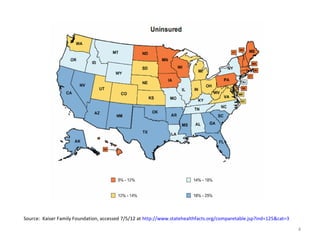
Source: Kaiser Family Foundation, accessed 7/5/12 at http://www.statehealthfacts.org/comparetable.jsp?ind=125&cat=3

                                                                                                                      4
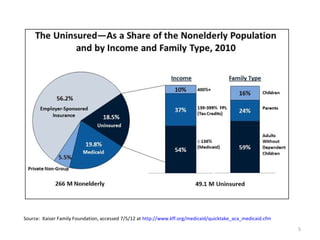
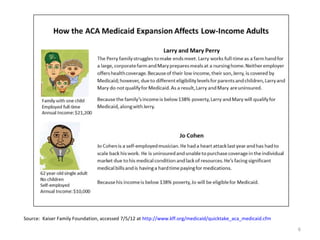
Source: Kaiser Family Foundation, accessed 7/5/12 at http://www.kff.org/medicaid/quicktake_aca_medicaid.cfm

                                                                                                              5
Source: Kaiser Family Foundation, accessed 7/5/12 at http://www.kff.org/medicaid/quicktake_aca_medicaid.cfm

                                                                                                              6
7
8
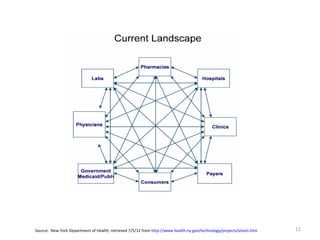
2. HITECH: Health Information Exchanges
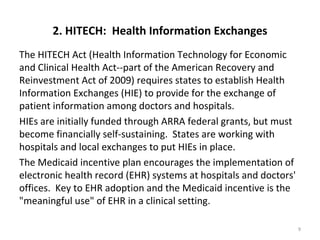
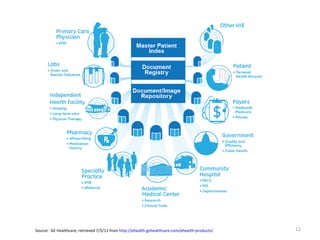
The HITECH Act (Health Information Technology for Economic
and Clinical Health Act--part of the American Recovery and
Reinvestment Act of 2009) requires states to establish Health
Information Exchanges (HIE) to provide for the exchange of
patient information among doctors and hospitals.
HIEs are initially funded through ARRA federal grants, but must
become financially self-sustaining. States are working with
hospitals and local exchanges to put HIEs in place.
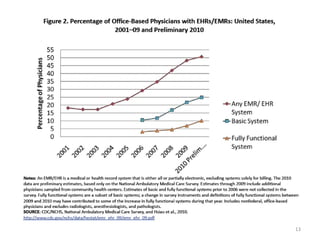
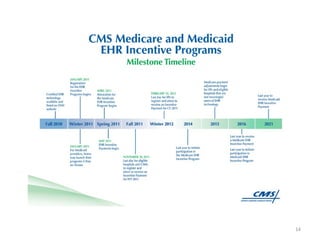
The Medicaid incentive plan encourages the implementation of
electronic health record (EHR) systems at hospitals and doctors'
offices. Key to EHR adoption and the Medicaid incentive is the
"meaningful use" of EHR in a clinical setting.

                                                                   9
10
Source: New York Department of Health, retrieved 7/5/12 from http://www.health.ny.gov/technology/projects/vision.htm   11
Source: GE Healthcare, retrieved 7/5/12 from http://ehealth.gehealthcare.com/ehealth-products/   12
13
14
3. Medicaid Information Technology Architecture
                      (MITA)

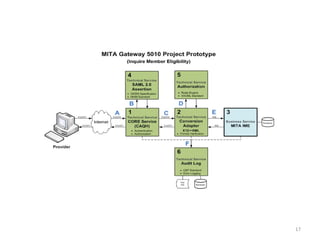
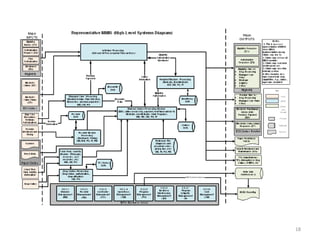
MITA is important because it presents an "architecture"
for how to build Medicaid and related systems at the
state level. If states (and their vendors) comply with
MITA architecture, they receive a 90% federal match
for system costs.
The MITA concept has recently been extended into
eligibility determination systems because of the large
influx of newly Medicaid-eligible people under the
Affordable Care Act.


                                                     15
16
17
18
19

Week 3: Health and human services IT

  • 1.
    technology in thepublic sector week 3: health and human services IT Northwestern University MPPA 490 Summer 2012 - Greg Wass 1
  • 2.
    1. Affordable CareAct: Health Insurance Exchanges The Affordable Care Act requires states to provide statewide health insurance exchanges--marketplaces that allow families to qualify themselves by income and status to determine what kind of insurance they are able to obtain at what rates. (Health insurance exchange is sometimes abbreviated HIX.) View: www.healthcare.gov 2
  • 3.
  • 4.
    Source: Kaiser FamilyFoundation, accessed 7/5/12 at http://www.statehealthfacts.org/comparetable.jsp?ind=125&cat=3 4
  • 5.
    Source: Kaiser FamilyFoundation, accessed 7/5/12 at http://www.kff.org/medicaid/quicktake_aca_medicaid.cfm 5
  • 6.
    Source: Kaiser FamilyFoundation, accessed 7/5/12 at http://www.kff.org/medicaid/quicktake_aca_medicaid.cfm 6
  • 7.
  • 8.
  • 9.
    2. HITECH: HealthInformation Exchanges The HITECH Act (Health Information Technology for Economic and Clinical Health Act--part of the American Recovery and Reinvestment Act of 2009) requires states to establish Health Information Exchanges (HIE) to provide for the exchange of patient information among doctors and hospitals. HIEs are initially funded through ARRA federal grants, but must become financially self-sustaining. States are working with hospitals and local exchanges to put HIEs in place. The Medicaid incentive plan encourages the implementation of electronic health record (EHR) systems at hospitals and doctors' offices. Key to EHR adoption and the Medicaid incentive is the "meaningful use" of EHR in a clinical setting. 9
  • 10.
  • 11.
    Source: New YorkDepartment of Health, retrieved 7/5/12 from http://www.health.ny.gov/technology/projects/vision.htm 11
  • 12.
    Source: GE Healthcare,retrieved 7/5/12 from http://ehealth.gehealthcare.com/ehealth-products/ 12
  • 13.
  • 14.
  • 15.
    3. Medicaid InformationTechnology Architecture (MITA) MITA is important because it presents an "architecture" for how to build Medicaid and related systems at the state level. If states (and their vendors) comply with MITA architecture, they receive a 90% federal match for system costs. The MITA concept has recently been extended into eligibility determination systems because of the large influx of newly Medicaid-eligible people under the Affordable Care Act. 15
  • 16.
  • 17.
  • 18.
  • 19.