Greg Wass, Governor’s Office of Management and Budget
6/19/13
State of Illinois
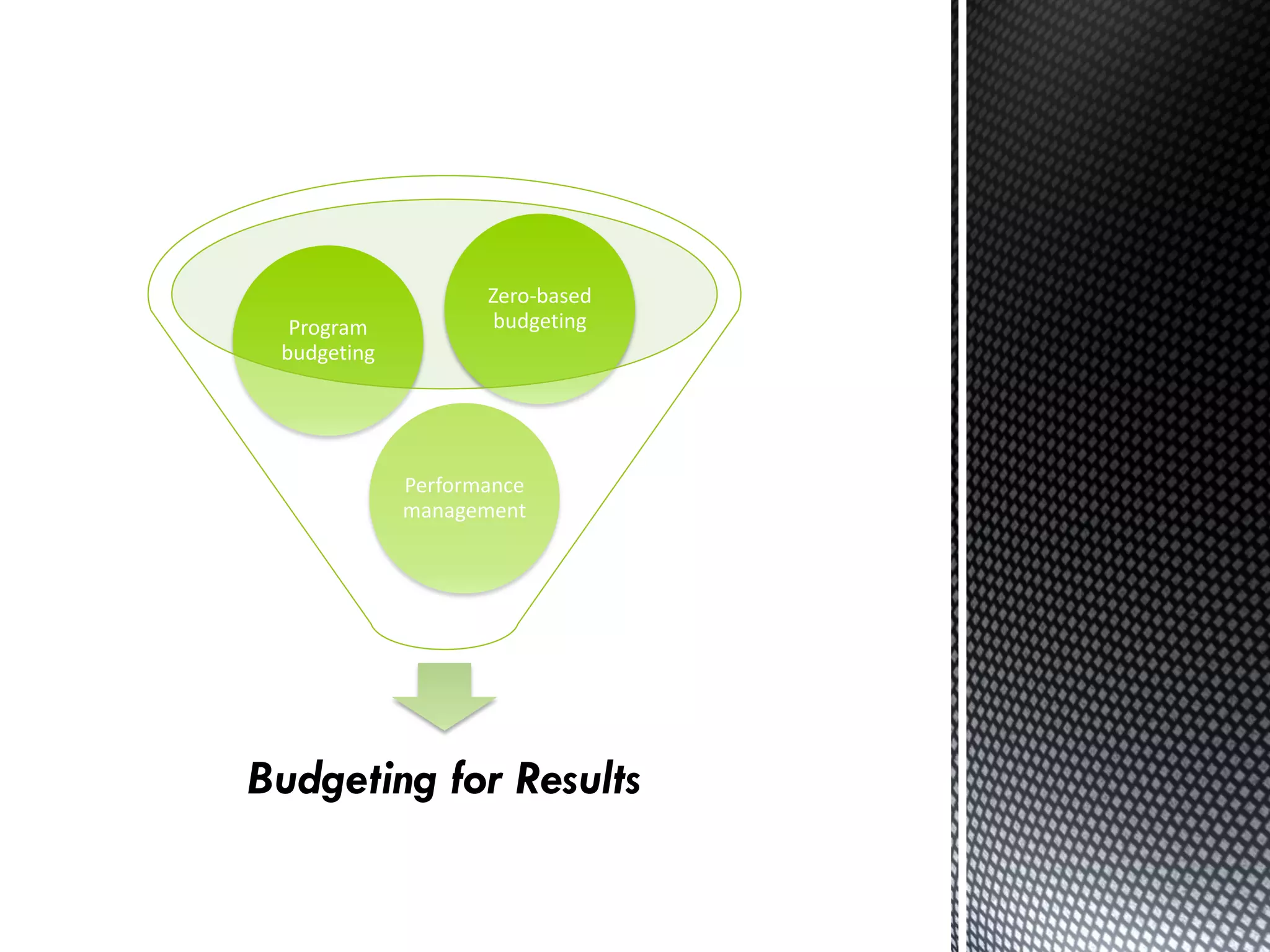
Budgeting for Results
Performance
management
Program
budgeting
Zero-based
budgeting
3
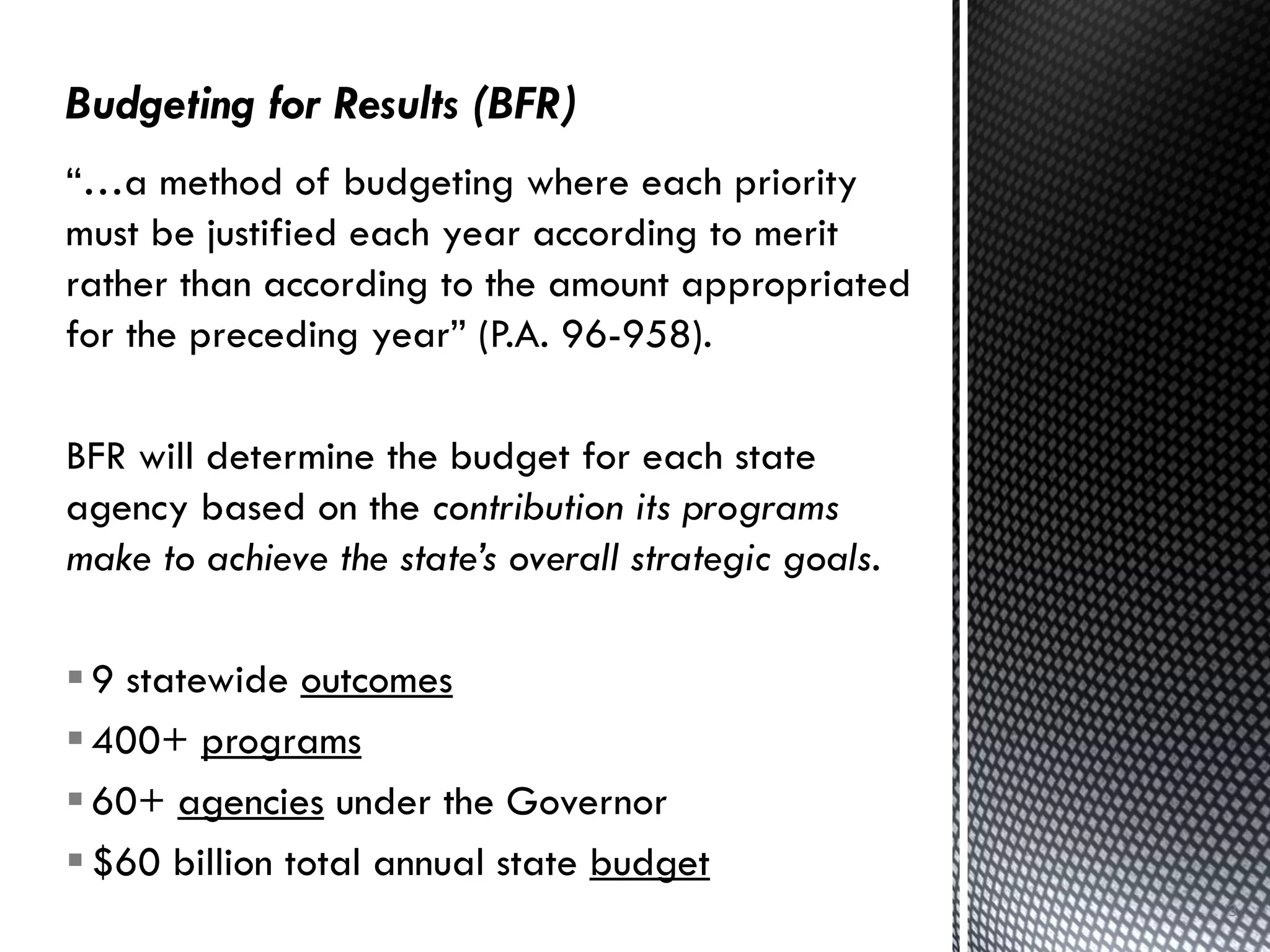
“…a method of budgeting where each priority
must be justified each year according to merit
rather than according to the amount appropriated
for the preceding year” (P.A. 96-958).
BFR will determine the budget for each state
agency based on the contribution its programs
make to achieve the state’s overall strategic goals.
9 statewide outcomes
400+ programs
60+ agencies under the Governor
$60 billion total annual state budget
4
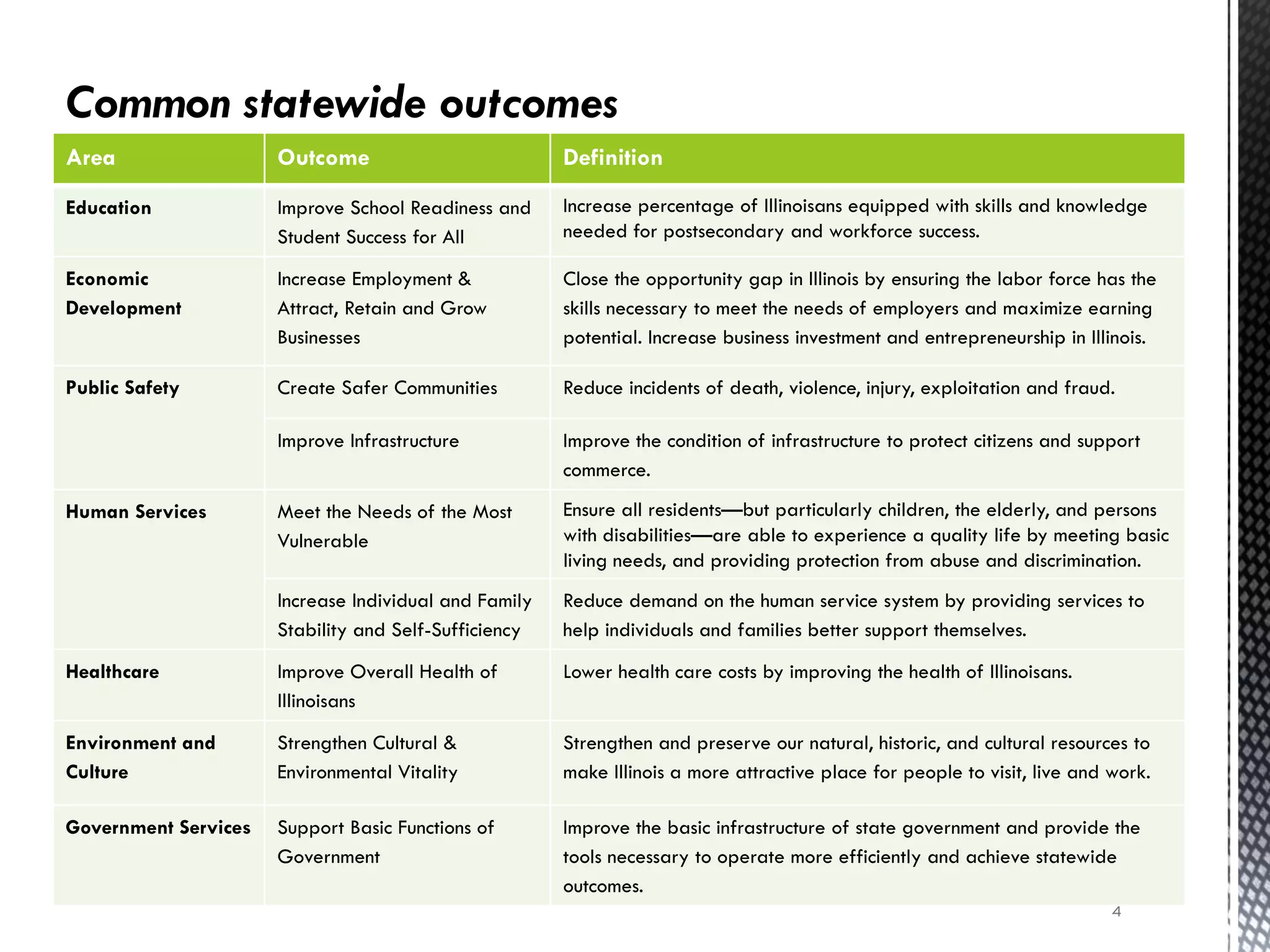
Area Outcome Definition
Education Improve School Readiness and
Student Success for All
Increase percentage of Illinoisans equipped with skills and knowledge
needed for postsecondary and workforce success.
Economic
Development
Increase Employment &
Attract, Retain and Grow
Businesses
Close the opportunity gap in Illinois by ensuring the labor force has the
skills necessary to meet the needs of employers and maximize earning
potential. Increase business investment and entrepreneurship in Illinois.
Public Safety Create Safer Communities Reduce incidents of death, violence, injury, exploitation and fraud.
Improve Infrastructure Improve the condition of infrastructure to protect citizens and support
commerce.
Human Services Meet the Needs of the Most
Vulnerable
Ensure all residents—but particularly children, the elderly, and persons
with disabilities—are able to experience a quality life by meeting basic
living needs, and providing protection from abuse and discrimination.
Increase Individual and Family
Stability and Self-Sufficiency
Reduce demand on the human service system by providing services to
help individuals and families better support themselves.
Healthcare Improve Overall Health of
Illinoisans
Lower health care costs by improving the health of Illinoisans.
Environment and
Culture
Strengthen Cultural &
Environmental Vitality
Strengthen and preserve our natural, historic, and cultural resources to
make Illinois a more attractive place for people to visit, live and work.
Government Services Support Basic Functions of
Government
Improve the basic infrastructure of state government and provide the
tools necessary to operate more efficiently and achieve statewide
outcomes.
Currently 60+ across state government
Organized by outcome group
High-level people in agencies
Diverse group
Knowledgeable about programs and budgets
Responsible for identifying indicators
Responsible for performance reporting
Responsible for change management within agency
5
• Established BFR Commission
• Completed strategy maps / CCT / GFOA
• Completed logic models
• Defined result areas
• Validated statewide outcomes
• Identified impact-level indicators for each outcome
• Identified outcome-level indicators for each outcome
• Identifying program-level indicators for each program
CROs
Common
statewide
outcomes
Uniform data
model &
methods
Data collection
& analysis Decision support
2012 2013 2014
6
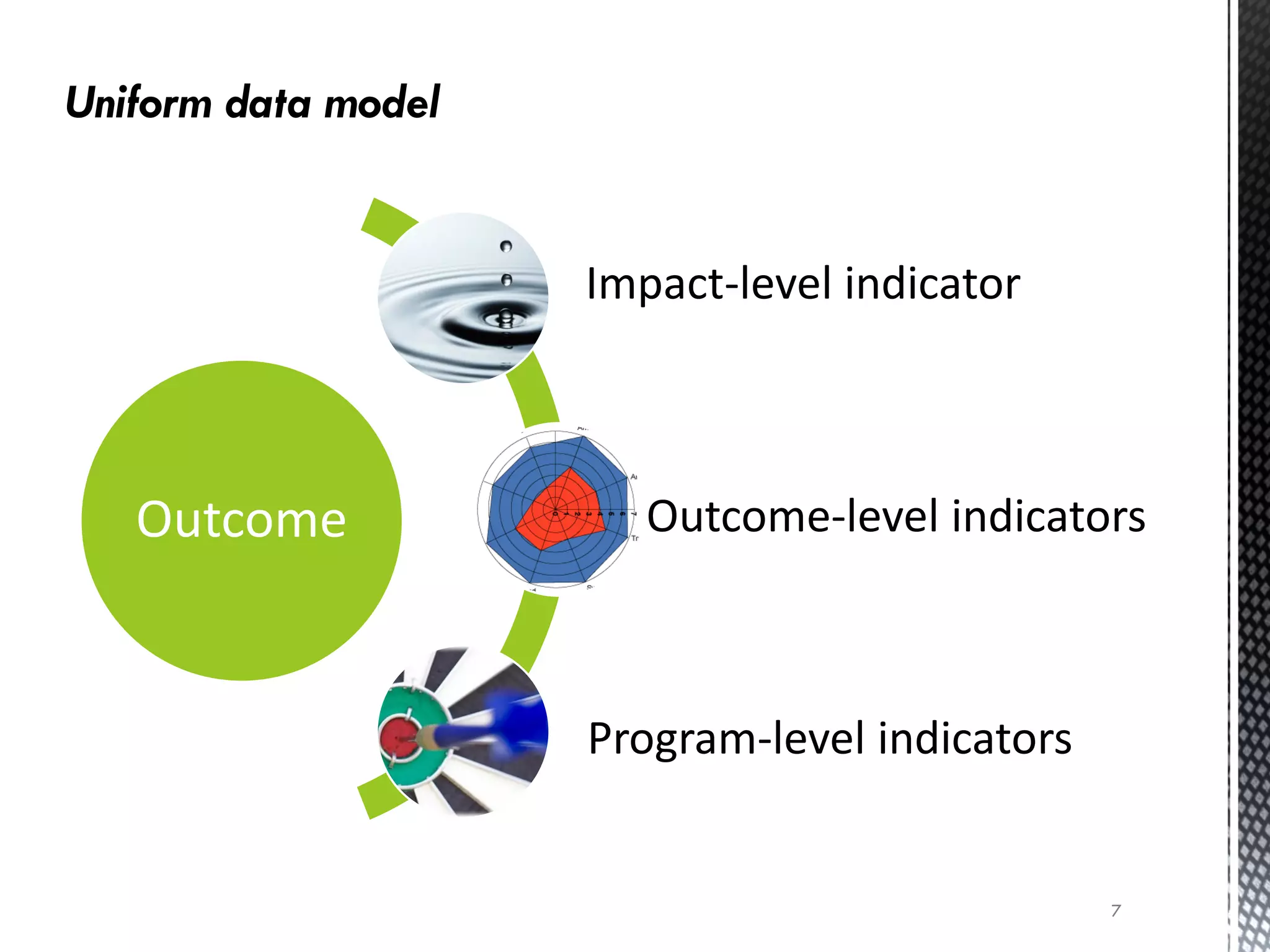
Outcome
Impact-level indicator
Outcome-level indicators
Program-level indicators
7
• Generally-accepted long-term
measures that reflect overall
conditions in the state
• Impact Indicators:
 Unemployment rate
 Statewide infrastructure condition index
 Cost of health care per capita
 Dollars generated by tourism
 % of Illinoisans’ with a high quality
degree or credential
 Unnatural death rate and statewide
property loss index
 % of target population meeting "quality
of life" levels
 % of target population meeting "strong
and stable" criteria
 Satisfaction index of stakeholders
Outcome
Impact-level
indicator
Outcome-level
indicators
Program-level
indicators
8
 Measure changes in statewide
outcomes that are influenced more
directly by state gov’t activities
 Examples:
 % of 8th graders meeting or
exceeding state standards in reading
& math
 % of counties with state-approved
emergency plans / mitigation plans
 Transportation fatalities index
 % of Illinoisans with disabilities living
in the least restrictive settings
appropriate to their needs
 % of Illinoisans with a primary care
physician
 % change in visitation to museums and
sites
Outcome
Impact-level
indicator
Outcome-level
indicators
Program-level
indicators
9
 Measures of efficiency or
effectiveness of a program related
to respective outcome indicators
 Examples:
Estimated number of Illinois drivers that
learn the dangers of drinking and driving
Estimated number of people reached by
DNR state park advertising
 Last step in building the data model
is to define at least one indicator for
each program by end of June 2013
Outcome
Impact-level
indicator
Outcome-level
indicators
Program-level
indicators
10
• Collect and report data for each program’s indicator(s) on a
monthly or quarterly basis
• Refine and train staff on tools to analyze program
performance data for decision support purposes
• Pilot Budgeting for Results in FY15 budget process
• Integrate Budgeting for Results approach (outcomes,
programs, analytics) into appropriations process for FY15
Common
statewide
outcomes
Uniform data
model &
methods
Data collection
& analysis Decision support
2012 2013 2014
11

Illinois budgeting for results update 6.19.13

  • 1.
    Greg Wass, Governor’sOffice of Management and Budget 6/19/13 State of Illinois
  • 2.
  • 3.
    3 “…a method ofbudgeting where each priority must be justified each year according to merit rather than according to the amount appropriated for the preceding year” (P.A. 96-958). BFR will determine the budget for each state agency based on the contribution its programs make to achieve the state’s overall strategic goals. 9 statewide outcomes 400+ programs 60+ agencies under the Governor $60 billion total annual state budget
  • 4.
    4 Area Outcome Definition EducationImprove School Readiness and Student Success for All Increase percentage of Illinoisans equipped with skills and knowledge needed for postsecondary and workforce success. Economic Development Increase Employment & Attract, Retain and Grow Businesses Close the opportunity gap in Illinois by ensuring the labor force has the skills necessary to meet the needs of employers and maximize earning potential. Increase business investment and entrepreneurship in Illinois. Public Safety Create Safer Communities Reduce incidents of death, violence, injury, exploitation and fraud. Improve Infrastructure Improve the condition of infrastructure to protect citizens and support commerce. Human Services Meet the Needs of the Most Vulnerable Ensure all residents—but particularly children, the elderly, and persons with disabilities—are able to experience a quality life by meeting basic living needs, and providing protection from abuse and discrimination. Increase Individual and Family Stability and Self-Sufficiency Reduce demand on the human service system by providing services to help individuals and families better support themselves. Healthcare Improve Overall Health of Illinoisans Lower health care costs by improving the health of Illinoisans. Environment and Culture Strengthen Cultural & Environmental Vitality Strengthen and preserve our natural, historic, and cultural resources to make Illinois a more attractive place for people to visit, live and work. Government Services Support Basic Functions of Government Improve the basic infrastructure of state government and provide the tools necessary to operate more efficiently and achieve statewide outcomes.
  • 5.
    Currently 60+ acrossstate government Organized by outcome group High-level people in agencies Diverse group Knowledgeable about programs and budgets Responsible for identifying indicators Responsible for performance reporting Responsible for change management within agency 5
  • 6.
    • Established BFRCommission • Completed strategy maps / CCT / GFOA • Completed logic models • Defined result areas • Validated statewide outcomes • Identified impact-level indicators for each outcome • Identified outcome-level indicators for each outcome • Identifying program-level indicators for each program CROs Common statewide outcomes Uniform data model & methods Data collection & analysis Decision support 2012 2013 2014 6
  • 7.
  • 8.
    • Generally-accepted long-term measuresthat reflect overall conditions in the state • Impact Indicators:  Unemployment rate  Statewide infrastructure condition index  Cost of health care per capita  Dollars generated by tourism  % of Illinoisans’ with a high quality degree or credential  Unnatural death rate and statewide property loss index  % of target population meeting "quality of life" levels  % of target population meeting "strong and stable" criteria  Satisfaction index of stakeholders Outcome Impact-level indicator Outcome-level indicators Program-level indicators 8
  • 9.
     Measure changesin statewide outcomes that are influenced more directly by state gov’t activities  Examples:  % of 8th graders meeting or exceeding state standards in reading & math  % of counties with state-approved emergency plans / mitigation plans  Transportation fatalities index  % of Illinoisans with disabilities living in the least restrictive settings appropriate to their needs  % of Illinoisans with a primary care physician  % change in visitation to museums and sites Outcome Impact-level indicator Outcome-level indicators Program-level indicators 9
  • 10.
     Measures ofefficiency or effectiveness of a program related to respective outcome indicators  Examples: Estimated number of Illinois drivers that learn the dangers of drinking and driving Estimated number of people reached by DNR state park advertising  Last step in building the data model is to define at least one indicator for each program by end of June 2013 Outcome Impact-level indicator Outcome-level indicators Program-level indicators 10
  • 11.
    • Collect andreport data for each program’s indicator(s) on a monthly or quarterly basis • Refine and train staff on tools to analyze program performance data for decision support purposes • Pilot Budgeting for Results in FY15 budget process • Integrate Budgeting for Results approach (outcomes, programs, analytics) into appropriations process for FY15 Common statewide outcomes Uniform data model & methods Data collection & analysis Decision support 2012 2013 2014 11