Lesson 1 Relationships & Communication
Evaluate the effects of family relationships on physical, mental/emotional, and social health Evaluate the positive & negative effects of relationships with peers Demonstrate communication skills that build & maintain healthy relationships
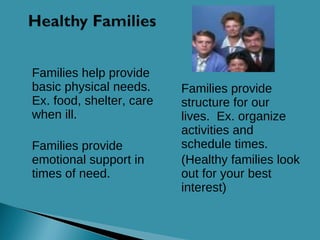
Families help provide basic physical needs. Ex. food, shelter, care when ill. Families provide emotional support in times of need. Families provide structure for our lives.  Ex. organize activities and schedule times.  (Healthy families look out for your best interest)                                       
Beliefs & standards of conduct that are important to a person Instilled through cultural heritage, religious beliefs, and family traditions You use your values to make decisions everyday.
Sow an act, and you reap a habit. Sow a habit, and you reap a character. Sow a character, and you reap a destiny.  — Charles Read, 1814-1884
Achievement Ambition Appreciation Believe In Yourself Caring Character Class And Grace Commitment Common Ground Compassion Confidence Courage Courtesy Dedication Determination
 
 
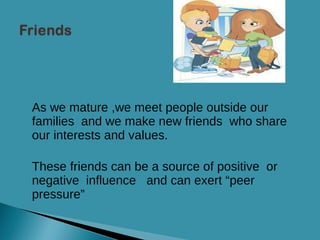
As we mature ,we meet people outside our families  and we make new friends  who share our interests and values. These friends can be a source of positive  or negative  influence  and can exert “peer pressure”
 
Forming mature relationships with your peers is important for your social health Being involved in a variety of school, religious, and community activities can promote your mental, emotional and social growth.
As you develop relationships  with new people or groups, you may experience peer pressure Peer pressure is the influence that people your age may have on you Peer pressure can be positive or negative
Peer pressure is especially influential for adolescents with low self-esteem who are trying to be accepted by other teens. In order to feel a sense of belonging, teens may engage in high-risk behaviors or activities that go against their values
 
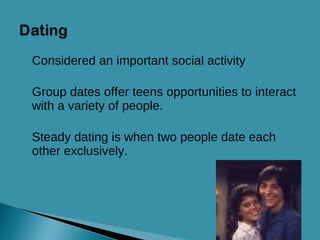
Considered an important social activity Group dates offer teens opportunities to interact with a variety of people. Steady dating is when two people date each other exclusively.
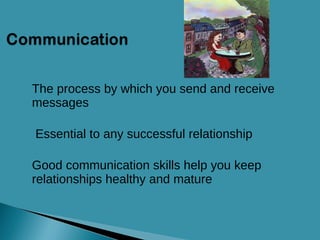
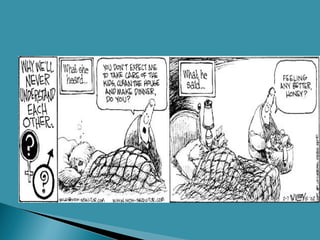
The process by which you send and receive messages  Essential to any successful relationship Good communication skills help you keep relationships healthy and mature
Speak directly to the person. Provide a clear, organized message that states the situation. Clearly express  your feelings, thoughts, ideas and expectations. Use “I” messages to avoid placing blame. Maintain a polite tone in your voice. Note: Body language should match your words   or you will send a mixed message
Good listening skills means listening to what others say. Guidelines for being a good listener: Give your full attention to the person speaking. Focus on the speaker’s message. Indicate your interest. Remember what the speaker had said. Use positive body language.
 
 
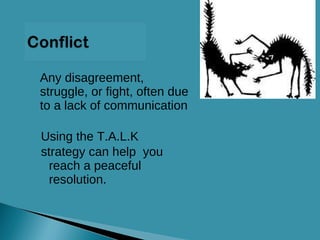
Any disagreement, struggle, or fight, often due to a lack of communication Using the T.A.L.K strategy can help  you reach a peaceful resolution.
 
T - Take time out A - Allow each person to express his/her opinion uninterrupted L - Let each person take turns to ask questions and clarify any statements K - Keep brainstorming to find a good solution
Good communication is especially important in dating relationships. Express yourselves honestly and listen to what the other person is saying. “ Choose your battles wisely”  Avoid unnecessary conflict.
1.Evaluate ways your parents, guardians, and other family members contribute to your physical, mental and emotional health and help you establish healthy relationships. 2.Define the term peer pressure and evaluate  positive & negative effects of relationships with peers.
3. List three benefits of dating. 4. Explain & demonstrate the importance of using good communication skills in building & maintaining healthy relationships. Give two examples. 5. Make a list of positive ways you can develop healthy relationships with your peers. Describe specific actions you can take to become a good friend.
health 123456

  • 1.
    Lesson 1 Relationships& Communication
  • 2.
    Evaluate the effectsof family relationships on physical, mental/emotional, and social health Evaluate the positive & negative effects of relationships with peers Demonstrate communication skills that build & maintain healthy relationships
  • 3.
    Families help providebasic physical needs. Ex. food, shelter, care when ill. Families provide emotional support in times of need. Families provide structure for our lives. Ex. organize activities and schedule times. (Healthy families look out for your best interest)                                    
  • 4.
    Beliefs & standardsof conduct that are important to a person Instilled through cultural heritage, religious beliefs, and family traditions You use your values to make decisions everyday.
  • 5.
    Sow an act,and you reap a habit. Sow a habit, and you reap a character. Sow a character, and you reap a destiny. — Charles Read, 1814-1884
  • 6.
    Achievement Ambition AppreciationBelieve In Yourself Caring Character Class And Grace Commitment Common Ground Compassion Confidence Courage Courtesy Dedication Determination
  • 7.
  • 8.
  • 9.
    As we mature,we meet people outside our families and we make new friends who share our interests and values. These friends can be a source of positive or negative influence and can exert “peer pressure”
  • 10.
  • 11.
    Forming mature relationshipswith your peers is important for your social health Being involved in a variety of school, religious, and community activities can promote your mental, emotional and social growth.
  • 12.
    As you developrelationships with new people or groups, you may experience peer pressure Peer pressure is the influence that people your age may have on you Peer pressure can be positive or negative
  • 13.
    Peer pressure isespecially influential for adolescents with low self-esteem who are trying to be accepted by other teens. In order to feel a sense of belonging, teens may engage in high-risk behaviors or activities that go against their values
  • 14.
  • 15.
    Considered an importantsocial activity Group dates offer teens opportunities to interact with a variety of people. Steady dating is when two people date each other exclusively.
  • 16.
    The process bywhich you send and receive messages Essential to any successful relationship Good communication skills help you keep relationships healthy and mature
  • 17.
    Speak directly tothe person. Provide a clear, organized message that states the situation. Clearly express your feelings, thoughts, ideas and expectations. Use “I” messages to avoid placing blame. Maintain a polite tone in your voice. Note: Body language should match your words or you will send a mixed message
  • 18.
    Good listening skillsmeans listening to what others say. Guidelines for being a good listener: Give your full attention to the person speaking. Focus on the speaker’s message. Indicate your interest. Remember what the speaker had said. Use positive body language.
  • 19.
  • 20.
  • 21.
    Any disagreement, struggle,or fight, often due to a lack of communication Using the T.A.L.K strategy can help you reach a peaceful resolution.
  • 22.
  • 23.
    T - Taketime out A - Allow each person to express his/her opinion uninterrupted L - Let each person take turns to ask questions and clarify any statements K - Keep brainstorming to find a good solution
  • 24.
    Good communication isespecially important in dating relationships. Express yourselves honestly and listen to what the other person is saying. “ Choose your battles wisely” Avoid unnecessary conflict.
  • 25.
    1.Evaluate ways yourparents, guardians, and other family members contribute to your physical, mental and emotional health and help you establish healthy relationships. 2.Define the term peer pressure and evaluate positive & negative effects of relationships with peers.

  • 26.
    3. List threebenefits of dating. 4. Explain & demonstrate the importance of using good communication skills in building & maintaining healthy relationships. Give two examples. 5. Make a list of positive ways you can develop healthy relationships with your peers. Describe specific actions you can take to become a good friend.