From the Plastics Strategy to
microplastics
Valentina Bertato
European Commission
DG Environment
Helsinki Chemicals Forum, 14 June 2018
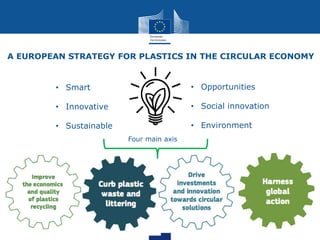
A EUROPEAN STRATEGY FOR PLASTICS IN THE CIRCULAR ECONOMY
• Smart
• Innovative
• Sustainable
• Opportunities
• Social innovation
• Environment
Four main axis
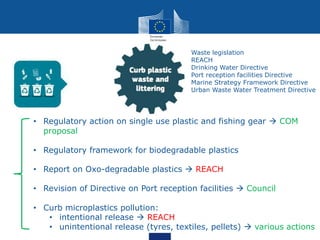
• Regulatory action on single use plastic and fishing gear  COM
proposal
• Regulatory framework for biodegradable plastics
• Report on Oxo-degradable plastics  REACH
• Revision of Directive on Port reception facilities  Council
• Curb microplastics pollution:
• intentional release  REACH
• unintentional release (tyres, textiles, pellets)  various actions
Waste legislation
REACH
Drinking Water Directive
Port reception facilities Directive
Marine Strategy Framework Directive
Urban Waste Water Treatment Directive
Intentionally added microplastics
• ECHA working definition:
• Any polymer-containing solid or semi-solid
particle having a size of 5mm or less in at least
one external dimension
• Uses assessed:
 Cosmetics (rinse-off and leave-on), agriculture,
detergents, healthcare, oil and gas
Unintentionally generated
microplastics
 Tyres
 Plastic pellets
 Synthetic clothing
 Wastewater treatment
o Development of standards
o Measure of emissions
o Labelling
o Extended Producer Responsibility Scheme
o Restrictive measures where needed
Conclusions
 Plastics and microplastics are a policy priority for the
Commission
We do not want a plastic-free economy, BUT
Plastic needs to be used in a more sustainable and
circular way
 REACH restriction process: unacceptable risk from
the presence of microplastics in the environment 
very strong push to all other actions
 Plastics Strategy: combination of many targeted
actions across the sectors, using all regulatory and
non-regulatory tools available.
This presentation does not necessarily reflect the official
opinion of the Commission.
Thank you
7

HCF 2018 Panel 4: Valentina Bertato

  • 1.
    From the PlasticsStrategy to microplastics Valentina Bertato European Commission DG Environment Helsinki Chemicals Forum, 14 June 2018
  • 2.
    A EUROPEAN STRATEGYFOR PLASTICS IN THE CIRCULAR ECONOMY • Smart • Innovative • Sustainable • Opportunities • Social innovation • Environment Four main axis
  • 3.
    • Regulatory actionon single use plastic and fishing gear  COM proposal • Regulatory framework for biodegradable plastics • Report on Oxo-degradable plastics  REACH • Revision of Directive on Port reception facilities  Council • Curb microplastics pollution: • intentional release  REACH • unintentional release (tyres, textiles, pellets)  various actions Waste legislation REACH Drinking Water Directive Port reception facilities Directive Marine Strategy Framework Directive Urban Waste Water Treatment Directive
  • 4.
    Intentionally added microplastics •ECHA working definition: • Any polymer-containing solid or semi-solid particle having a size of 5mm or less in at least one external dimension • Uses assessed:  Cosmetics (rinse-off and leave-on), agriculture, detergents, healthcare, oil and gas
  • 5.
    Unintentionally generated microplastics  Tyres Plastic pellets  Synthetic clothing  Wastewater treatment o Development of standards o Measure of emissions o Labelling o Extended Producer Responsibility Scheme o Restrictive measures where needed
  • 6.
    Conclusions  Plastics andmicroplastics are a policy priority for the Commission We do not want a plastic-free economy, BUT Plastic needs to be used in a more sustainable and circular way  REACH restriction process: unacceptable risk from the presence of microplastics in the environment  very strong push to all other actions  Plastics Strategy: combination of many targeted actions across the sectors, using all regulatory and non-regulatory tools available.
  • 7.
    This presentation doesnot necessarily reflect the official opinion of the Commission. Thank you 7