Prerequisites to resolve the plastics issue
Ending the global plastics crisis requires multifaceted solutions that address the entire
lifecycle of plastics, from production to disposal. Below are four essential strategies, accompanied
by a detailed explanation of each:
1. Transition to a Circular Economy
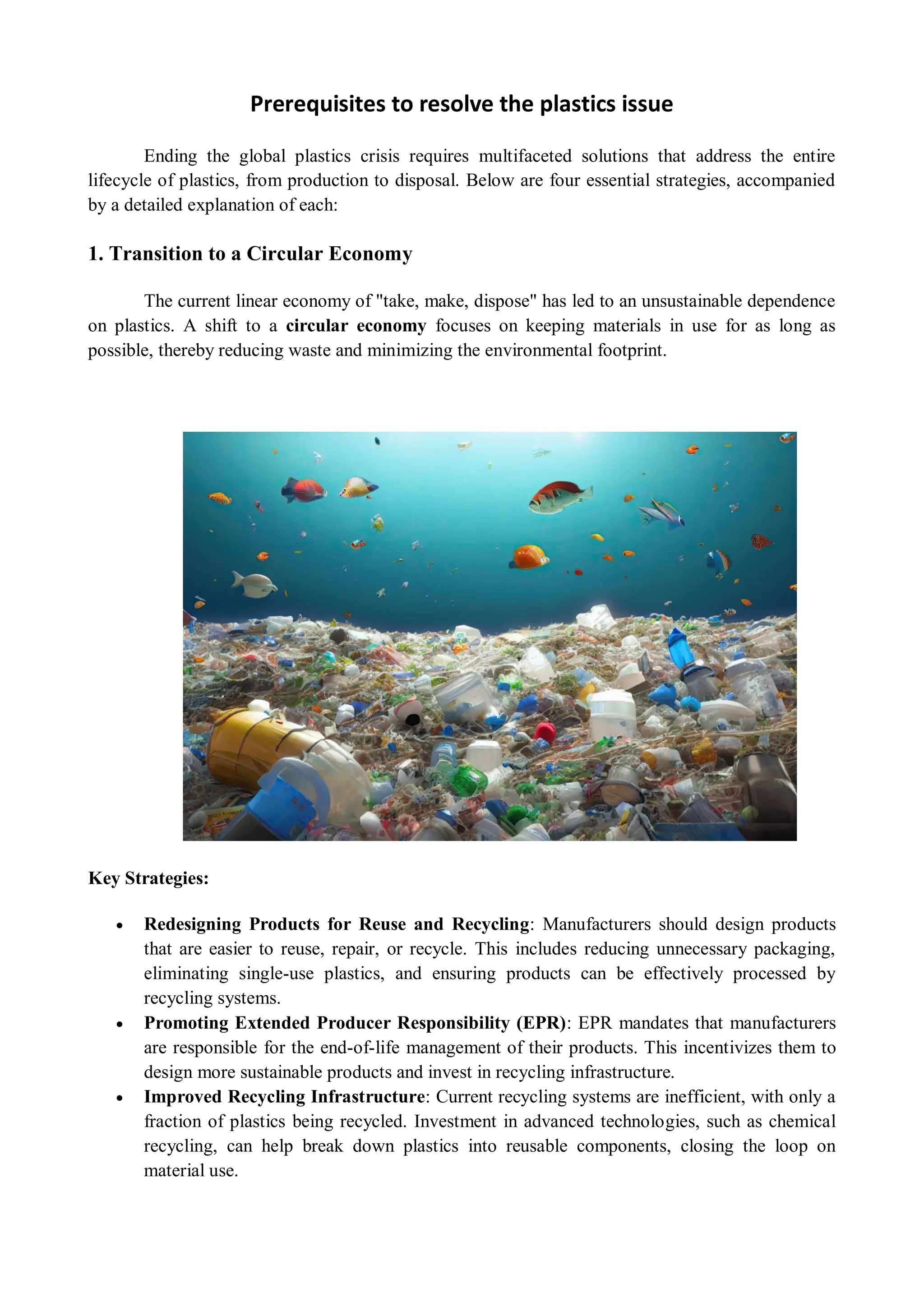
The current linear economy of "take, make, dispose" has led to an unsustainable dependence
on plastics. A shift to a circular economy focuses on keeping materials in use for as long as
possible, thereby reducing waste and minimizing the environmental footprint.
Key Strategies:
 Redesigning Products for Reuse and Recycling: Manufacturers should design products
that are easier to reuse, repair, or recycle. This includes reducing unnecessary packaging,
eliminating single-use plastics, and ensuring products can be effectively processed by
recycling systems.
 Promoting Extended Producer Responsibility (EPR): EPR mandates that manufacturers
are responsible for the end-of-life management of their products. This incentivizes them to
design more sustainable products and invest in recycling infrastructure.
 Improved Recycling Infrastructure: Current recycling systems are inefficient, with only a
fraction of plastics being recycled. Investment in advanced technologies, such as chemical
recycling, can help break down plastics into reusable components, closing the loop on
material use.
 Innovation in Materials: Developing alternatives to traditional plastics, such as
biodegradable or compostable materials, can help reduce the environmental impact of plastic
waste.
Benefits:
 Reduces plastic pollution by minimizing waste and promoting sustainable material use.
 Encourages innovation in product design and waste management.
 Supports economic growth by creating new jobs in the recycling and sustainable materials
sectors.
2. Legislation and Policy Measures
Government intervention is crucial in regulating plastic production and consumption. Strong
policies can drive systemic change and hold industries accountable for their contributions to the
plastics crisis.
Key Policies:
 Bans and Restrictions on Single-Use Plastics: Many countries have introduced bans on
items like plastic bags, straws, and cutlery. Expanding these bans to more single-use items
can significantly reduce plastic waste.
 Plastic Taxes and Levies: Implementing taxes on plastic production or consumption can
discourage the use of virgin plastics and encourage the adoption of more sustainable
alternatives. For instance, taxing plastic packaging can lead companies to invest in reusable
or biodegradable options.
 Incentives for Sustainable Practices: Offering tax breaks or subsidies to companies that
adopt sustainable practices, such as using recycled materials, can promote eco-friendly
behaviour in the private sector.
 International Agreements: Since plastic pollution is a global issue, international
cooperation is necessary. A legally binding global treaty to address plastic pollution could
set common standards for production, consumption, and waste management.
Benefits:
 Provides a regulatory framework that encourages industries to adopt sustainable practices.
 Creates financial incentives for both consumers and businesses to reduce plastic use.
 Ensures accountability through penalties for non-compliance with environmental standards.
3. Public Awareness and Behavioural Change
Educating the public about the impact of plastic pollution and the steps they can take to
mitigate it is essential for long-term change. This includes promoting responsible consumption and
disposal practices, as well as encouraging a shift away from plastic dependency.
Key Initiatives:
 Educational Campaigns: Governments, NGOs, and businesses should collaborate on large-
scale campaigns that educate consumers about the environmental and health impacts of
plastic pollution. This includes highlighting the benefits of reusable products and proper
recycling methods.
 Corporate Responsibility: Companies should take a proactive approach by educating
consumers about the sustainability of their products and offering eco-friendly alternatives.
Initiatives like offering discounts for customers who bring their own reusable bags or
containers can encourage sustainable practices.
 Community Engagement: Local governments and organizations can foster community
involvement in clean-up activities, recycling programs, and other initiatives to reduce plastic
waste. Such programs can empower individuals to take responsibility for their consumption
and disposal habits.
 Behavioural Nudges: Simple policy changes, such as making reusable options more
convenient or providing visible recycling infrastructure, can nudge consumers toward more
sustainable behaviour.
Benefits:
 Increases consumer demand for sustainable products, influencing market trends.
 Reduces the amount of plastic waste entering the environment through better disposal
habits.
 Builds a culture of sustainability that prioritizes environmental health over convenience.
4. Investment in Research and Technological Innovation
Innovative technologies and research are critical to developing new materials, improving
recycling processes, and finding alternative solutions to plastic use. Investing in R&D can
accelerate the transition to a more sustainable plastic economy.
Key Areas of Focus:
 Development of Alternative Materials: Researchers are working on creating plastic
alternatives that are biodegradable, compostable, or derived from renewable resources.
These materials should be scalable and cost-effective to ensure widespread adoption.
 Advanced Recycling Technologies: Traditional recycling methods struggle to process
certain types of plastics. Chemical recycling and other advanced techniques can break down
plastics into their original components, allowing for more efficient reuse. Technologies such
as pyrolysis, depolymerisation, and enzymatic recycling are being developed to address
these challenges.
 Waste-to-Energy Technologies: While not a perfect solution, waste-to-energy technologies
can convert plastic waste into electricity or fuel. These technologies should be viewed as a
last resort, only to be used when recycling is not viable.
 Ocean Clean-up Technologies: Plastic pollution in the oceans is a major environmental
challenge. Innovations like floating barriers, robotic trash collectors, and biodegradable
fishing nets can help reduce plastic waste in marine ecosystems.
Benefits:
 Provides new materials and processes that reduce the environmental impact of plastics.
 Enhances the efficiency of recycling systems, reducing the need for virgin plastic
production.
 Supports the development of sustainable solutions to plastic pollution in diverse
environments.
Conclusion
Addressing the plastics crisis requires coordinated efforts across multiple sectors, from
governments and industries to individuals and researchers. Transitioning to a circular economy,
enacting strong policies, fostering public awareness, and investing in innovation are four must-have
strategies to tackle this global challenge. By embracing these solutions, the world can significantly
reduce plastic pollution and move toward a more sustainable future.

Prerequisites to resolve the plastics issue

  • 1.
    Prerequisites to resolvethe plastics issue Ending the global plastics crisis requires multifaceted solutions that address the entire lifecycle of plastics, from production to disposal. Below are four essential strategies, accompanied by a detailed explanation of each: 1. Transition to a Circular Economy The current linear economy of "take, make, dispose" has led to an unsustainable dependence on plastics. A shift to a circular economy focuses on keeping materials in use for as long as possible, thereby reducing waste and minimizing the environmental footprint. Key Strategies:  Redesigning Products for Reuse and Recycling: Manufacturers should design products that are easier to reuse, repair, or recycle. This includes reducing unnecessary packaging, eliminating single-use plastics, and ensuring products can be effectively processed by recycling systems.  Promoting Extended Producer Responsibility (EPR): EPR mandates that manufacturers are responsible for the end-of-life management of their products. This incentivizes them to design more sustainable products and invest in recycling infrastructure.  Improved Recycling Infrastructure: Current recycling systems are inefficient, with only a fraction of plastics being recycled. Investment in advanced technologies, such as chemical recycling, can help break down plastics into reusable components, closing the loop on material use.
  • 2.
     Innovation inMaterials: Developing alternatives to traditional plastics, such as biodegradable or compostable materials, can help reduce the environmental impact of plastic waste. Benefits:  Reduces plastic pollution by minimizing waste and promoting sustainable material use.  Encourages innovation in product design and waste management.  Supports economic growth by creating new jobs in the recycling and sustainable materials sectors. 2. Legislation and Policy Measures Government intervention is crucial in regulating plastic production and consumption. Strong policies can drive systemic change and hold industries accountable for their contributions to the plastics crisis. Key Policies:  Bans and Restrictions on Single-Use Plastics: Many countries have introduced bans on items like plastic bags, straws, and cutlery. Expanding these bans to more single-use items can significantly reduce plastic waste.  Plastic Taxes and Levies: Implementing taxes on plastic production or consumption can discourage the use of virgin plastics and encourage the adoption of more sustainable alternatives. For instance, taxing plastic packaging can lead companies to invest in reusable or biodegradable options.  Incentives for Sustainable Practices: Offering tax breaks or subsidies to companies that adopt sustainable practices, such as using recycled materials, can promote eco-friendly behaviour in the private sector.  International Agreements: Since plastic pollution is a global issue, international cooperation is necessary. A legally binding global treaty to address plastic pollution could set common standards for production, consumption, and waste management. Benefits:  Provides a regulatory framework that encourages industries to adopt sustainable practices.  Creates financial incentives for both consumers and businesses to reduce plastic use.  Ensures accountability through penalties for non-compliance with environmental standards. 3. Public Awareness and Behavioural Change Educating the public about the impact of plastic pollution and the steps they can take to mitigate it is essential for long-term change. This includes promoting responsible consumption and disposal practices, as well as encouraging a shift away from plastic dependency.
  • 3.
    Key Initiatives:  EducationalCampaigns: Governments, NGOs, and businesses should collaborate on large- scale campaigns that educate consumers about the environmental and health impacts of plastic pollution. This includes highlighting the benefits of reusable products and proper recycling methods.  Corporate Responsibility: Companies should take a proactive approach by educating consumers about the sustainability of their products and offering eco-friendly alternatives. Initiatives like offering discounts for customers who bring their own reusable bags or containers can encourage sustainable practices.  Community Engagement: Local governments and organizations can foster community involvement in clean-up activities, recycling programs, and other initiatives to reduce plastic waste. Such programs can empower individuals to take responsibility for their consumption and disposal habits.  Behavioural Nudges: Simple policy changes, such as making reusable options more convenient or providing visible recycling infrastructure, can nudge consumers toward more sustainable behaviour. Benefits:  Increases consumer demand for sustainable products, influencing market trends.  Reduces the amount of plastic waste entering the environment through better disposal habits.  Builds a culture of sustainability that prioritizes environmental health over convenience. 4. Investment in Research and Technological Innovation Innovative technologies and research are critical to developing new materials, improving recycling processes, and finding alternative solutions to plastic use. Investing in R&D can accelerate the transition to a more sustainable plastic economy. Key Areas of Focus:  Development of Alternative Materials: Researchers are working on creating plastic alternatives that are biodegradable, compostable, or derived from renewable resources. These materials should be scalable and cost-effective to ensure widespread adoption.  Advanced Recycling Technologies: Traditional recycling methods struggle to process certain types of plastics. Chemical recycling and other advanced techniques can break down plastics into their original components, allowing for more efficient reuse. Technologies such as pyrolysis, depolymerisation, and enzymatic recycling are being developed to address these challenges.  Waste-to-Energy Technologies: While not a perfect solution, waste-to-energy technologies can convert plastic waste into electricity or fuel. These technologies should be viewed as a last resort, only to be used when recycling is not viable.
  • 4.
     Ocean Clean-upTechnologies: Plastic pollution in the oceans is a major environmental challenge. Innovations like floating barriers, robotic trash collectors, and biodegradable fishing nets can help reduce plastic waste in marine ecosystems. Benefits:  Provides new materials and processes that reduce the environmental impact of plastics.  Enhances the efficiency of recycling systems, reducing the need for virgin plastic production.  Supports the development of sustainable solutions to plastic pollution in diverse environments. Conclusion Addressing the plastics crisis requires coordinated efforts across multiple sectors, from governments and industries to individuals and researchers. Transitioning to a circular economy, enacting strong policies, fostering public awareness, and investing in innovation are four must-have strategies to tackle this global challenge. By embracing these solutions, the world can significantly reduce plastic pollution and move toward a more sustainable future.