Plastic Pollution in the Ocean. The global
challenge of plastic waste in oceans and the
efforts to mitigate it.
By Nigora Xakimova
Plastic pollution in oceans is one of the most pressing environmental issues of our
time. Each year, millions of tons of plastic waste find their way into marine
ecosystems, affecting wildlife, ecosystems, and even human health. Here’s an
overview of the problem, its impacts, and ongoing efforts to mitigate it.
Although plastic has many beneficial applications, we have developed an
addiction to single-use plastic products, which has detrimental effects on the
environment, society, economy, and human health.
Up to five trillion plastic bags are used annually worldwide, and one million
plastic bottles are bought every minute. Approximately 50% of all plastic produced
is made to be used only once before being discarded.
About plastic pollution in the oceans
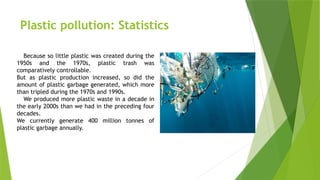
Plastic pollution: Statistics
Because so little plastic was created during the
1950s and the 1970s, plastic trash was
comparatively controllable.
But as plastic production increased, so did the
amount of plastic garbage generated, which more
than tripled during the 1970s and 1990s.
We produced more plastic waste in a decade in
the early 2000s than we had in the preceding four
decades.
We currently generate 400 million tonnes of
plastic garbage annually.
Solutions
 Governments, businesses, and other stakeholders are beginning to take action as the
globe begins to recognize the issue.
 Governments can take a number of actions as important players in the plastics value
chain:
 First of all, they can ban, for instance, the plastic things that we do not need.
 To ensure that the plastics we require are created and introduced into the market in a
way that permits their reuse, governments should also encourage innovation.
 Additionally, governments must make sure that plastic remains in the economy for as
long as feasible.
 Despite the fact that there has been a lot of progress, we must all do more to stop
plastic pollution at its source.
Environmental Impact
Harm to Marine Life: Over 700 marine species
are known to be affected by plastic debris.
Animals such as sea turtles, fish, and seabirds
mistake plastic for food, leading to ingestion that
can cause starvation, malnutrition, or internal
injuries.
Entanglement: Many marine creatures become
entangled in discarded fishing gear and other
plastic items, which can cause suffocation,
drowning, or injury.
Coral Reefs and Ecosystems: Plastics can
physically damage coral reefs, which are vital to
marine biodiversity. Chemicals from plastics may
also alter the chemistry of ecosystems and disrupt
reproductive systems in marine organisms.
Human Impact
Food Chain Contamination: Microplastics
are now found in seafood consumed by
humans. Plastics absorb harmful pollutants,
which can transfer up the food chain, posing
risks to human health, including potential
cancer risks, reproductive issues, and
developmental problems.
Economic Costs: Plastic pollution affects
industries such as tourism, fishing, and
shipping. Coastal communities bear the
brunt of the cleanup costs, and there are
considerable losses in revenue from marine-
related businesses.
Global Efforts to Mitigate Plastic Pollution
Addressing ocean plastic pollution requires concerted efforts from governments,
corporations, civil society, and individuals. Key initiatives include:
1.International Agreements:
1. Global Plastics Treaty: In March 2022, the United Nations initiated a legally
binding agreement to address plastic pollution, expected to be finalized by
2024. The treaty aims to cover the entire lifecycle of plastics, from production
to disposal.
2. MARPOL (Marine Pollution) Convention: This international agreement aims to
prevent pollution from ships, including plastic waste, by regulating waste
disposal practices at sea.
2.Corporate and Industry Action:
1. Extended Producer Responsibility (EPR): This policy approach holds producers
accountable for the end-of-life impacts of their products, encouraging them to
design more sustainable packaging and reduce plastic use.
Global Efforts to Mitigate Plastic Pollution
Waste Management and Recycling:
Improved Waste Collection: Developing better waste management systems, particularly in
developing countries, can reduce the amount of plastic that enters the ocean.
Circular Economy Models: Shifting towards a circular economy involves designing products
that are easier to recycle, reusing materials, and minimizing waste production. This approach
reduces the demand for virgin plastic production.
Ocean Cleanup Efforts:
The Ocean Cleanup: This non-profit organization has developed systems to remove plastic
from the Great Pacific Garbage Patch and prevent plastics from entering the oceans via rivers.
Beach Cleanups: Local and global initiatives, such as the International Coastal Cleanup Day,
mobilize millions of volunteers worldwide to remove plastic waste from beaches and
waterways.
Public Awareness and Advocacy:
Consumer Behavior: Individuals are encouraged to reduce single-use plastics, participate in
recycling programs, and support policies that limit plastic production.
Education and Advocacy: Organizations and activists are working to raise awareness about
the dangers of plastic pollution, advocating for policy changes and shifts in corporate
practices.
Challenges Ahead
• Global Coordination: Effective mitigation requires coordinated action across
borders. Nations must collaborate on policies and share technologies to
manage plastic waste efficiently.
• Funding: Substantial investment is required to improve waste infrastructure,
especially in countries where waste management systems are
underdeveloped.
• Innovation: New materials and technologies are needed to create
alternatives to plastic and improve recycling efficiency.
Conclusion
Plastic pollution in the ocean is a multifaceted issue that threatens marine
ecosystems, wildlife, human health, and global economies. While the problem
is daunting, ongoing efforts through international cooperation, innovative
solutions, corporate responsibility, and public engagement provide hope for a
cleaner, healthier ocean.
However, sustained action is essential to mitigate the damage and protect
future generations from the long-lasting impacts of plastic waste.

Plastic Pollution in the Ocean case study.pptx

  • 1.
    Plastic Pollution inthe Ocean. The global challenge of plastic waste in oceans and the efforts to mitigate it. By Nigora Xakimova
  • 2.
    Plastic pollution inoceans is one of the most pressing environmental issues of our time. Each year, millions of tons of plastic waste find their way into marine ecosystems, affecting wildlife, ecosystems, and even human health. Here’s an overview of the problem, its impacts, and ongoing efforts to mitigate it. Although plastic has many beneficial applications, we have developed an addiction to single-use plastic products, which has detrimental effects on the environment, society, economy, and human health. Up to five trillion plastic bags are used annually worldwide, and one million plastic bottles are bought every minute. Approximately 50% of all plastic produced is made to be used only once before being discarded. About plastic pollution in the oceans
  • 3.
    Plastic pollution: Statistics Becauseso little plastic was created during the 1950s and the 1970s, plastic trash was comparatively controllable. But as plastic production increased, so did the amount of plastic garbage generated, which more than tripled during the 1970s and 1990s. We produced more plastic waste in a decade in the early 2000s than we had in the preceding four decades. We currently generate 400 million tonnes of plastic garbage annually.
  • 4.
    Solutions  Governments, businesses,and other stakeholders are beginning to take action as the globe begins to recognize the issue.  Governments can take a number of actions as important players in the plastics value chain:  First of all, they can ban, for instance, the plastic things that we do not need.  To ensure that the plastics we require are created and introduced into the market in a way that permits their reuse, governments should also encourage innovation.  Additionally, governments must make sure that plastic remains in the economy for as long as feasible.  Despite the fact that there has been a lot of progress, we must all do more to stop plastic pollution at its source.
  • 5.
    Environmental Impact Harm toMarine Life: Over 700 marine species are known to be affected by plastic debris. Animals such as sea turtles, fish, and seabirds mistake plastic for food, leading to ingestion that can cause starvation, malnutrition, or internal injuries. Entanglement: Many marine creatures become entangled in discarded fishing gear and other plastic items, which can cause suffocation, drowning, or injury. Coral Reefs and Ecosystems: Plastics can physically damage coral reefs, which are vital to marine biodiversity. Chemicals from plastics may also alter the chemistry of ecosystems and disrupt reproductive systems in marine organisms.
  • 6.
    Human Impact Food ChainContamination: Microplastics are now found in seafood consumed by humans. Plastics absorb harmful pollutants, which can transfer up the food chain, posing risks to human health, including potential cancer risks, reproductive issues, and developmental problems. Economic Costs: Plastic pollution affects industries such as tourism, fishing, and shipping. Coastal communities bear the brunt of the cleanup costs, and there are considerable losses in revenue from marine- related businesses.
  • 7.
    Global Efforts toMitigate Plastic Pollution Addressing ocean plastic pollution requires concerted efforts from governments, corporations, civil society, and individuals. Key initiatives include: 1.International Agreements: 1. Global Plastics Treaty: In March 2022, the United Nations initiated a legally binding agreement to address plastic pollution, expected to be finalized by 2024. The treaty aims to cover the entire lifecycle of plastics, from production to disposal. 2. MARPOL (Marine Pollution) Convention: This international agreement aims to prevent pollution from ships, including plastic waste, by regulating waste disposal practices at sea. 2.Corporate and Industry Action: 1. Extended Producer Responsibility (EPR): This policy approach holds producers accountable for the end-of-life impacts of their products, encouraging them to design more sustainable packaging and reduce plastic use.
  • 8.
    Global Efforts toMitigate Plastic Pollution Waste Management and Recycling: Improved Waste Collection: Developing better waste management systems, particularly in developing countries, can reduce the amount of plastic that enters the ocean. Circular Economy Models: Shifting towards a circular economy involves designing products that are easier to recycle, reusing materials, and minimizing waste production. This approach reduces the demand for virgin plastic production. Ocean Cleanup Efforts: The Ocean Cleanup: This non-profit organization has developed systems to remove plastic from the Great Pacific Garbage Patch and prevent plastics from entering the oceans via rivers. Beach Cleanups: Local and global initiatives, such as the International Coastal Cleanup Day, mobilize millions of volunteers worldwide to remove plastic waste from beaches and waterways. Public Awareness and Advocacy: Consumer Behavior: Individuals are encouraged to reduce single-use plastics, participate in recycling programs, and support policies that limit plastic production. Education and Advocacy: Organizations and activists are working to raise awareness about the dangers of plastic pollution, advocating for policy changes and shifts in corporate practices.
  • 9.
    Challenges Ahead • GlobalCoordination: Effective mitigation requires coordinated action across borders. Nations must collaborate on policies and share technologies to manage plastic waste efficiently. • Funding: Substantial investment is required to improve waste infrastructure, especially in countries where waste management systems are underdeveloped. • Innovation: New materials and technologies are needed to create alternatives to plastic and improve recycling efficiency.
  • 10.
    Conclusion Plastic pollution inthe ocean is a multifaceted issue that threatens marine ecosystems, wildlife, human health, and global economies. While the problem is daunting, ongoing efforts through international cooperation, innovative solutions, corporate responsibility, and public engagement provide hope for a cleaner, healthier ocean. However, sustained action is essential to mitigate the damage and protect future generations from the long-lasting impacts of plastic waste.