Debate: "Can product stewardship
replace regulation? Case nanomaterials"
Moderator: Roger Drew, Toxicology Consultant, Australia.
Debaters:
David Azoulay, Managing Attorney, CIEL, Switzerland.
David Warheit, Technical Fellow − Toxicology and Risk Assessment,
The Chemours Company, US.
Helsinki Chemicals Forum June 15th 2018
2
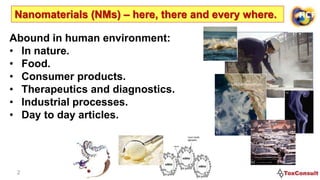
Nanomaterials (NMs) – here, there and every where.
Abound in human environment:
• In nature.
• Food.
• Consumer products.
• Therapeutics and diagnostics.
• Industrial processes.
• Day to day articles.
3
4
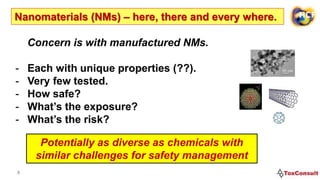
Nanomaterials (NMs) – here, there and every where.
Potentially as diverse as chemicals with
similar challenges for safety management
Concern is with manufactured NMs.
- Each with unique properties (??).
- Very few tested.
- How safe?
- What’s the exposure?
- What’s the risk?
5
- Chemical regulation has evolved over the last 50+ years.
- Predilection towards risk and rule based regulation.
- Amount of information required to assess risk tends to be
based on the amount of chemical produced/marketed.
- Chemical product stewardship = Responsible Care ®
- Evolved over 30+ years to build trust and confidence.
- A set of Core Principles practiced in 68 global economies.
- Has considerably decreased injuries and incidents.
In these paradigms can “chemical”
be replaced by “nanomaterial” ?
Questions from the forum organiser:
• Is chemical legislation robust enough for NM’s?
• What’s the role of industry product stewardship?
• How can companies show due diligence?
6
• Can workers and consumers [researchers] have
confidence in safe use of NM, or should there be
explicit testing requirements?
7
With respect to understanding hazards and safe use,
what are the challenges/benefits with product
stewardship or regulation for NM’s?
David Azoulay: What detracts from product stewardship but
is attractive about regulation?
David Warheit: What are the benefits of product stewardship
and the issues with regulation?

HCF 2018 Depate introduction: Roger Drew

  • 1.
    Debate: "Can productstewardship replace regulation? Case nanomaterials" Moderator: Roger Drew, Toxicology Consultant, Australia. Debaters: David Azoulay, Managing Attorney, CIEL, Switzerland. David Warheit, Technical Fellow − Toxicology and Risk Assessment, The Chemours Company, US. Helsinki Chemicals Forum June 15th 2018
  • 2.
    2 Nanomaterials (NMs) –here, there and every where. Abound in human environment: • In nature. • Food. • Consumer products. • Therapeutics and diagnostics. • Industrial processes. • Day to day articles.
  • 3.
  • 4.
    4 Nanomaterials (NMs) –here, there and every where. Potentially as diverse as chemicals with similar challenges for safety management Concern is with manufactured NMs. - Each with unique properties (??). - Very few tested. - How safe? - What’s the exposure? - What’s the risk?
  • 5.
    5 - Chemical regulationhas evolved over the last 50+ years. - Predilection towards risk and rule based regulation. - Amount of information required to assess risk tends to be based on the amount of chemical produced/marketed. - Chemical product stewardship = Responsible Care ® - Evolved over 30+ years to build trust and confidence. - A set of Core Principles practiced in 68 global economies. - Has considerably decreased injuries and incidents. In these paradigms can “chemical” be replaced by “nanomaterial” ?
  • 6.
    Questions from theforum organiser: • Is chemical legislation robust enough for NM’s? • What’s the role of industry product stewardship? • How can companies show due diligence? 6 • Can workers and consumers [researchers] have confidence in safe use of NM, or should there be explicit testing requirements?
  • 7.
    7 With respect tounderstanding hazards and safe use, what are the challenges/benefits with product stewardship or regulation for NM’s? David Azoulay: What detracts from product stewardship but is attractive about regulation? David Warheit: What are the benefits of product stewardship and the issues with regulation?

Editor's Notes

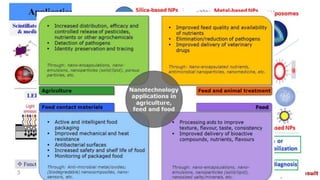
  • #3 Ribsomes ~30nm. Biochemical reactions occur on nanoscale. The organoleptic properties of ice cream depend on its nanostructure of fat globules, stabilized by the nano-membranes of 10–20 nm casein micelles. Medicine - drug delivery, medical imaging, gene therapy, biosensors and cancer treatment.
  • #8 During debate (hopefully): How might these be addressed?