Health Informatics: Its Evolution 
and Impact 
Lynn Wedin 
Health Informatics Capstone 
Instructor: Olivia Pollard 
October 6, 2014
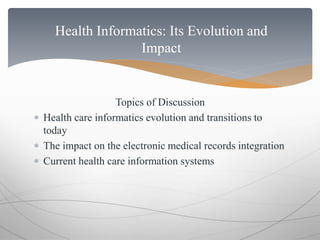
Health Informatics: Its Evolution and 
Impact 
Topics of Discussion 
 Health care informatics evolution and transitions to 
today 
 The impact on the electronic medical records integration 
 Current health care information systems
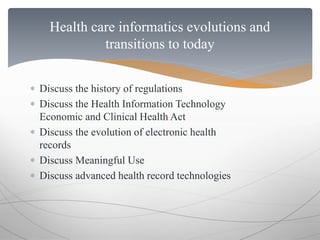
Health care informatics evolutions and 
transitions to today 
 Discuss the history of regulations 
 Discuss the Health Information Technology 
Economic and Clinical Health Act 
 Discuss the evolution of electronic health 
records 
 Discuss Meaningful Use 
 Discuss advanced health record technologies
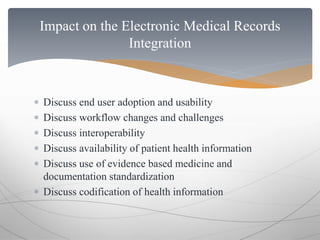
Impact on the Electronic Medical Records 
Integration 
 Discuss end user adoption and usability 
 Discuss workflow changes and challenges 
 Discuss interoperability 
 Discuss availability of patient health information 
 Discuss use of evidence based medicine and 
documentation standardization 
 Discuss codification of health information
Current Health Care Information Systems 
 Discuss various health care information 
system components 
 Discuss hardware security 
 Discuss access and software security
Why is this important? 
 Understand why health care needs to change 
 Understand how informatics can support change 
 Understand informatics options available to support 
change 
 Understand how to implement health informatics
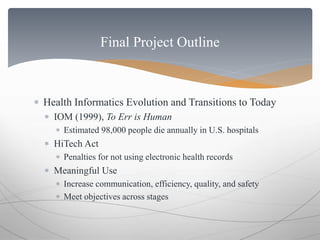
Final Project Outline 
 Health Informatics Evolution and Transitions to Today 
 IOM (1999), To Err is Human 
 Estimated 98,000 people die annually in U.S. hospitals 
 HiTech Act 
 Penalties for not using electronic health records 
 Meaningful Use 
 Increase communication, efficiency, quality, and safety 
 Meet objectives across stages
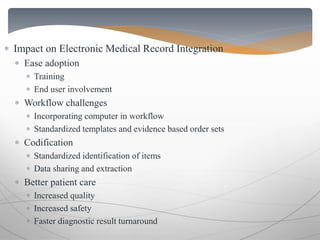
 Impact on Electronic Medical Record Integration 
 Ease adoption 
 Training 
 End user involvement 
 Workflow challenges 
 Incorporating computer in workflow 
 Standardized templates and evidence based order sets 
 Codification 
 Standardized identification of items 
 Data sharing and extraction 
 Better patient care 
 Increased quality 
 Increased safety 
 Faster diagnostic result turnaround
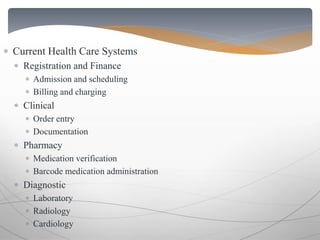
 Current Health Care Systems 
 Registration and Finance 
 Admission and scheduling 
 Billing and charging 
 Clinical 
 Order entry 
 Documentation 
 Pharmacy 
 Medication verification 
 Barcode medication administration 
 Diagnostic 
 Laboratory 
 Radiology 
 Cardiology
References 
 Blumenthal, D. (2011). A quick look at Meaningful Use: The age of 
meaningful use. Stat: Bulletin of the Wisconsin Nurses Association, 80(5), 1-3. 
Retrieved from EBSCOhost. 
 Goldberg, L., Lide, B., Lowry, S., Massett, H. A., O'Connell, T., Preece, J., & 
Schneiderman, B. (2011). Usability and accessibility in consumer health 
informatics: Current trends and future challenges. American Journal of 
Preventative Medicine, 40, pS187- 
S197. doi:10.1016/j.amepre.2011.01.009Hamid, F., & Cline, T. W. (2013). 
 Hamid, F., & Cline, T. W. (2013). Providers' Acceptance Factors and their 
Perceived Barriers to Electronic Health Record (EHR) Adoption. Online 
Journal Of Nursing Informatics, 17(3), 1-11. 
 Perkins, J., & Schmidt, M. (2012). Meaningful Use: Today and tomorrow. 
MLO: Medical Laboratory Observer, 44(10), 34-36.

Hca496.w1.a1.blog entry part i.docx

  • 1.
    Health Informatics: ItsEvolution and Impact Lynn Wedin Health Informatics Capstone Instructor: Olivia Pollard October 6, 2014
  • 2.
    Health Informatics: ItsEvolution and Impact Topics of Discussion  Health care informatics evolution and transitions to today  The impact on the electronic medical records integration  Current health care information systems
  • 3.
    Health care informaticsevolutions and transitions to today  Discuss the history of regulations  Discuss the Health Information Technology Economic and Clinical Health Act  Discuss the evolution of electronic health records  Discuss Meaningful Use  Discuss advanced health record technologies
  • 4.
    Impact on theElectronic Medical Records Integration  Discuss end user adoption and usability  Discuss workflow changes and challenges  Discuss interoperability  Discuss availability of patient health information  Discuss use of evidence based medicine and documentation standardization  Discuss codification of health information
  • 5.
    Current Health CareInformation Systems  Discuss various health care information system components  Discuss hardware security  Discuss access and software security
  • 6.
    Why is thisimportant?  Understand why health care needs to change  Understand how informatics can support change  Understand informatics options available to support change  Understand how to implement health informatics
  • 7.
    Final Project Outline  Health Informatics Evolution and Transitions to Today  IOM (1999), To Err is Human  Estimated 98,000 people die annually in U.S. hospitals  HiTech Act  Penalties for not using electronic health records  Meaningful Use  Increase communication, efficiency, quality, and safety  Meet objectives across stages
  • 8.
     Impact onElectronic Medical Record Integration  Ease adoption  Training  End user involvement  Workflow challenges  Incorporating computer in workflow  Standardized templates and evidence based order sets  Codification  Standardized identification of items  Data sharing and extraction  Better patient care  Increased quality  Increased safety  Faster diagnostic result turnaround
  • 9.
     Current HealthCare Systems  Registration and Finance  Admission and scheduling  Billing and charging  Clinical  Order entry  Documentation  Pharmacy  Medication verification  Barcode medication administration  Diagnostic  Laboratory  Radiology  Cardiology
  • 10.
    References  Blumenthal,D. (2011). A quick look at Meaningful Use: The age of meaningful use. Stat: Bulletin of the Wisconsin Nurses Association, 80(5), 1-3. Retrieved from EBSCOhost.  Goldberg, L., Lide, B., Lowry, S., Massett, H. A., O'Connell, T., Preece, J., & Schneiderman, B. (2011). Usability and accessibility in consumer health informatics: Current trends and future challenges. American Journal of Preventative Medicine, 40, pS187- S197. doi:10.1016/j.amepre.2011.01.009Hamid, F., & Cline, T. W. (2013).  Hamid, F., & Cline, T. W. (2013). Providers' Acceptance Factors and their Perceived Barriers to Electronic Health Record (EHR) Adoption. Online Journal Of Nursing Informatics, 17(3), 1-11.  Perkins, J., & Schmidt, M. (2012). Meaningful Use: Today and tomorrow. MLO: Medical Laboratory Observer, 44(10), 34-36.