B.P. PODDAR INSTITUTE OF MANAGEMENT AND
TECHNOLOGY
Topic:- Hazardous Waste Management
Subject:- Environmental Sciences
MC-401
BY------
Chayan Pathak(11500119041)
Contents
➔ Overview of Hazardous Waste
➔ Source Of Hazardous Waste
➔ Effects Of Hazardous Waste
➔ Characteristics Of Hazardous Waste
➔ Hazardous Waste Control Measures
➔ Hazardous Waste Treatment
Methods
➔ Hazardous Waste Disposal Methods
➔ Conclusion
Hazardous Waste
A hazardous Waste is a Waste with properties
that make it dangerous or capable of having a
harmful effect on human health or the
Environment
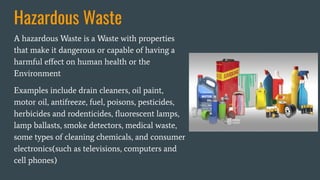
Examples include drain cleaners, oil paint,
motor oil, antifreeze, fuel, poisons, pesticides,
herbicides and rodenticides, fluorescent lamps,
lamp ballasts, smoke detectors, medical waste,
some types of cleaning chemicals, and consumer
electronics(such as televisions, computers and
cell phones)
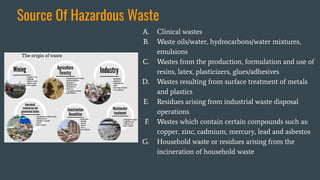
Source Of Hazardous Waste
A. Clinical wastes
B. Waste oils/water, hydrocarbons/water mixtures,
emulsions
C. Wastes from the production, formulation and use of
resins, latex, plasticizers, glues/adhesives
D. Wastes resulting from surface treatment of metals
and plastics
E. Residues arising from industrial waste disposal
operations
F. Wastes which contain certain compounds such as:
copper, zinc, cadmium, mercury, lead and asbestos
G. Household waste or residues arising from the
incineration of household waste
Effects Of Hazardous Waste
❖ Cause of mass life and material damage and
loss(disability, death, fire, explosion)
❖ Cause of environmental damage: water, solid
and air pollution(underground and surface
drinking water)
❖ Cause of potential increased chemical
bioaccumulation that is hard for
biodegradability(chlorine containing
chemicals)
❖ Cause of long term irreversible health risks
❖ High concern of trans- boundary movement of
toxic waste
❖ Cause of massive toxic health damages
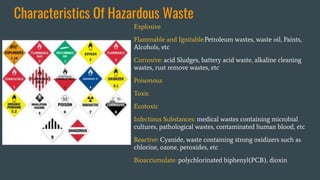
Characteristics Of Hazardous Waste
Explosive
Flammable and Ignitable:Petroleum wastes, waste oil, Paints,
Alcohols, etc
Corrosive: acid Sludges, battery acid waste, alkaline cleaning
wastes, rust remove wastes, etc
Poisonous
Toxic
Ecotoxic
Infectious Substances: medical wastes containing microbial
cultures, pathological wastes, contaminated human blood, etc
Reactive: Cyanide, waste containing strong oxidizers such as
chlorine, ozone, peroxides, etc
Bioaccumulate: polychlorinated biphenyl(PCB), dioxin
Hazardous Waste Control Measures
1. Source Reduction
❖ Technological Efficiency
❖ Material Substitute
❖ Good Management Practice
2. Waste Avoidance
3. Waste Minimization
4. Water Recycling
❖ Direct Reuse
❖ Reclamation
5. Waste Treatment
6. Waste Disposal
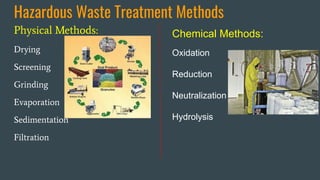
Hazardous Waste Treatment Methods
Physical Methods:
Drying
Screening
Grinding
Evaporation
Sedimentation
Filtration
Chemical Methods:
Oxidation
Reduction
Neutralization
Hydrolysis
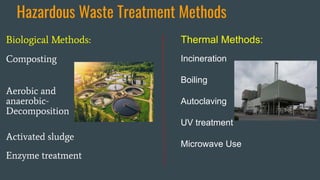
Biological Methods:
Composting
Aerobic and
anaerobic-
Decomposition
Activated sludge
Enzyme treatment
Hazardous Waste Treatment Methods
Thermal Methods:
Incineration
Boiling
Autoclaving
UV treatment
Microwave Use
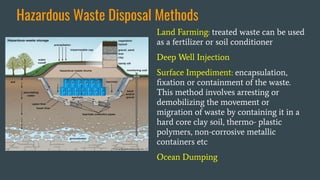
Hazardous Waste Disposal Methods
Land Farming: treated waste can be used
as a fertilizer or soil conditioner
Deep Well Injection
Surface Impediment: encapsulation,
fixation or containment of the waste.
This method involves arresting or
demobilizing the movement or
migration of waste by containing it in a
hard core clay soil, thermo- plastic
polymers, non-corrosive metallic
containers etc
Ocean Dumping
Conclusion
Hazardous waste is a relatively new concern of environmental engineers.
For years, the necessary by-products of an industrialized society were piled
“out back” on land that had little value. As time passed and the rains came
and went, the migration of harmful chemicals moved hazardous waste to the
front page of the newspaper and into the classroom. Engineers employed in
all public and private sectors must now face head-on the processing,
transportation, and disposal of these wastes. Hazardous waste must be
appropriately addressed at the “front end” of the generation process, either
by maximizing resource recovery or by detoxification at the site of
generation.
In Minnesota, for example, the problem of household hazardous wastes are
being handled in permanent, regional collection centers, replacing
once-a-day drop-off programs common throughout the United
States(Ailbmann 1991). Storage, landfilling in particular, is at best a last
resort measure for hazardous waste handling.
hazardous waste management

hazardous waste management

  • 1.
    B.P. PODDAR INSTITUTEOF MANAGEMENT AND TECHNOLOGY Topic:- Hazardous Waste Management Subject:- Environmental Sciences MC-401 BY------ Chayan Pathak(11500119041)
  • 2.
    Contents ➔ Overview ofHazardous Waste ➔ Source Of Hazardous Waste ➔ Effects Of Hazardous Waste ➔ Characteristics Of Hazardous Waste ➔ Hazardous Waste Control Measures ➔ Hazardous Waste Treatment Methods ➔ Hazardous Waste Disposal Methods ➔ Conclusion
  • 3.
    Hazardous Waste A hazardousWaste is a Waste with properties that make it dangerous or capable of having a harmful effect on human health or the Environment Examples include drain cleaners, oil paint, motor oil, antifreeze, fuel, poisons, pesticides, herbicides and rodenticides, fluorescent lamps, lamp ballasts, smoke detectors, medical waste, some types of cleaning chemicals, and consumer electronics(such as televisions, computers and cell phones)
  • 4.
    Source Of HazardousWaste A. Clinical wastes B. Waste oils/water, hydrocarbons/water mixtures, emulsions C. Wastes from the production, formulation and use of resins, latex, plasticizers, glues/adhesives D. Wastes resulting from surface treatment of metals and plastics E. Residues arising from industrial waste disposal operations F. Wastes which contain certain compounds such as: copper, zinc, cadmium, mercury, lead and asbestos G. Household waste or residues arising from the incineration of household waste
  • 5.
    Effects Of HazardousWaste ❖ Cause of mass life and material damage and loss(disability, death, fire, explosion) ❖ Cause of environmental damage: water, solid and air pollution(underground and surface drinking water) ❖ Cause of potential increased chemical bioaccumulation that is hard for biodegradability(chlorine containing chemicals) ❖ Cause of long term irreversible health risks ❖ High concern of trans- boundary movement of toxic waste ❖ Cause of massive toxic health damages
  • 6.
    Characteristics Of HazardousWaste Explosive Flammable and Ignitable:Petroleum wastes, waste oil, Paints, Alcohols, etc Corrosive: acid Sludges, battery acid waste, alkaline cleaning wastes, rust remove wastes, etc Poisonous Toxic Ecotoxic Infectious Substances: medical wastes containing microbial cultures, pathological wastes, contaminated human blood, etc Reactive: Cyanide, waste containing strong oxidizers such as chlorine, ozone, peroxides, etc Bioaccumulate: polychlorinated biphenyl(PCB), dioxin
  • 7.
    Hazardous Waste ControlMeasures 1. Source Reduction ❖ Technological Efficiency ❖ Material Substitute ❖ Good Management Practice 2. Waste Avoidance 3. Waste Minimization 4. Water Recycling ❖ Direct Reuse ❖ Reclamation 5. Waste Treatment 6. Waste Disposal
  • 8.
    Hazardous Waste TreatmentMethods Physical Methods: Drying Screening Grinding Evaporation Sedimentation Filtration Chemical Methods: Oxidation Reduction Neutralization Hydrolysis
  • 9.
    Biological Methods: Composting Aerobic and anaerobic- Decomposition Activatedsludge Enzyme treatment Hazardous Waste Treatment Methods Thermal Methods: Incineration Boiling Autoclaving UV treatment Microwave Use
  • 10.
    Hazardous Waste DisposalMethods Land Farming: treated waste can be used as a fertilizer or soil conditioner Deep Well Injection Surface Impediment: encapsulation, fixation or containment of the waste. This method involves arresting or demobilizing the movement or migration of waste by containing it in a hard core clay soil, thermo- plastic polymers, non-corrosive metallic containers etc Ocean Dumping
  • 11.
    Conclusion Hazardous waste isa relatively new concern of environmental engineers. For years, the necessary by-products of an industrialized society were piled “out back” on land that had little value. As time passed and the rains came and went, the migration of harmful chemicals moved hazardous waste to the front page of the newspaper and into the classroom. Engineers employed in all public and private sectors must now face head-on the processing, transportation, and disposal of these wastes. Hazardous waste must be appropriately addressed at the “front end” of the generation process, either by maximizing resource recovery or by detoxification at the site of generation. In Minnesota, for example, the problem of household hazardous wastes are being handled in permanent, regional collection centers, replacing once-a-day drop-off programs common throughout the United States(Ailbmann 1991). Storage, landfilling in particular, is at best a last resort measure for hazardous waste handling.