Hack the Mind:
Using Psychology to Boost Online Engagement
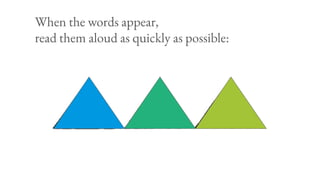
When the words appear,
read them aloud as quickly as possible:
By the end of this session, you should be able to:
1. Appreciate the complexity of the human mind—and how
it responds to messages you put out
2. Begin experimenting with psychological “tactics” in order
to communicate with your target audiences
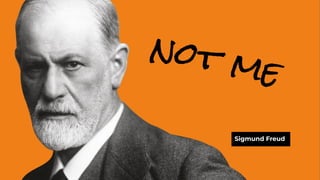
not me
Sigmund Freud
I’m Jarrett.
▪ Marketing Manager at Mighty
Citizen
▪ Career in strategic communications,
content marketing, and storytelling
for mission-driven organizations
jway@mightycitizen.com
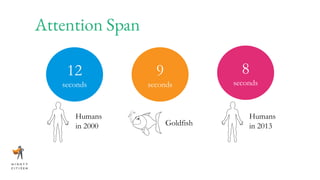
Attention Span
12
seconds
9
seconds
8
seconds
Humans
in 2013
Humans
in 2000 Goldfish
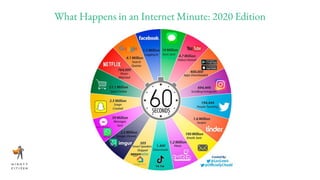
What Happens in an Internet Minute: 2020 Edition
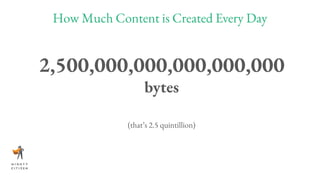
How Much Content is Created Every Day
2,500,000,000,000,000,000
bytes
(that’s 2.5 quintillion)
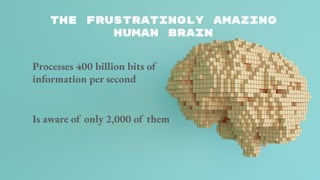
The Frustratingly AMAZING
Human BrAIn
Processes 400 billion bits of
information per second
Is aware of only 2,000 of them
A Quick Note About
Psychographics
QUESTION:
Does your organization have
psychographic profiles of your users?
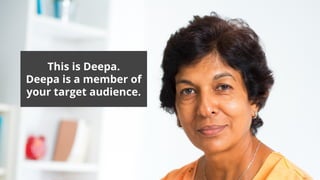
This is Deepa.
Deepa is a member of
your target audience.
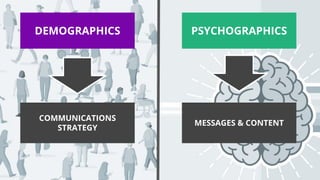
DEMOGRAPHICS
Female
Lives within 50 miles
High-school grad
Mother of three
Business owner
Immigrant
High income
Religious
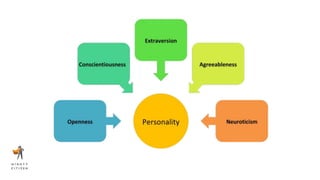
PSYCHOGRAPHICS
Extroverted
Aggressive
Conscientious
Traditional
Family-focused
DEMOGRAPHICS PSYCHOGRAPHICS
COMMUNICATIONS
STRATEGY
MESSAGES & CONTENT
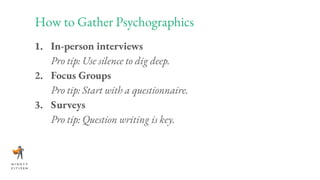
How to Gather Psychographics
1. In-person interviews
Pro tip: Use silence to dig deep.
2. Focus Groups
Pro tip: Start with a questionnaire.
3. Surveys
Pro tip: Question writing is key.
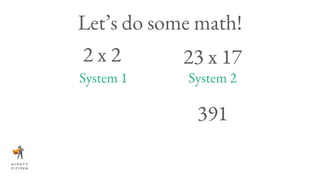
The Two Ways We Think
2 x 2 23 x 17
System 1 System 2
Let’s do some math!
391
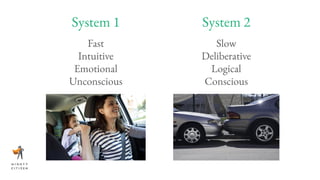
System 1
Fast
Intuitive
Emotional
Unconscious
System 2
Slow
Deliberative
Logical
Conscious
“If there are several ways of achieving the same goal,
people will eventually gravitate to the least
demanding course of action. Laziness is built deep
into our nature.”
—Daniel Kahneman, Thinking, Fast and Slow
So what does this have to do with marketing?
cognitive ease
noun.
The measure of how easy it is for our brains to
process information
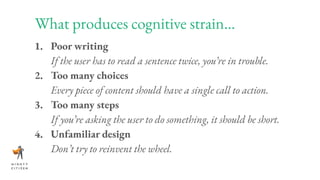
What produces cognitive strain...
1. Poor writing
If the user has to read a sentence twice, you’re in trouble.
2. Too many choices
Every piece of content should have a single call to action.
3. Too many steps
If you’re asking the user to do something, it should be short.
4. Unfamiliar design
Don’t try to reinvent the wheel.
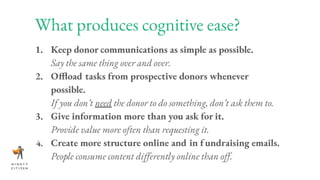
What produces cognitive ease?
1. Keep donor communications as simple as possible.
Say the same thing over and over.
2. Offload tasks from prospective donors whenever
possible.
If you don’t need the donor to do something, don’t ask them to.
3. Give information more than you ask for it.
Provide value more often than requesting it.
4. Create more structure online and in fundraising emails.
People consume content differently online than off.
Some Heuristics
heuristic
noun.
any approach to problem solving, learning, or discovery that
employs a practical method not guaranteed to be optimal, but
sufficient for the immediate goals
a rule of thumb
Affect
People make decisions quickly by bringing their emotional
response into play.
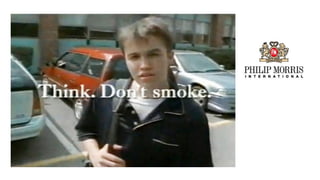
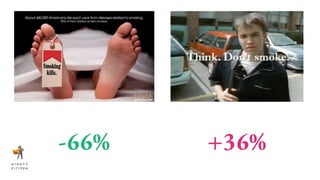
Dunn, North Carolina
Pop.: 1,400
Dunn, North Carolina
Pop.: 1,400
-66% +36%
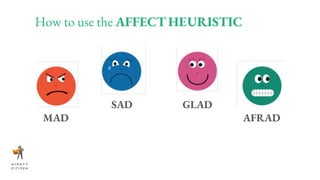
How to use the AFFECT HEURISTIC
MAD
SAD GLAD
AFRAD
Anchoring
The human tendency to rely too heavily on the first piece of
information offered (the “anchor”) when making decisions.
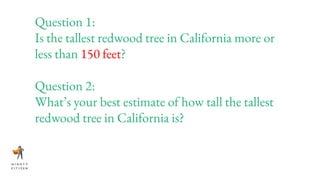
Question 1:
Is the tallest redwood tree in California more or
less than 150 feet?
Question 2:
What’s your best estimate of how tall the tallest
redwood tree in California is?
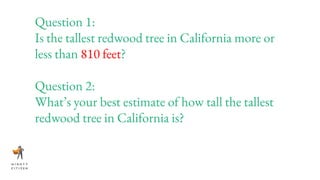
Question 1:
Is the tallest redwood tree in California more or
less than 810 feet?
Question 2:
What’s your best estimate of how tall the tallest
redwood tree in California is?
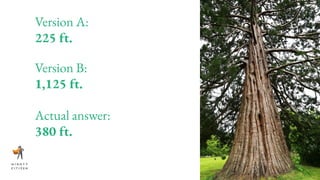
Version A:
225 ft.
Version B:
1,125 ft.
Actual answer:
380 ft.
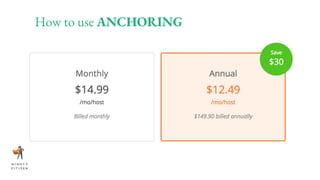
How to use ANCHORING
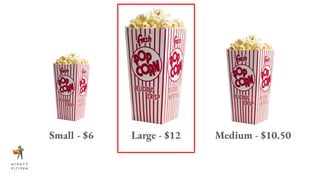
Small - $6 Large - $12 Medium - $10.50
Decoy Effect
People tend to change their preference between two options
when presented with a third option that is asymmetrical.
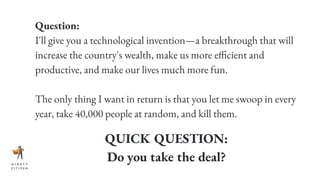
Question:
I'll give you a technological invention—a breakthrough that will
increase the country's wealth, make us more efficient and
productive, and make our lives much more fun.
The only thing I want in return is that you let me swoop in every
year, take 40,000 people at random, and kill them.
QUICK QUESTION:
Do you take the deal?
Framing Effect
Our choices are influenced by the way they are framed through
different wordings, settings, and situations.
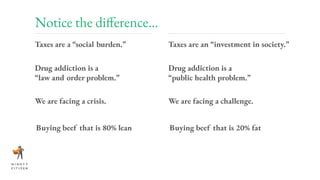
Notice the difference...
Taxes are a “social burden.” Taxes are an “investment in society.”
Drug addiction is a
“law and order problem.”
Drug addiction is a
“public health problem.”
We are facing a crisis. We are facing a challenge.
Buying beef that is 80% lean Buying beef that is 20% fat
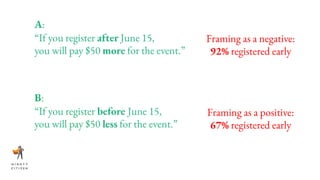
A:
“If you register after June 15,
you will pay $50 more for the event.”
Framing as a negative:
92% registered early
B:
“If you register before June 15,
you will pay $50 less for the event.”
Framing as a positive:
67% registered early
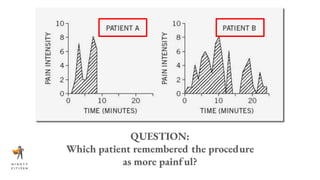
Peak-End Rule
People judge an experience based on an average
of how they felt at the peak and at the end.
QUESTION:
Which patient remembered the procedure
as more painful?
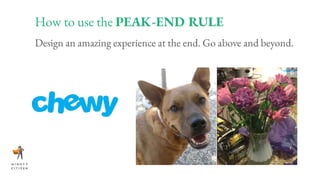
How to use the PEAK-END RULE
Design an amazing experience at the end. Go above and beyond.
I need to take a break to wash my hands.
While I do that,
complete the following word in the chat box:
S _ _ P
Banana
Vomit
Priming
When people are exposed to one stimulus, it affects how they
respond to another stimulus.
Words create associations.
Choose them wisely.
“You” versus “We”
“Join the giving club!” versus “Join the giving society!”
Images matter too.
“Donation Form” versus “Donate Today”
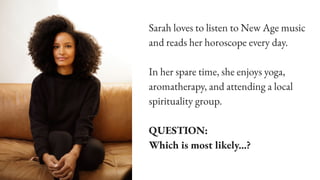
Sarah loves to listen to New Age music
and reads her horoscope every day.
In her spare time, she enjoys yoga,
aromatherapy, and attending a local
spirituality group.
QUESTION:
Which is most likely...?
Representativeness
People judge the probability of an event by finding a comparable
“known event” and assuming that the probabilities will be similar.
Which is just a fancy way of saying we
judge books by their covers.
How to use REPRESENTATIVENESS
▪ Show your users what they expect to see.
▪ Use their vocabulary, not yours.
▪ When introducing something new (products, service,
resource, etc.), compare it something already known.
● Invest resources to segment your prospective donors by
their psychographics—and then use those insights to craft
your messages.
● Humans “think” using two systems—and you want
people using System 1 more than System 2.
● Experiment with heuristics in your communications and
discover what moves the needle.
Summing it all up...
Questions?
Get the Slides and Heuristic Cheat Sheet:
mightycitizen.com/hackthemind
Tools and templates:
mightycitizen.com/tools
Thank You!
Jarrett Way, Marketing Manager
jway@mightycitizen.com

Hack the Mind: Using Psychology to Boost Your Fundraising

  • 1.
    Hack the Mind: UsingPsychology to Boost Online Engagement
  • 4.
    When the wordsappear, read them aloud as quickly as possible:
  • 5.
    By the endof this session, you should be able to: 1. Appreciate the complexity of the human mind—and how it responds to messages you put out 2. Begin experimenting with psychological “tactics” in order to communicate with your target audiences
  • 6.
  • 7.
    I’m Jarrett. ▪ MarketingManager at Mighty Citizen ▪ Career in strategic communications, content marketing, and storytelling for mission-driven organizations jway@mightycitizen.com
  • 8.
  • 9.
    What Happens inan Internet Minute: 2020 Edition
  • 10.
    How Much Contentis Created Every Day 2,500,000,000,000,000,000 bytes (that’s 2.5 quintillion)
  • 11.
    The Frustratingly AMAZING HumanBrAIn Processes 400 billion bits of information per second Is aware of only 2,000 of them
  • 12.
    A Quick NoteAbout Psychographics
  • 13.
    QUESTION: Does your organizationhave psychographic profiles of your users?
  • 14.
    This is Deepa. Deepais a member of your target audience.
  • 15.
    DEMOGRAPHICS Female Lives within 50miles High-school grad Mother of three Business owner Immigrant High income Religious
  • 16.
  • 18.
  • 19.
    How to GatherPsychographics 1. In-person interviews Pro tip: Use silence to dig deep. 2. Focus Groups Pro tip: Start with a questionnaire. 3. Surveys Pro tip: Question writing is key.
  • 20.
    The Two WaysWe Think
  • 21.
    2 x 223 x 17 System 1 System 2 Let’s do some math! 391
  • 22.
  • 23.
    “If there areseveral ways of achieving the same goal, people will eventually gravitate to the least demanding course of action. Laziness is built deep into our nature.” —Daniel Kahneman, Thinking, Fast and Slow So what does this have to do with marketing?
  • 24.
    cognitive ease noun. The measureof how easy it is for our brains to process information
  • 26.
    What produces cognitivestrain... 1. Poor writing If the user has to read a sentence twice, you’re in trouble. 2. Too many choices Every piece of content should have a single call to action. 3. Too many steps If you’re asking the user to do something, it should be short. 4. Unfamiliar design Don’t try to reinvent the wheel.
  • 28.
    What produces cognitiveease? 1. Keep donor communications as simple as possible. Say the same thing over and over. 2. Offload tasks from prospective donors whenever possible. If you don’t need the donor to do something, don’t ask them to. 3. Give information more than you ask for it. Provide value more often than requesting it. 4. Create more structure online and in fundraising emails. People consume content differently online than off.
  • 29.
  • 30.
    heuristic noun. any approach toproblem solving, learning, or discovery that employs a practical method not guaranteed to be optimal, but sufficient for the immediate goals a rule of thumb
  • 31.
    Affect People make decisionsquickly by bringing their emotional response into play.
  • 32.
  • 33.
  • 34.
  • 35.
    How to usethe AFFECT HEURISTIC MAD SAD GLAD AFRAD
  • 36.
    Anchoring The human tendencyto rely too heavily on the first piece of information offered (the “anchor”) when making decisions.
  • 37.
    Question 1: Is thetallest redwood tree in California more or less than 150 feet? Question 2: What’s your best estimate of how tall the tallest redwood tree in California is?
  • 38.
    Question 1: Is thetallest redwood tree in California more or less than 810 feet? Question 2: What’s your best estimate of how tall the tallest redwood tree in California is?
  • 39.
    Version A: 225 ft. VersionB: 1,125 ft. Actual answer: 380 ft.
  • 40.
    How to useANCHORING
  • 41.
    Small - $6Large - $12 Medium - $10.50
  • 42.
    Decoy Effect People tendto change their preference between two options when presented with a third option that is asymmetrical.
  • 43.
    Question: I'll give youa technological invention—a breakthrough that will increase the country's wealth, make us more efficient and productive, and make our lives much more fun. The only thing I want in return is that you let me swoop in every year, take 40,000 people at random, and kill them. QUICK QUESTION: Do you take the deal?
  • 45.
    Framing Effect Our choicesare influenced by the way they are framed through different wordings, settings, and situations.
  • 47.
    Notice the difference... Taxesare a “social burden.” Taxes are an “investment in society.” Drug addiction is a “law and order problem.” Drug addiction is a “public health problem.” We are facing a crisis. We are facing a challenge. Buying beef that is 80% lean Buying beef that is 20% fat
  • 48.
    A: “If you registerafter June 15, you will pay $50 more for the event.” Framing as a negative: 92% registered early B: “If you register before June 15, you will pay $50 less for the event.” Framing as a positive: 67% registered early
  • 49.
    Peak-End Rule People judgean experience based on an average of how they felt at the peak and at the end.
  • 50.
    QUESTION: Which patient rememberedthe procedure as more painful?
  • 51.
    How to usethe PEAK-END RULE Design an amazing experience at the end. Go above and beyond.
  • 52.
    I need totake a break to wash my hands. While I do that, complete the following word in the chat box: S _ _ P
  • 53.
  • 54.
    Priming When people areexposed to one stimulus, it affects how they respond to another stimulus.
  • 55.
    Words create associations. Choosethem wisely. “You” versus “We” “Join the giving club!” versus “Join the giving society!” Images matter too. “Donation Form” versus “Donate Today”
  • 57.
    Sarah loves tolisten to New Age music and reads her horoscope every day. In her spare time, she enjoys yoga, aromatherapy, and attending a local spirituality group. QUESTION: Which is most likely...?
  • 58.
    Representativeness People judge theprobability of an event by finding a comparable “known event” and assuming that the probabilities will be similar. Which is just a fancy way of saying we judge books by their covers.
  • 59.
    How to useREPRESENTATIVENESS ▪ Show your users what they expect to see. ▪ Use their vocabulary, not yours. ▪ When introducing something new (products, service, resource, etc.), compare it something already known.
  • 60.
    ● Invest resourcesto segment your prospective donors by their psychographics—and then use those insights to craft your messages. ● Humans “think” using two systems—and you want people using System 1 more than System 2. ● Experiment with heuristics in your communications and discover what moves the needle. Summing it all up...
  • 61.
    Questions? Get the Slidesand Heuristic Cheat Sheet: mightycitizen.com/hackthemind Tools and templates: mightycitizen.com/tools
  • 62.
    Thank You! Jarrett Way,Marketing Manager jway@mightycitizen.com