Cognitive Biases &
In eCommerce optimization
How to use this in eCommerce?
> Start with a higher price - that’s made at any new collection / product launch - with
the purpose of selling it in the discount period
> First mover’s advantage
>
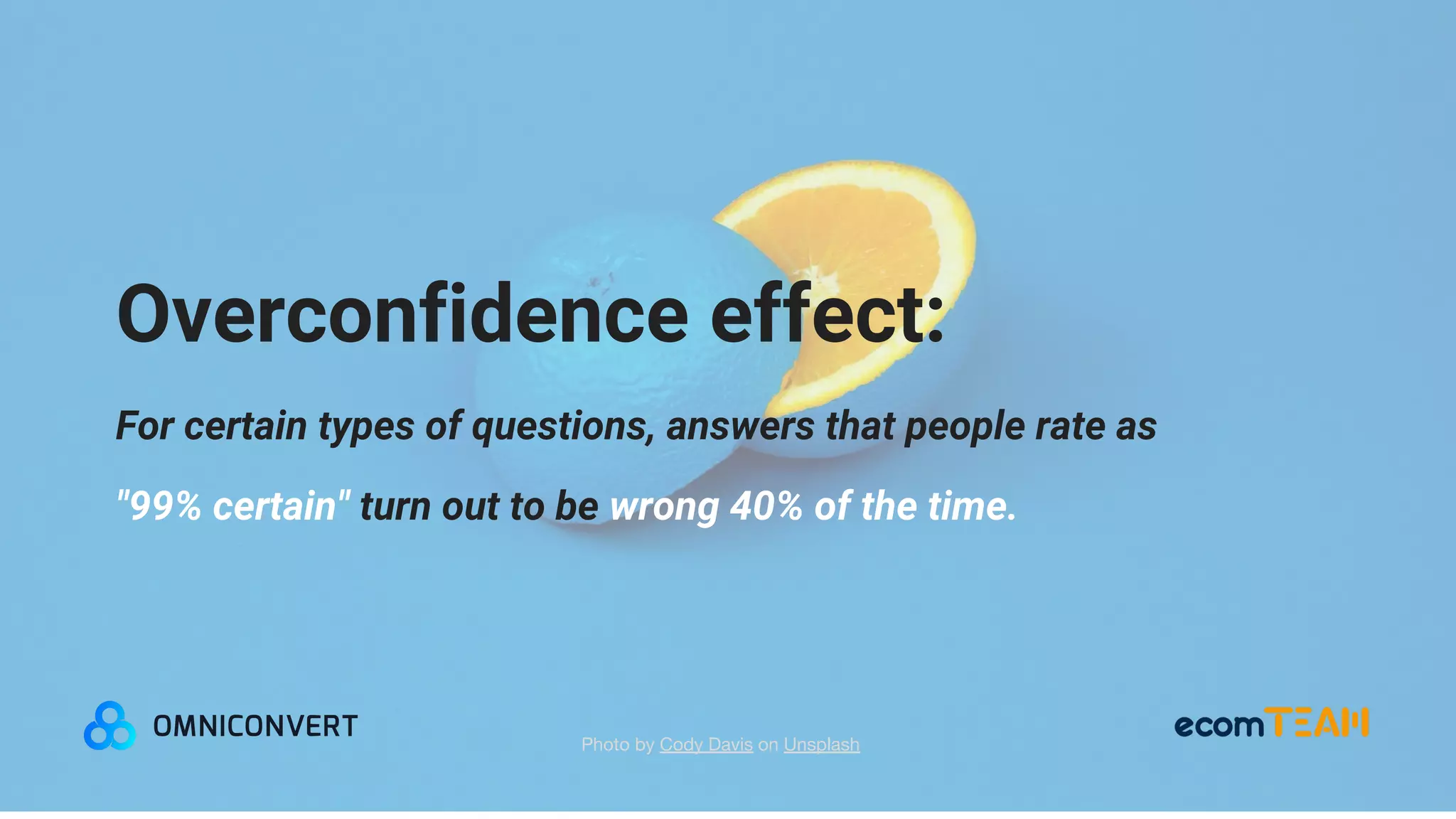
Overconfidence effect:
For certain types of questions, answers that people rate as
"99% certain" turn out to be wrong 40% of the time.
Photo by Cody Davis on Unsplash
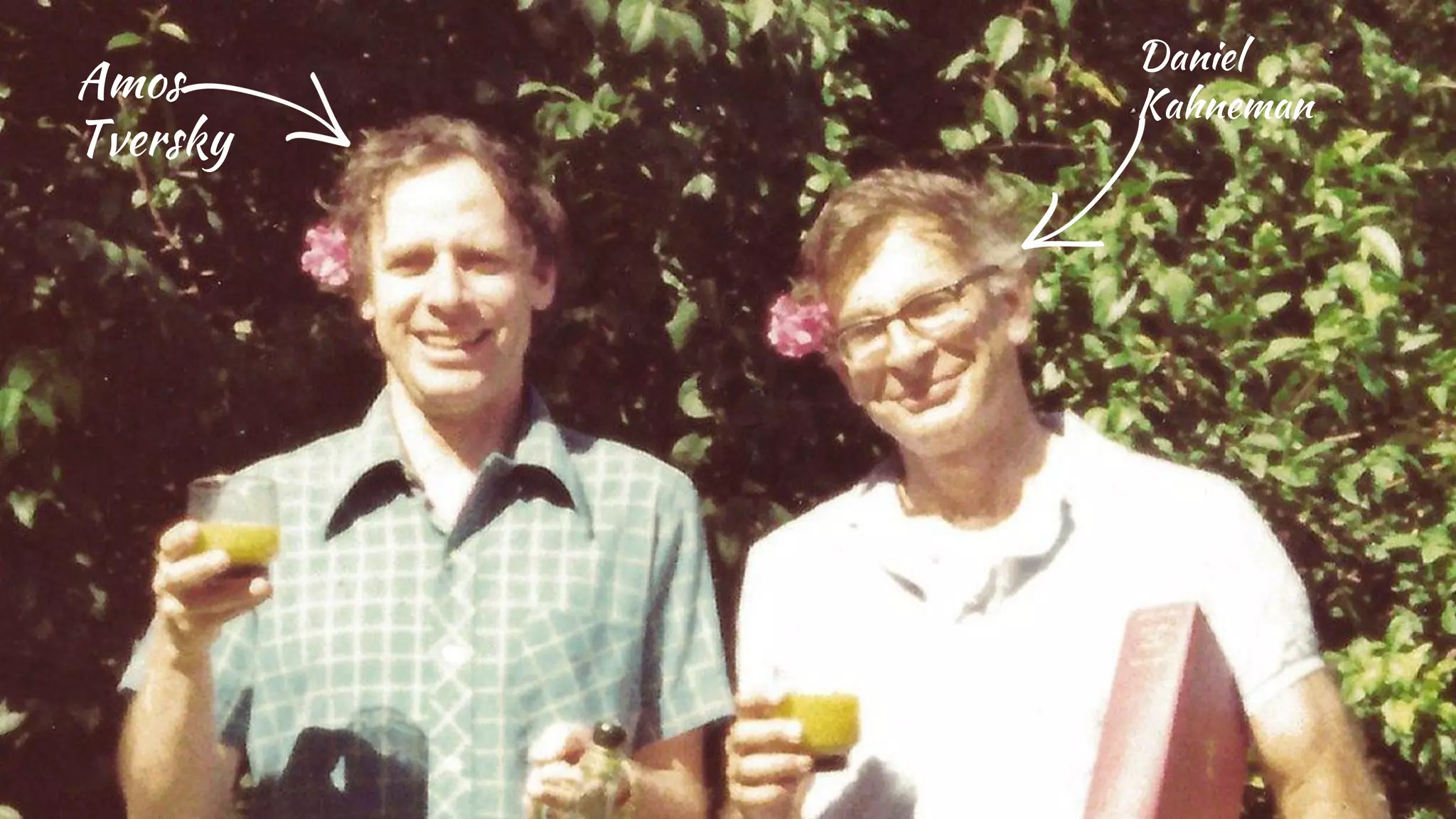
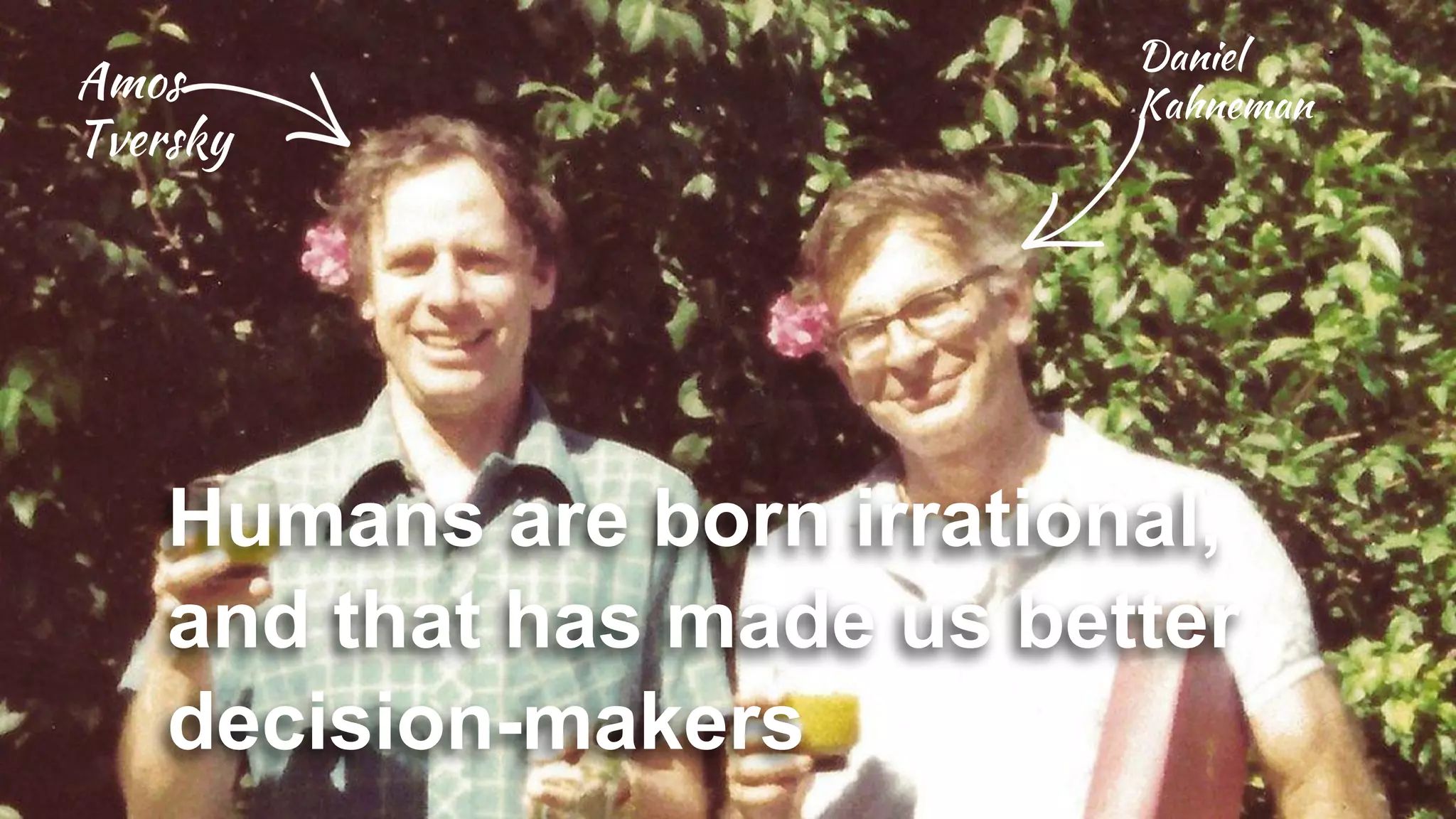
Amos
Tversky
Daniel
Kahneman
Amos
Tversky
Daniel
Kahneman
Humans are born irrational,
and that has made us better
decision-makers
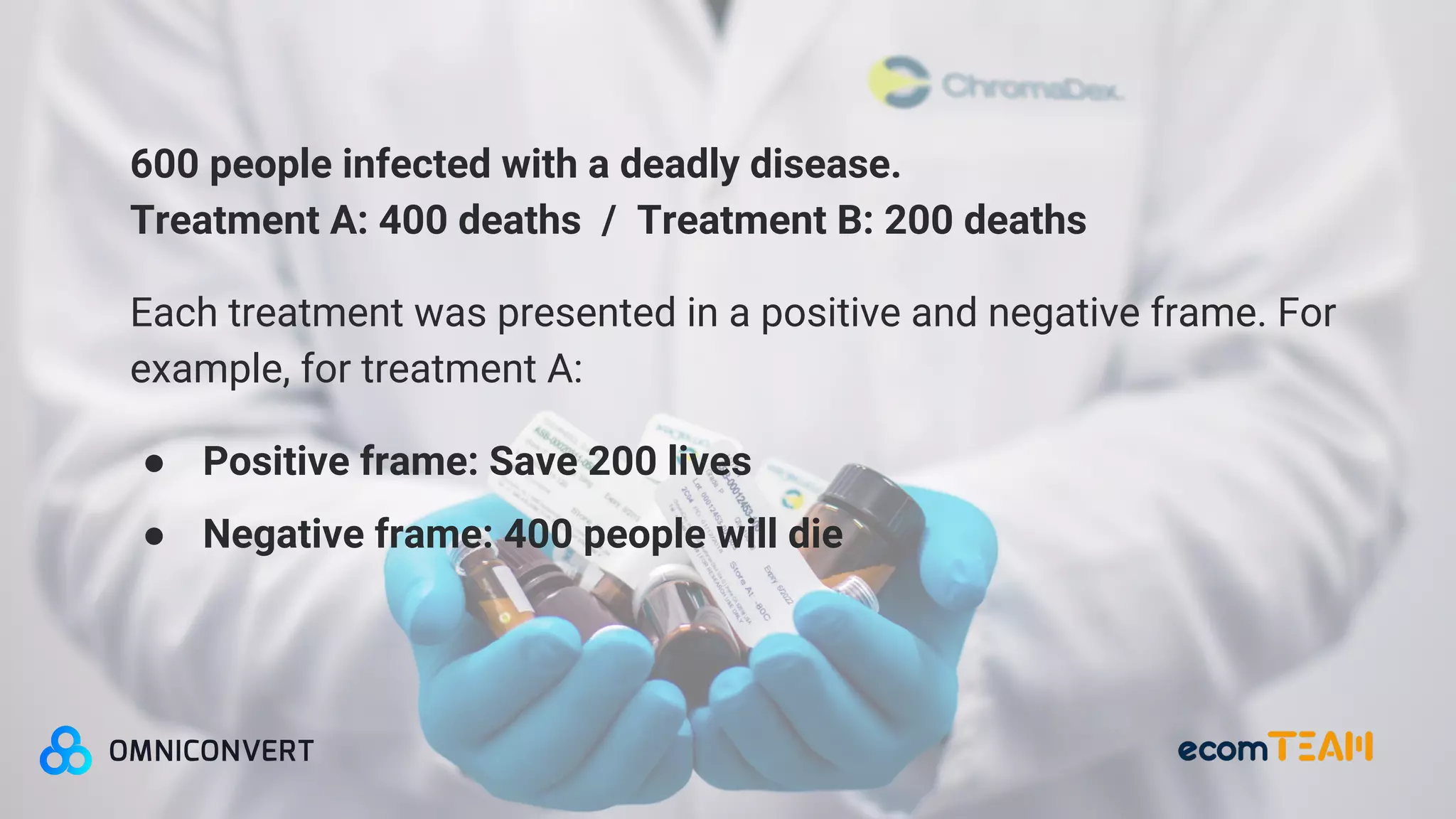
600 people infected with a deadly disease.
Treatment A: 400 deaths / Treatment B: 200 deaths
Each treatment was presented in a positive and negative frame. For
example, for treatment A:
● Positive frame: Save 200 lives
● Negative frame: 400 people will die
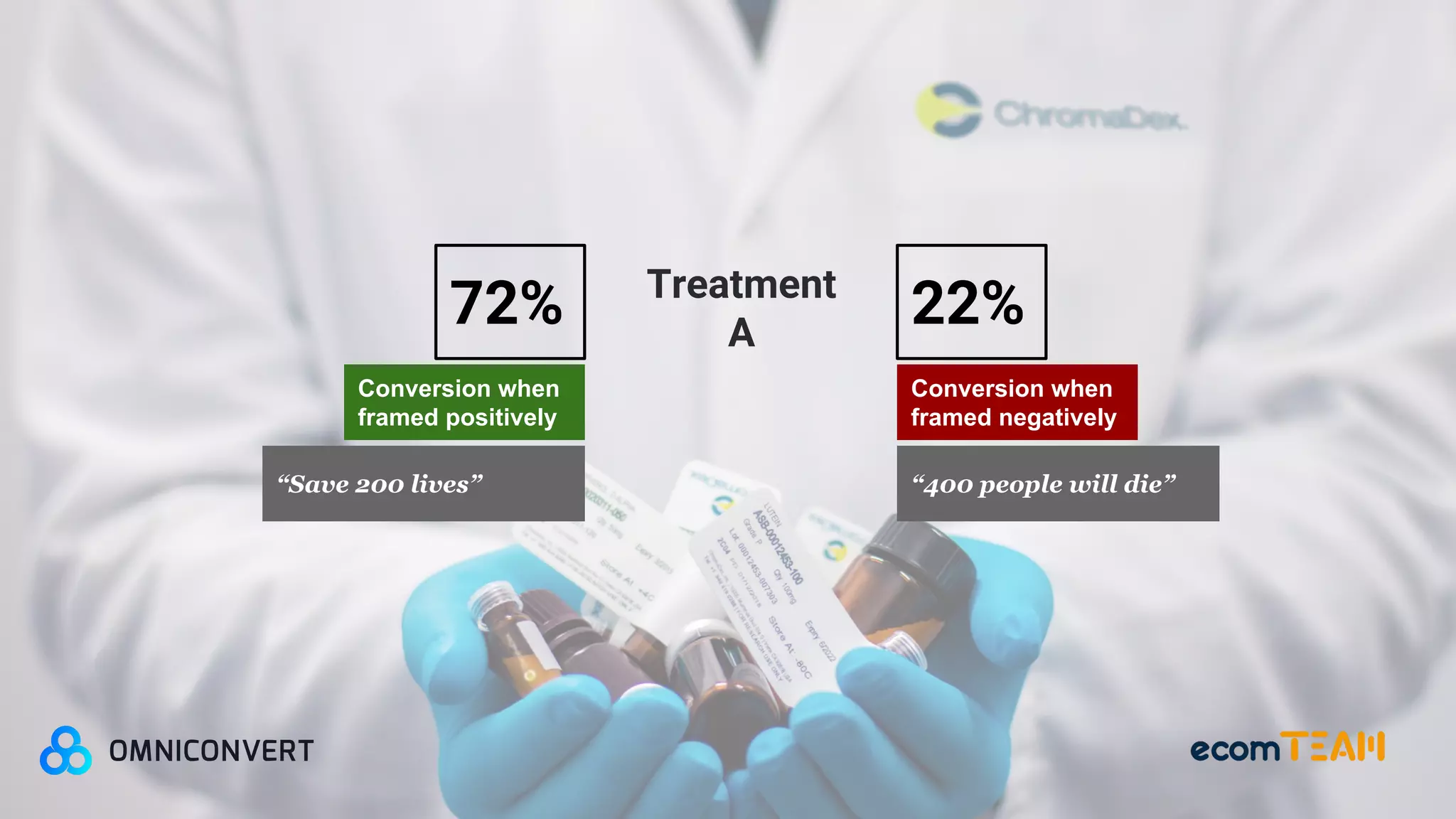
72%
Conversion when
framed positively
22%
Conversion when
framed negatively
“Save 200 lives”
Treatment
A
“400 people will die”
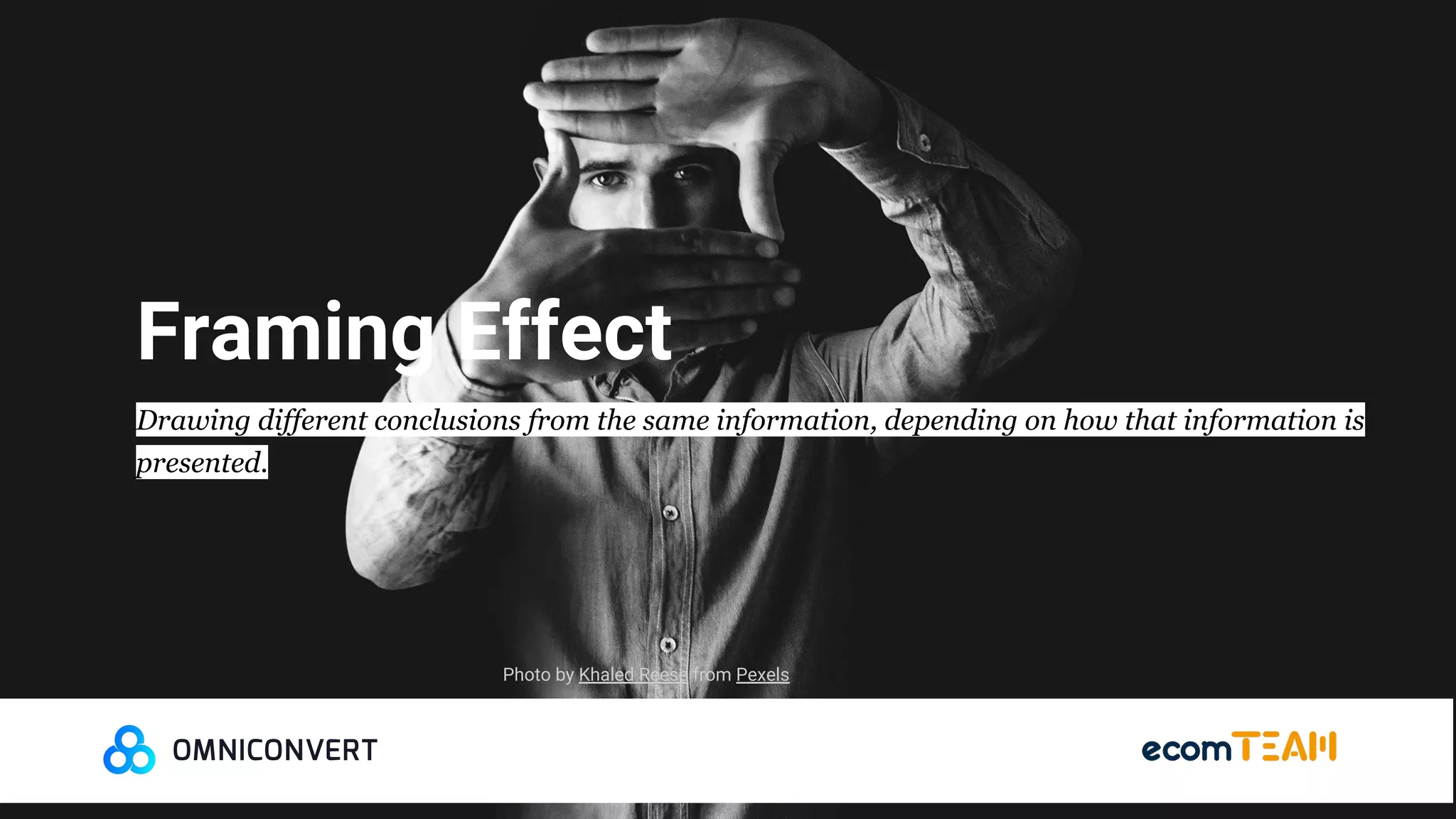
Framing Effect
Drawing different conclusions from the same information, depending on how that information is
presented.
Photo by Khaled Reese from Pexels
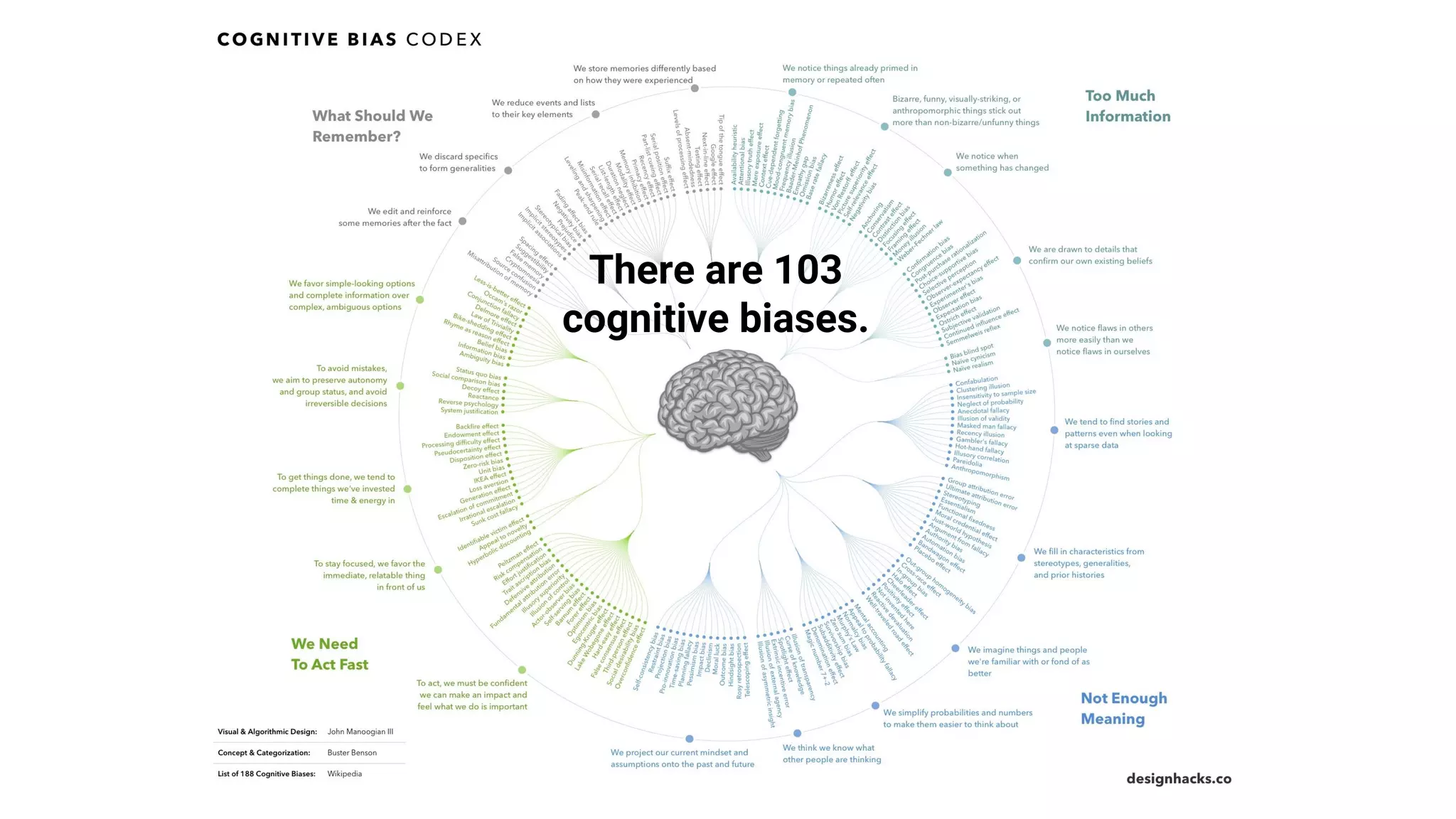
There are 103
cognitive biases.
In the last 6 years, we have gained a lot of
experience.
We have analyzed
>41k human-driven A/B testing
experiments made by thousands of
eCommerce websites
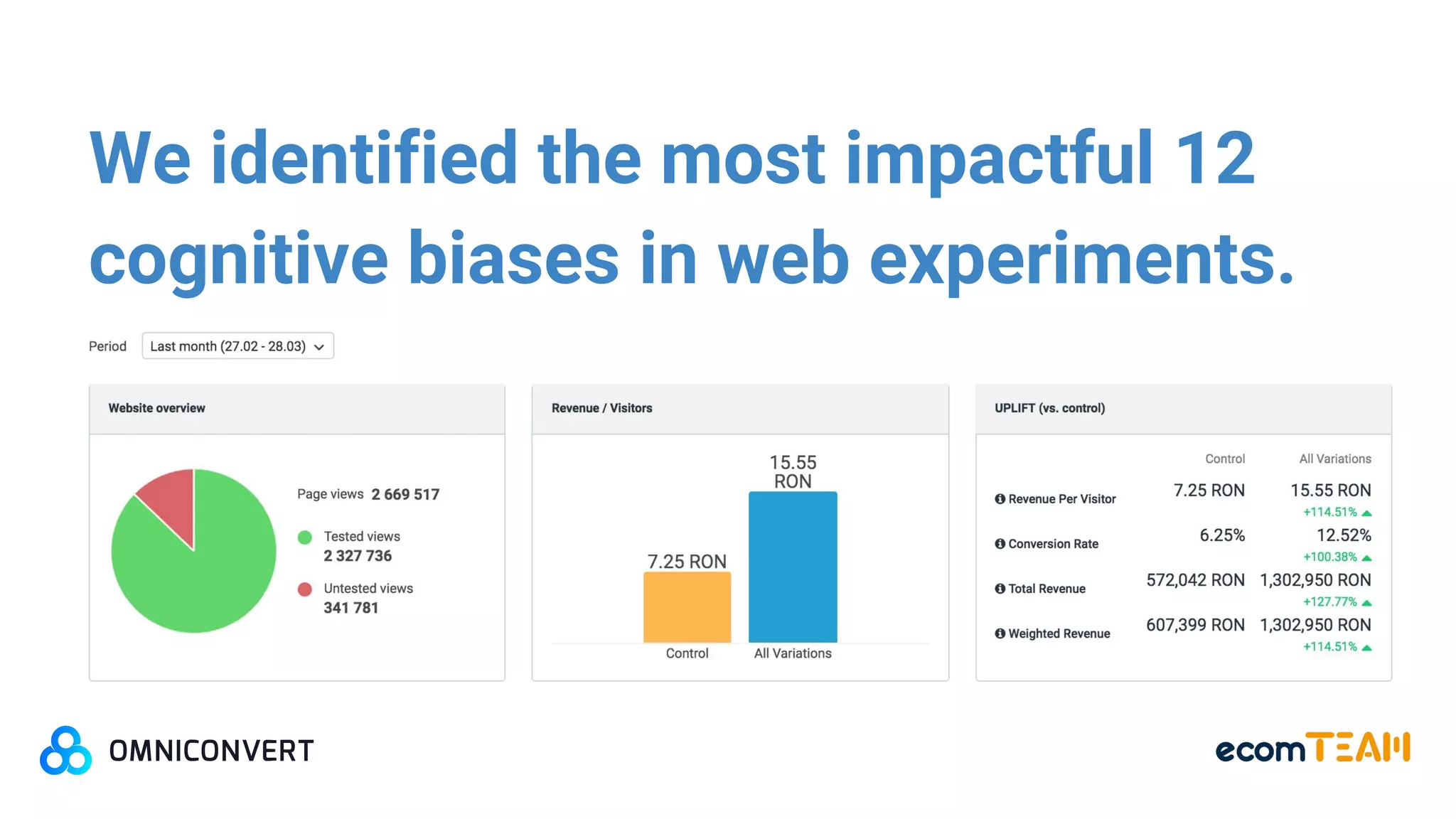
We identified the most impactful 12
cognitive biases in web experiments.
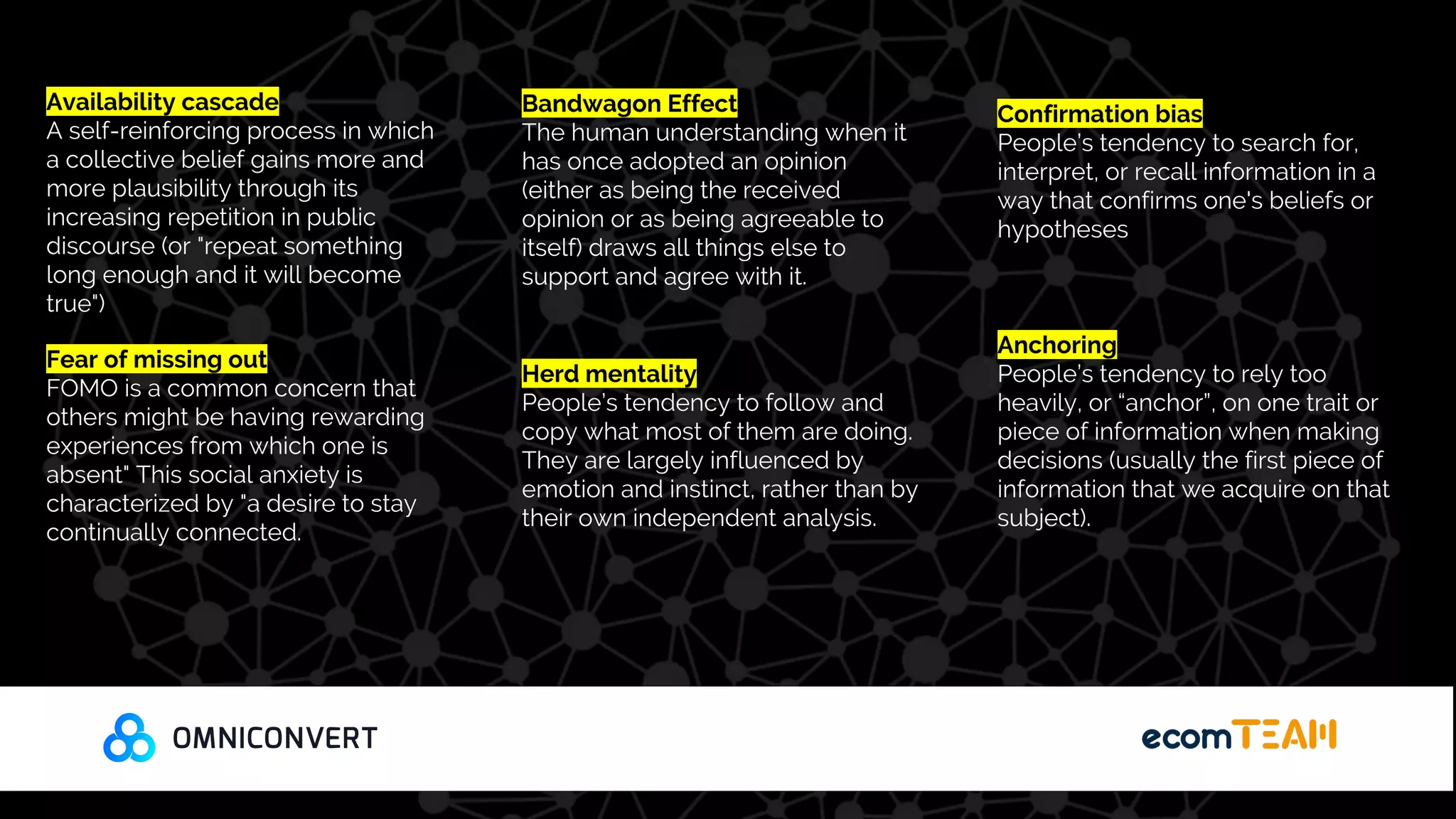
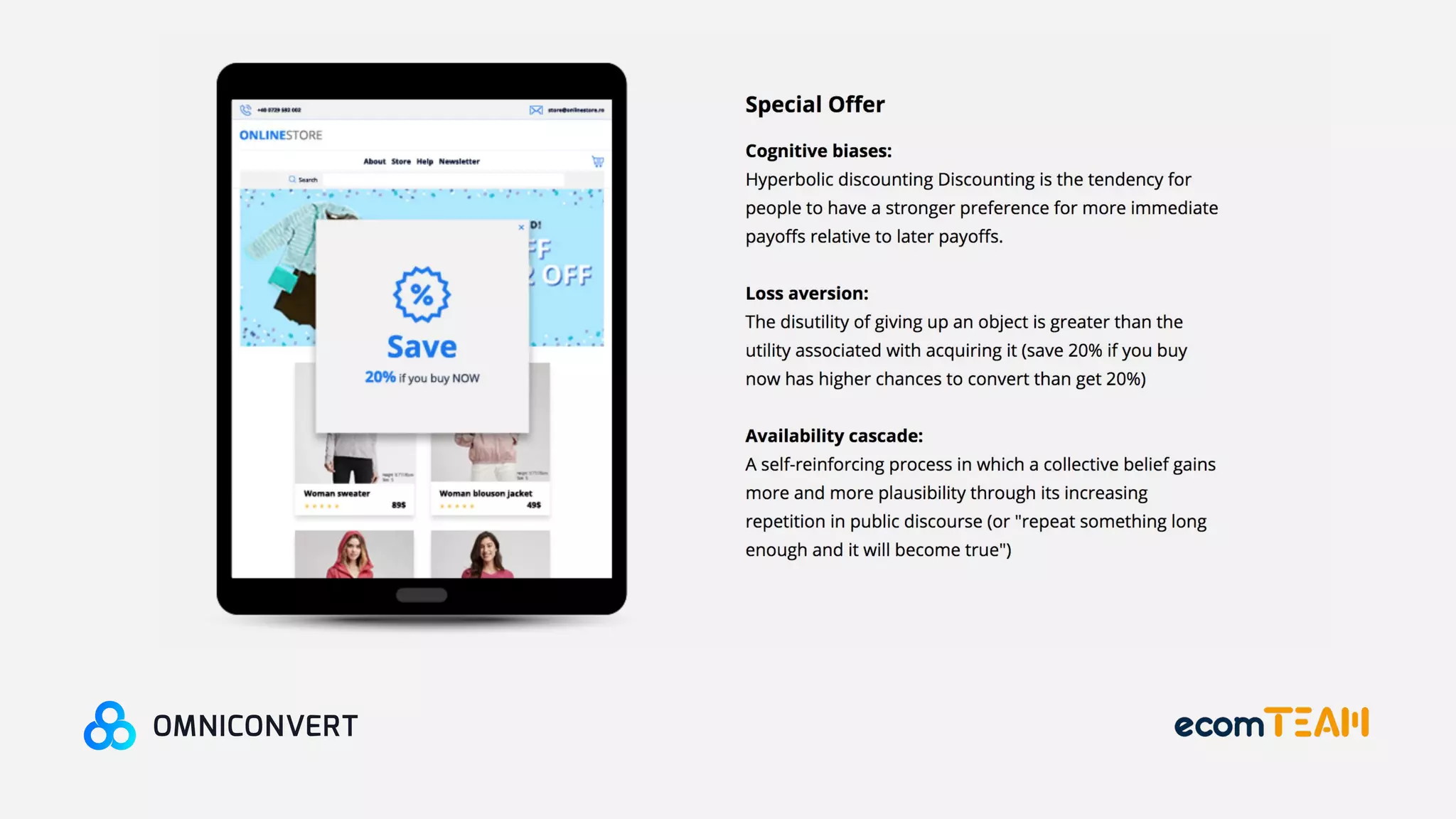
Availability cascade
A self-reinforcing process in which
a collective belief gains more and
more plausibility through its
increasing repetition in public
discourse (or "repeat something
long enough and it will become
true")
Fear of missing out
FOMO is a common concern that
others might be having rewarding
experiences from which one is
absent" This social anxiety is
characterized by "a desire to stay
continually connected.
Bandwagon Effect
The human understanding when it
has once adopted an opinion
(either as being the received
opinion or as being agreeable to
itself) draws all things else to
support and agree with it.
Herd mentality
People’s tendency to follow and
copy what most of them are doing.
They are largely influenced by
emotion and instinct, rather than by
their own independent analysis.
Confirmation bias
People’s tendency to search for,
interpret, or recall information in a
way that confirms one's beliefs or
hypotheses
Anchoring
People’s tendency to rely too
heavily, or “anchor”, on one trait or
piece of information when making
decisions (usually the first piece of
information that we acquire on that
subject).
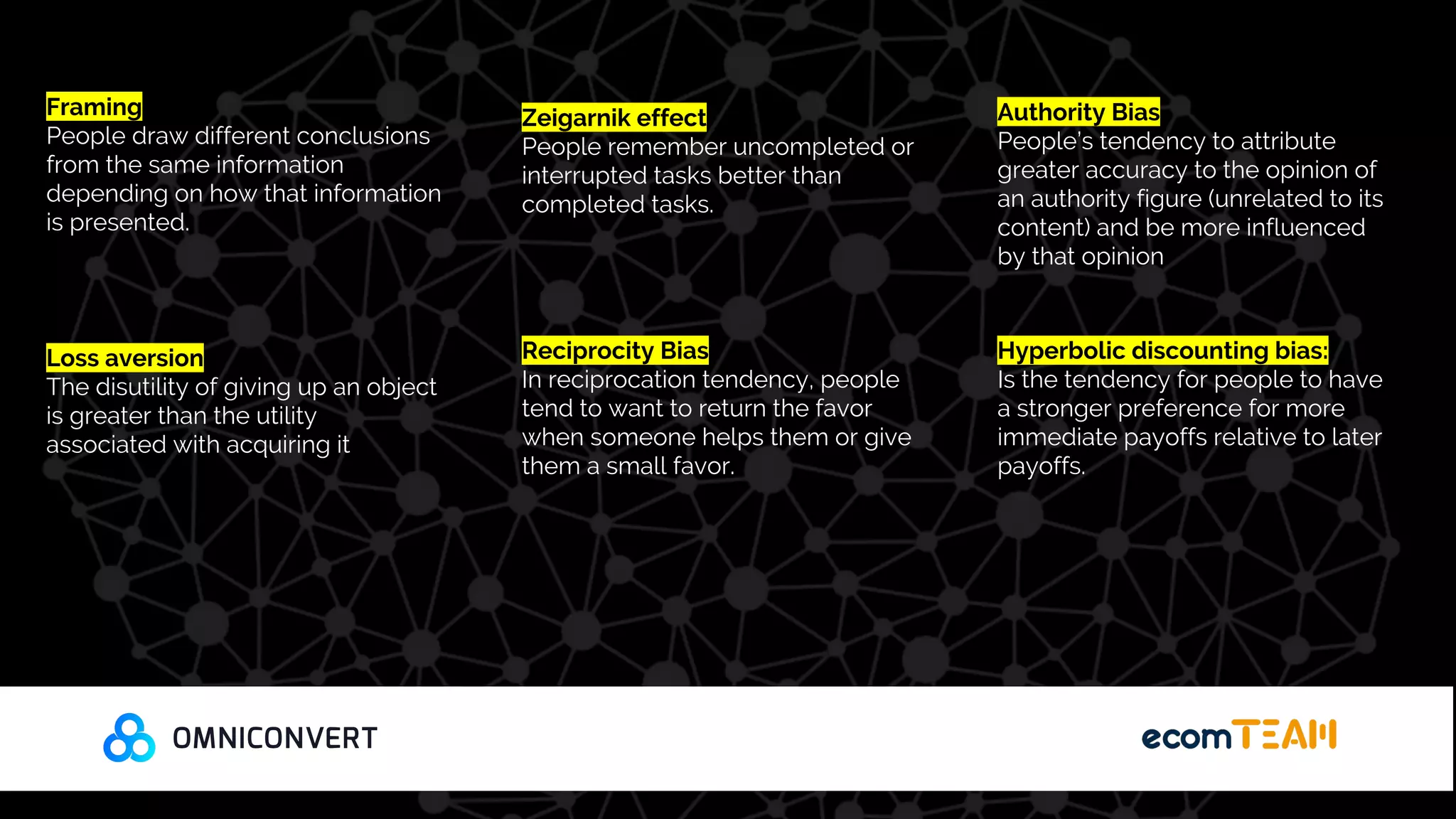
Framing
People draw different conclusions
from the same information
depending on how that information
is presented.
Loss aversion
The disutility of giving up an object
is greater than the utility
associated with acquiring it
Zeigarnik effect
People remember uncompleted or
interrupted tasks better than
completed tasks.
Reciprocity Bias
In reciprocation tendency, people
tend to want to return the favor
when someone helps them or give
them a small favor.
Authority Bias
People’s tendency to attribute
greater accuracy to the opinion of
an authority figure (unrelated to its
content) and be more influenced
by that opinion
Hyperbolic discounting bias:
Is the tendency for people to have
a stronger preference for more
immediate payoffs relative to later
payoffs.
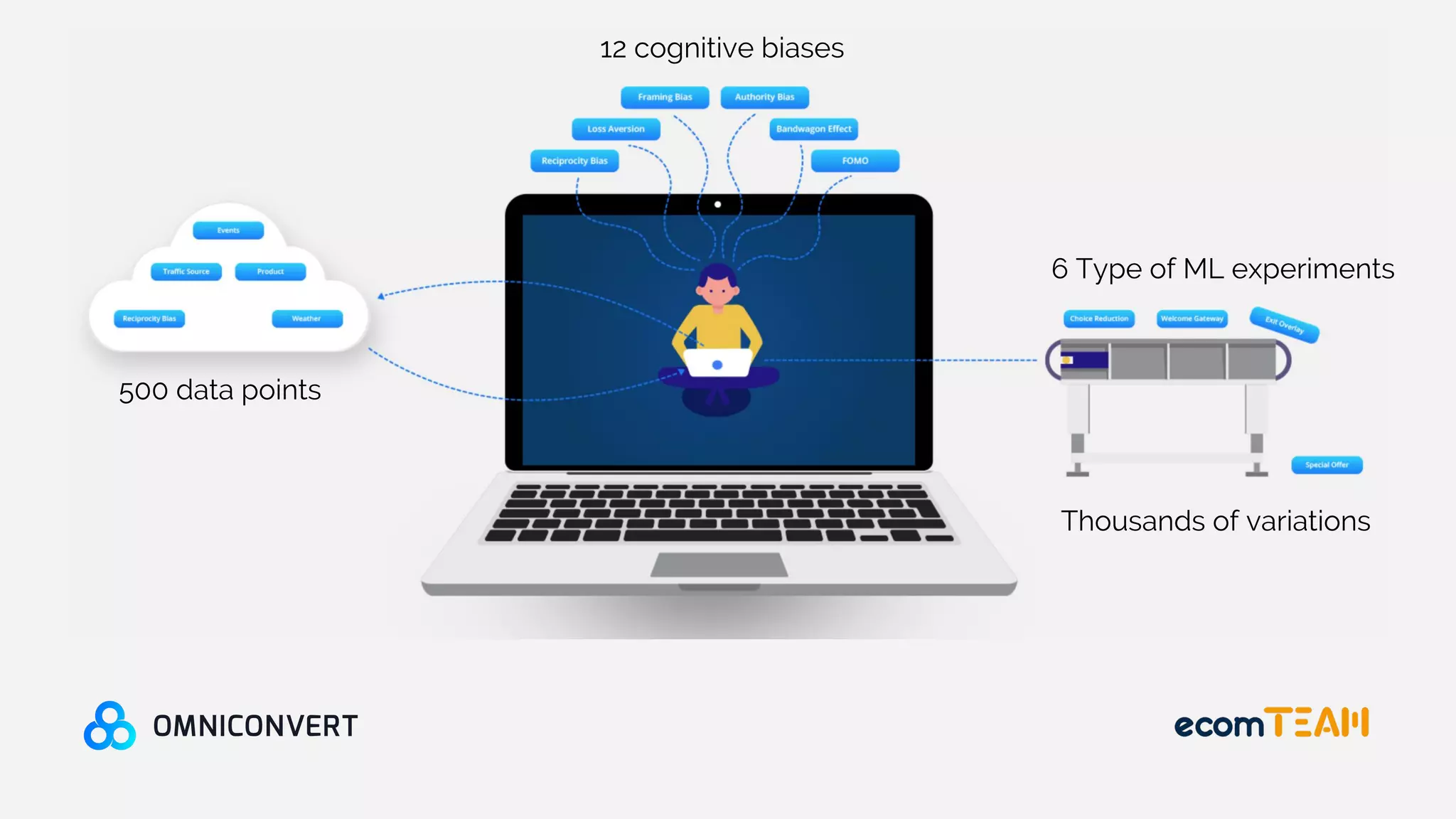
500 data points
12 cognitive biases
6 Type of ML experiments
Thousands of variations
automated.omniconvert.com
Valentin Radu
valentin.radu@omniconvert.com
Thank you!

Cognitive biases & machine learning in eCommerce Optimization

  • 1.
    Cognitive Biases & IneCommerce optimization
  • 2.
    How to usethis in eCommerce? > Start with a higher price - that’s made at any new collection / product launch - with the purpose of selling it in the discount period > First mover’s advantage >
  • 3.
    Overconfidence effect: For certaintypes of questions, answers that people rate as "99% certain" turn out to be wrong 40% of the time. Photo by Cody Davis on Unsplash
  • 4.
  • 5.
    Amos Tversky Daniel Kahneman Humans are bornirrational, and that has made us better decision-makers
  • 6.
    600 people infectedwith a deadly disease. Treatment A: 400 deaths / Treatment B: 200 deaths Each treatment was presented in a positive and negative frame. For example, for treatment A: ● Positive frame: Save 200 lives ● Negative frame: 400 people will die
  • 7.
    72% Conversion when framed positively 22% Conversionwhen framed negatively “Save 200 lives” Treatment A “400 people will die”
  • 8.
    Framing Effect Drawing differentconclusions from the same information, depending on how that information is presented. Photo by Khaled Reese from Pexels
  • 9.
  • 10.
    In the last6 years, we have gained a lot of experience.
  • 11.
    We have analyzed >41khuman-driven A/B testing experiments made by thousands of eCommerce websites
  • 12.
    We identified themost impactful 12 cognitive biases in web experiments.
  • 13.
    Availability cascade A self-reinforcingprocess in which a collective belief gains more and more plausibility through its increasing repetition in public discourse (or "repeat something long enough and it will become true") Fear of missing out FOMO is a common concern that others might be having rewarding experiences from which one is absent" This social anxiety is characterized by "a desire to stay continually connected. Bandwagon Effect The human understanding when it has once adopted an opinion (either as being the received opinion or as being agreeable to itself) draws all things else to support and agree with it. Herd mentality People’s tendency to follow and copy what most of them are doing. They are largely influenced by emotion and instinct, rather than by their own independent analysis. Confirmation bias People’s tendency to search for, interpret, or recall information in a way that confirms one's beliefs or hypotheses Anchoring People’s tendency to rely too heavily, or “anchor”, on one trait or piece of information when making decisions (usually the first piece of information that we acquire on that subject).
  • 14.
    Framing People draw differentconclusions from the same information depending on how that information is presented. Loss aversion The disutility of giving up an object is greater than the utility associated with acquiring it Zeigarnik effect People remember uncompleted or interrupted tasks better than completed tasks. Reciprocity Bias In reciprocation tendency, people tend to want to return the favor when someone helps them or give them a small favor. Authority Bias People’s tendency to attribute greater accuracy to the opinion of an authority figure (unrelated to its content) and be more influenced by that opinion Hyperbolic discounting bias: Is the tendency for people to have a stronger preference for more immediate payoffs relative to later payoffs.
  • 15.
    500 data points 12cognitive biases 6 Type of ML experiments Thousands of variations
  • 18.
  • 19.