HACCP
PRESENTATION
Mr. SUMAN MAITY
(B.Sc. Industrial Fish and Fisheries & M.Sc. in Fisheries Science)
HACCP
Definition -
Hazard Analysis Critical Control
Point (HACCP) system which provides the
framework for monitoring the total food system,
from harvesting to consumption, to reduce to
reduce the risk of foodborne illness. The system
is designed to identify and control potential
problem before they occur.
HACCP SYSTEM
Significant of HACCP
Hazard Analysis
Critical Control Point
Food Safety Management System
It Identifies, Evaluate and Controls
Hazards which are Significant for
Food Safety
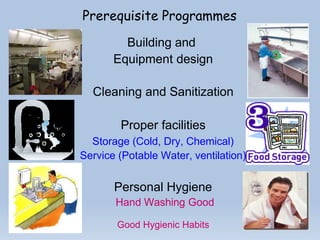
Prerequisite Programmes
Building and
Equipment design
Cleaning and Sanitization
Proper facilities
Storage (Cold, Dry, Chemical)
Service (Potable Water, ventilation)
Personal Hygiene
Hand Washing Good
Good Hygienic Habits
Prerequisite programmes
Maintenance
Waste management
Pest control
Approved
Suppliers Think
Hygiene
Staff Training
Operational control
(policy, procedures, work instructions)
Seven Principles of
HACCP
1. Conduct Hazards Analysis
2. Determine the Critical Control Points
3. Establish Critical Limits
4. Establish Monitoring System
5. Establish Corrective Action
6. Establish Verification Procedures
7. Establish Documentation
HACCP PRINCIPLES
1. Hazards Analysis
what could go wrong
Identify the hazards that affects the process
Identify the steps that hazards likely to occur
Decide which hazards are significant
Determine the measures necessary to control the hazards
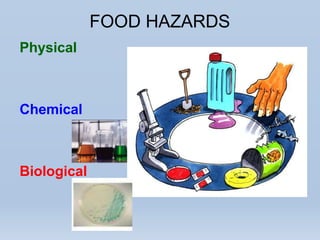
FOOD HAZARDS
Physical
Chemical
Biological
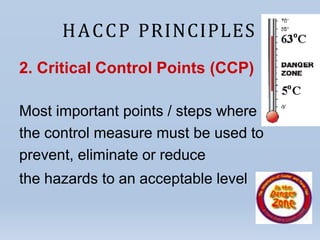
HACCP PRINCIPLES
2. Critical Control Points (CCP)
Most important points / steps where
the control measure must be used to
prevent, eliminate or reduce
the hazards to an acceptable level
HACCP PRINCIPLES
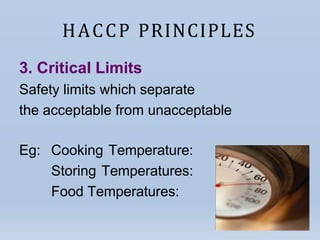
3. Critical Limits
Safety limits which separate
the acceptable from unacceptable
Eg: Cooking Temperature:
Storing Temperatures:
Food Temperatures:
HACCP PRINCIPLES
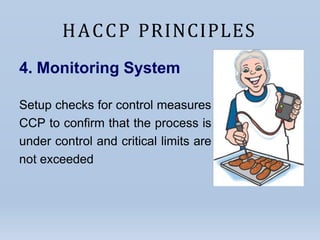
4. Monitoring System
Setup checks for control measures
CCP to confirm that the process is
under control and critical limits are
not exceeded
at
HACCP PRINCIPLES
5. Corrective Action
Decide what to do when
Critical limit is breached.
HACCP PRINCIPLES
6. Verification
Prove that HACCP plan is working
HACCP PRINCIPLES
7. Documentation
Keep records
Temperature Charts
Cleaning Schedules
Pest Control Records
Equipment Maintenance Records
Training Records
Delivery Checks
Non conformance Reports
HACCP PROCESS FLOW MAP
• Purchase
• Delivery
• Storage
• Preparation
• Cooking
• Food holding
• Service
HACCP PROCESS FLOW MAP
Purchase
Hazards
Biologically, Physically and Chemically
contaminated products
Controls
Approved Suppliers
HACCP PROCESS FLOW MAP
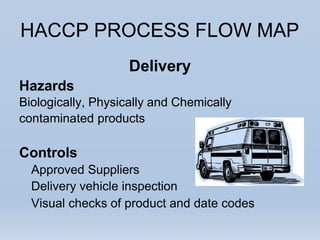
Delivery
Hazards
Biologically, Physically and Chemically
contaminated products
Controls
Approved Suppliers
Delivery vehicle inspection
Visual checks of product and date codes
HACCP PROCESS FLOW MAP
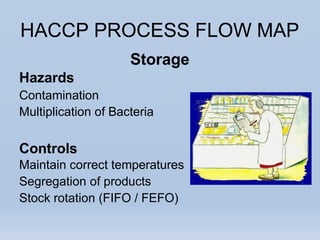
Storage
Hazards
Contamination
Multiplication of Bacteria
Controls
Maintain correct temperatures
Segregation of products
Stock rotation (FIFO / FEFO)
HACCP PROCESS FLOW MAP
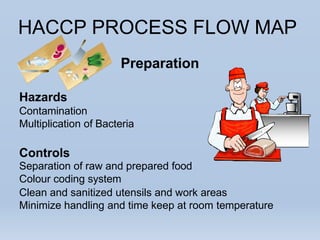
Preparation
Hazards
Contamination
Multiplication of Bacteria
Controls
Separation of raw and prepared food
Colour coding system
Clean and sanitized utensils and work areas
Minimize handling and time keep at room temperature
HACCP PROCESS FLOW MAP
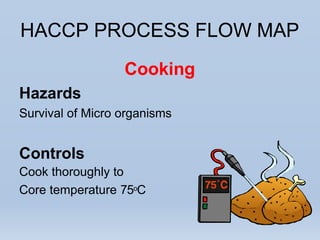
Cooking
Hazards
Survival of Micro organisms
Controls
Cook thoroughly to
Core temperature 75oC
HACCP PROCESS FLOW MAP
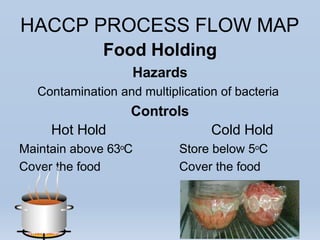
Food Holding
Hazards
Contamination and multiplication of bacteria
Controls
Hot Hold
Maintain above 63oC
Cover the food
Cold Hold
Store below 5oC
Cover the food
HACCP PROCESS FLOW MAP
Service
Hazards
Contamination
Multiplication of Bacteria
Controls
Maintain the correct temperatures
Clean and sanitized utensils
Minimize handling
Thank You

HACCP PPT

  • 1.
    HACCP PRESENTATION Mr. SUMAN MAITY (B.Sc.Industrial Fish and Fisheries & M.Sc. in Fisheries Science)
  • 2.
    HACCP Definition - Hazard AnalysisCritical Control Point (HACCP) system which provides the framework for monitoring the total food system, from harvesting to consumption, to reduce to reduce the risk of foodborne illness. The system is designed to identify and control potential problem before they occur.
  • 3.
    HACCP SYSTEM Significant ofHACCP Hazard Analysis Critical Control Point Food Safety Management System It Identifies, Evaluate and Controls Hazards which are Significant for Food Safety
  • 4.
    Prerequisite Programmes Building and Equipmentdesign Cleaning and Sanitization Proper facilities Storage (Cold, Dry, Chemical) Service (Potable Water, ventilation) Personal Hygiene Hand Washing Good Good Hygienic Habits
  • 5.
    Prerequisite programmes Maintenance Waste management Pestcontrol Approved Suppliers Think Hygiene Staff Training Operational control (policy, procedures, work instructions)
  • 6.
    Seven Principles of HACCP 1.Conduct Hazards Analysis 2. Determine the Critical Control Points 3. Establish Critical Limits 4. Establish Monitoring System 5. Establish Corrective Action 6. Establish Verification Procedures 7. Establish Documentation
  • 7.
    HACCP PRINCIPLES 1. HazardsAnalysis what could go wrong Identify the hazards that affects the process Identify the steps that hazards likely to occur Decide which hazards are significant Determine the measures necessary to control the hazards
  • 8.
  • 9.
    HACCP PRINCIPLES 2. CriticalControl Points (CCP) Most important points / steps where the control measure must be used to prevent, eliminate or reduce the hazards to an acceptable level
  • 10.
    HACCP PRINCIPLES 3. CriticalLimits Safety limits which separate the acceptable from unacceptable Eg: Cooking Temperature: Storing Temperatures: Food Temperatures:
  • 11.
    HACCP PRINCIPLES 4. MonitoringSystem Setup checks for control measures CCP to confirm that the process is under control and critical limits are not exceeded at
  • 12.
    HACCP PRINCIPLES 5. CorrectiveAction Decide what to do when Critical limit is breached.
  • 13.
    HACCP PRINCIPLES 6. Verification Provethat HACCP plan is working
  • 14.
    HACCP PRINCIPLES 7. Documentation Keeprecords Temperature Charts Cleaning Schedules Pest Control Records Equipment Maintenance Records Training Records Delivery Checks Non conformance Reports
  • 15.
    HACCP PROCESS FLOWMAP • Purchase • Delivery • Storage • Preparation • Cooking • Food holding • Service
  • 16.
    HACCP PROCESS FLOWMAP Purchase Hazards Biologically, Physically and Chemically contaminated products Controls Approved Suppliers
  • 17.
    HACCP PROCESS FLOWMAP Delivery Hazards Biologically, Physically and Chemically contaminated products Controls Approved Suppliers Delivery vehicle inspection Visual checks of product and date codes
  • 18.
    HACCP PROCESS FLOWMAP Storage Hazards Contamination Multiplication of Bacteria Controls Maintain correct temperatures Segregation of products Stock rotation (FIFO / FEFO)
  • 19.
    HACCP PROCESS FLOWMAP Preparation Hazards Contamination Multiplication of Bacteria Controls Separation of raw and prepared food Colour coding system Clean and sanitized utensils and work areas Minimize handling and time keep at room temperature
  • 20.
    HACCP PROCESS FLOWMAP Cooking Hazards Survival of Micro organisms Controls Cook thoroughly to Core temperature 75oC
  • 21.
    HACCP PROCESS FLOWMAP Food Holding Hazards Contamination and multiplication of bacteria Controls Hot Hold Maintain above 63oC Cover the food Cold Hold Store below 5oC Cover the food
  • 22.
    HACCP PROCESS FLOWMAP Service Hazards Contamination Multiplication of Bacteria Controls Maintain the correct temperatures Clean and sanitized utensils Minimize handling
  • 23.