PaBCaédKUrTwkkm<úCa Cambodian Water Partnership (CamboWP) Cambodia National Mekong Committee
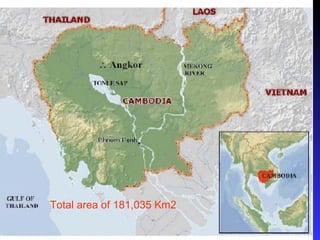
RbB½næbNþajClsaRsþenARbeTskm<úCa   Total area of 181,035 Km2
Over 20 years, Cambodia experienced untold suffering and destruction caused by internally and externally induced wars, genocide and internal conflict. As a result of civil strife, Cambodia was left with more than its fair share of vulnerable groups and development problems.   Rural water supply and sanitation has been an integral part of the Government’s overall strategy for rural development and poverty reduction.  The Royal Government of Cambodia focuses on providing all citizens with clean and safe water, protecting all citizens from water related diseases, providing adequate water supply to ensure food security economic activities and appropriate living standards.  Increasing the proportion of rural population with access to safe water to 50% in 2015 Introduction
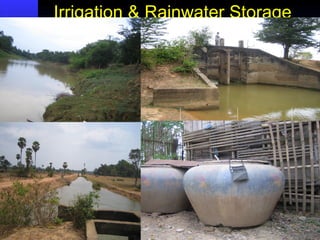
Irrigation & Rainwater Storage
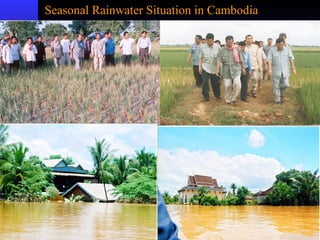
Seasonal Rainwater Situation in Cambodia
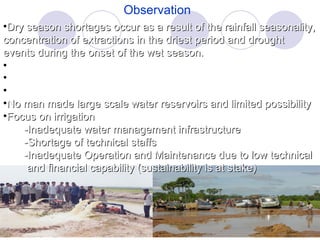
Observation Dry season shortages occur as a result of the rainfall seasonality, concentration of extractions in the driest period and drought events during the onset of the wet season.   Rainy season is flooded in some provinces. Traditional way in using and storing rainwater (rural people) No man made   large scale water reservoirs and limited possibility Focus on irrigation -Inadequate water management infrastructure -Shortage of technical staffs -Inadequate Operation and Maintenance due to low technical and financial capability (sustainability is at stake)
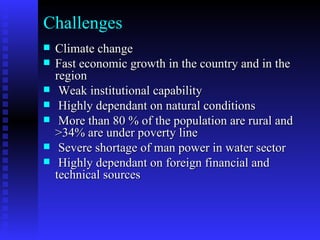
Challenges Climate change Fast economic growth in the country and in the region Weak institutional capability Highly dependant on natural conditions More than 80 % of the population are rural and >34% are under poverty line Severe shortage of man power in water sector Highly dependant on foreign financial and technical sources
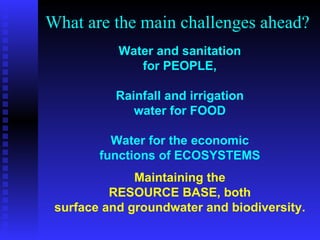
What are the main challenges ahead?   Maintaining the RESOURCE BASE, both surface and groundwater and biodiversity. Water and sanitation for PEOPLE, Rainfall and irrigation water for FOOD Water for the economic functions of ECOSYSTEMS
sU m G r Ku N Thanks for your attention

GWP - Cambodia

  • 1.
    PaBCaédKUrTwkkm<úCa Cambodian WaterPartnership (CamboWP) Cambodia National Mekong Committee
  • 2.
    RbB½næbNþajClsaRsþenARbeTskm<úCa Total area of 181,035 Km2
  • 3.
    Over 20 years,Cambodia experienced untold suffering and destruction caused by internally and externally induced wars, genocide and internal conflict. As a result of civil strife, Cambodia was left with more than its fair share of vulnerable groups and development problems. Rural water supply and sanitation has been an integral part of the Government’s overall strategy for rural development and poverty reduction. The Royal Government of Cambodia focuses on providing all citizens with clean and safe water, protecting all citizens from water related diseases, providing adequate water supply to ensure food security economic activities and appropriate living standards. Increasing the proportion of rural population with access to safe water to 50% in 2015 Introduction
  • 4.
  • 5.
  • 6.
    Observation Dry seasonshortages occur as a result of the rainfall seasonality, concentration of extractions in the driest period and drought events during the onset of the wet season. Rainy season is flooded in some provinces. Traditional way in using and storing rainwater (rural people) No man made large scale water reservoirs and limited possibility Focus on irrigation -Inadequate water management infrastructure -Shortage of technical staffs -Inadequate Operation and Maintenance due to low technical and financial capability (sustainability is at stake)
  • 7.
    Challenges Climate changeFast economic growth in the country and in the region Weak institutional capability Highly dependant on natural conditions More than 80 % of the population are rural and >34% are under poverty line Severe shortage of man power in water sector Highly dependant on foreign financial and technical sources
  • 8.
    What are themain challenges ahead? Maintaining the RESOURCE BASE, both surface and groundwater and biodiversity. Water and sanitation for PEOPLE, Rainfall and irrigation water for FOOD Water for the economic functions of ECOSYSTEMS
  • 9.
    sU m Gr Ku N Thanks for your attention