• Founded by Maharaja Sri Gupta. 
• Called the golden age. 
• Chandra Gupta1 and Samudra Gupta11 were most noble rulers. 
• Advancements in science, political administration and academic fields. 
• Revival of Sanskrit and Hinduism. 
• Compilation of Vedas and Puranas. 
• Historians believed that the Gupta dynasty was a Vaishya dynasty. 
• There are contradictory theories about the original homeland of the 
Guptas. 
• Some say they originated from Varendri(Bangladesh) and others from Murshidabad.
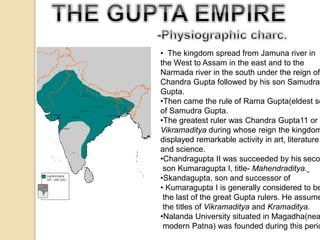
• The kingdom spread from Jamuna river in 
the West to Assam in the east and to the 
Narmada river in the south under the reign of 
Chandra Gupta followed by his son Samudra 
Gupta. 
•Then came the rule of Rama Gupta(eldest son 
of Samudra Gupta. 
•The greatest ruler was Chandra Gupta11 or 
Vikramaditya during whose reign the kingdom 
displayed remarkable activity in art, literature 
and science. 
•Chandragupta II was succeeded by his second 
son Kumaragupta I, title- Mahendraditya. 
•Skandagupta, son and successor of 
• Kumaragupta I is generally considered to be 
the last of the great Gupta rulers. He assumed 
the titles of Vikramaditya and Kramaditya. 
•Nalanda University situated in Magadha(near 
modern Patna) was founded during this period.
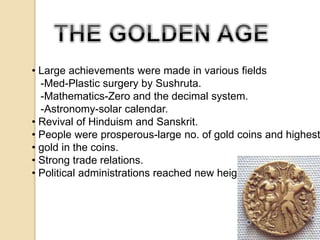
• Large achievements were made in various fields 
-Med-Plastic surgery by Sushruta. 
-Mathematics-Zero and the decimal system. 
-Astronomy-solar calendar. 
• Revival of Hinduism and Sanskrit. 
• People were prosperous-large no. of gold coins and highest • gold in the coins. 
• Strong trade relations. 
• Political administrations reached new heights.
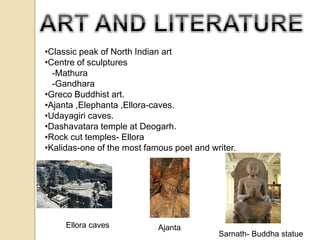
•Classic peak of North Indian art 
•Centre of sculptures 
-Mathura 
-Gandhara 
•Greco Buddhist art. 
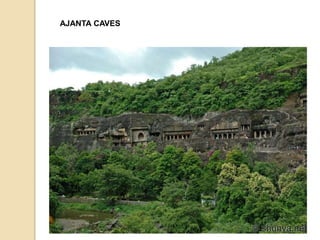
•Ajanta ,Elephanta ,Ellora-caves. 
•Udayagiri caves. 
•Dashavatara temple at Deogarh. 
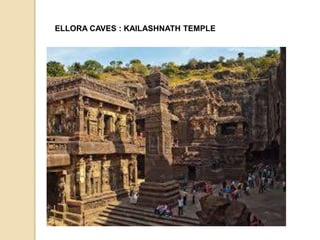
•Rock cut temples- Ellora 
•Kalidas-one of the most famous poet and writer. 
Sarnath- Buddha statue 
Ellora caves Ajanta
GUPTA ADMINISTRATION: 
- Kingship: 
•Assumption of High sounding titles. 
•Divine nature of Monarchy. 
•Ruler was administrator of Law. 
•Rulers authority was circumscribed by various checks. 
-Mantriparishad: 
Prime Minister. 
Council. 
Kumaramatyas.
Fa-Hsien(a Chinese traveller): Life in Gupta period 
• He reported the people to be happy, relatively free of government 
oppression, and inclined towards courtesy and charity. 
•Other references in the journal, however, indicate that the caste 
system was rapidly assuming its basic features, including 
"untouchability," the social isolation of a lowest class that is 
doomed to menial labor. 
•Peacefulness of society, the rarity of serious crime, and the mildness 
of the administration. 
•Social custom- All respectable persons were vegetarians, meat eating being 
confined to low castes and untouchables. 
•He found Buddhism still flourishing, but theistic Hinduism was very widespread.
•In the Gupta period 89% of the population was in the rural 
areas i.e., in the villages which were not permanent because 
of the migration of people due to various factors like war 
and other calamities. 
•Various invasions also led to the destruction of cities. 
•And hence we do not find any traces of urban settlements. 
•Therefore we can only find major architectural works like the 
temples. 
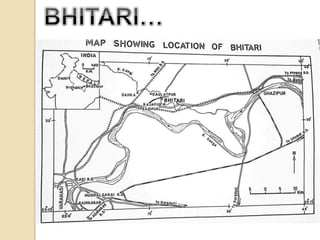
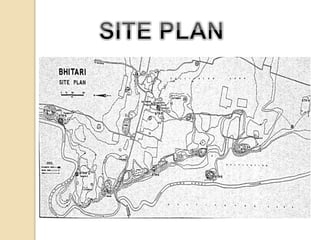
•The only ruins of the settlement found were in BHITARI(an 
Ancient village in the GHAZIPUR District, U.P.).
•The name came from the Sanskrit word “BHITTI” (meaning 
‘wall’). 
•It is on the east bank of river Gargi. 
•Temple based settlement supported by the king. 
•Several classical temples were excavated mainly three. 
•Several inscriptions-reign of Skanda Gupta and Kumara Gupta. 
•Single cultured site with short duration occupation. 
•It presents the appearance of a very large ruined earthen fort. 
•In general form-nearly a rectangle.(East Face-500yards; 
•South-525; North-700.) 
•Each of the sides had large mounds upon which were either 
temples or forts. 
•Ruins consisted of broken bricks.
During Gupta period, rock cut architecture reached its zenith and the era 
marked the beginning of Free Standing Temple Architecture. 
The temples are built on a high plinth. 
Plinth area divided in small square or rectangular cells by building walls. 
The cells were then filled with compact clay. 
Above it , was laid the floor of the temple. 
The building material was either bricks or dressed stone blocks. 
Brick temples were terraced temples which are said to be originated from Stupa 
Architecture.(E.g.- temple at Bhitarigaon) 
The stone temples had its roots in the Rock cut temples. (E.g.- temple at Bhitari
In early Gupta temples, Shikharas were not important but became 
one of the key features in later Gupta temples. 
Main temple or the Garvagriha had the image of the god. 
Original temple was connected to the hall buy a vestibule. 
There were spacious courtyards around the main temple. 
Writing of manuscripts around temple buildings was a common 
practice. 
Major temples built were: 
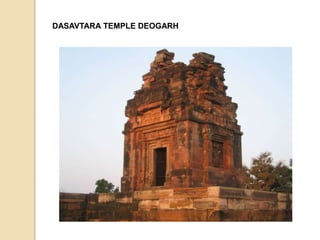
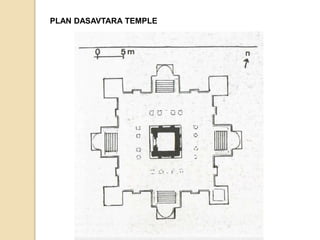
Dasavtara temple , Deogarh 
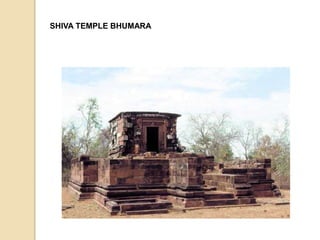
Shiva temple , Bhumara 
Temples at Bhitarigaon 
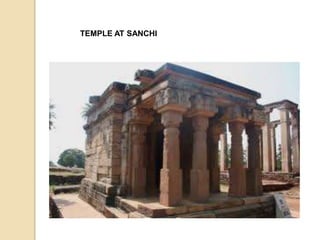
Temple at Sanchi
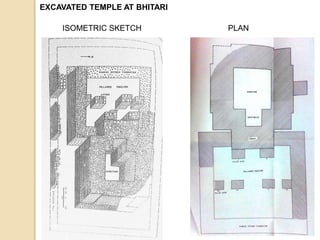
EXCAVATED TEMPLE AT BHITARI 
ISOMETRIC SKETCH PLAN
DASAVTARA TEMPLE DEOGARH
PLAN DASAVTARA TEMPLE
SHIVA TEMPLE BHUMARA
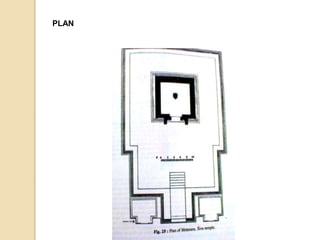
PLAN
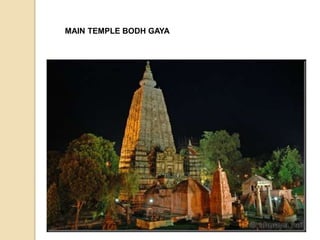
MAIN TEMPLE BODH GAYA
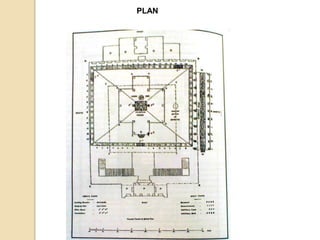
PLAN
TEMPLE AT SANCHI
AJANTA CAVES
ELLORA CAVES : KAILASHNATH TEMPLE
Gupta period human settlements

Gupta period human settlements

  • 2.
    • Founded byMaharaja Sri Gupta. • Called the golden age. • Chandra Gupta1 and Samudra Gupta11 were most noble rulers. • Advancements in science, political administration and academic fields. • Revival of Sanskrit and Hinduism. • Compilation of Vedas and Puranas. • Historians believed that the Gupta dynasty was a Vaishya dynasty. • There are contradictory theories about the original homeland of the Guptas. • Some say they originated from Varendri(Bangladesh) and others from Murshidabad.
  • 3.
    • The kingdomspread from Jamuna river in the West to Assam in the east and to the Narmada river in the south under the reign of Chandra Gupta followed by his son Samudra Gupta. •Then came the rule of Rama Gupta(eldest son of Samudra Gupta. •The greatest ruler was Chandra Gupta11 or Vikramaditya during whose reign the kingdom displayed remarkable activity in art, literature and science. •Chandragupta II was succeeded by his second son Kumaragupta I, title- Mahendraditya. •Skandagupta, son and successor of • Kumaragupta I is generally considered to be the last of the great Gupta rulers. He assumed the titles of Vikramaditya and Kramaditya. •Nalanda University situated in Magadha(near modern Patna) was founded during this period.
  • 4.
    • Large achievementswere made in various fields -Med-Plastic surgery by Sushruta. -Mathematics-Zero and the decimal system. -Astronomy-solar calendar. • Revival of Hinduism and Sanskrit. • People were prosperous-large no. of gold coins and highest • gold in the coins. • Strong trade relations. • Political administrations reached new heights.
  • 5.
    •Classic peak ofNorth Indian art •Centre of sculptures -Mathura -Gandhara •Greco Buddhist art. •Ajanta ,Elephanta ,Ellora-caves. •Udayagiri caves. •Dashavatara temple at Deogarh. •Rock cut temples- Ellora •Kalidas-one of the most famous poet and writer. Sarnath- Buddha statue Ellora caves Ajanta
  • 6.
    GUPTA ADMINISTRATION: -Kingship: •Assumption of High sounding titles. •Divine nature of Monarchy. •Ruler was administrator of Law. •Rulers authority was circumscribed by various checks. -Mantriparishad: Prime Minister. Council. Kumaramatyas.
  • 7.
    Fa-Hsien(a Chinese traveller):Life in Gupta period • He reported the people to be happy, relatively free of government oppression, and inclined towards courtesy and charity. •Other references in the journal, however, indicate that the caste system was rapidly assuming its basic features, including "untouchability," the social isolation of a lowest class that is doomed to menial labor. •Peacefulness of society, the rarity of serious crime, and the mildness of the administration. •Social custom- All respectable persons were vegetarians, meat eating being confined to low castes and untouchables. •He found Buddhism still flourishing, but theistic Hinduism was very widespread.
  • 8.
    •In the Guptaperiod 89% of the population was in the rural areas i.e., in the villages which were not permanent because of the migration of people due to various factors like war and other calamities. •Various invasions also led to the destruction of cities. •And hence we do not find any traces of urban settlements. •Therefore we can only find major architectural works like the temples. •The only ruins of the settlement found were in BHITARI(an Ancient village in the GHAZIPUR District, U.P.).
  • 11.
    •The name camefrom the Sanskrit word “BHITTI” (meaning ‘wall’). •It is on the east bank of river Gargi. •Temple based settlement supported by the king. •Several classical temples were excavated mainly three. •Several inscriptions-reign of Skanda Gupta and Kumara Gupta. •Single cultured site with short duration occupation. •It presents the appearance of a very large ruined earthen fort. •In general form-nearly a rectangle.(East Face-500yards; •South-525; North-700.) •Each of the sides had large mounds upon which were either temples or forts. •Ruins consisted of broken bricks.
  • 12.
    During Gupta period,rock cut architecture reached its zenith and the era marked the beginning of Free Standing Temple Architecture. The temples are built on a high plinth. Plinth area divided in small square or rectangular cells by building walls. The cells were then filled with compact clay. Above it , was laid the floor of the temple. The building material was either bricks or dressed stone blocks. Brick temples were terraced temples which are said to be originated from Stupa Architecture.(E.g.- temple at Bhitarigaon) The stone temples had its roots in the Rock cut temples. (E.g.- temple at Bhitari
  • 13.
    In early Guptatemples, Shikharas were not important but became one of the key features in later Gupta temples. Main temple or the Garvagriha had the image of the god. Original temple was connected to the hall buy a vestibule. There were spacious courtyards around the main temple. Writing of manuscripts around temple buildings was a common practice. Major temples built were: Dasavtara temple , Deogarh Shiva temple , Bhumara Temples at Bhitarigaon Temple at Sanchi
  • 14.
    EXCAVATED TEMPLE ATBHITARI ISOMETRIC SKETCH PLAN
  • 15.
  • 16.
  • 17.
  • 18.
  • 19.
  • 20.
  • 21.
  • 22.
  • 23.
    ELLORA CAVES :KAILASHNATH TEMPLE