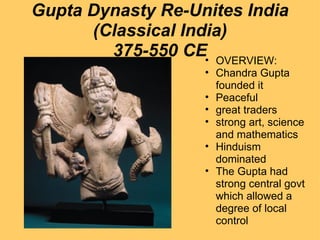
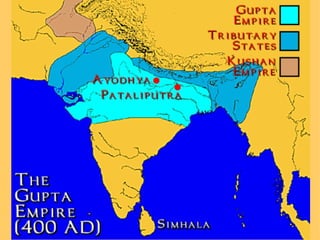
Gupta Dynasty Re-Unites India (Classical India) 375-550 CE OVERVIEW: Chandra Gupta founded it Peaceful great traders strong art, science and mathematics Hinduism dominated The Gupta had strong central govt which allowed a degree of local control
 
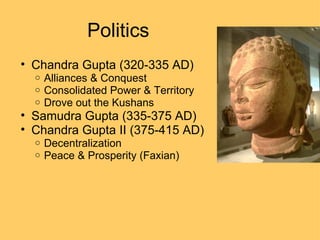
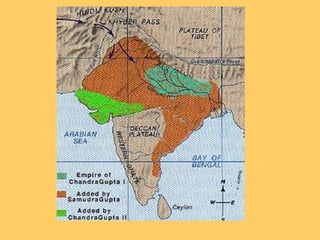
Politics Chandra Gupta (320-335 AD)‏ Alliances & Conquest Consolidated Power & Territory Drove out the Kushans Samudra Gupta (335-375 AD)‏ Chandra Gupta II (375-415 AD)‏ Decentralization Peace & Prosperity (Faxian)‏
 
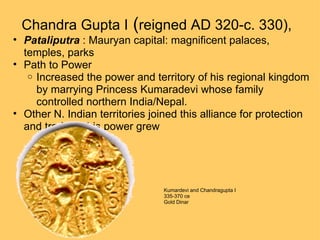
Chandra Gupta I  ( reigned AD 320-c. 330),   Pataliputra  : Mauryan capital: magnificent palaces, temples, parks Path to Power Increased the power and territory of his regional kingdom by marrying Princess Kumaradevi whose family controlled northern India/Nepal.  Other N. Indian territories joined this alliance for protection and trade as his power grew  Kumardevi and Chandragupta I 335-370 ce Gold Dinar
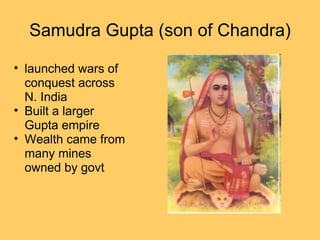
Samudra Gupta (son of Chandra) launched wars of conquest across N. India Built a larger Gupta empire Wealth came from many mines owned by govt
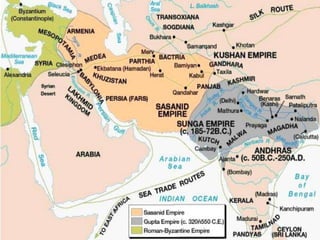
Gupta Economy owned gold mines, silver mines, and vast lands. rent money from farmers funded government (govt owned the land) Silk Road  served Gupta, Han, Rome and Persian Dynasties Indian merchants shipped ivory, jewels, and textiles, salt and iron The Romans traded glass, jewels, and clothes. Chinese merchants traded silk, spices, tea, and porcelain. The Gupta Empire profited greatly from religious trade and religious pilgrims.
 
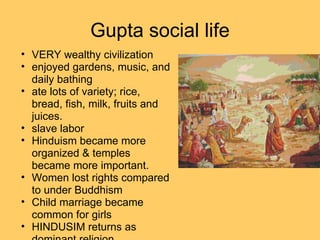
Gupta social life VERY wealthy civilization enjoyed gardens, music, and daily bathing ate lots of variety; rice, bread, fish, milk, fruits and juices.  slave labor  Hinduism became more organized & temples became more important. Women lost rights compared to under Buddhism Child marriage became common for girls HINDUSIM returns as dominant religion
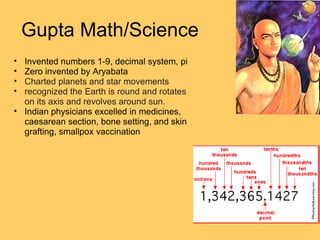
Gupta Math/Science Invented numbers 1-9, decimal system, pi Zero invented by Aryabata  Charted planets and star movements recognized the Earth is round and rotates on its axis and revolves around sun. Indian physicians excelled in medicines, caesarean section, bone setting, and skin grafting, smallpox vaccination
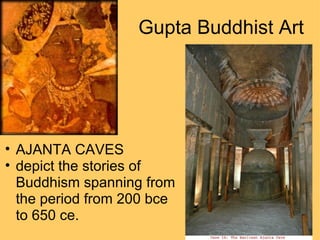
Gupta Buddhist Art AJANTA CAVES  depict the stories of Buddhism spanning from the period from 200 bce to 650 ce.
 
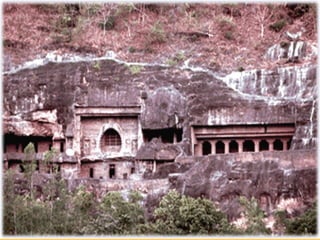
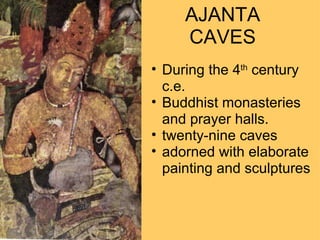
.  AJANTA CAVES During the 4 th  century c.e.  Buddhist monasteries and prayer halls.  twenty-nine caves  adorned with elaborate painting and sculptures
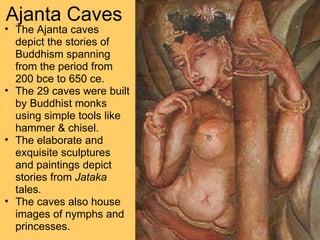
Ajanta Caves The Ajanta caves depict the stories of Buddhism spanning from the period from 200 bce to 650 ce.  The 29 caves were built by Buddhist monks using simple tools like hammer & chisel.  The elaborate and exquisite sculptures and paintings depict stories from  Jataka  tales.  The caves also house images of nymphs and princesses.
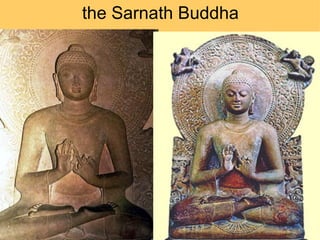
the Sarnath Buddha
Gupta Decline Later Gupta rulers lived extravagantly, which weakened the people’s loyalty. Guptas weakened by the expense of the War with White Huns and competing India kingdoms
White Huns c. 500ce invade  through Kyber Pass and Ganges Valley destroyed cities and reduced Hindu temples to rubble.  Feudal provinces declare independence when Gupta are destroyed India seperates into independent kingdoms.  not unified again until the Muslims in the 11 th  century

Gupta_Empire

  • 1.
    Gupta Dynasty Re-UnitesIndia (Classical India) 375-550 CE OVERVIEW: Chandra Gupta founded it Peaceful great traders strong art, science and mathematics Hinduism dominated The Gupta had strong central govt which allowed a degree of local control
  • 2.
  • 3.
    Politics Chandra Gupta(320-335 AD)‏ Alliances & Conquest Consolidated Power & Territory Drove out the Kushans Samudra Gupta (335-375 AD)‏ Chandra Gupta II (375-415 AD)‏ Decentralization Peace & Prosperity (Faxian)‏
  • 4.
  • 5.
    Chandra Gupta I ( reigned AD 320-c. 330), Pataliputra : Mauryan capital: magnificent palaces, temples, parks Path to Power Increased the power and territory of his regional kingdom by marrying Princess Kumaradevi whose family controlled northern India/Nepal. Other N. Indian territories joined this alliance for protection and trade as his power grew Kumardevi and Chandragupta I 335-370 ce Gold Dinar
  • 6.
    Samudra Gupta (sonof Chandra) launched wars of conquest across N. India Built a larger Gupta empire Wealth came from many mines owned by govt
  • 7.
    Gupta Economy ownedgold mines, silver mines, and vast lands. rent money from farmers funded government (govt owned the land) Silk Road served Gupta, Han, Rome and Persian Dynasties Indian merchants shipped ivory, jewels, and textiles, salt and iron The Romans traded glass, jewels, and clothes. Chinese merchants traded silk, spices, tea, and porcelain. The Gupta Empire profited greatly from religious trade and religious pilgrims.
  • 8.
  • 9.
    Gupta social lifeVERY wealthy civilization enjoyed gardens, music, and daily bathing ate lots of variety; rice, bread, fish, milk, fruits and juices. slave labor Hinduism became more organized & temples became more important. Women lost rights compared to under Buddhism Child marriage became common for girls HINDUSIM returns as dominant religion
  • 10.
    Gupta Math/Science Inventednumbers 1-9, decimal system, pi Zero invented by Aryabata Charted planets and star movements recognized the Earth is round and rotates on its axis and revolves around sun. Indian physicians excelled in medicines, caesarean section, bone setting, and skin grafting, smallpox vaccination
  • 11.
    Gupta Buddhist ArtAJANTA CAVES depict the stories of Buddhism spanning from the period from 200 bce to 650 ce.
  • 12.
  • 13.
    . AJANTACAVES During the 4 th century c.e. Buddhist monasteries and prayer halls. twenty-nine caves adorned with elaborate painting and sculptures
  • 14.
    Ajanta Caves TheAjanta caves depict the stories of Buddhism spanning from the period from 200 bce to 650 ce. The 29 caves were built by Buddhist monks using simple tools like hammer & chisel. The elaborate and exquisite sculptures and paintings depict stories from Jataka tales. The caves also house images of nymphs and princesses.
  • 15.
  • 16.
    Gupta Decline LaterGupta rulers lived extravagantly, which weakened the people’s loyalty. Guptas weakened by the expense of the War with White Huns and competing India kingdoms
  • 17.
    White Huns c.500ce invade through Kyber Pass and Ganges Valley destroyed cities and reduced Hindu temples to rubble. Feudal provinces declare independence when Gupta are destroyed India seperates into independent kingdoms. not unified again until the Muslims in the 11 th century