GUILLAIN-BARRÉ
  SYNDROME
  Linda Roybal & Sarah Jane Calub
DESCRIPTION
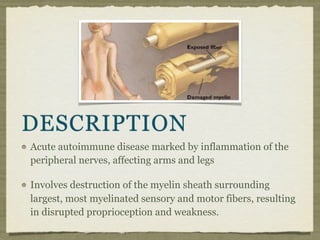
Acute autoimmune disease marked by inflammation of the
peripheral nerves, affecting arms and legs

Involves destruction of the myelin sheath surrounding
largest, most myelinated sensory and motor fibers, resulting
in disrupted proprioception and weakness.
ETIOLOGY


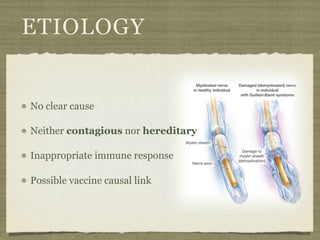
No clear cause

Neither contagious nor hereditary

Inappropriate immune response

Possible vaccine causal link
INCIDENCE &
PREVALENCE


GBS affects 2 per 100,000 annually (1,500 people/year)

Nondiscriminatory: can affect persons of any gender, age, or
ethnic background
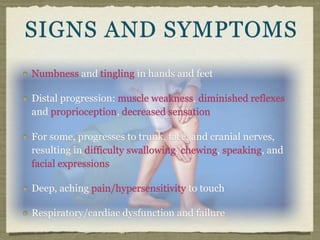
SIGNS AND SYMPTOMS
Numbness and tingling in hands and feet

Distal progression: muscle weakness, diminished reflexes
and proprioception, decreased sensation

For some, progresses to trunk, face, and cranial nerves,
resulting in difficulty swallowing, chewing, speaking, and
facial expressions

Deep, aching pain/hypersensitivity to touch

Respiratory/cardiac dysfunction and failure
COURSE/PROGNOSIS
80% experience complete recovery

Recovery may last from 2 months to 2 years

3 distinct phases:

  Acute (4 wks) - initial rapid onset of symptoms

  Plateu (few days to few weeks) - symptoms neither
  worsen nor improve

  Recovery - gradual improvement
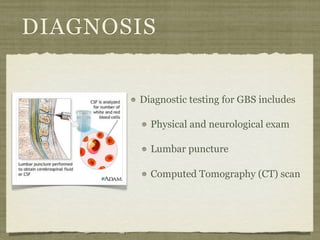
DIAGNOSIS


       Diagnostic testing for GBS includes

         Physical and neurological exam

         Lumbar puncture

         Computed Tomography (CT) scan
MEDICAL/SURGICAL
MANAGEMENT

Intravenous immunoglobin therapy: prevents immune
system from further attacking Schwann cells and myelin by
blocking receptors on microphages

Plasmapheresis: filters blood plasma to remove
antibodies and aids in replacing lost fluids

Corticosteroids: inhibit inflammation associated w/
symptoms
IMPACT ON CLIENT

Limited physical mobility

Inability to engage in meaningful occupations because of
pain, extreme muscle weakness in arms and legs, and fatigue

Sensory functions impaired

Using cultural contexts to structure intervention activities
REFERENCES
Guillain-Barré Syndrome Support Group (2009) A Quick Guide to Guillain-Barré Syndrome and

   CIDP. Guillain-Barré Support Group, Sleaford.

Little evidence that supports a causal link between most vaccines and Guillain-Barre syndrome.

   (2009). Drugs & Therapy Perspectives, 25(11), 21-23.

Lugg, J. (2010). Recognising and managing Guillain-Barre syndrome. Emergency Nurse, 18(3),

   27-30.

Lundy-Ekman, L. (2007). Neuroscience: fundamentals for rehabilitation (3rd ed.). St. Louis,

   Mo.: Saunders/Elsevier.

Guillain-Barré Syndrome Presentation

  • 1.
    GUILLAIN-BARRÉ SYNDROME Linda Roybal & Sarah Jane Calub
  • 2.
    DESCRIPTION Acute autoimmune diseasemarked by inflammation of the peripheral nerves, affecting arms and legs Involves destruction of the myelin sheath surrounding largest, most myelinated sensory and motor fibers, resulting in disrupted proprioception and weakness.
  • 3.
    ETIOLOGY No clear cause Neithercontagious nor hereditary Inappropriate immune response Possible vaccine causal link
  • 4.
    INCIDENCE & PREVALENCE GBS affects2 per 100,000 annually (1,500 people/year) Nondiscriminatory: can affect persons of any gender, age, or ethnic background
  • 5.
    SIGNS AND SYMPTOMS Numbnessand tingling in hands and feet Distal progression: muscle weakness, diminished reflexes and proprioception, decreased sensation For some, progresses to trunk, face, and cranial nerves, resulting in difficulty swallowing, chewing, speaking, and facial expressions Deep, aching pain/hypersensitivity to touch Respiratory/cardiac dysfunction and failure
  • 6.
    COURSE/PROGNOSIS 80% experience completerecovery Recovery may last from 2 months to 2 years 3 distinct phases: Acute (4 wks) - initial rapid onset of symptoms Plateu (few days to few weeks) - symptoms neither worsen nor improve Recovery - gradual improvement
  • 7.
    DIAGNOSIS Diagnostic testing for GBS includes Physical and neurological exam Lumbar puncture Computed Tomography (CT) scan
  • 8.
    MEDICAL/SURGICAL MANAGEMENT Intravenous immunoglobin therapy:prevents immune system from further attacking Schwann cells and myelin by blocking receptors on microphages Plasmapheresis: filters blood plasma to remove antibodies and aids in replacing lost fluids Corticosteroids: inhibit inflammation associated w/ symptoms
  • 9.
    IMPACT ON CLIENT Limitedphysical mobility Inability to engage in meaningful occupations because of pain, extreme muscle weakness in arms and legs, and fatigue Sensory functions impaired Using cultural contexts to structure intervention activities
  • 10.
    REFERENCES Guillain-Barré Syndrome SupportGroup (2009) A Quick Guide to Guillain-Barré Syndrome and CIDP. Guillain-Barré Support Group, Sleaford. Little evidence that supports a causal link between most vaccines and Guillain-Barre syndrome. (2009). Drugs & Therapy Perspectives, 25(11), 21-23. Lugg, J. (2010). Recognising and managing Guillain-Barre syndrome. Emergency Nurse, 18(3), 27-30. Lundy-Ekman, L. (2007). Neuroscience: fundamentals for rehabilitation (3rd ed.). St. Louis, Mo.: Saunders/Elsevier.