
This is not a test
Agenda for growing a direct to consumer
business
• Why (belief):
   • Business purpose
• How (actions to realize the why):
   • Defining your organizational structure
   • Location in the purchasing funnel
   • Strategy outline
• What (results):
   • Reporting
   • Customer experience
The Why

"People don't buy what you do, they buy why you do it.“
                                      Simon Sinek
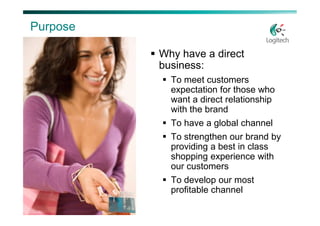
Purpose

           Why have a direct
            business:
             To meet customers
              expectation for those who
              want a direct relationship
              with the brand
             To have a global channel
             To strengthen our brand by
              providing a best in class
              shopping experience with
              our customers
             To develop our most
              profitable channel
The How
“The essence of positioning is sacrifice.”
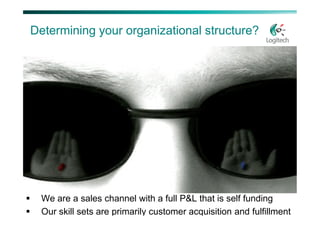
Determining your organizational structure?


     We are a sales channel with a full P&L that is self funding
     Our skill sets are primarily customer acquisition and fulfillment
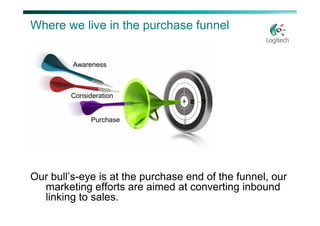
Where we live in the purchase funnel


         Awareness


        Consideration


              Purchase


Our bull’s-eye is at the purchase end of the funnel, our
  marketing efforts are aimed at converting inbound
  linking to sales.
Vijay Govindarajan's three strategy boxes

Box 1                      Box 2                        Box 3
• Competing for the        • Selectively forget the     • Competing for the
present                    past                         future
• Driving core business    • Adjacent to the core       • New Space, more risk
to meet budget
                           • New ideas that we          • Experimental and
• Constrained view         will test, but not part of   innovative
                           our business plan
• Testing future                                        • Requires change and
assumptions (fail fast)                                 learning
                                                        • Unconstrained view


                     http://www.vijaygovindarajan.com/
A couple of closing thoughts on the how


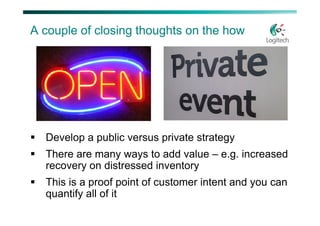
 Develop a public versus private strategy
 There are many ways to add value – e.g. increased
  recovery on distressed inventory
 This is a proof point of customer intent and you can
  quantify all of it
The What
“Metrics map to objectives, period.”
The Dashboard

• We only have four core metrics (the dashboard):
  • (Traffic x Conversion) x Average Order Size =
  Revenue.
  • NPS = Net Promoter Score, which we use to
  quantify moments of truth for the customer related
  to the purchasing process (purchase, assessment
  and advocacy).
  • We take a deep dive on all four (by geography, by
  time period and by product).
  • There are supporting metrics that map to the core
  and are tied by an objective of improving the core.
E-mail: lance_binley@logitech.com
              Direct: 510-713-5012

Growing a direct to consumer channel

  • 1.
  • 2.
    Agenda for growinga direct to consumer business • Why (belief): • Business purpose • How (actions to realize the why): • Defining your organizational structure • Location in the purchasing funnel • Strategy outline • What (results): • Reporting • Customer experience
  • 3.
    The Why "People don'tbuy what you do, they buy why you do it.“ Simon Sinek
  • 4.
    Purpose  Why have a direct business:  To meet customers expectation for those who want a direct relationship with the brand  To have a global channel  To strengthen our brand by providing a best in class shopping experience with our customers  To develop our most profitable channel
  • 5.
    The How “The essenceof positioning is sacrifice.”
  • 6.
    Determining your organizationalstructure?  We are a sales channel with a full P&L that is self funding  Our skill sets are primarily customer acquisition and fulfillment
  • 7.
    Where we livein the purchase funnel Awareness Consideration Purchase Our bull’s-eye is at the purchase end of the funnel, our marketing efforts are aimed at converting inbound linking to sales.
  • 8.
    Vijay Govindarajan's threestrategy boxes Box 1 Box 2 Box 3 • Competing for the • Selectively forget the • Competing for the present past future • Driving core business • Adjacent to the core • New Space, more risk to meet budget • New ideas that we • Experimental and • Constrained view will test, but not part of innovative our business plan • Testing future • Requires change and assumptions (fail fast) learning • Unconstrained view http://www.vijaygovindarajan.com/
  • 9.
    A couple ofclosing thoughts on the how  Develop a public versus private strategy  There are many ways to add value – e.g. increased recovery on distressed inventory  This is a proof point of customer intent and you can quantify all of it
  • 10.
    The What “Metrics mapto objectives, period.”
  • 11.
    The Dashboard • Weonly have four core metrics (the dashboard): • (Traffic x Conversion) x Average Order Size = Revenue. • NPS = Net Promoter Score, which we use to quantify moments of truth for the customer related to the purchasing process (purchase, assessment and advocacy). • We take a deep dive on all four (by geography, by time period and by product). • There are supporting metrics that map to the core and are tied by an objective of improving the core.
  • 12.