GREEN
WALLAn Overview
Contents
• Introduction
• History of Green Walls
• Types of Green Walls
• Benefits of Green Walls
• Main Factors
• Special Cases
• Challenges
• Conclusion
Introduction
• Increased environmental consciousness
• Sustainable development
• Greening of buildings
• Green walls
History of Green Walls
The hanging gardens of Babylon
Some important developments
• 1920s: The British and North American garden city movement promote
the integration of house and garden through features such as self-clinging
climbing plants.
• 1988: Introduction of a stainless steel cable system for green facades.
• 1990s:Introduction of Cable and wire-rope net systems
• 1993: First major application of a trellis panel system in California
• 1994: Indoor living wall with bio-filtration system installed in Canada
• 2002: The MFO Park opened in Switzerland. The project featured over
1,300 high par climbing plants.
• 2005: The Japanese government sponsored a massive green wall in Expo
2005, comprised of 30 different modular green wall systems available in
Japan.
• 2007: Seattle implements the Green Factor, which includes green walls.
Different Types
Green Wall
Green
Facades
Cable and
Wire-Rope
Net Systems
Modular
Trellis Panel
System
Living Walls
Modular
Living Wall
Vegetated
Mat Wall
Green Facades
Climbing plants or cascading groundcovers to cover
specially designed supporting structures
Rooted at the base of these structures, in the
ground, in intermediate planters or on rooftops
Self-clinging plants such as English ivy
Their sucker root attach directly to a wall, covering
entire surfaces
These can damage unsuitable walls and/or cause
difficulties when the time comes for maintenance.
Green Facades
Cable and Wire-Rope Net Systems
Cables are employed to support faster
growing climbing plants with denser foliage
Wire-nets are used to support slower growing
plants that need supports at closer intervals
Modular Trellis Panel System
light weight, three-dimensional panel made
from a galvanized and welded steel wire
Because of the panels are rigid, they can span
between structures and can also be used for
freestanding green walls.
Living Walls
Pre-vegetated panels, vertical modules or planted
blankets, fixed vertically to a structural wall or
frame
Panels made of plastic, expanded polystyrene,
synthetic fabric, clay, metal, and concrete
Support a great diversity and density of plant
species
There are various forms, with the main
differences between interior and exterior designs.
Living Walls
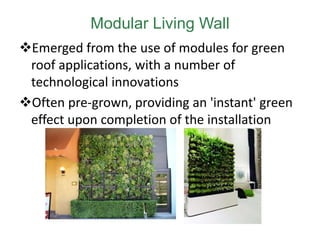
Modular Living Wall
Emerged from the use of modules for green
roof applications, with a number of
technological innovations
Often pre-grown, providing an 'instant' green
effect upon completion of the installation
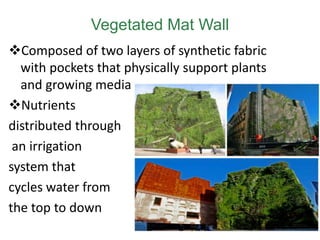
Vegetated Mat Wall
Composed of two layers of synthetic fabric
with pockets that physically support plants
and growing media
Nutrients
distributed through
an irrigation
system that
cycles water from
the top to down
BENEFITS OF GREEN FACADES
AND LIVING WALLS
PUBLIC/PRIVATE BENEFITS
Area of impact Description Benefits
Reduce urban heat
island effect
Temperature rise in urban areas caused
by the replacement of natural
vegetation by other structures
Promotes natural cooling
and reduces temperature.
Improved exterior
air quality
Modern urban environments are having
high concentration of air pollutants
Captures airborne
pollutants and filters
particulate matter
Aesthetic
improvement
studies have linked the presence of
plants to improved human health and
mental well being
•Creates visual interest
•Increases property values
•Hides unsightly features
Building structure
protection
Buildings are exposed to the weathering
and cause deterioration
Protects exterior from UV
radiation and temperature
fluctuations
Improved energy
efficiency
Improves thermal insulation capacity
through external temperature regulation
Reduces ambient
Temperature
Improved indoor
air quality
Filter contaminates that are flushed out
of buildings through traditional
ventilation systems
Captures airborne
pollutants such as dust and
pollen
Environmental Benefits
Offer cooling in the city through direct
shading and evaporate transpiration
Filters gaseous and particulate pollutants from
the atmosphere in the urban environment
Economical Benefits
Reduce climatic stress on building and increase
the service and practical life of buildings and
reduce cost on the painting materials
Reduce energy used for cooling vastly
Aesthetics
Well designed green walls provide good
aesthetic look
Other benefits
Increased biodiversity
Urban agriculture
MAIN FACTORS
Plant selection
Irrigation
1. Elements of a Living Wall
2. Factors for Successful Green Facades
i. Attachment to building envelope
ii. Calculation of structural loads
iii. Plant selection
iv. Plant maintenance
v. Registered manufactures and trained
installers
3.Factors Affecting Living Walls
i. Irrigation
ii. Use correctly specified plants
iii. Consideration of the microclimates
iv. Growing medium
4. Cost
i. Project size.
ii. Design team costs.
iii. System type.
iv. Support structure requirements.
v. Building location.
vi. Complexity of design.
vii. Use of standard or custom
components.
5. Maintenance
• Different plants will have different irrigation and
nutrient requirements
• Cable and wire-rope system require periodic
checking to ensure that the elements are
properly in place as the plants mature
• Living walls require regular irrigation and degree
of maintenance required will depend on the type
of living wall system and the vegetation used.
• Aesthetic qualities expected by client
SPECIAL CASES
1. Loose Medium Wall
2. Mat Medium Wall
3. Structural Media Wall
4. Pro Wall
5. Versa Wall Systems
CHALANGES
1.Expense
2.Heavy Load
3.Maintenance
CONCLUSIONS
• Green walls provide an efficient tool in energy saving,
bio diversity and temperature-air control
• Offer a new emerging way to a green built
environment
• Still under research, not commonly practiced in
India, but in foreign countries like USA, Japan &
France
• To be hoped that the development of experience &
knowledge of benefits will encourage people to
switch to green built construction.
Green wall

Green wall

  • 1.
  • 2.
    Contents • Introduction • Historyof Green Walls • Types of Green Walls • Benefits of Green Walls • Main Factors • Special Cases • Challenges • Conclusion
  • 3.
    Introduction • Increased environmentalconsciousness • Sustainable development • Greening of buildings • Green walls
  • 4.
    History of GreenWalls The hanging gardens of Babylon
  • 5.
    Some important developments •1920s: The British and North American garden city movement promote the integration of house and garden through features such as self-clinging climbing plants. • 1988: Introduction of a stainless steel cable system for green facades. • 1990s:Introduction of Cable and wire-rope net systems • 1993: First major application of a trellis panel system in California • 1994: Indoor living wall with bio-filtration system installed in Canada • 2002: The MFO Park opened in Switzerland. The project featured over 1,300 high par climbing plants. • 2005: The Japanese government sponsored a massive green wall in Expo 2005, comprised of 30 different modular green wall systems available in Japan. • 2007: Seattle implements the Green Factor, which includes green walls.
  • 6.
    Different Types Green Wall Green Facades Cableand Wire-Rope Net Systems Modular Trellis Panel System Living Walls Modular Living Wall Vegetated Mat Wall
  • 7.
    Green Facades Climbing plantsor cascading groundcovers to cover specially designed supporting structures Rooted at the base of these structures, in the ground, in intermediate planters or on rooftops Self-clinging plants such as English ivy Their sucker root attach directly to a wall, covering entire surfaces These can damage unsuitable walls and/or cause difficulties when the time comes for maintenance.
  • 8.
  • 9.
    Cable and Wire-RopeNet Systems Cables are employed to support faster growing climbing plants with denser foliage Wire-nets are used to support slower growing plants that need supports at closer intervals
  • 10.
    Modular Trellis PanelSystem light weight, three-dimensional panel made from a galvanized and welded steel wire Because of the panels are rigid, they can span between structures and can also be used for freestanding green walls.
  • 11.
    Living Walls Pre-vegetated panels,vertical modules or planted blankets, fixed vertically to a structural wall or frame Panels made of plastic, expanded polystyrene, synthetic fabric, clay, metal, and concrete Support a great diversity and density of plant species There are various forms, with the main differences between interior and exterior designs.
  • 12.
  • 13.
    Modular Living Wall Emergedfrom the use of modules for green roof applications, with a number of technological innovations Often pre-grown, providing an 'instant' green effect upon completion of the installation
  • 14.
    Vegetated Mat Wall Composedof two layers of synthetic fabric with pockets that physically support plants and growing media Nutrients distributed through an irrigation system that cycles water from the top to down
  • 15.
    BENEFITS OF GREENFACADES AND LIVING WALLS
  • 16.
    PUBLIC/PRIVATE BENEFITS Area ofimpact Description Benefits Reduce urban heat island effect Temperature rise in urban areas caused by the replacement of natural vegetation by other structures Promotes natural cooling and reduces temperature. Improved exterior air quality Modern urban environments are having high concentration of air pollutants Captures airborne pollutants and filters particulate matter Aesthetic improvement studies have linked the presence of plants to improved human health and mental well being •Creates visual interest •Increases property values •Hides unsightly features Building structure protection Buildings are exposed to the weathering and cause deterioration Protects exterior from UV radiation and temperature fluctuations Improved energy efficiency Improves thermal insulation capacity through external temperature regulation Reduces ambient Temperature Improved indoor air quality Filter contaminates that are flushed out of buildings through traditional ventilation systems Captures airborne pollutants such as dust and pollen
  • 17.
    Environmental Benefits Offer coolingin the city through direct shading and evaporate transpiration Filters gaseous and particulate pollutants from the atmosphere in the urban environment Economical Benefits Reduce climatic stress on building and increase the service and practical life of buildings and reduce cost on the painting materials Reduce energy used for cooling vastly
  • 18.
    Aesthetics Well designed greenwalls provide good aesthetic look Other benefits Increased biodiversity Urban agriculture
  • 19.
  • 20.
    2. Factors forSuccessful Green Facades i. Attachment to building envelope ii. Calculation of structural loads iii. Plant selection iv. Plant maintenance v. Registered manufactures and trained installers
  • 21.
    3.Factors Affecting LivingWalls i. Irrigation ii. Use correctly specified plants iii. Consideration of the microclimates iv. Growing medium
  • 22.
    4. Cost i. Projectsize. ii. Design team costs. iii. System type. iv. Support structure requirements. v. Building location. vi. Complexity of design. vii. Use of standard or custom components.
  • 23.
    5. Maintenance • Differentplants will have different irrigation and nutrient requirements • Cable and wire-rope system require periodic checking to ensure that the elements are properly in place as the plants mature • Living walls require regular irrigation and degree of maintenance required will depend on the type of living wall system and the vegetation used. • Aesthetic qualities expected by client
  • 24.
    SPECIAL CASES 1. LooseMedium Wall 2. Mat Medium Wall 3. Structural Media Wall 4. Pro Wall 5. Versa Wall Systems
  • 25.
  • 26.
    CONCLUSIONS • Green wallsprovide an efficient tool in energy saving, bio diversity and temperature-air control • Offer a new emerging way to a green built environment • Still under research, not commonly practiced in India, but in foreign countries like USA, Japan & France • To be hoped that the development of experience & knowledge of benefits will encourage people to switch to green built construction.