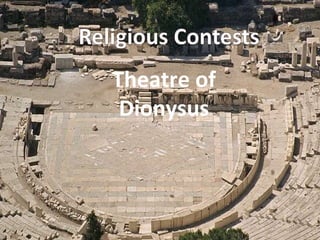
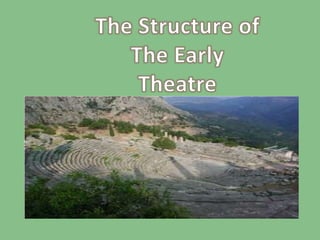
Theatre of Dionysus
Revelry-filled Festivals Religious contests were for prizes. Men dressed in rough goat skin. Plays were only presented at one of the four annual festivals in Athens, City Dionysia. Many tribes competed for prizes and the honor of winning the contest.
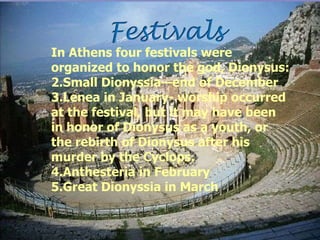
In Athens four festivals were organized to honor the god, Dionysus: Small Dionyssia—end of December Lenea in January- worship occurred at the festival, but it may have been in honor of Dionysus as a youth, or the rebirth of Dionysus after his murder by the Cyclops. Anthesteria in February Great Dionyssia in March
During Small Dionyssia some old plays were performed. Tragic contests were organized during the Lenea and Great Dionyssia. New tragedies were performed during the Great Dionyssia .
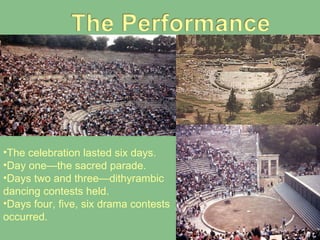
The celebration lasted six days. Day one—the sacred parade. Days two and three—dithyrambic dancing contests held. Days four, five, six drama contests occurred.
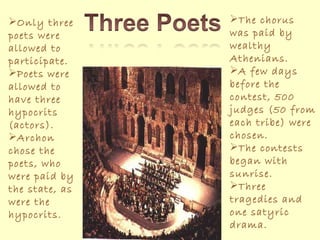
Only three poets were allowed to participate. Poets were allowed to have three hypocrits (actors). Archon chose the poets, who were paid by the state, as were the hypocrits. The chorus was paid by wealthy Athenians. A few days before the contest, 500 judges (50 from each tribe) were chosen. The contests began with sunrise. Three tragedies and one satyric drama.
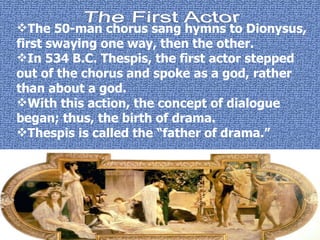
The 50-man chorus sang hymns to Dionysus, first swaying one way, then the other. In 534 B.C. Thespis, the first actor stepped out of the chorus and spoke as a god, rather than about a god. With this action, the concept of dialogue began; thus, the birth of drama. Thespis is called the “father of drama.”
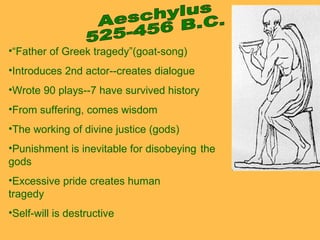
Aeschylus 525-456 B.C. “ Father of Greek tragedy”(goat-song) Introduces 2nd actor--creates dialogue Wrote 90 plays--7 have survived history From suffering, comes wisdom The working of divine justice (gods)  Punishment is inevitable for disobeying  the gods Excessive pride creates human  tragedy  Self-will is destructive
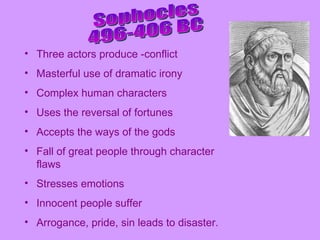
Sophocles 496-406 BC Three actors produce -conflict Masterful use of dramatic irony Complex human characters Uses the reversal of fortunes Accepts the ways of the gods Fall of great people through character flaws Stresses emotions Innocent people suffer Arrogance, pride, sin leads to disaster.
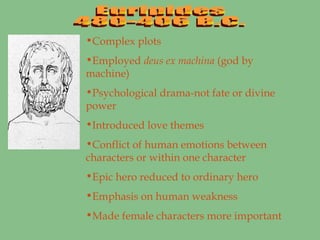
Euripides 480-406 B.C. Complex plots Employed  deus ex machina  (god by machine) Psychological drama-not fate or divine power Introduced love themes Conflict of human emotions between characters or within one character Epic hero reduced to ordinary hero Emphasis on human weakness Made female characters more important
 
 
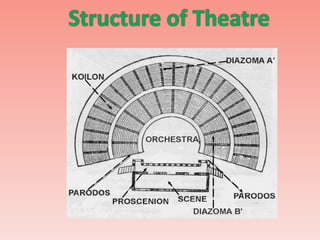
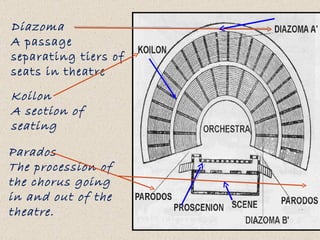
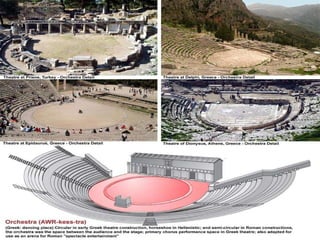
Diazoma A passage separating tiers of seats in theatre Koilon A section of seating Parados The procession of the chorus going in and out of the theatre.
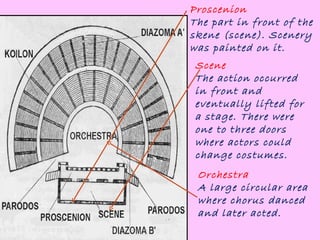
Proscenion The part in front of the skene (scene). Scenery was painted on it. Scene The action occurred in front and eventually lifted for a stage. There were one to three doors where actors could change costumes. Orchestra A large circular area where chorus danced and later acted.
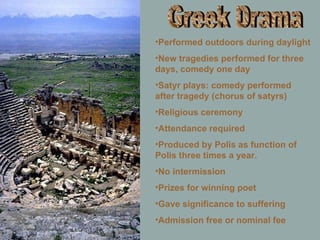
Greek Drama Performed outdoors during daylight New tragedies performed for three days, comedy one day Satyr plays: comedy performed after tragedy (chorus of satyrs) Religious ceremony Attendance required Produced by Polis as function of Polis three times a year. No intermission Prizes for winning poet Gave significance to suffering Admission free or nominal fee
 
Elements of Greek Tragic Drama Unity of place--few if any change of scenery. Unity of time--usually only one day Single action--no subplots Three actors took different roles--only three actors on stage. Nemesis =destruction Hubris =excessive (obdurate) pride
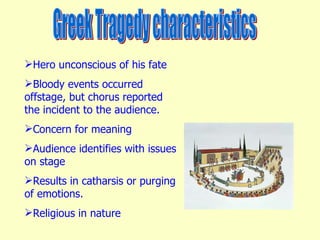
Greek Tragedy characteristics Hero unconscious of his fate Bloody events occurred offstage, but chorus reported the incident to the audience. Concern for meaning Audience identifies with issues on stage Results in catharsis or purging of emotions. Religious in nature
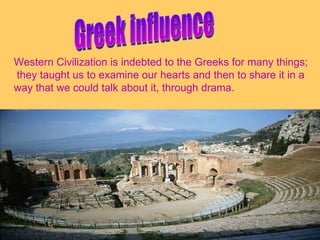
Greek influence Western Civilization is indebted to the Greeks for many things;  they taught us to examine our hearts and then to share it in a way that we could talk about it, through drama.

Greek drama

  • 1.
  • 2.
  • 3.
    Revelry-filled Festivals Religiouscontests were for prizes. Men dressed in rough goat skin. Plays were only presented at one of the four annual festivals in Athens, City Dionysia. Many tribes competed for prizes and the honor of winning the contest.
  • 4.
    In Athens fourfestivals were organized to honor the god, Dionysus: Small Dionyssia—end of December Lenea in January- worship occurred at the festival, but it may have been in honor of Dionysus as a youth, or the rebirth of Dionysus after his murder by the Cyclops. Anthesteria in February Great Dionyssia in March
  • 5.
    During Small Dionyssiasome old plays were performed. Tragic contests were organized during the Lenea and Great Dionyssia. New tragedies were performed during the Great Dionyssia .
  • 6.
    The celebration lastedsix days. Day one—the sacred parade. Days two and three—dithyrambic dancing contests held. Days four, five, six drama contests occurred.
  • 7.
    Only three poetswere allowed to participate. Poets were allowed to have three hypocrits (actors). Archon chose the poets, who were paid by the state, as were the hypocrits. The chorus was paid by wealthy Athenians. A few days before the contest, 500 judges (50 from each tribe) were chosen. The contests began with sunrise. Three tragedies and one satyric drama.
  • 8.
    The 50-man chorussang hymns to Dionysus, first swaying one way, then the other. In 534 B.C. Thespis, the first actor stepped out of the chorus and spoke as a god, rather than about a god. With this action, the concept of dialogue began; thus, the birth of drama. Thespis is called the “father of drama.”
  • 9.
    Aeschylus 525-456 B.C.“ Father of Greek tragedy”(goat-song) Introduces 2nd actor--creates dialogue Wrote 90 plays--7 have survived history From suffering, comes wisdom The working of divine justice (gods) Punishment is inevitable for disobeying the gods Excessive pride creates human tragedy Self-will is destructive
  • 10.
    Sophocles 496-406 BCThree actors produce -conflict Masterful use of dramatic irony Complex human characters Uses the reversal of fortunes Accepts the ways of the gods Fall of great people through character flaws Stresses emotions Innocent people suffer Arrogance, pride, sin leads to disaster.
  • 11.
    Euripides 480-406 B.C.Complex plots Employed deus ex machina (god by machine) Psychological drama-not fate or divine power Introduced love themes Conflict of human emotions between characters or within one character Epic hero reduced to ordinary hero Emphasis on human weakness Made female characters more important
  • 12.
  • 13.
  • 14.
    Diazoma A passageseparating tiers of seats in theatre Koilon A section of seating Parados The procession of the chorus going in and out of the theatre.
  • 15.
    Proscenion The partin front of the skene (scene). Scenery was painted on it. Scene The action occurred in front and eventually lifted for a stage. There were one to three doors where actors could change costumes. Orchestra A large circular area where chorus danced and later acted.
  • 16.
    Greek Drama Performedoutdoors during daylight New tragedies performed for three days, comedy one day Satyr plays: comedy performed after tragedy (chorus of satyrs) Religious ceremony Attendance required Produced by Polis as function of Polis three times a year. No intermission Prizes for winning poet Gave significance to suffering Admission free or nominal fee
  • 17.
  • 18.
    Elements of GreekTragic Drama Unity of place--few if any change of scenery. Unity of time--usually only one day Single action--no subplots Three actors took different roles--only three actors on stage. Nemesis =destruction Hubris =excessive (obdurate) pride
  • 19.
    Greek Tragedy characteristicsHero unconscious of his fate Bloody events occurred offstage, but chorus reported the incident to the audience. Concern for meaning Audience identifies with issues on stage Results in catharsis or purging of emotions. Religious in nature
  • 20.
    Greek influence WesternCivilization is indebted to the Greeks for many things; they taught us to examine our hearts and then to share it in a way that we could talk about it, through drama.