THE ANCIENT GREEK THEATRE  Student: Jake Seok Teacher: Brian
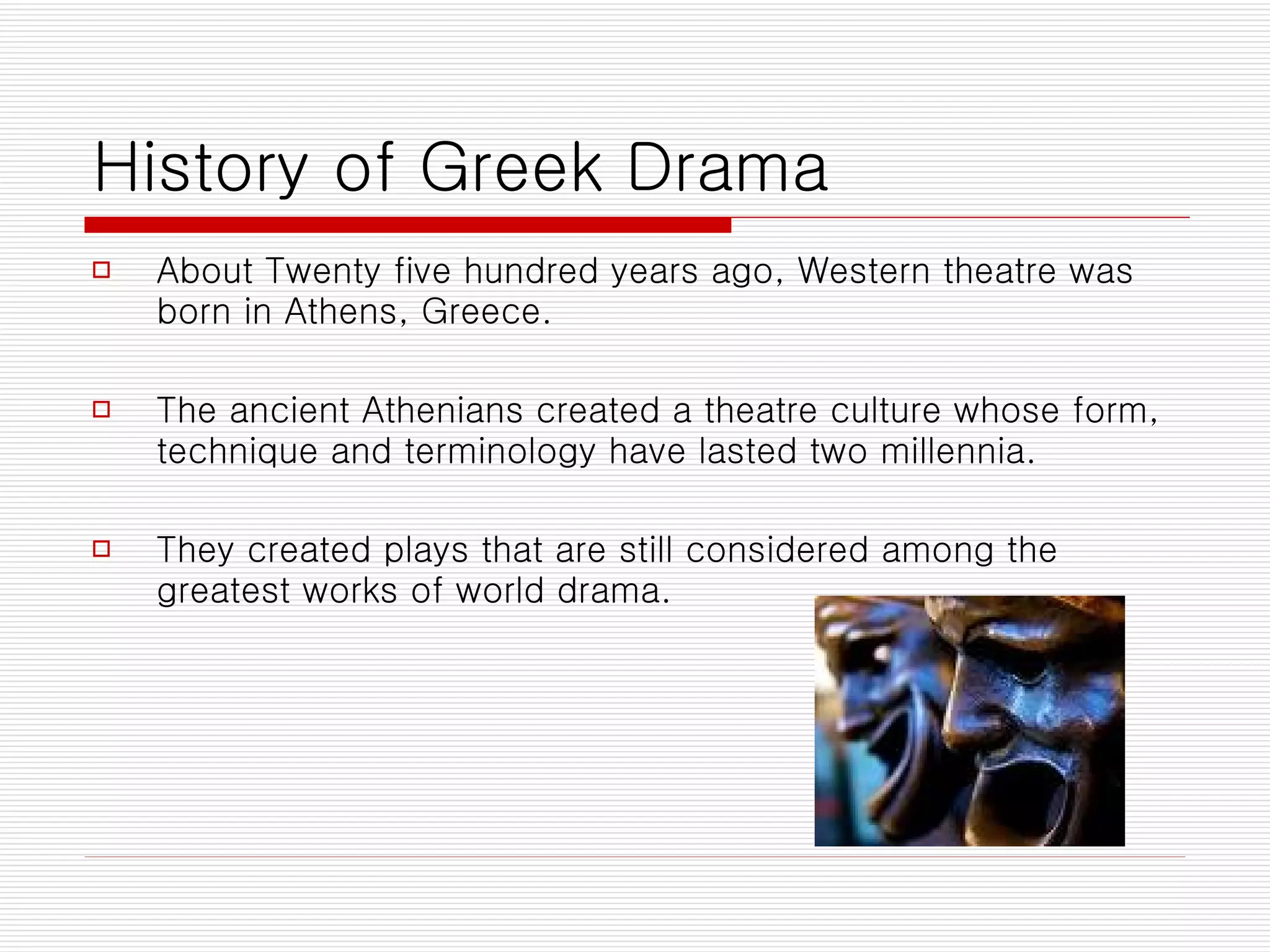
History of Greek Drama About Twenty five hundred years ago, Western theatre was born in Athens, Greece.  The ancient Athenians created a theatre culture whose form, technique and terminology have lasted two millennia. They created plays that are still considered among the greatest works of world drama.
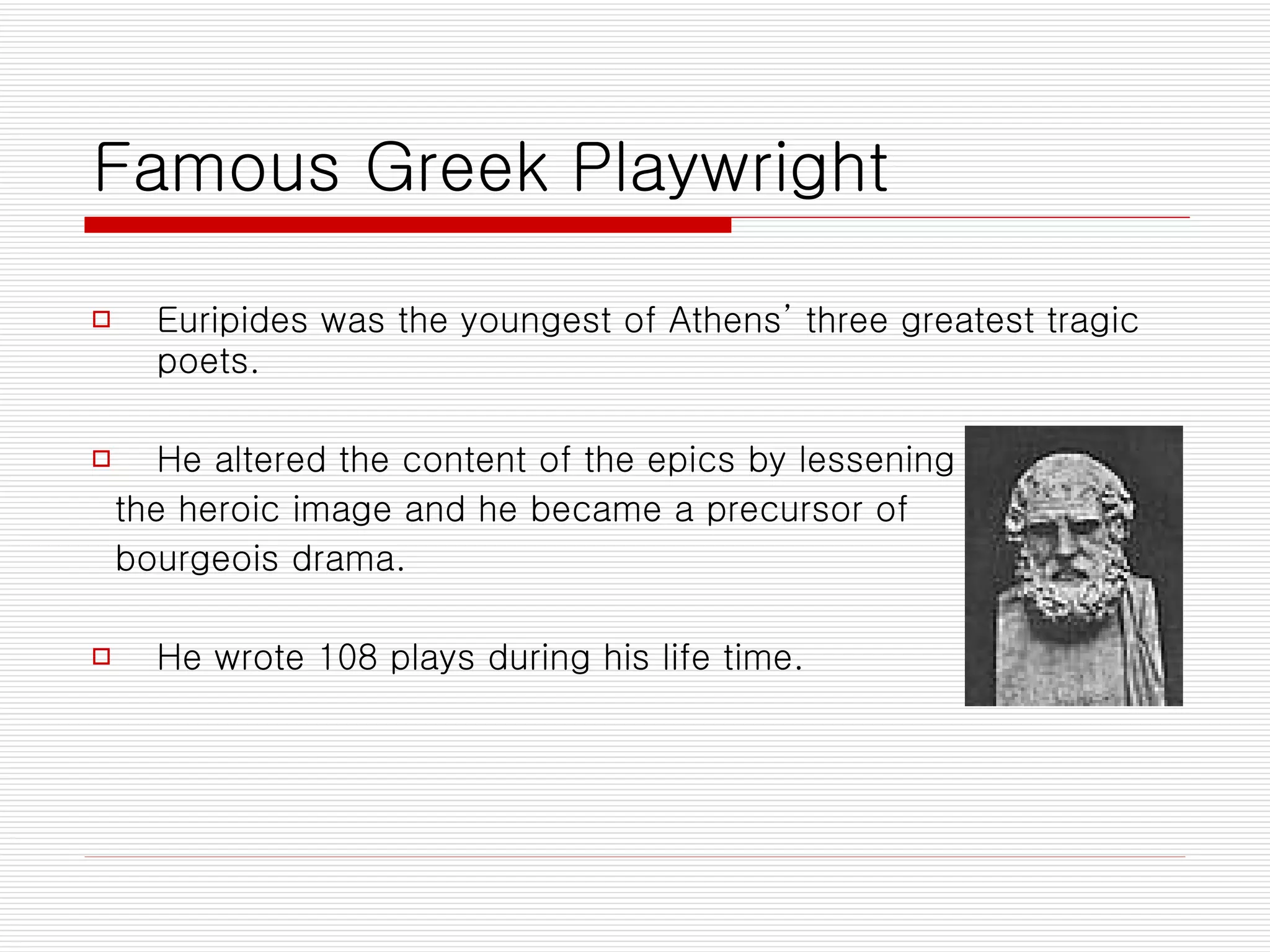
Famous Greek Playwright Euripides was the youngest of Athens’ three greatest tragic poets. He altered the content of the epics by lessening  the heroic image and he became a precursor of  bourgeois drama. He wrote 108 plays during his life time.
THE GOLDEN AGE OF GREEK THEATRE   The period around 600 BC - 200 BC was known as the Golden age of Greek Theater arts.  Athens was the focal point for the flourishing arts. The political and military epicenter gave birth to great emperors, soldiers, philosophers, poets, writers and actors.
Athenian Drama Competitions  In 534 BC, the ruler of Athens, Pisistratus, changed the Dionysian Festivals and instituted drama competitions. In the ensuing 50 years, the  competitions became popular annual  events.
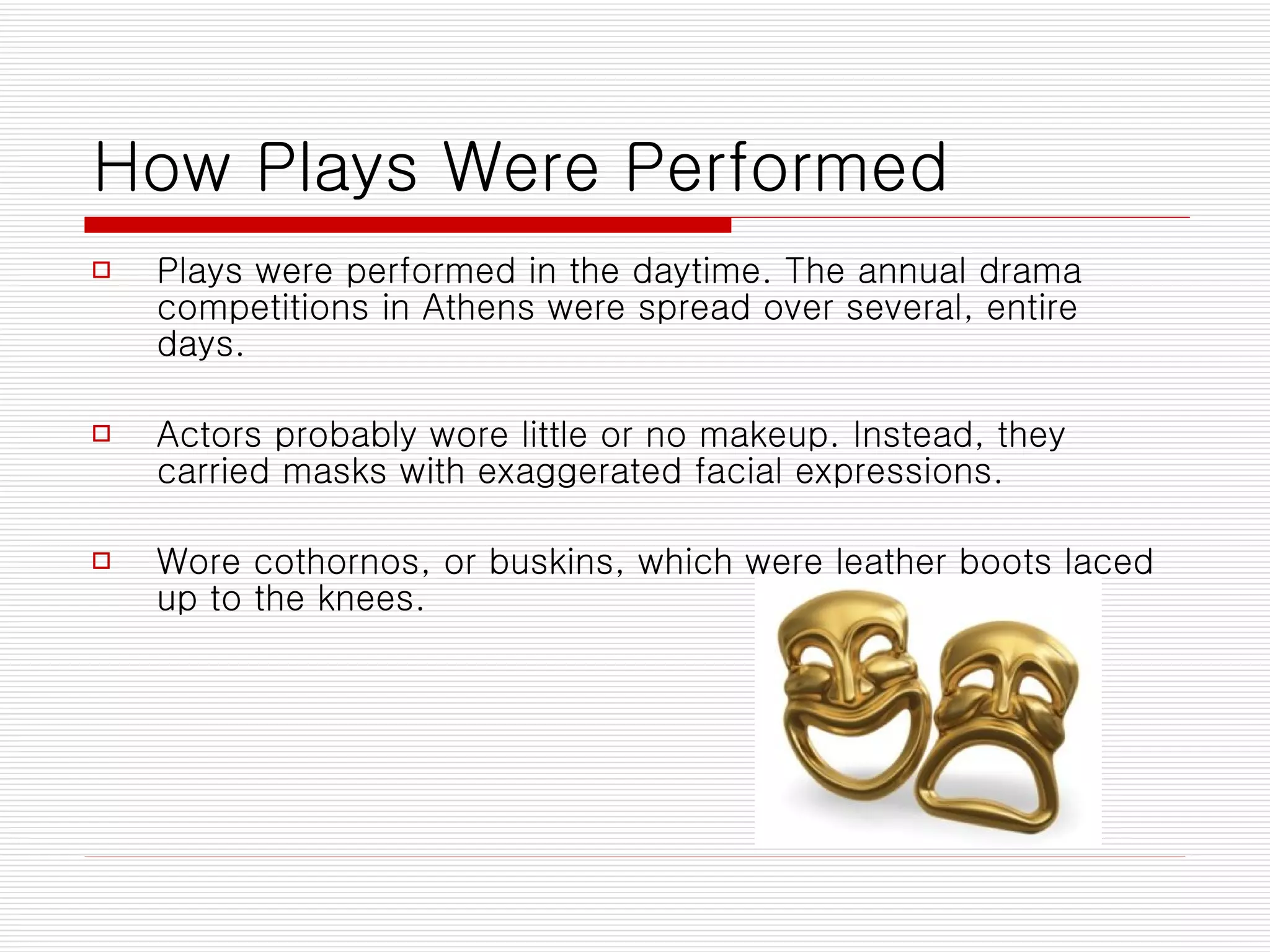
How Plays Were Performed  Plays were performed in the daytime. The annual drama competitions in Athens were spread over several, entire days.  Actors probably wore little or no makeup. Instead, they carried masks with exaggerated facial expressions.  Wore cothornos, or buskins, which were leather boots laced up to the knees.
TRAGEDY  Tragedy, derived from the Greek words tragos (goat) and ode (song), told a story that was intended to teach religious lessons.  Much like Biblical parables, tragedies were designed to show the right and wrong paths in life
Lighting, Properties and Costume Sun provided lighting.  For example, torches were used, more as properties in order to heighten the power of the appearance of certain passages or characters, the furies. Gestures had to be large and sweeping and costumes had to be large and flowing in order to allow free, athletic movement,  and to make a strong visual impression upon the audience.
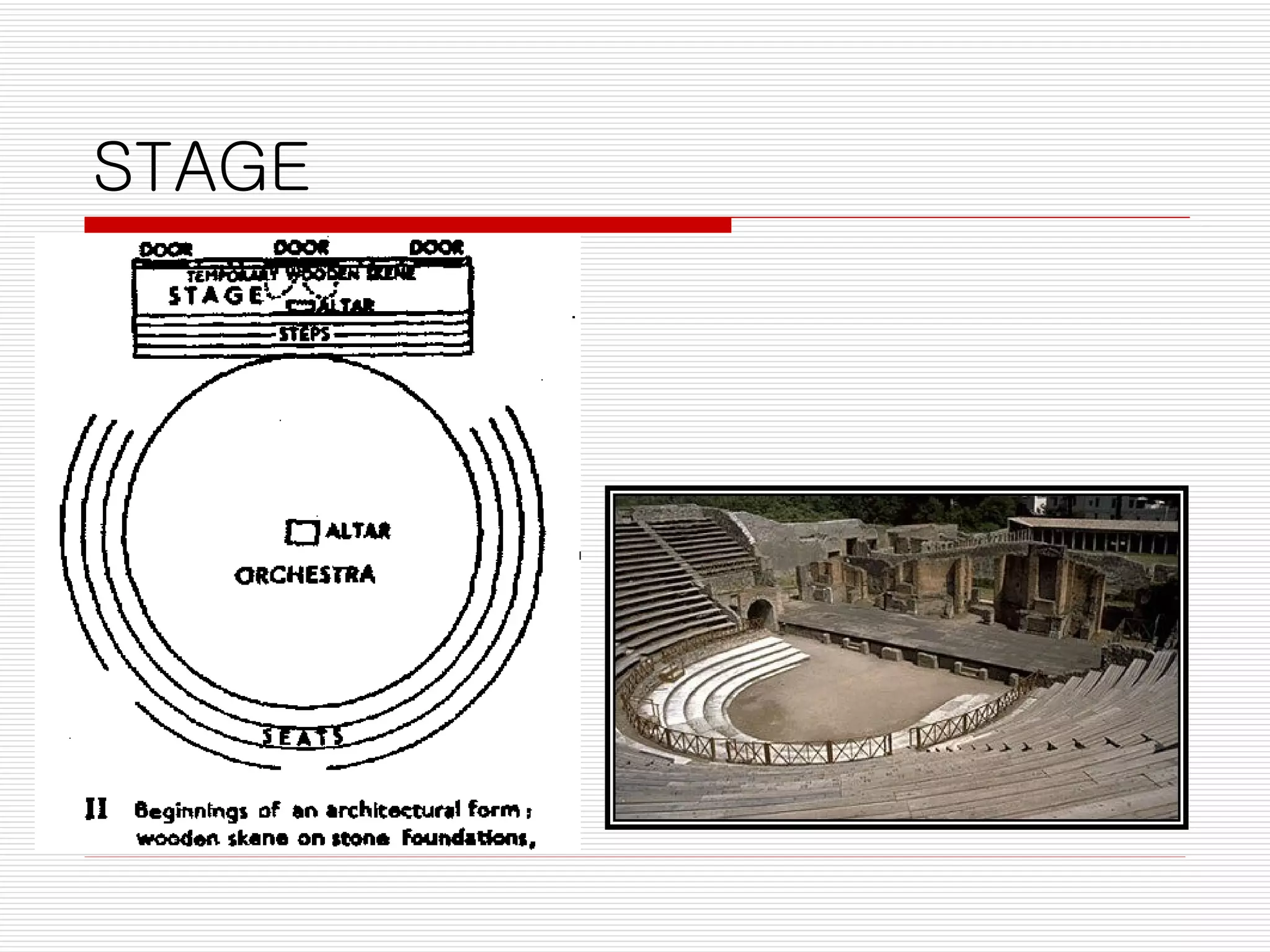
STAGE


The Ancient Greek Theatre

  • 1.
    THE ANCIENT GREEKTHEATRE Student: Jake Seok Teacher: Brian
  • 2.
    History of GreekDrama About Twenty five hundred years ago, Western theatre was born in Athens, Greece. The ancient Athenians created a theatre culture whose form, technique and terminology have lasted two millennia. They created plays that are still considered among the greatest works of world drama.
  • 3.
    Famous Greek PlaywrightEuripides was the youngest of Athens’ three greatest tragic poets. He altered the content of the epics by lessening the heroic image and he became a precursor of bourgeois drama. He wrote 108 plays during his life time.
  • 4.
    THE GOLDEN AGEOF GREEK THEATRE The period around 600 BC - 200 BC was known as the Golden age of Greek Theater arts. Athens was the focal point for the flourishing arts. The political and military epicenter gave birth to great emperors, soldiers, philosophers, poets, writers and actors.
  • 5.
    Athenian Drama Competitions In 534 BC, the ruler of Athens, Pisistratus, changed the Dionysian Festivals and instituted drama competitions. In the ensuing 50 years, the competitions became popular annual events.
  • 6.
    How Plays WerePerformed Plays were performed in the daytime. The annual drama competitions in Athens were spread over several, entire days. Actors probably wore little or no makeup. Instead, they carried masks with exaggerated facial expressions. Wore cothornos, or buskins, which were leather boots laced up to the knees.
  • 7.
    TRAGEDY Tragedy,derived from the Greek words tragos (goat) and ode (song), told a story that was intended to teach religious lessons. Much like Biblical parables, tragedies were designed to show the right and wrong paths in life
  • 8.
    Lighting, Properties andCostume Sun provided lighting. For example, torches were used, more as properties in order to heighten the power of the appearance of certain passages or characters, the furies. Gestures had to be large and sweeping and costumes had to be large and flowing in order to allow free, athletic movement, and to make a strong visual impression upon the audience.
  • 9.
  • 10.
  • 11.