Grazing Standing Corn w/ Cover Crops
And the Economics
By Russ Wilson
Wilson Land & Cattle Co.
Wilson Land & Cattle Co. is a small family 205 acre farm w/130 acres pastured with multi species of livestock. Located
in south western Forest County of PA. Owned and operated by the Russ Wilson family. Wilson Land & Cattle Co. is
developing into a successful model for fulfilling relationships between soil, animals and people through a sustainable
farming enterprise dedicated to restorative agricultural practices.
Species of livestock raised
• Registered Black Angus Cattle – 85
• F-1 and F-2 Waygu Cattle (American Kobe Beef)-12
• Registered Dorset Sheep-35
• Cross Bred Sheep-40
• Poultry mixed spieces-200
• Hogs 1-sow and 1- boar
We are a sustainable farm, using innovative farming techniques, reducing inputs by using livestock as our harvesters,
and keeping soil covered year round for better soil health.
• Time and Money
• Better Feed ?
• More Pounds of Feed/
Acre
• Healthier Livestock
• Improved Soil Health
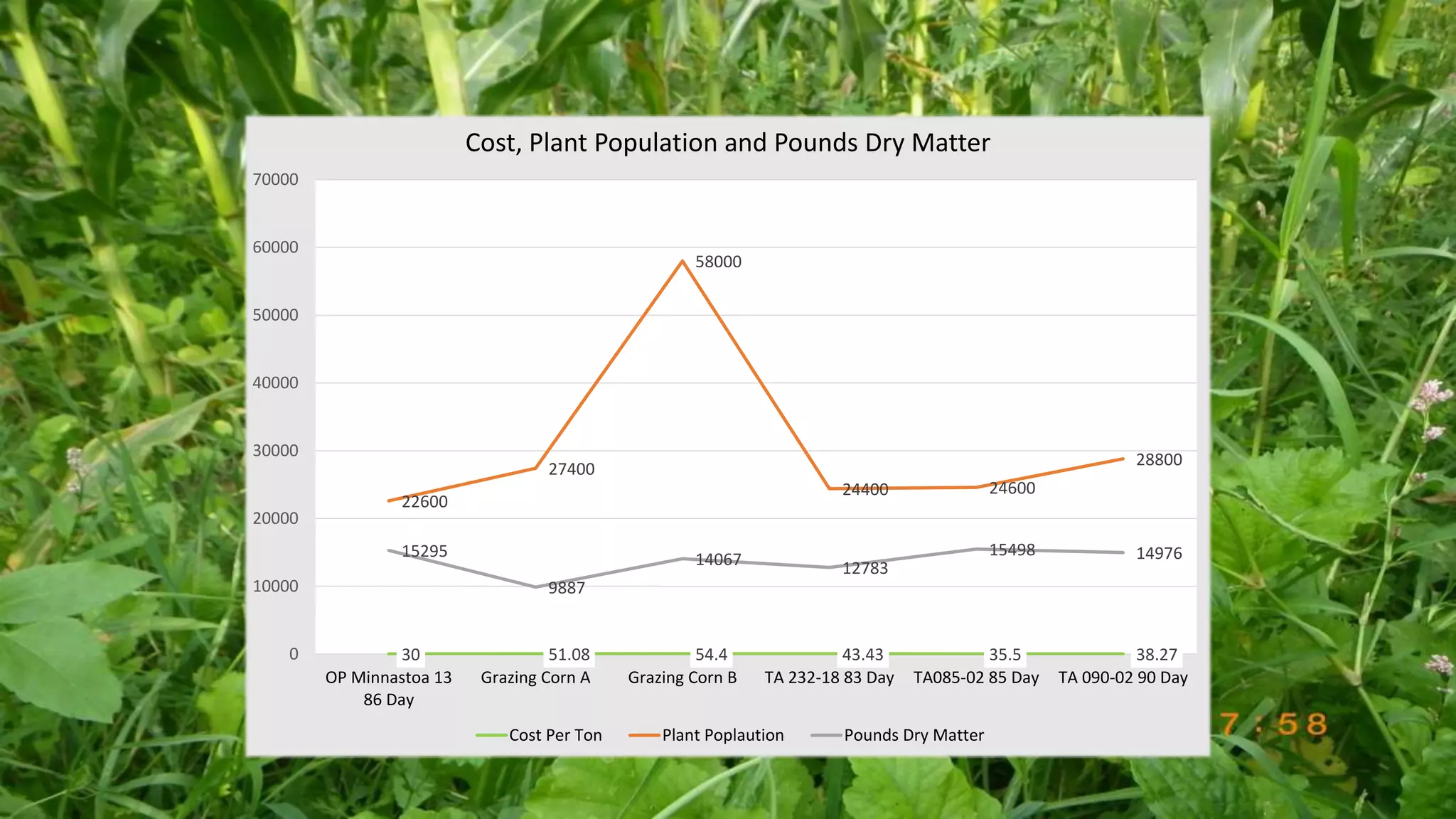
30 51.08 54.4 43.43 35.5 38.27
22600
27400
58000
24400 24600
28800
15295
9887
14067 12783
15498 14976
0
10000
20000
30000
40000
50000
60000
70000
OP Minnastoa 13
86 Day
Grazing Corn A Grazing Corn B TA 232-18 83 Day TA085-02 85 Day TA 090-02 90 Day
Cost, Plant Population and Pounds Dry Matter
Cost Per Ton Plant Poplaution Pounds Dry Matter
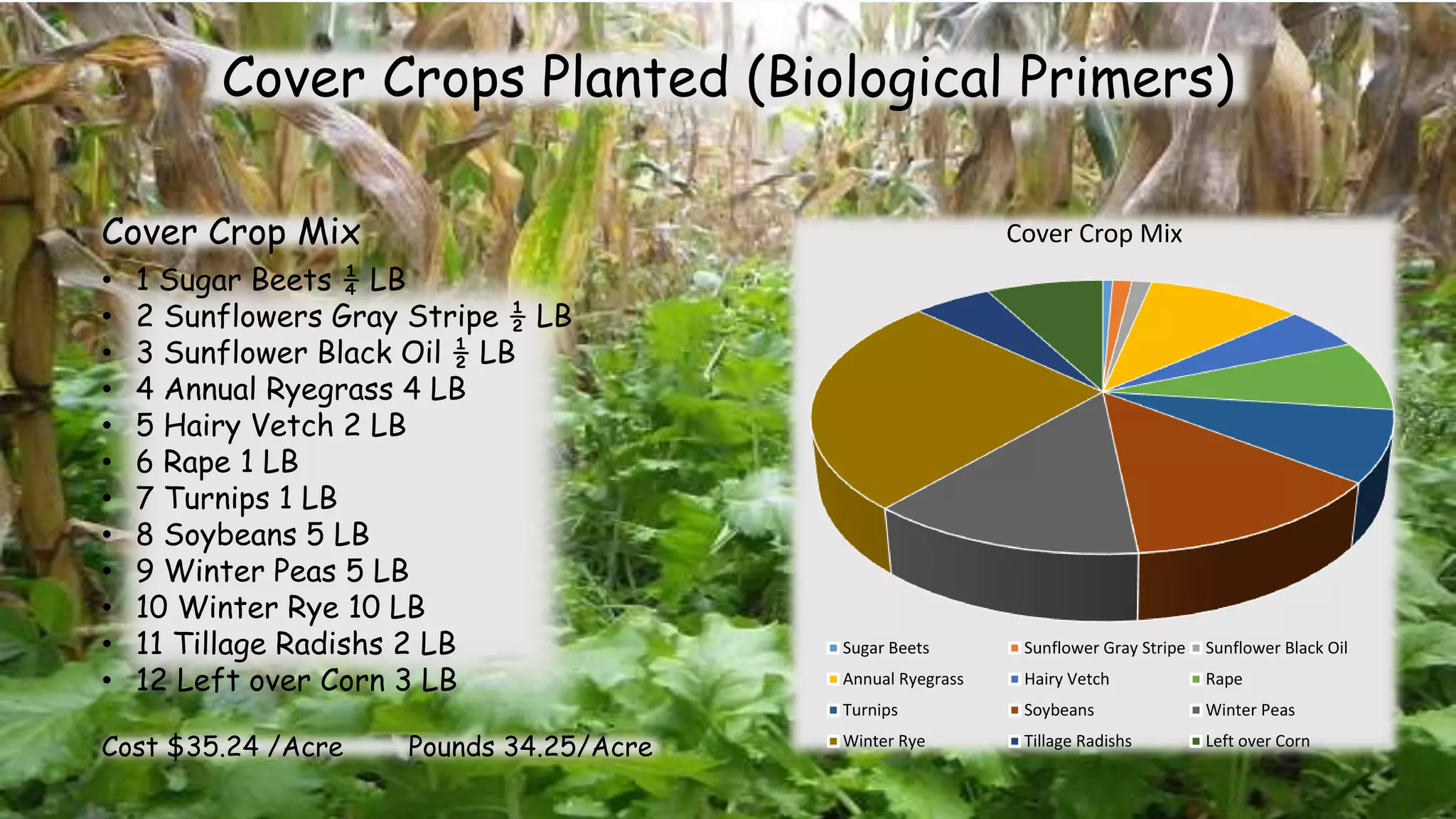
Cover Crop Mix
Sugar Beets Sunflower Gray Stripe Sunflower Black Oil
Annual Ryegrass Hairy Vetch Rape
Turnips Soybeans Winter Peas
Winter Rye Tillage Radishs Left over Corn
Cover Crops Planted (Biological Primers)
• 1 Sugar Beets ¼ LB
• 2 Sunflowers Gray Stripe ½ LB
• 3 Sunflower Black Oil ½ LB
• 4 Annual Ryegrass 4 LB
• 5 Hairy Vetch 2 LB
• 6 Rape 1 LB
• 7 Turnips 1 LB
• 8 Soybeans 5 LB
• 9 Winter Peas 5 LB
• 10 Winter Rye 10 LB
• 11 Tillage Radishs 2 LB
• 12 Left over Corn 3 LB
Cover Crop Mix
Cost $35.24 /Acre Pounds 34.25/Acre
Four
consecutive
rows
34%
56%
10%
Stover Ears W/ Husk Cover Crops
Minnesota 13 Open Pollinated Corn W/ Cover Crops
Ear W/ Husk 56% CP 8.00%
Stover 34% CP 4.7%
Cover Crop 10% CP 9.7%
Weighted Avg. CP 6.76%
Plant Population 22600
15,295 Pounds of dry matter to acre
Cost $30.00 per ton
Lower corn plant population
(22,600) =
• More Ears of Corn
• More Sun Light for Cover Crops
• More Tons to the Acre
• Less Cost to produce
• Better soil health
for the next crop
• 7 Ears of Corn
• 2 Stalks
Source Unknown
We need to farm with less inputs
The Highest Input on the average Farm is Human Labor
Things we didn’t have to do by grazing stock piled corn
1. Pick Corn
2. Store corn
3. Grind Corn
4. Feed Corn
5. Less Manure Barn Cleaned less often 12day vs 6day
6. Less Bedding (big input for use)
7. Less manure to load
8. Less Manure to spread
9. Less hay to make or Buy and Haul
10. Less hay to feed
11. List seems endless
Things we did do by grazing stock piled corn
1. Moved cattle in and out of the barn everyday
2. Set temporary fence everyday
3. Fed 1 bale of high quality hay every day for supplement
4. Fed balanced mineral pack
Second Highest Input is Fossil Fuel
How much Time and fossil fuel was saved?
How Much Money was saved
9.5 Acres of Corn W/Cover Crop
Avg. 6.88 ton to Acre
Avg. cost $42.11 Acre Over Entire Test
65.36 tons of feed
Total of $2752.31
Hay Production Cost $130.00 Ton for our farm to produce 1 ton of
hay
$130 X 65.36 ton
Total of $8496.80
For a Saving of $5744.49
If entire Test Was $30 per ton @ 7.65 ton to the acre X 9 ½ Acres
Cost Saving would be an additional $572.77
Grazing Day Comparison on our Farm
1 grazing day = 1-1000LBS stocking (animal) unit
• 2012 Corn field A 5 acres
Yield 6 very poor quality round bales of hay 3500 lbs dry matter
=
23 grazing days to the acre
• 2012 Corn Field B 4 ½ acres
Yield 200 grazing days of perennial grasses and weeds
=
44 grazing days to the acre
• 2013 Corn field A and B 9 ½ acres
Yield 64 grazing days X 79.5 stocking units
= 5088 grazing days
5088 grazing / 9.5 acres
=
536 grazing days to the acre
Perennial cool season grasses and legume mix permanent pasture 2013 508 days to the acre (our best and least expensive)
Jean-Marie Luginbuhl at NC State
Grazing Behavior of Cattle
Over all
Body condition
And
Health
We try to maintain over all body condition of 5-6
Cattle did very well grazing. We had no
Health problems and maintained or gained weight
Grazing standing and cover crops
0
10
20
30
40
50
60
70
80
90
100
2011
2012
2013
15
20
31
76
32
96
13.6
9.1
54.8
3.6
1
2.9
1.6
0.4
2
Soil Nutrient Levels
Phosphorus Potassium Sulfur Zinc Copper
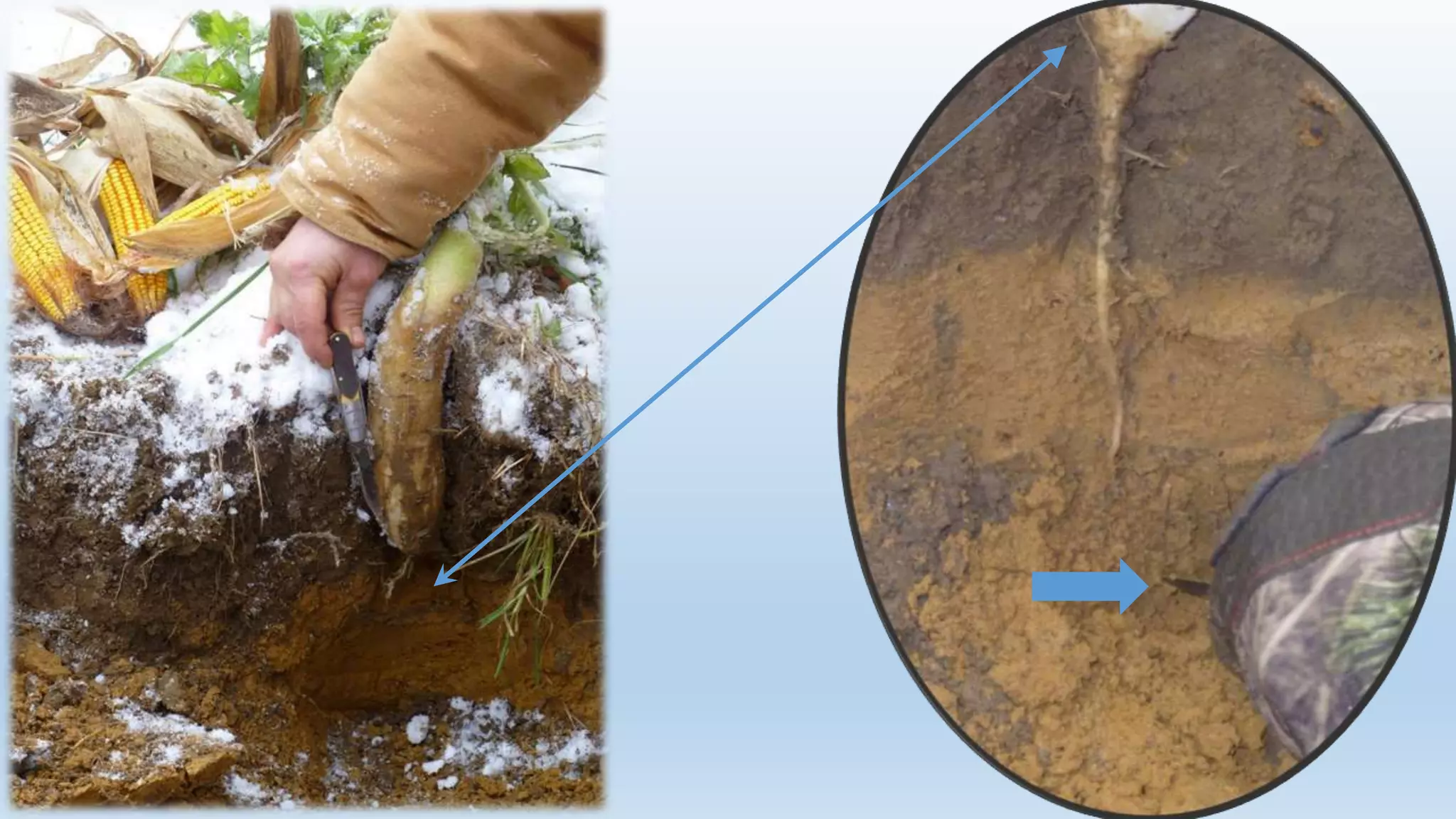
Little Buddies (earthworms)
Working Below Soil surface
earthworm tunnels can create "macro-pores" to aid the
movement of water through the soil. They also help
incorporate organic matter into the mineral soil to make
more nutrients available to plants.
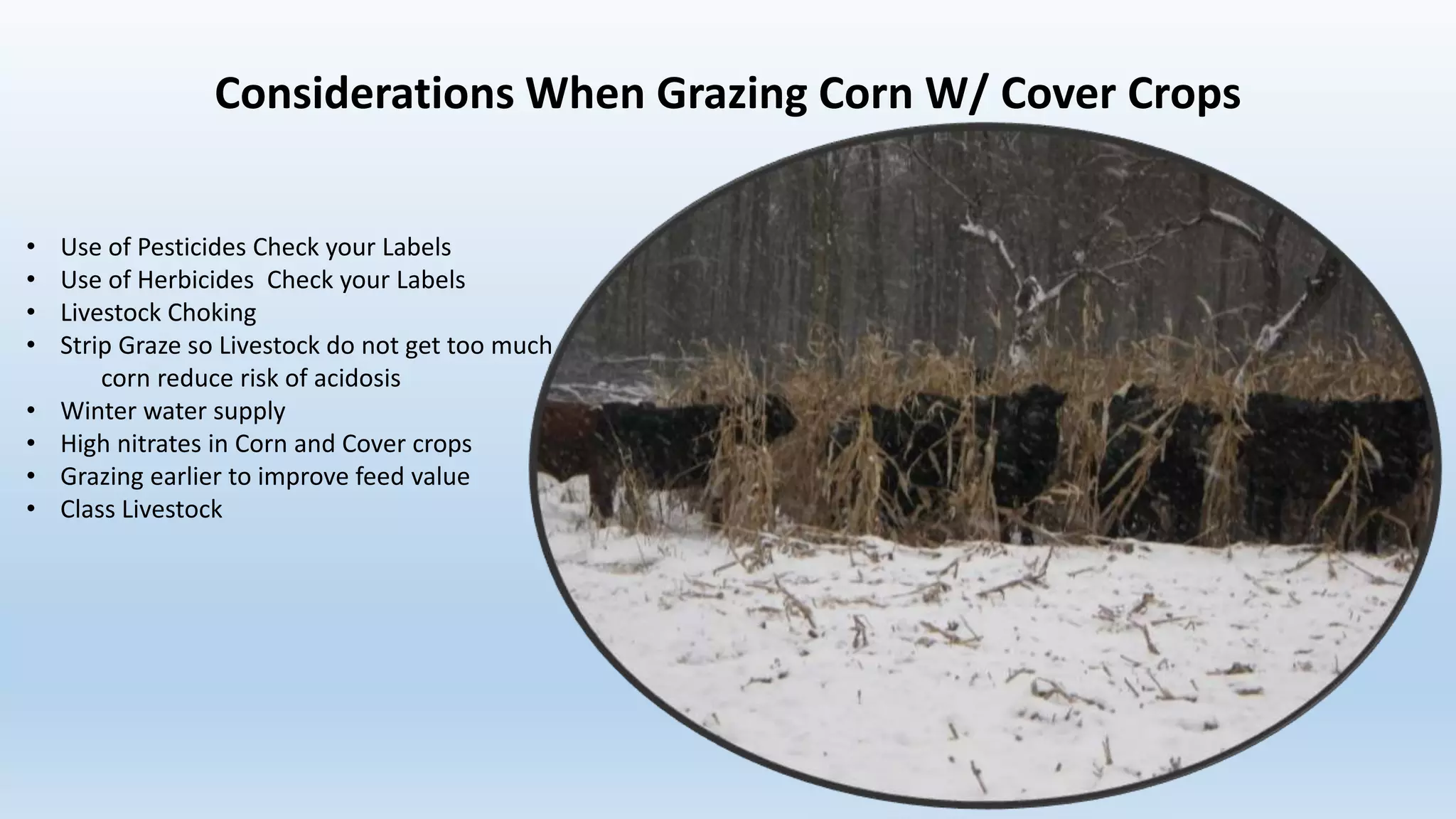
Considerations When Grazing Corn W/ Cover Crops
• Use of Pesticides Check your Labels
• Use of Herbicides Check your Labels
• Livestock Choking
• Strip Graze so Livestock do not get too much
corn reduce risk of acidosis
• Winter water supply
• High nitrates in Corn and Cover crops
• Grazing earlier to improve feed value
• Class Livestock
Recommendations on my observations and data
Lower corn plant population 20,000- 24,000
Good lodge resistant corn
Shorter day corn
Plant cover crop for whatever your intentions are
Soil Fertility
Organic Matter
Increased Feed Value
Do not go with what looks the best
Take samples. It isn’t always what it seems!
 Do your homework
Special Thanks
Friends and Family
that helped with this project
Contact
Wilson Land &Cattle Co.
Tionetsa PA
(814)-354-2325
ancattle@gmail.com

Grazing corn

  • 1.
    Grazing Standing Cornw/ Cover Crops And the Economics By Russ Wilson
  • 2.
    Wilson Land &Cattle Co. Wilson Land & Cattle Co. is a small family 205 acre farm w/130 acres pastured with multi species of livestock. Located in south western Forest County of PA. Owned and operated by the Russ Wilson family. Wilson Land & Cattle Co. is developing into a successful model for fulfilling relationships between soil, animals and people through a sustainable farming enterprise dedicated to restorative agricultural practices. Species of livestock raised • Registered Black Angus Cattle – 85 • F-1 and F-2 Waygu Cattle (American Kobe Beef)-12 • Registered Dorset Sheep-35 • Cross Bred Sheep-40 • Poultry mixed spieces-200 • Hogs 1-sow and 1- boar We are a sustainable farm, using innovative farming techniques, reducing inputs by using livestock as our harvesters, and keeping soil covered year round for better soil health.
  • 3.
    • Time andMoney • Better Feed ? • More Pounds of Feed/ Acre • Healthier Livestock • Improved Soil Health
  • 4.
    30 51.08 54.443.43 35.5 38.27 22600 27400 58000 24400 24600 28800 15295 9887 14067 12783 15498 14976 0 10000 20000 30000 40000 50000 60000 70000 OP Minnastoa 13 86 Day Grazing Corn A Grazing Corn B TA 232-18 83 Day TA085-02 85 Day TA 090-02 90 Day Cost, Plant Population and Pounds Dry Matter Cost Per Ton Plant Poplaution Pounds Dry Matter
  • 5.
    Cover Crop Mix SugarBeets Sunflower Gray Stripe Sunflower Black Oil Annual Ryegrass Hairy Vetch Rape Turnips Soybeans Winter Peas Winter Rye Tillage Radishs Left over Corn Cover Crops Planted (Biological Primers) • 1 Sugar Beets ¼ LB • 2 Sunflowers Gray Stripe ½ LB • 3 Sunflower Black Oil ½ LB • 4 Annual Ryegrass 4 LB • 5 Hairy Vetch 2 LB • 6 Rape 1 LB • 7 Turnips 1 LB • 8 Soybeans 5 LB • 9 Winter Peas 5 LB • 10 Winter Rye 10 LB • 11 Tillage Radishs 2 LB • 12 Left over Corn 3 LB Cover Crop Mix Cost $35.24 /Acre Pounds 34.25/Acre
  • 6.
  • 7.
    34% 56% 10% Stover Ears W/Husk Cover Crops Minnesota 13 Open Pollinated Corn W/ Cover Crops Ear W/ Husk 56% CP 8.00% Stover 34% CP 4.7% Cover Crop 10% CP 9.7% Weighted Avg. CP 6.76% Plant Population 22600 15,295 Pounds of dry matter to acre Cost $30.00 per ton
  • 8.
    Lower corn plantpopulation (22,600) = • More Ears of Corn • More Sun Light for Cover Crops • More Tons to the Acre • Less Cost to produce • Better soil health for the next crop • 7 Ears of Corn • 2 Stalks
  • 9.
    Source Unknown We needto farm with less inputs
  • 10.
    The Highest Inputon the average Farm is Human Labor Things we didn’t have to do by grazing stock piled corn 1. Pick Corn 2. Store corn 3. Grind Corn 4. Feed Corn 5. Less Manure Barn Cleaned less often 12day vs 6day 6. Less Bedding (big input for use) 7. Less manure to load 8. Less Manure to spread 9. Less hay to make or Buy and Haul 10. Less hay to feed 11. List seems endless Things we did do by grazing stock piled corn 1. Moved cattle in and out of the barn everyday 2. Set temporary fence everyday 3. Fed 1 bale of high quality hay every day for supplement 4. Fed balanced mineral pack Second Highest Input is Fossil Fuel How much Time and fossil fuel was saved?
  • 11.
    How Much Moneywas saved 9.5 Acres of Corn W/Cover Crop Avg. 6.88 ton to Acre Avg. cost $42.11 Acre Over Entire Test 65.36 tons of feed Total of $2752.31 Hay Production Cost $130.00 Ton for our farm to produce 1 ton of hay $130 X 65.36 ton Total of $8496.80 For a Saving of $5744.49 If entire Test Was $30 per ton @ 7.65 ton to the acre X 9 ½ Acres Cost Saving would be an additional $572.77
  • 12.
    Grazing Day Comparisonon our Farm 1 grazing day = 1-1000LBS stocking (animal) unit • 2012 Corn field A 5 acres Yield 6 very poor quality round bales of hay 3500 lbs dry matter = 23 grazing days to the acre • 2012 Corn Field B 4 ½ acres Yield 200 grazing days of perennial grasses and weeds = 44 grazing days to the acre • 2013 Corn field A and B 9 ½ acres Yield 64 grazing days X 79.5 stocking units = 5088 grazing days 5088 grazing / 9.5 acres = 536 grazing days to the acre Perennial cool season grasses and legume mix permanent pasture 2013 508 days to the acre (our best and least expensive)
  • 13.
    Jean-Marie Luginbuhl atNC State Grazing Behavior of Cattle
  • 15.
    Over all Body condition And Health Wetry to maintain over all body condition of 5-6 Cattle did very well grazing. We had no Health problems and maintained or gained weight Grazing standing and cover crops
  • 16.
  • 18.
    Little Buddies (earthworms) WorkingBelow Soil surface earthworm tunnels can create "macro-pores" to aid the movement of water through the soil. They also help incorporate organic matter into the mineral soil to make more nutrients available to plants.
  • 19.
    Considerations When GrazingCorn W/ Cover Crops • Use of Pesticides Check your Labels • Use of Herbicides Check your Labels • Livestock Choking • Strip Graze so Livestock do not get too much corn reduce risk of acidosis • Winter water supply • High nitrates in Corn and Cover crops • Grazing earlier to improve feed value • Class Livestock
  • 20.
    Recommendations on myobservations and data Lower corn plant population 20,000- 24,000 Good lodge resistant corn Shorter day corn Plant cover crop for whatever your intentions are Soil Fertility Organic Matter Increased Feed Value Do not go with what looks the best Take samples. It isn’t always what it seems!  Do your homework
  • 21.
    Special Thanks Friends andFamily that helped with this project
  • 22.
    Contact Wilson Land &CattleCo. Tionetsa PA (814)-354-2325 ancattle@gmail.com