Grammar
MUST 
We use must to express that we feel sure that something is true. 
Structure: modal + infinitive without to 
must be, must have, etc. 
Come inside and get warm – you must be 
freezing out there. 
They are really good, they must win. 
. 
They must be very rich. Look at the house.
MAY/MIGHT 
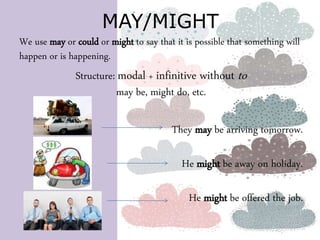
We use may or could or might to say that it is possible that something will 
happen or is happening. 
Structure: modal + infinitive without to 
may be, might do, etc. 
They may be arriving tomorrow. 
He might be away on holiday. 
He might be offered the job.
CAN’T 
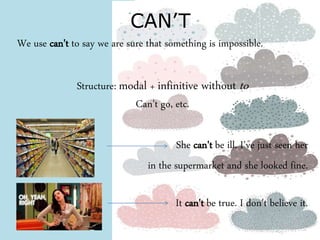
We use can't to say we are sure that something is impossible. 
Structure: modal + infinitive without to 
Can't go, etc. 
She can't be ill. I've just seen her 
in the supermarket and she looked fine. 
It can't be true. I don't believe it.
• They be out. They aren't answering the phone. 
must 
• Helen can’t 
be at secondary school. She's only eight. 
might 
• Jack be on holiday. I haven't seen him for a week. 
can’t 
• Oliver hasn't called. He have my number. 
• They be rich - they've got three houses! 
must 
can’t 
• She be awake yet. It's only seven o'clock.

Grammar/must, may, might and can't

  • 1.
  • 2.
    MUST We usemust to express that we feel sure that something is true. Structure: modal + infinitive without to must be, must have, etc. Come inside and get warm – you must be freezing out there. They are really good, they must win. . They must be very rich. Look at the house.
  • 3.
    MAY/MIGHT We usemay or could or might to say that it is possible that something will happen or is happening. Structure: modal + infinitive without to may be, might do, etc. They may be arriving tomorrow. He might be away on holiday. He might be offered the job.
  • 4.
    CAN’T We usecan't to say we are sure that something is impossible. Structure: modal + infinitive without to Can't go, etc. She can't be ill. I've just seen her in the supermarket and she looked fine. It can't be true. I don't believe it.
  • 5.
    • They beout. They aren't answering the phone. must • Helen can’t be at secondary school. She's only eight. might • Jack be on holiday. I haven't seen him for a week. can’t • Oliver hasn't called. He have my number. • They be rich - they've got three houses! must can’t • She be awake yet. It's only seven o'clock.