
Welcome
To
Our Presentation
“Grameen Phone CHQ Powering and Co-Generation”

2/25/2014
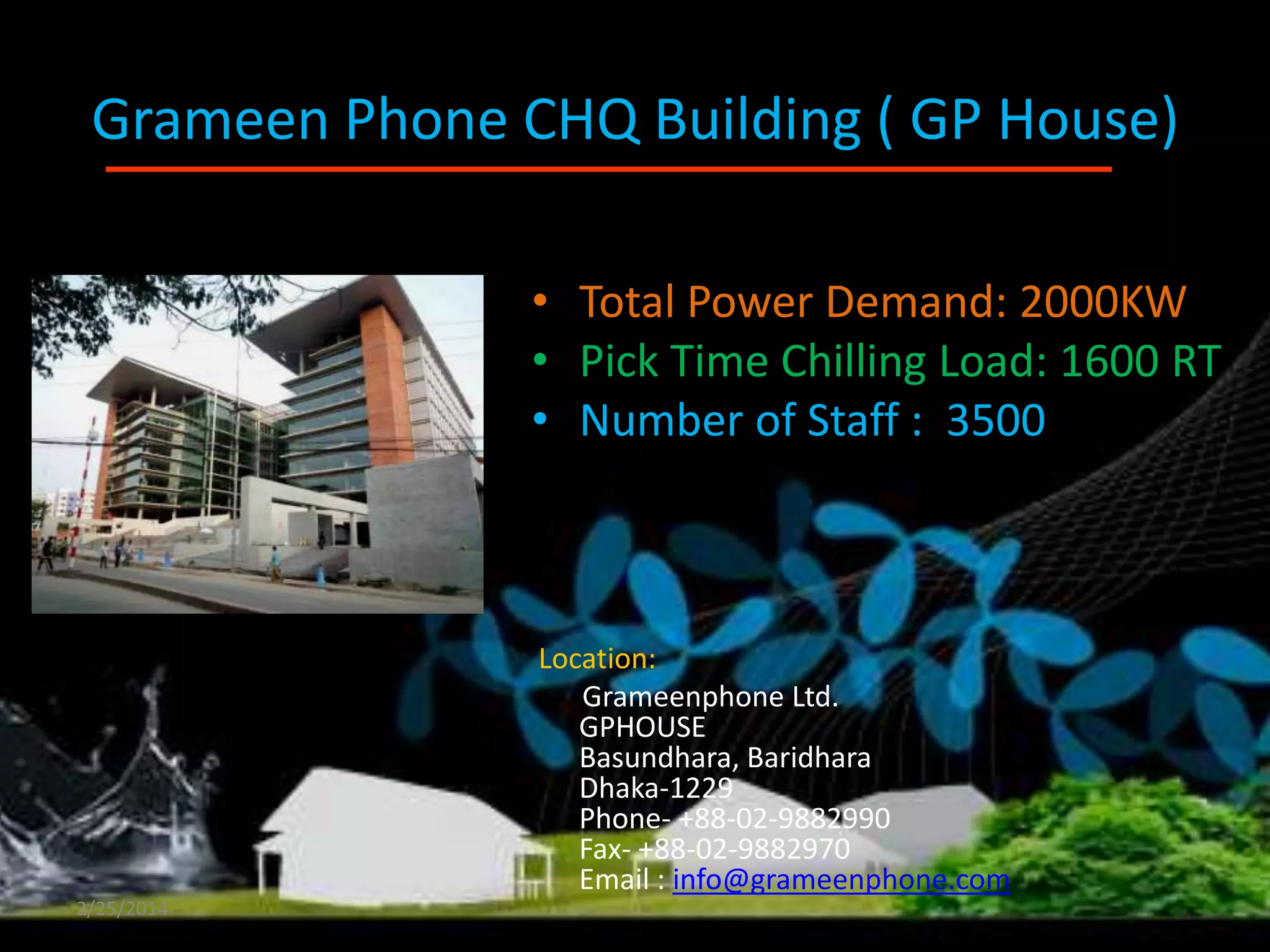
Grameen Phone CHQ Building ( GP House)
• Total Power Demand: 2000KW
• Pick Time Chilling Load: 1600 RT
• Number of Staff : 3500

Location:
Grameenphone Ltd.
GPHOUSE
Basundhara, Baridhara
Dhaka-1229
Phone- +88-02-9882990
Fax- +88-02-9882970
Email : info@grameenphone.com
2/25/2014
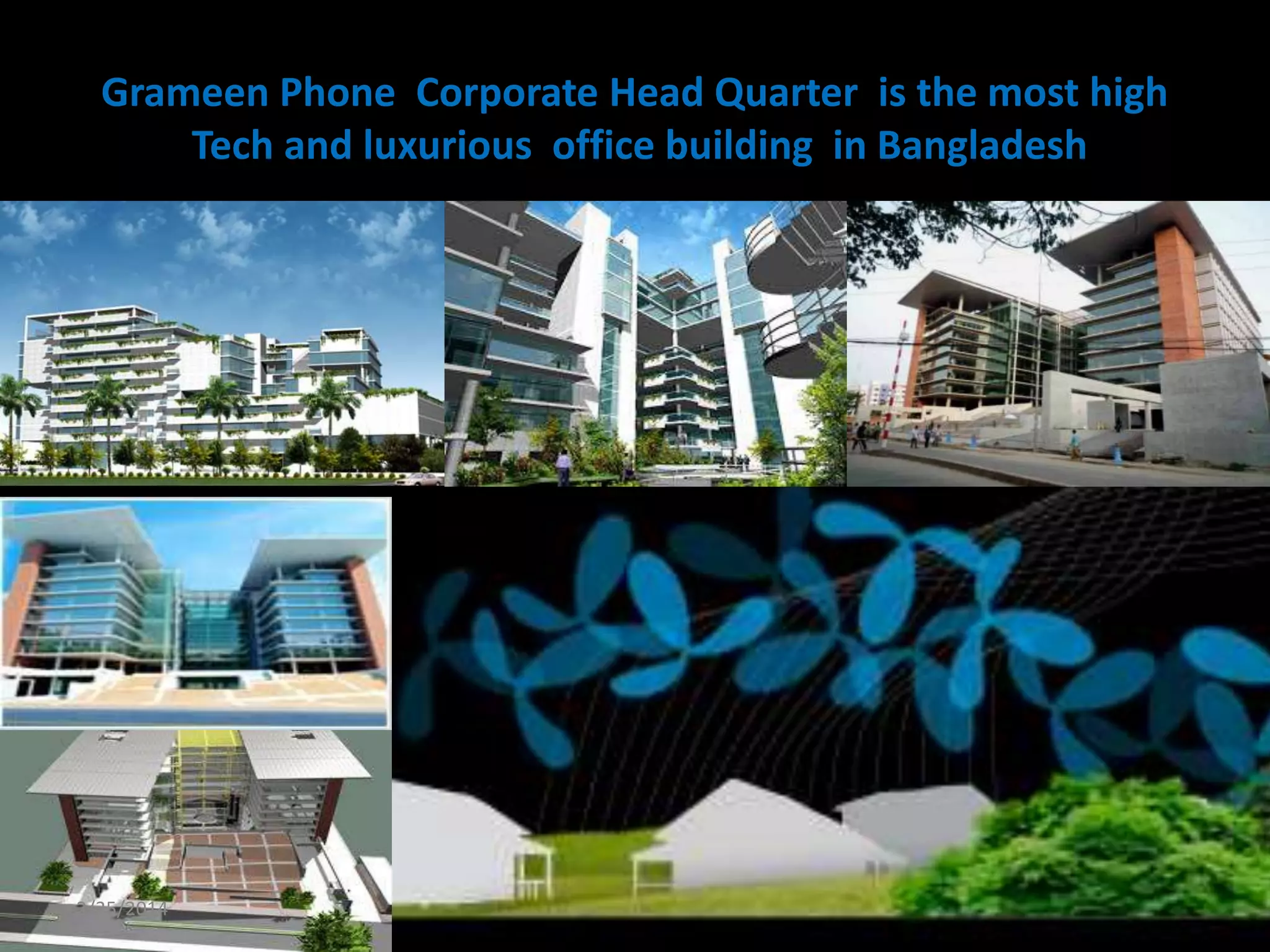
Grameen Phone Corporate Head Quarter is the most high
Tech and luxurious office building in Bangladesh

2/25/2014
GP Power House
•
•
•
•
•

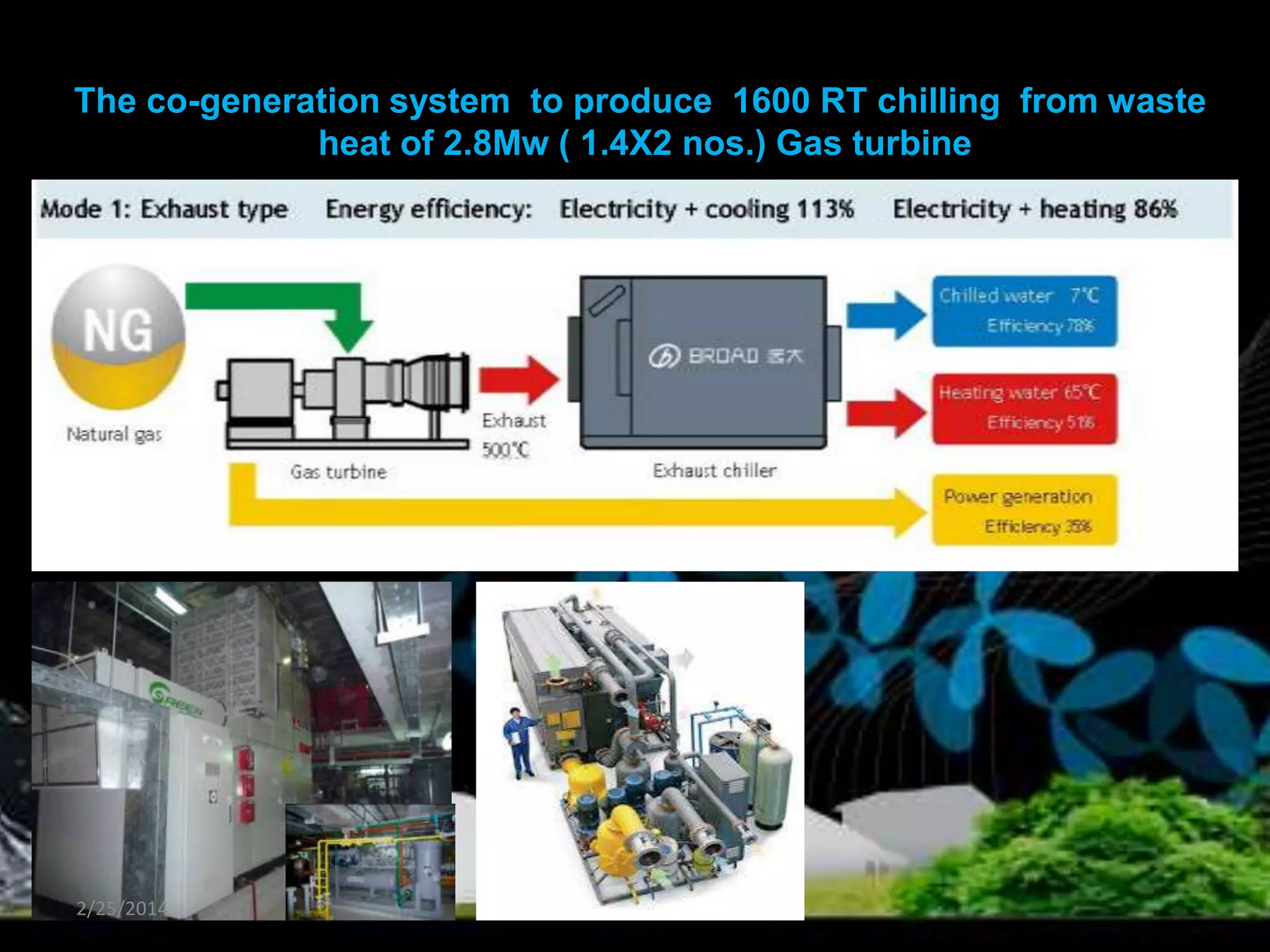
Natural Gas Turbine : 1.40 MW X 2 Sets ( Kawasaki, Japan)
Natural Gas Booster Compressor : 2 Sets
Diesel Generator : 1MW X 1Set
Air Compressor : 1 Set
Multi Energy Absorption Chiller : 827 RT X 3 Sets
Note: Co-generation system save almost 2.0 MW Power
requirements instead of load calculated 4.5 MW

2/25/2014
The co-generation system to produce 1600 RT chilling from waste
heat of 2.8Mw ( 1.4X2 nos.) Gas turbine

2/25/2014
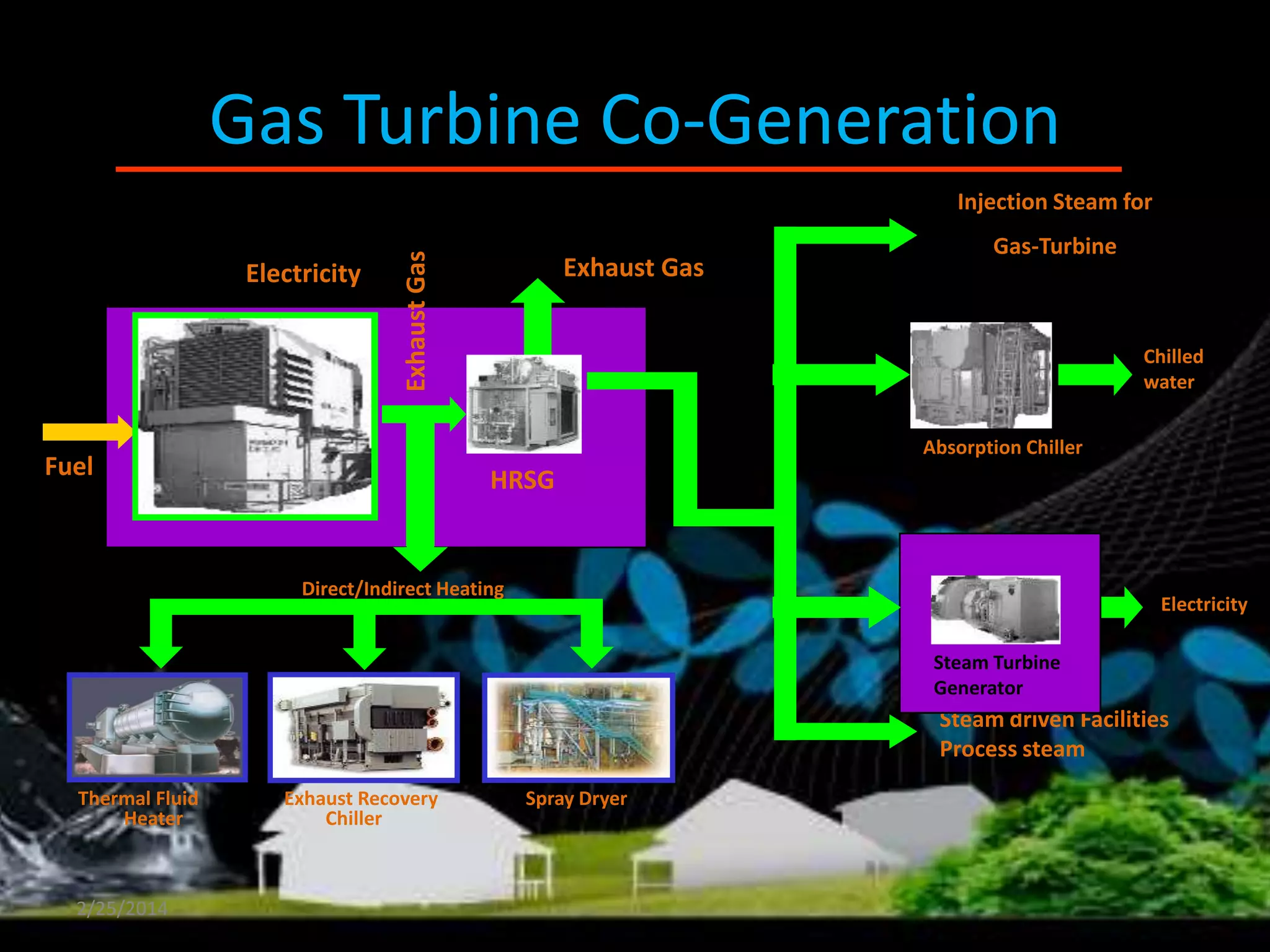
Gas Turbine Co-Generation
Electricity

Exhaust Gas

Injection Steam for

Exhaust Gas

Gas-Turbine

Steam

Chilled
water
Absorption Chiller

Fuel

HRSG

Direct/Indirect Heating

Electricity.
Steam Turbine
Generator

Steam driven Facilities
Process steam
Thermal Fluid
Heater

2/25/2014

Exhaust Recovery
Chiller

Spray Dryer
•

Co-Generation
Cogeneration & CHP

• Cogeneration through combined heat and power (CHP) is the
simultaneous production of electricity with the recovery and utilization
heat. Cogeneration is a highly efficient form of energy conversion
and it can achieve primary energy savings of approximately 40% by
compared to the separate purchase of electricity from the national
electricity grid and a gas boiler for onsite heating. Combined heat and
power plants are typically embedded close to the end user and
therefore help reduce transportation and distribution losses,
improving the overall performance of the electricity transmission and
distribution network . For power users where security of supply is an
important factor for their selection of power production equipment
and gas is abundant, gas-based cogeneration systems are ideally suited
as captive power plants.

2/25/2014
Co-Generation

2/25/2014
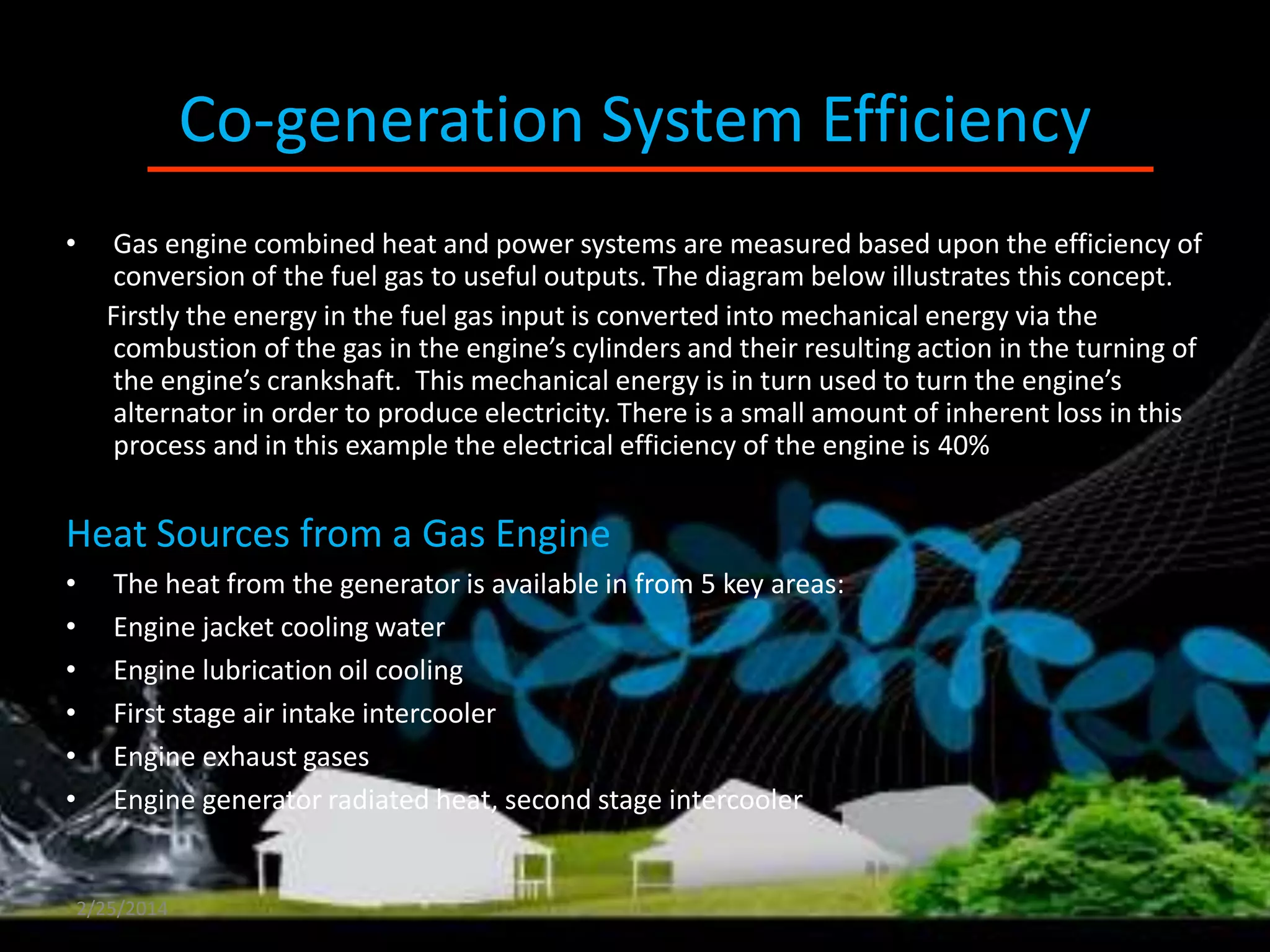
Co-generation System Efficiency
•

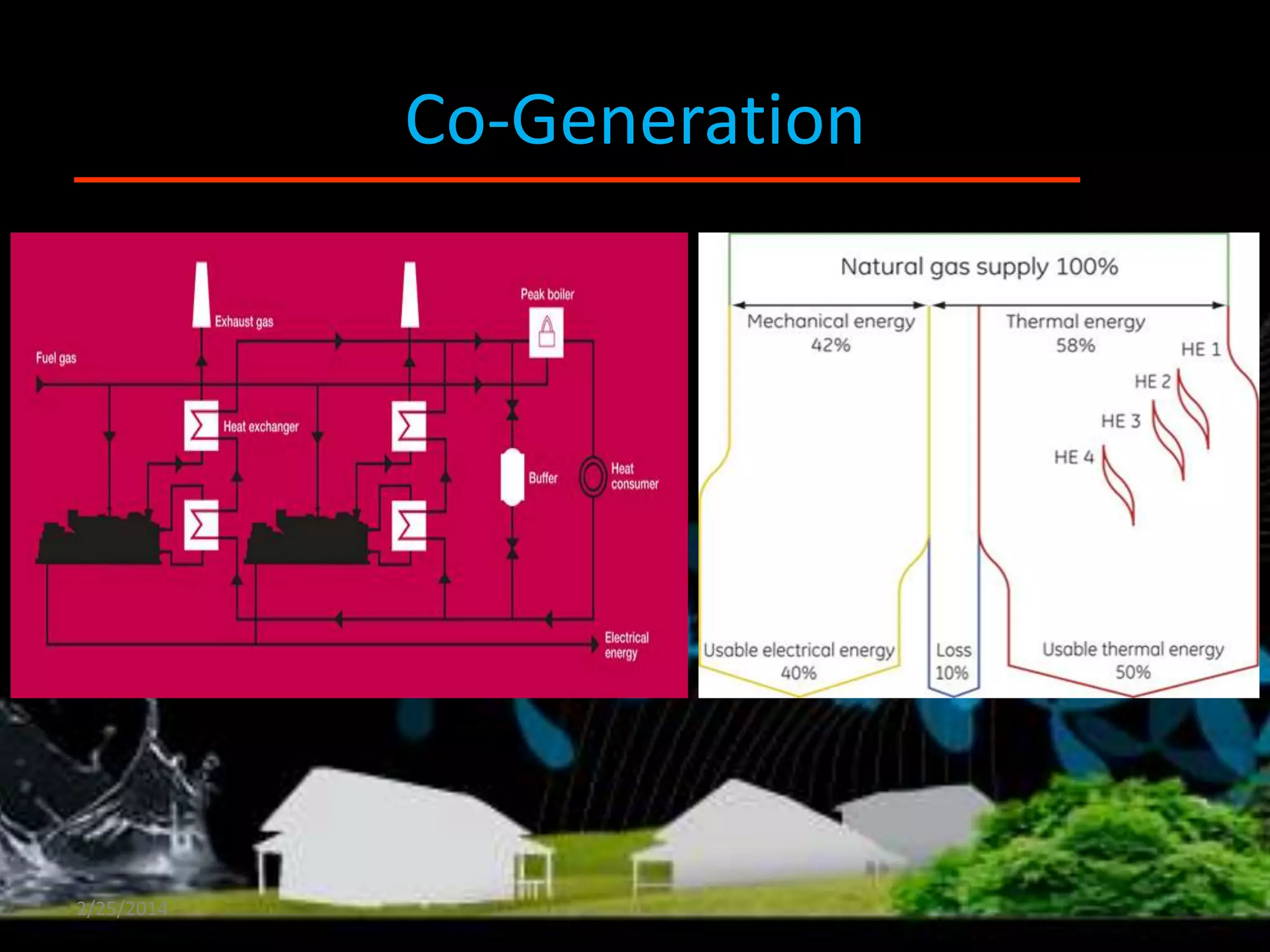
Gas engine combined heat and power systems are measured based upon the efficiency of
conversion of the fuel gas to useful outputs. The diagram below illustrates this concept.
Firstly the energy in the fuel gas input is converted into mechanical energy via the
combustion of the gas in the engine’s cylinders and their resulting action in the turning of
the engine’s crankshaft. This mechanical energy is in turn used to turn the engine’s
alternator in order to produce electricity. There is a small amount of inherent loss in this
process and in this example the electrical efficiency of the engine is 40%

Heat Sources from a Gas Engine
•
•
•
•
•
•

The heat from the generator is available in from 5 key areas:
Engine jacket cooling water
Engine lubrication oil cooling
First stage air intake intercooler
Engine exhaust gases
Engine generator radiated heat, second stage intercooler

2/25/2014
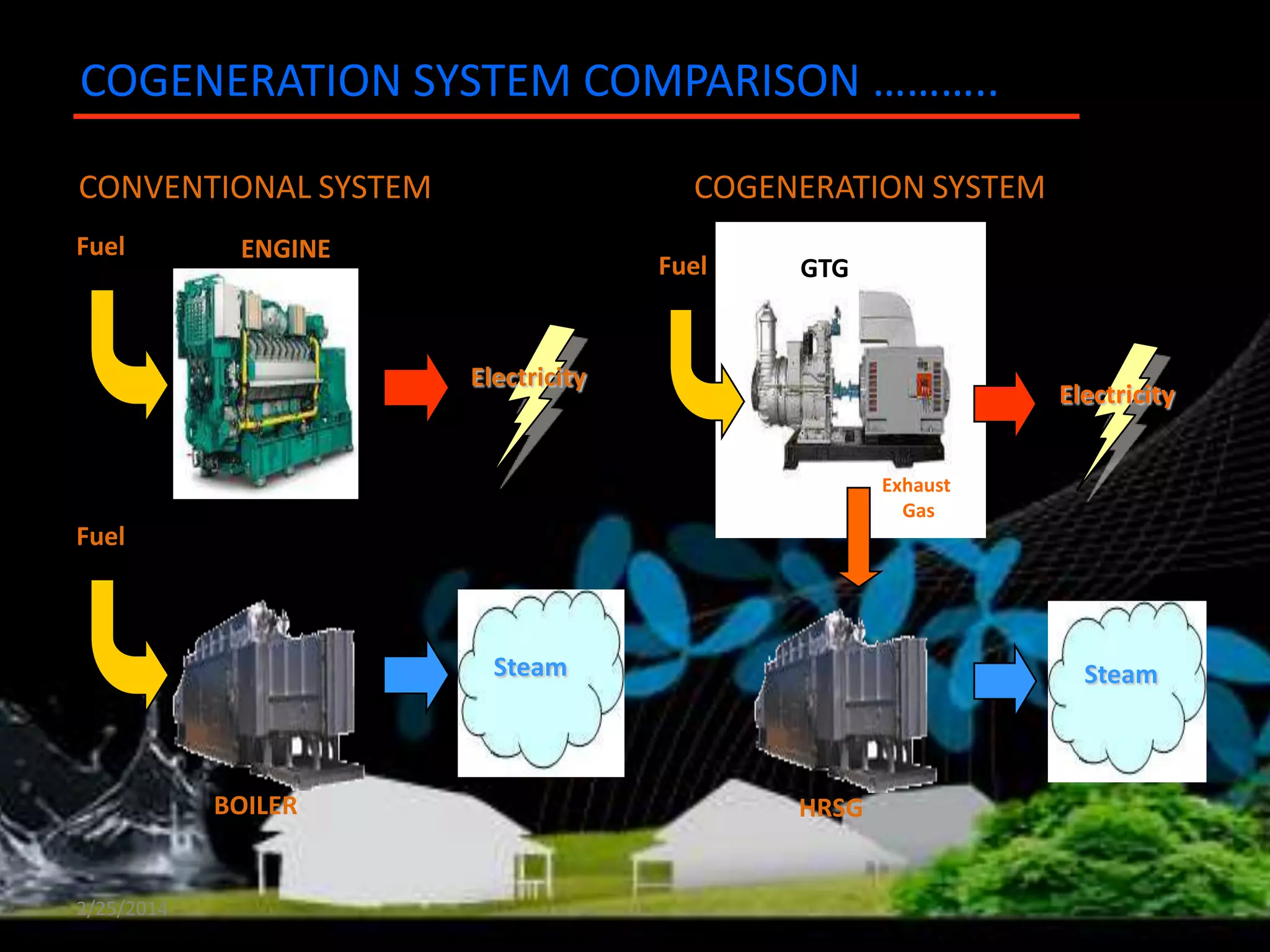
COGENERATION SYSTEM COMPARISON ………..
CONVENTIONAL SYSTEM
Fuel

COGENERATION SYSTEM

ENGINE

Fuel

GTG

Electricity

Electricity
Exhaust
Gas

Fuel

Steam

BOILER

2/25/2014

Steam

HRSG
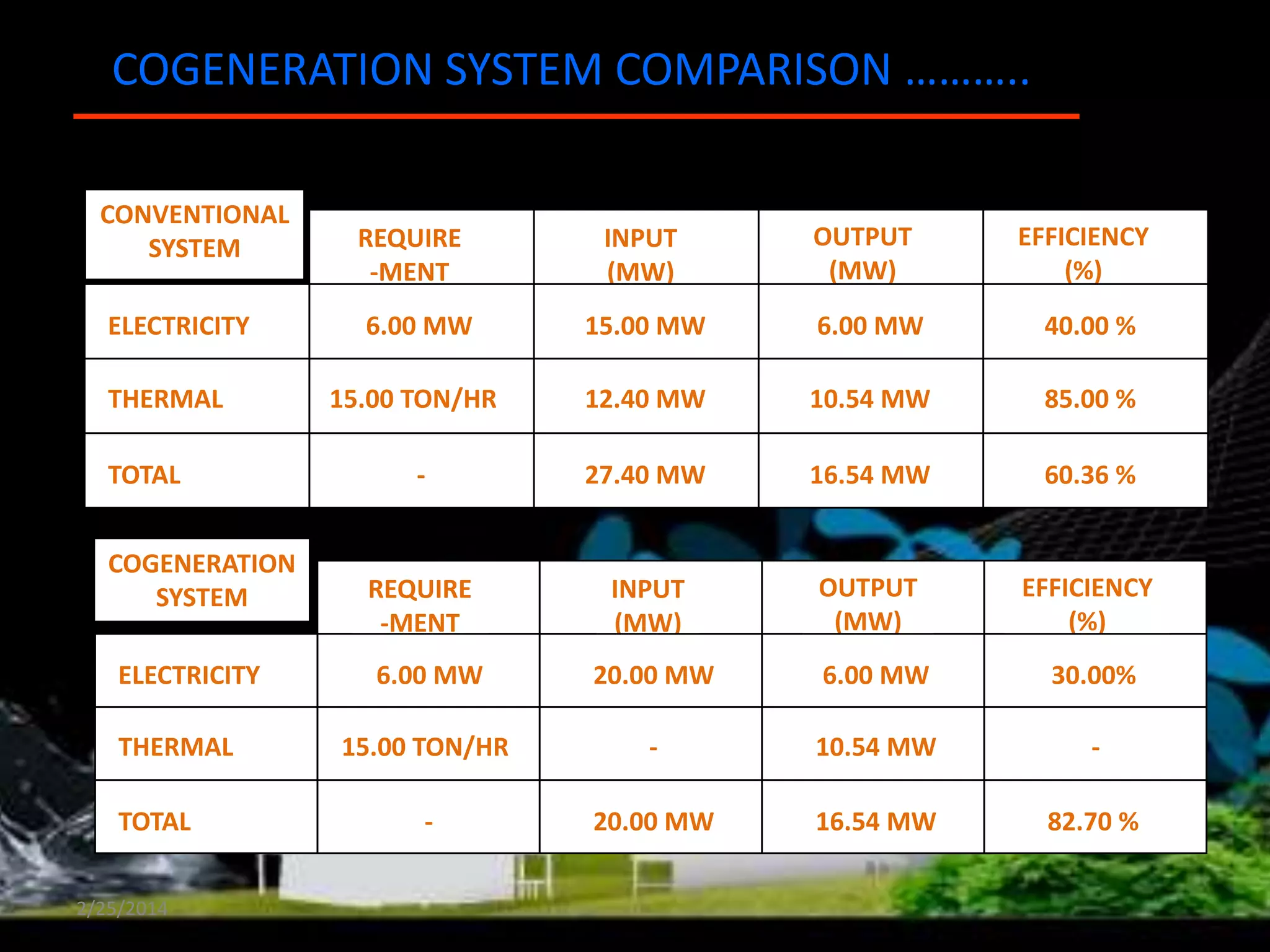
COGENERATION SYSTEM COMPARISON ………..
CONVENTIONAL
SYSTEM
ELECTRICITY

THERMAL
TOTAL

COGENERATION
SYSTEM
ELECTRICITY
THERMAL
TOTAL
2/25/2014

INPUT
(MW)

OUTPUT
(MW)

EFFICIENCY
(%)

6.00 MW

15.00 MW

6.00 MW

40.00 %

15.00 TON/HR

12.40 MW

10.54 MW

85.00 %

-

27.40 MW

16.54 MW

60.36 %

REQUIRE
-MENT

INPUT
(MW)

OUTPUT
(MW)

EFFICIENCY
(%)

6.00 MW

20.00 MW

6.00 MW

30.00%

15.00 TON/HR

-

10.54 MW

-

-

20.00 MW

16.54 MW

82.70 %

REQUIRE
-MENT
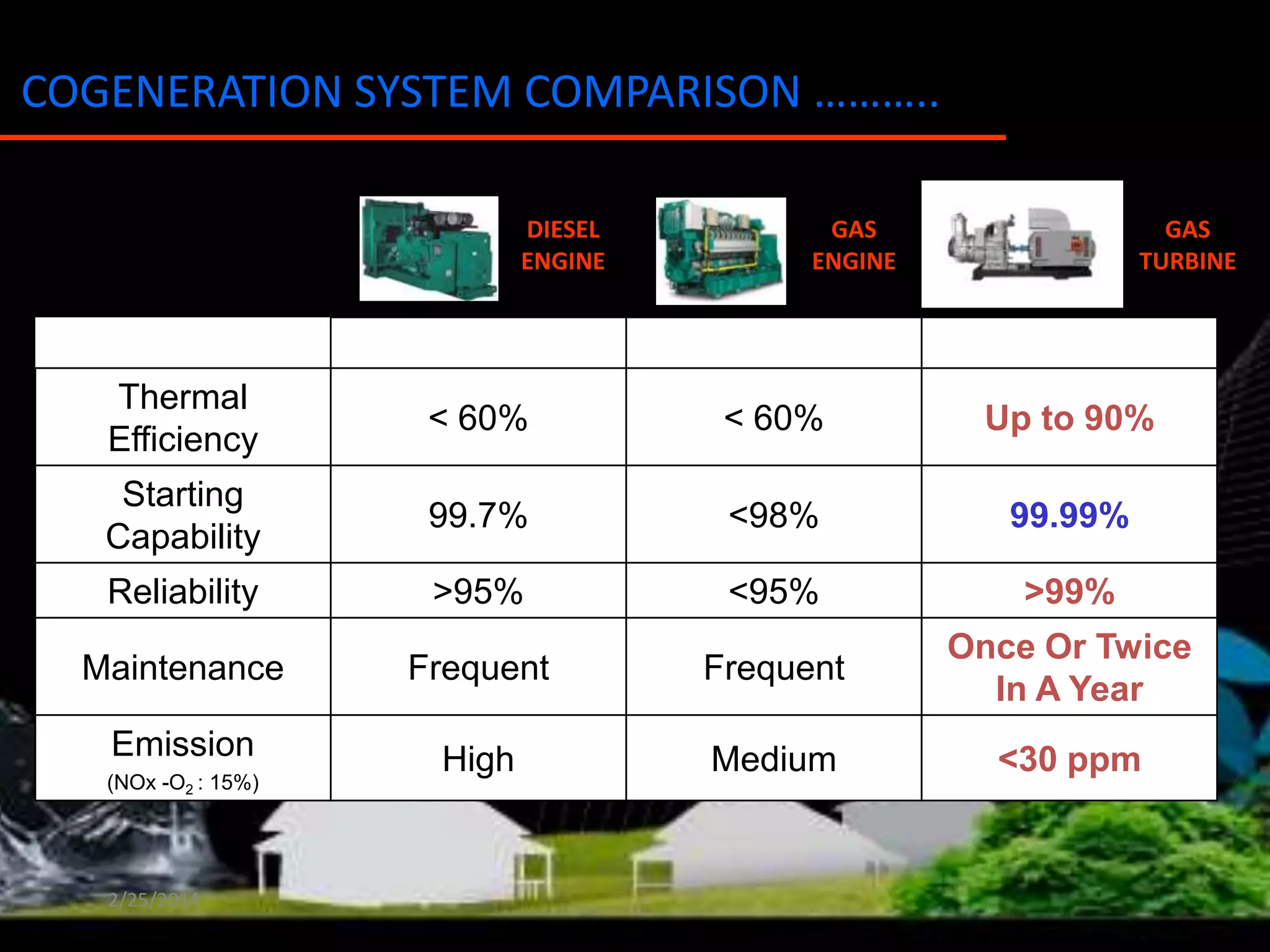
COGENERATION SYSTEM COMPARISON ………..
DIESEL
ENGINE

GAS
ENGINE

GAS
TURBINE

Thermal
Efficiency

< 60%

< 60%

Up to 90%

Starting
Capability

99.7%

<98%

99.99%

Reliability

>95%

<95%

>99%

Maintenance

Frequent

Frequent

Once Or Twice
In A Year

Emission

High

Medium

<30 ppm

(NOx -O2 : 15%)

2/25/2014
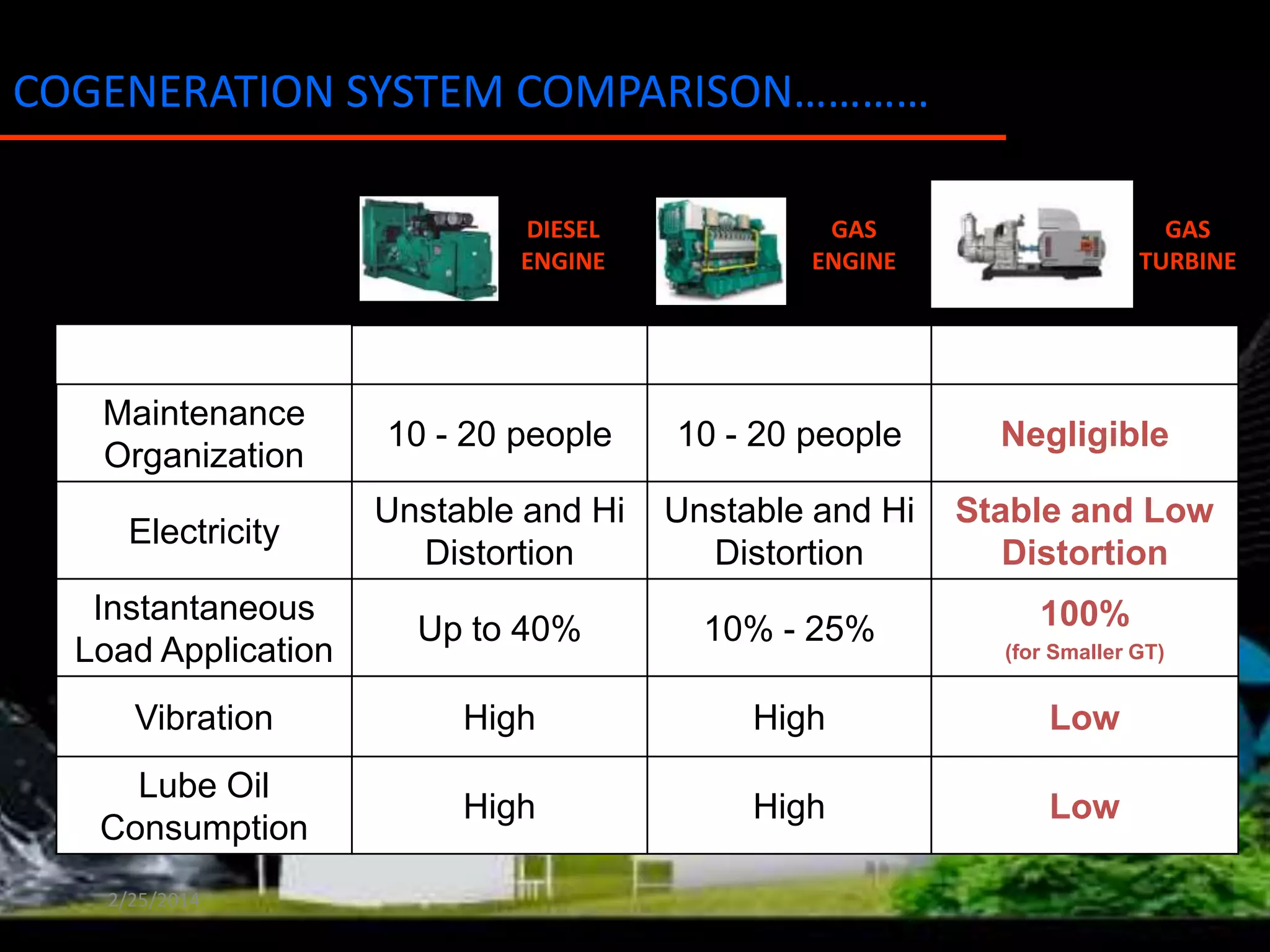
COGENERATION SYSTEM COMPARISON…………
DIESEL
ENGINE

GAS
ENGINE

Maintenance
Organization

10 - 20 people

10 - 20 people

Negligible

Electricity

Unstable and Hi
Distortion

Unstable and Hi
Distortion

Stable and Low
Distortion

Instantaneous
Load Application

Up to 40%

10% - 25%

100%

Vibration

High

High

Low

Lube Oil
Consumption

High

High

Low

2/25/2014

GAS
TURBINE

(for Smaller GT)
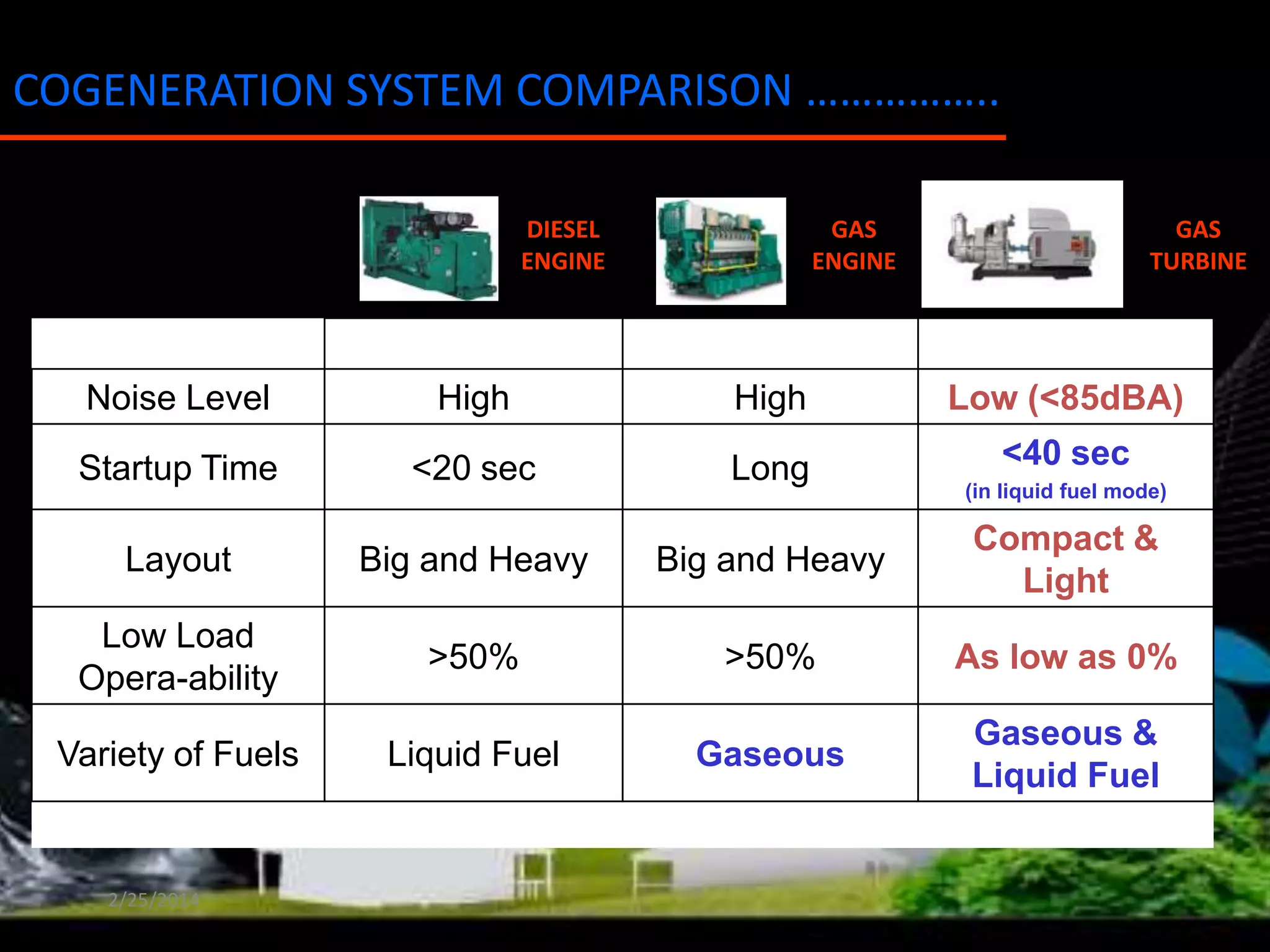
COGENERATION SYSTEM COMPARISON ……………..
DIESEL
ENGINE

GAS
ENGINE

GAS
TURBINE

Noise Level

High

High

Low (<85dBA)

Startup Time

<20 sec

Long

<40 sec

Layout

Big and Heavy

Big and Heavy

Compact &
Light

Low Load
Opera-ability

>50%

>50%

As low as 0%

Variety of Fuels

Liquid Fuel

Gaseous

Gaseous &
Liquid Fuel

2/25/2014

(in liquid fuel mode)
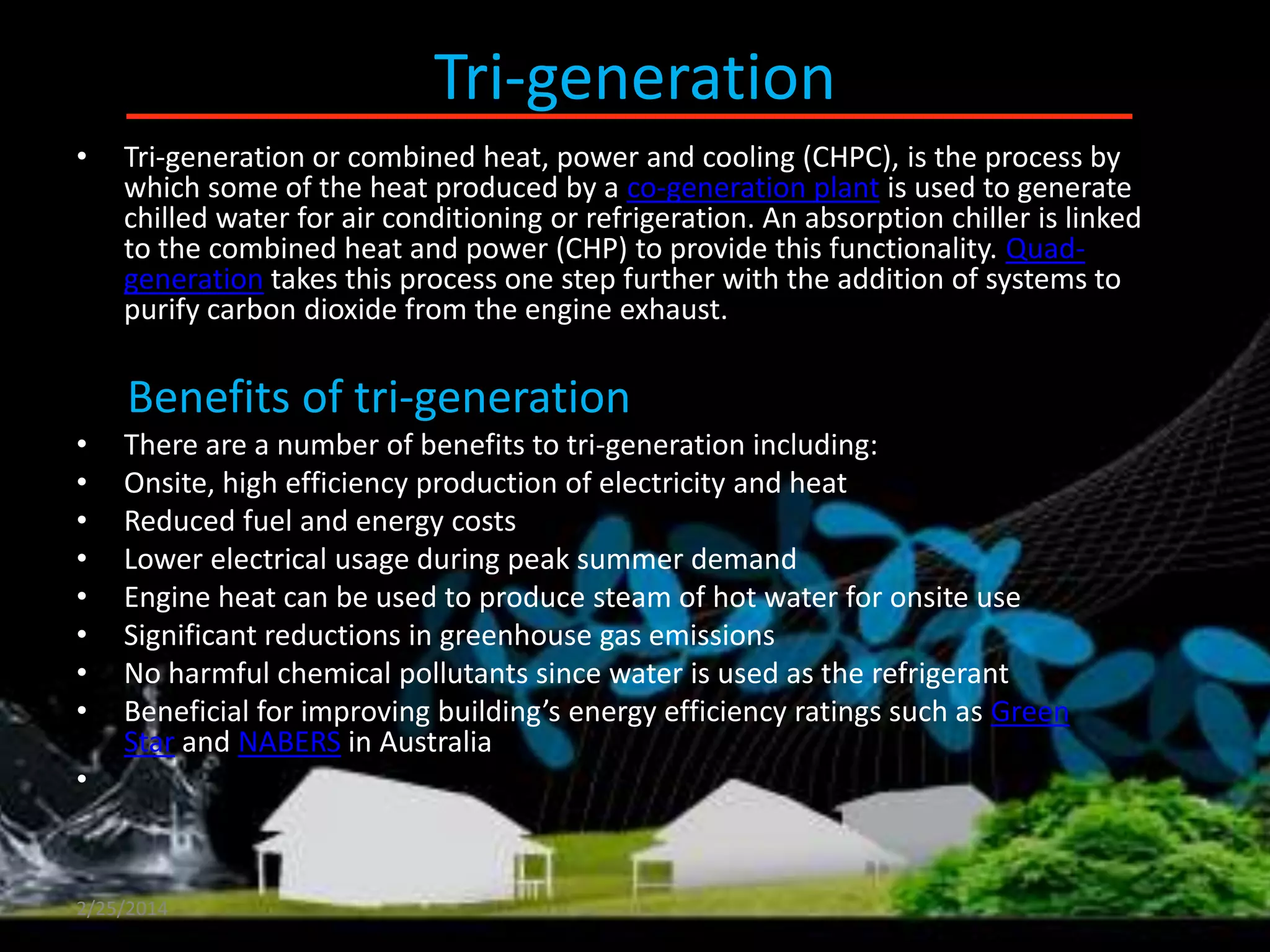
Tri-generation
•

Tri-generation or combined heat, power and cooling (CHPC), is the process by
which some of the heat produced by a co-generation plant is used to generate
chilled water for air conditioning or refrigeration. An absorption chiller is linked
to the combined heat and power (CHP) to provide this functionality. Quadgeneration takes this process one step further with the addition of systems to
purify carbon dioxide from the engine exhaust.

Benefits of tri-generation
•
•
•
•
•
•
•
•

There are a number of benefits to tri-generation including:
Onsite, high efficiency production of electricity and heat
Reduced fuel and energy costs
Lower electrical usage during peak summer demand
Engine heat can be used to produce steam of hot water for onsite use
Significant reductions in greenhouse gas emissions
No harmful chemical pollutants since water is used as the refrigerant
Beneficial for improving building’s energy efficiency ratings such as Green
Star and NABERS in Australia

•

2/25/2014
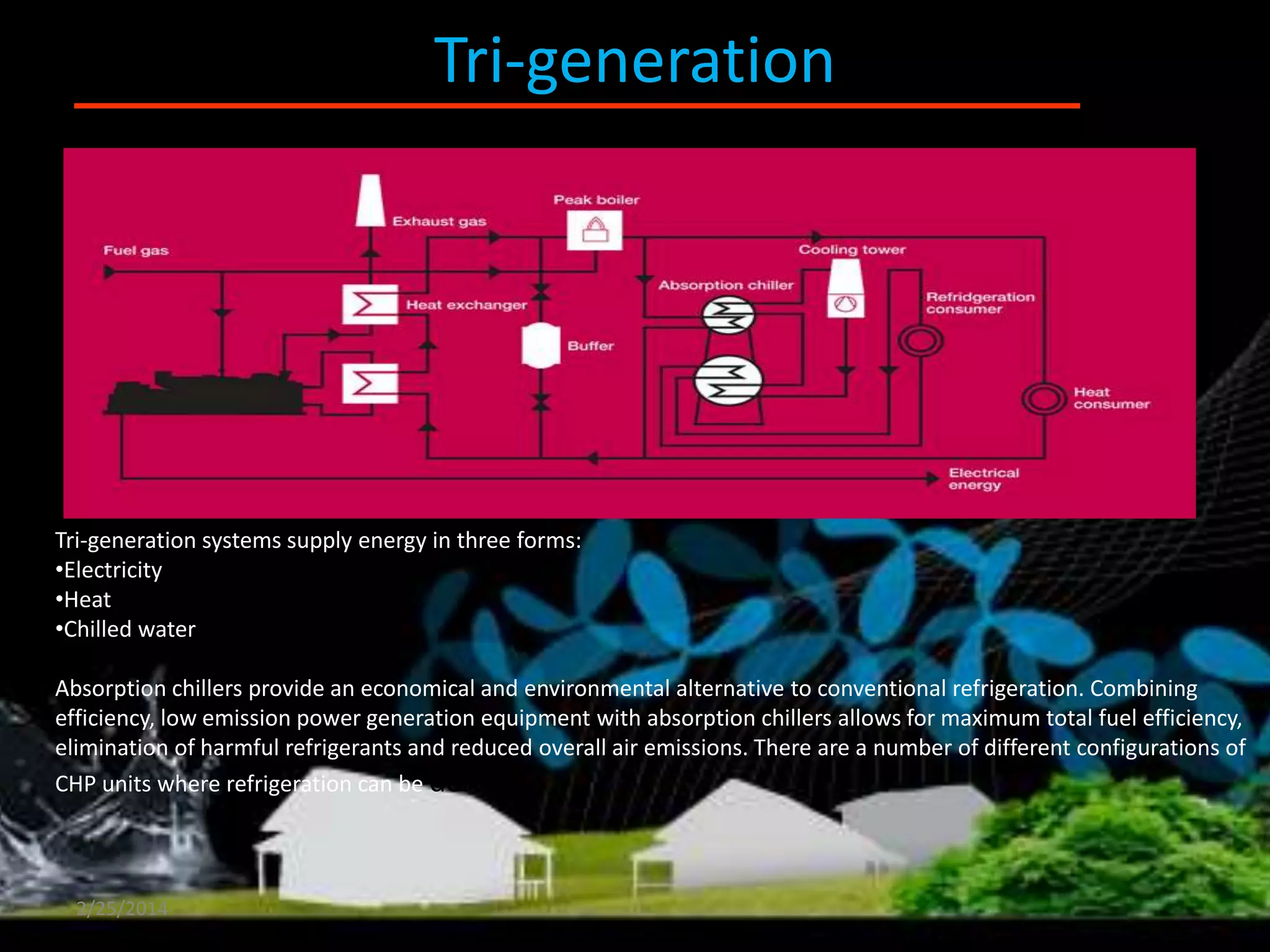
Tri-generation

Tri-generation systems supply energy in three forms:
•Electricity
•Heat
•Chilled water
Absorption chillers provide an economical and environmental alternative to conventional refrigeration. Combining
efficiency, low emission power generation equipment with absorption chillers allows for maximum total fuel efficiency,
elimination of harmful refrigerants and reduced overall air emissions. There are a number of different configurations of
CHP units where refrigeration can be derived

2/25/2014
Quad generation
Quad generation systems are some of the most advanced gas engine driven power
plants in the world. Quad generation encompasses the features of a tri generation
system, with combined electricity, heat and cooling but in addition includes the
recovery of carbon dioxide from the exhaust gas. This carbon dioxide is scrubbed
and can be used in industrial process or offers the potential for
carbon sequestration.

Benefits:
•
•

•
•

Potential for low or zero carbon emissions
Reduced operational costs versus separate purchase of electricity, heat, cooling
and carbon dioxide.
Uses all potential resources from gas utilization
Has a wide range of potential applications

Uses:
•
•
•
•

Carbon dioxide can be used for a number of purposes including:
As a growth enhancer in plants
Food industry
Industrial processes

2/25/2014
Expectation
We Should plan to do it in all our industrial,
commercial and residential complex to
save power and environment

2/25/2014
Getting it done, Do it yourself

THANKS TO ALL

2/25/2014

GrameenPhone

  • 1.
    Welcome To Our Presentation “Grameen PhoneCHQ Powering and Co-Generation” 2/25/2014
  • 2.
    Grameen Phone CHQBuilding ( GP House) • Total Power Demand: 2000KW • Pick Time Chilling Load: 1600 RT • Number of Staff : 3500 Location: Grameenphone Ltd. GPHOUSE Basundhara, Baridhara Dhaka-1229 Phone- +88-02-9882990 Fax- +88-02-9882970 Email : info@grameenphone.com 2/25/2014
  • 3.
    Grameen Phone CorporateHead Quarter is the most high Tech and luxurious office building in Bangladesh 2/25/2014
  • 4.
    GP Power House • • • • • NaturalGas Turbine : 1.40 MW X 2 Sets ( Kawasaki, Japan) Natural Gas Booster Compressor : 2 Sets Diesel Generator : 1MW X 1Set Air Compressor : 1 Set Multi Energy Absorption Chiller : 827 RT X 3 Sets Note: Co-generation system save almost 2.0 MW Power requirements instead of load calculated 4.5 MW 2/25/2014
  • 5.
    The co-generation systemto produce 1600 RT chilling from waste heat of 2.8Mw ( 1.4X2 nos.) Gas turbine 2/25/2014
  • 6.
    Gas Turbine Co-Generation Electricity ExhaustGas Injection Steam for Exhaust Gas Gas-Turbine Steam Chilled water Absorption Chiller Fuel HRSG Direct/Indirect Heating Electricity. Steam Turbine Generator Steam driven Facilities Process steam Thermal Fluid Heater 2/25/2014 Exhaust Recovery Chiller Spray Dryer
  • 7.
    • Co-Generation Cogeneration & CHP •Cogeneration through combined heat and power (CHP) is the simultaneous production of electricity with the recovery and utilization heat. Cogeneration is a highly efficient form of energy conversion and it can achieve primary energy savings of approximately 40% by compared to the separate purchase of electricity from the national electricity grid and a gas boiler for onsite heating. Combined heat and power plants are typically embedded close to the end user and therefore help reduce transportation and distribution losses, improving the overall performance of the electricity transmission and distribution network . For power users where security of supply is an important factor for their selection of power production equipment and gas is abundant, gas-based cogeneration systems are ideally suited as captive power plants. 2/25/2014
  • 8.
  • 9.
    Co-generation System Efficiency • Gasengine combined heat and power systems are measured based upon the efficiency of conversion of the fuel gas to useful outputs. The diagram below illustrates this concept. Firstly the energy in the fuel gas input is converted into mechanical energy via the combustion of the gas in the engine’s cylinders and their resulting action in the turning of the engine’s crankshaft. This mechanical energy is in turn used to turn the engine’s alternator in order to produce electricity. There is a small amount of inherent loss in this process and in this example the electrical efficiency of the engine is 40% Heat Sources from a Gas Engine • • • • • • The heat from the generator is available in from 5 key areas: Engine jacket cooling water Engine lubrication oil cooling First stage air intake intercooler Engine exhaust gases Engine generator radiated heat, second stage intercooler 2/25/2014
  • 10.
    COGENERATION SYSTEM COMPARISON……….. CONVENTIONAL SYSTEM Fuel COGENERATION SYSTEM ENGINE Fuel GTG Electricity Electricity Exhaust Gas Fuel Steam BOILER 2/25/2014 Steam HRSG
  • 11.
    COGENERATION SYSTEM COMPARISON……….. CONVENTIONAL SYSTEM ELECTRICITY THERMAL TOTAL COGENERATION SYSTEM ELECTRICITY THERMAL TOTAL 2/25/2014 INPUT (MW) OUTPUT (MW) EFFICIENCY (%) 6.00 MW 15.00 MW 6.00 MW 40.00 % 15.00 TON/HR 12.40 MW 10.54 MW 85.00 % - 27.40 MW 16.54 MW 60.36 % REQUIRE -MENT INPUT (MW) OUTPUT (MW) EFFICIENCY (%) 6.00 MW 20.00 MW 6.00 MW 30.00% 15.00 TON/HR - 10.54 MW - - 20.00 MW 16.54 MW 82.70 % REQUIRE -MENT
  • 12.
    COGENERATION SYSTEM COMPARISON……….. DIESEL ENGINE GAS ENGINE GAS TURBINE Thermal Efficiency < 60% < 60% Up to 90% Starting Capability 99.7% <98% 99.99% Reliability >95% <95% >99% Maintenance Frequent Frequent Once Or Twice In A Year Emission High Medium <30 ppm (NOx -O2 : 15%) 2/25/2014
  • 13.
    COGENERATION SYSTEM COMPARISON………… DIESEL ENGINE GAS ENGINE Maintenance Organization 10- 20 people 10 - 20 people Negligible Electricity Unstable and Hi Distortion Unstable and Hi Distortion Stable and Low Distortion Instantaneous Load Application Up to 40% 10% - 25% 100% Vibration High High Low Lube Oil Consumption High High Low 2/25/2014 GAS TURBINE (for Smaller GT)
  • 14.
    COGENERATION SYSTEM COMPARISON…………….. DIESEL ENGINE GAS ENGINE GAS TURBINE Noise Level High High Low (<85dBA) Startup Time <20 sec Long <40 sec Layout Big and Heavy Big and Heavy Compact & Light Low Load Opera-ability >50% >50% As low as 0% Variety of Fuels Liquid Fuel Gaseous Gaseous & Liquid Fuel 2/25/2014 (in liquid fuel mode)
  • 15.
    Tri-generation • Tri-generation or combinedheat, power and cooling (CHPC), is the process by which some of the heat produced by a co-generation plant is used to generate chilled water for air conditioning or refrigeration. An absorption chiller is linked to the combined heat and power (CHP) to provide this functionality. Quadgeneration takes this process one step further with the addition of systems to purify carbon dioxide from the engine exhaust. Benefits of tri-generation • • • • • • • • There are a number of benefits to tri-generation including: Onsite, high efficiency production of electricity and heat Reduced fuel and energy costs Lower electrical usage during peak summer demand Engine heat can be used to produce steam of hot water for onsite use Significant reductions in greenhouse gas emissions No harmful chemical pollutants since water is used as the refrigerant Beneficial for improving building’s energy efficiency ratings such as Green Star and NABERS in Australia • 2/25/2014
  • 16.
    Tri-generation Tri-generation systems supplyenergy in three forms: •Electricity •Heat •Chilled water Absorption chillers provide an economical and environmental alternative to conventional refrigeration. Combining efficiency, low emission power generation equipment with absorption chillers allows for maximum total fuel efficiency, elimination of harmful refrigerants and reduced overall air emissions. There are a number of different configurations of CHP units where refrigeration can be derived 2/25/2014
  • 17.
    Quad generation Quad generationsystems are some of the most advanced gas engine driven power plants in the world. Quad generation encompasses the features of a tri generation system, with combined electricity, heat and cooling but in addition includes the recovery of carbon dioxide from the exhaust gas. This carbon dioxide is scrubbed and can be used in industrial process or offers the potential for carbon sequestration. Benefits: • • • • Potential for low or zero carbon emissions Reduced operational costs versus separate purchase of electricity, heat, cooling and carbon dioxide. Uses all potential resources from gas utilization Has a wide range of potential applications Uses: • • • • Carbon dioxide can be used for a number of purposes including: As a growth enhancer in plants Food industry Industrial processes 2/25/2014
  • 18.
    Expectation We Should planto do it in all our industrial, commercial and residential complex to save power and environment 2/25/2014
  • 19.
    Getting it done,Do it yourself THANKS TO ALL 2/25/2014