Government in
   Athens
Social Studies for 9th E.G.B. | Teacher:
           Mauricio Torres
Democracy

   Type of government in which people rule
    themselves.
       The word comes from: “the rule of the
        people”.
Rule by the “Few”

   Even Athens, the city where democracy was
    born, began with a different type of
    government.
       First, kings ruled.
       Later, a group of rich
        landowners, aristocrats, took power.
           A government in which a few people
            have power is called an oligarchy.
       These people ran business, served as
        generals, judges and dominated Athenian
        society.
First signs of dissent

   In the 600s BC, a group of rebels sought to
    overthrow the aristocrats. They failed!

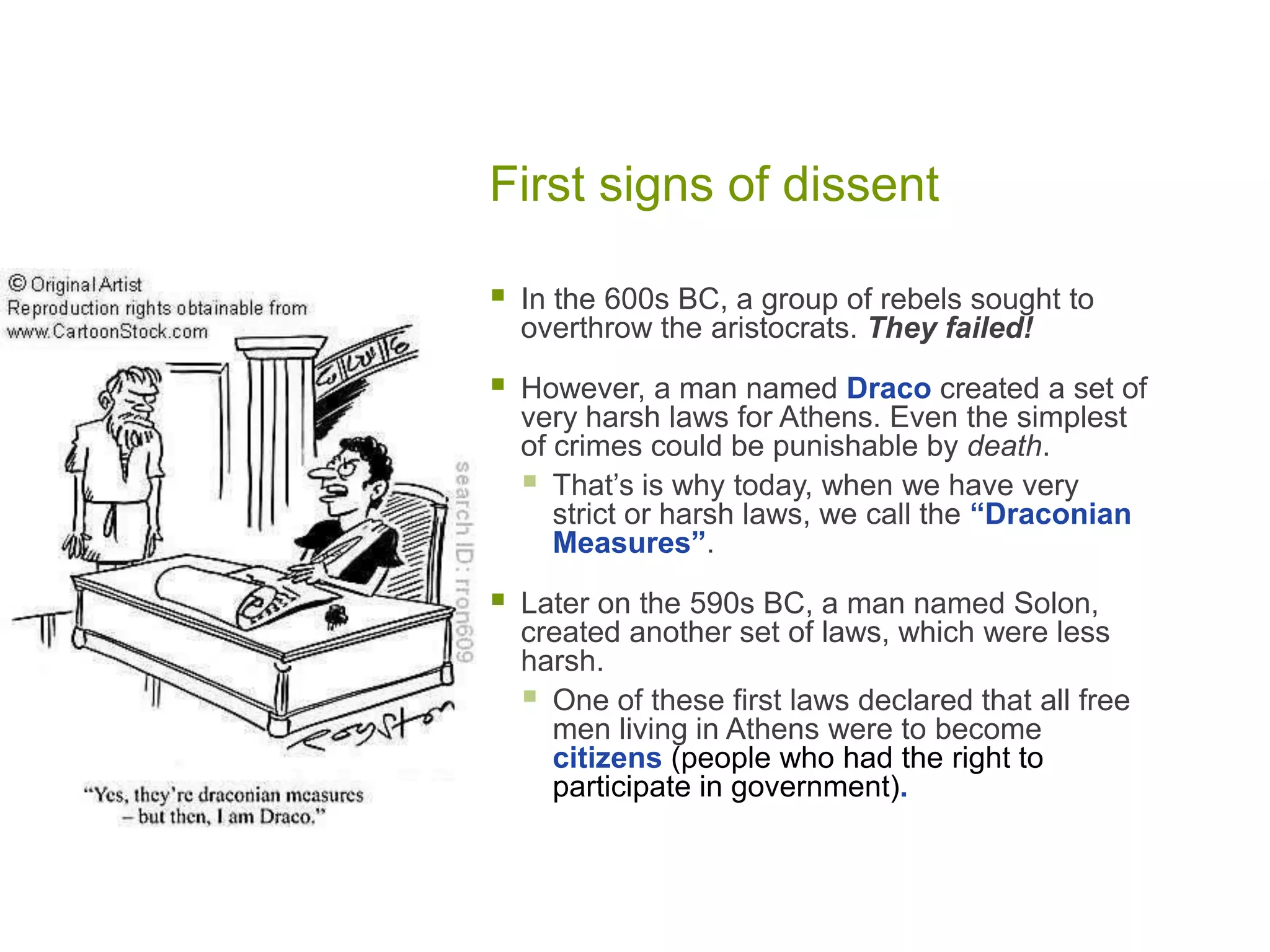
   However, a man named Draco created a set of
    very harsh laws for Athens. Even the simplest
    of crimes could be punishable by death.
     That’s is why today, when we have very
       strict or harsh laws, we call the “Draconian
       Measures”.

   Later on the 590s BC, a man named Solon,
    created another set of laws, which were less
    harsh.
     One of these first laws declared that all free
      men living in Athens were to become
      citizens (people who had the right to
      participate in government).
The Rise of the Tyrants

   In 546 a noble named Peisistratus overthrew
    the oligarchy and became the ruler of
    Athens.
       He held power through the use of force,
        making him a tyrant.
           Today this term is used to call a ruler
            who is harsh.
           Back in Athens, they were usually good
            leaders: they had support from the
            people.
       He brought peace and prosperity to the
        city.
Athens creates Democracy

   After the tyrants vanished, aristocrats came
    back to power.

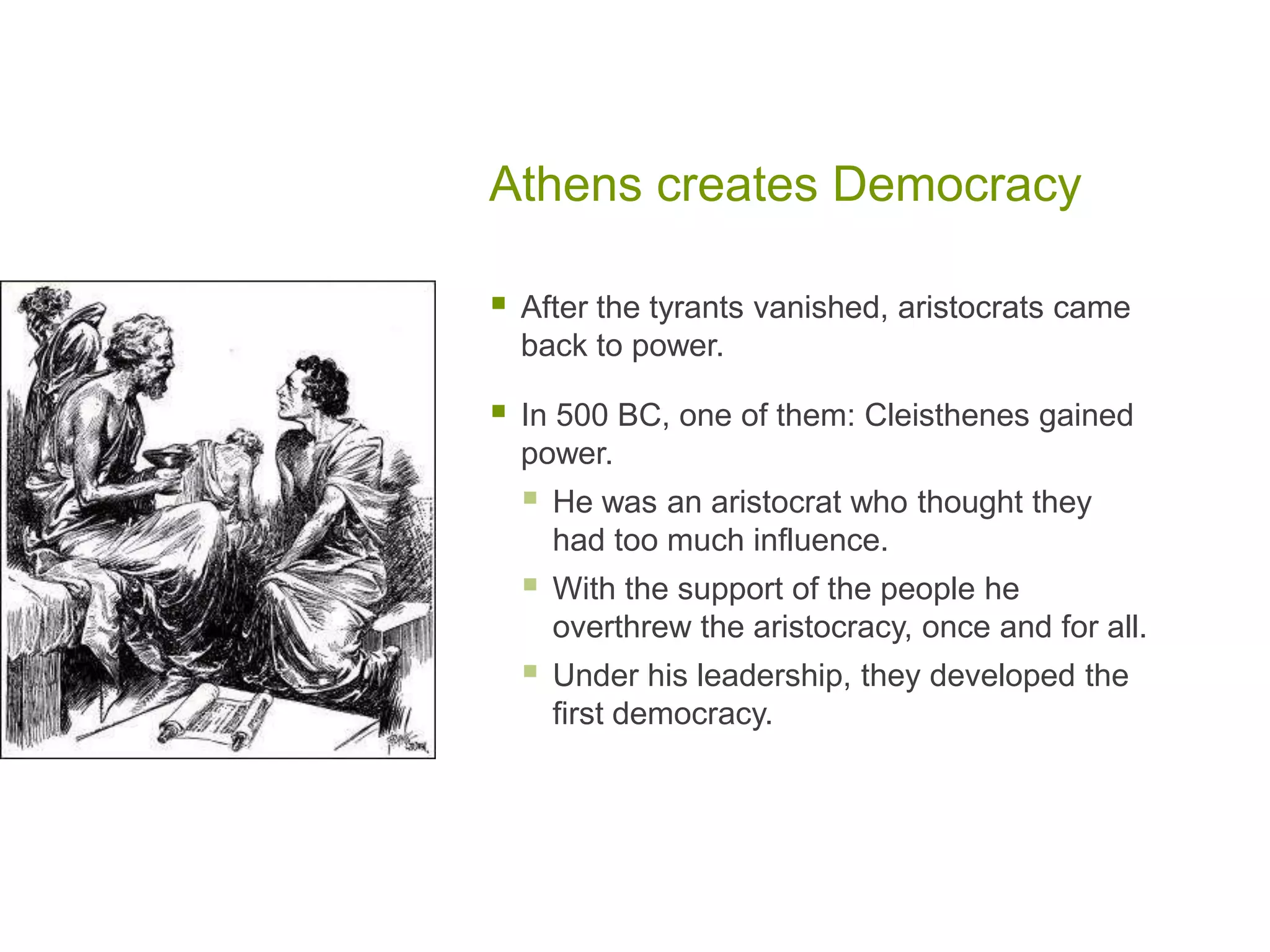
   In 500 BC, one of them: Cleisthenes gained
    power.
       He was an aristocrat who thought they
        had too much influence.
       With the support of the people he
        overthrew the aristocracy, once and for all.
       Under his leadership, they developed the
        first democracy.
Democracy 1.0

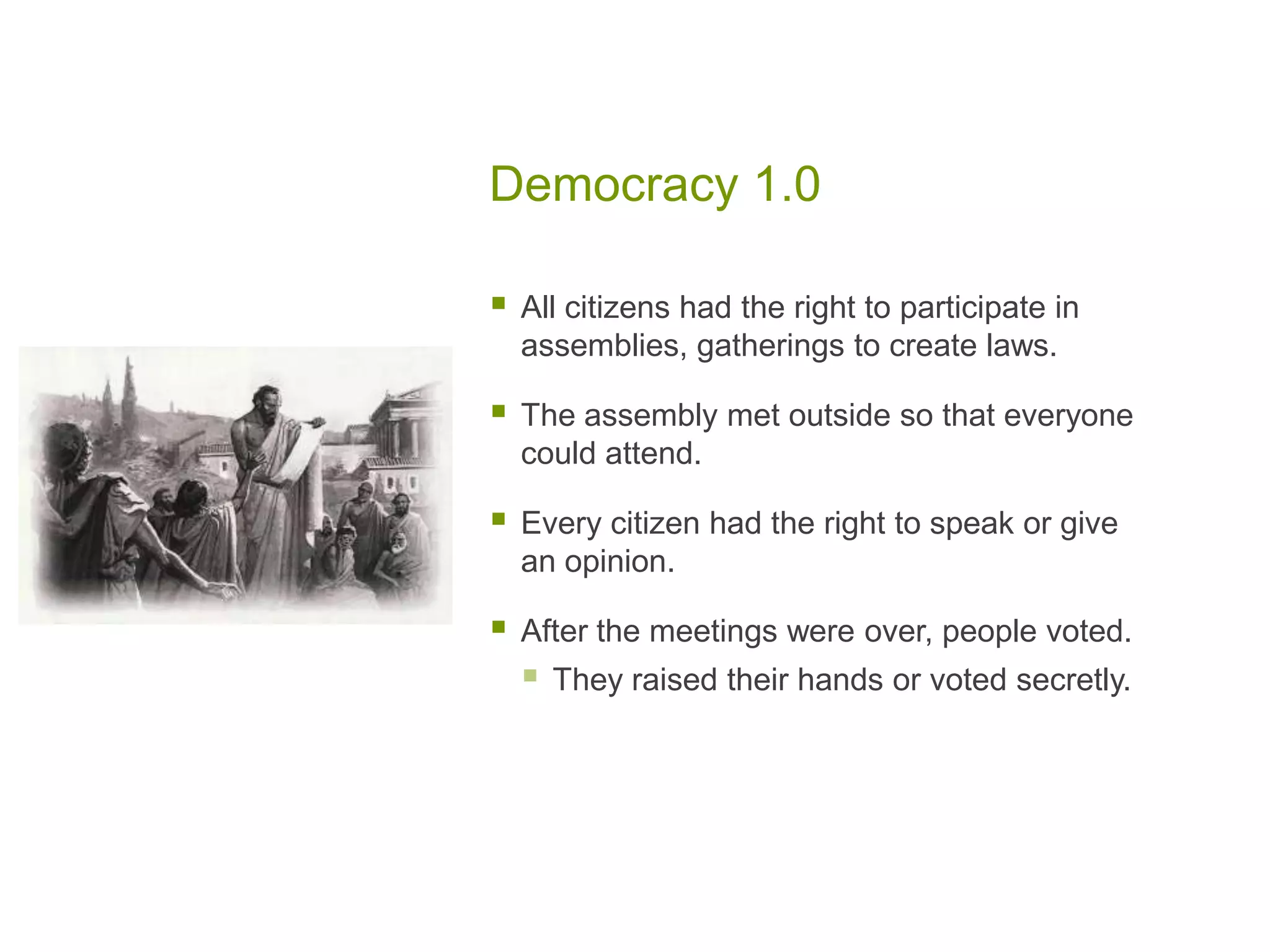
   All citizens had the right to participate in
    assemblies, gatherings to create laws.

   The assembly met outside so that everyone
    could attend.

   Every citizen had the right to speak or give
    an opinion.

   After the meetings were over, people voted.
       They raised their hands or voted secretly.
Changes in Democracy

   Pericles, a brilliant leader, encouraged
    people to take part in democracy and have
    pride in their city.
       He believed participating in government
        was just as important as defending the city
        during war.
       He began to pay people who served in
        public offices or juries.

   Pericles encouraged the people to introduce
    democracy all around Greece.
The Bitter End

   In the mid 330s BC, Macedonians
    conquered Athens.
       Phillip II was their king.

   The Macedonians kept a tight grip on their
    subjects and would leave little space for
    them to maneuver.
       The Athenians kept a democratic
        government, but with very limited powers.
       They weren’t happy with this situation, but
        they did not want to make Philip angry.
Ask Yourselves

   Describe
     What were Greek tyrants like?
     What is a tyrant?
     Who were the following:
       Draco, Pericles, Cleisthenes and
        Peisistratus?

   Explain:
     Why was Athens at one point considered an
      Oligarchy?
     How was democracy finally installed in
      Athens?

   Draw Conclusions:
     Why did many Athenians support the rule of
      tyrants?
     Why doesn’t Ecuador establish a direct
      democracy?
Homework

   Slogans for rulers:
    1. Select one of the rulers/characters
       mentioned on this unit.
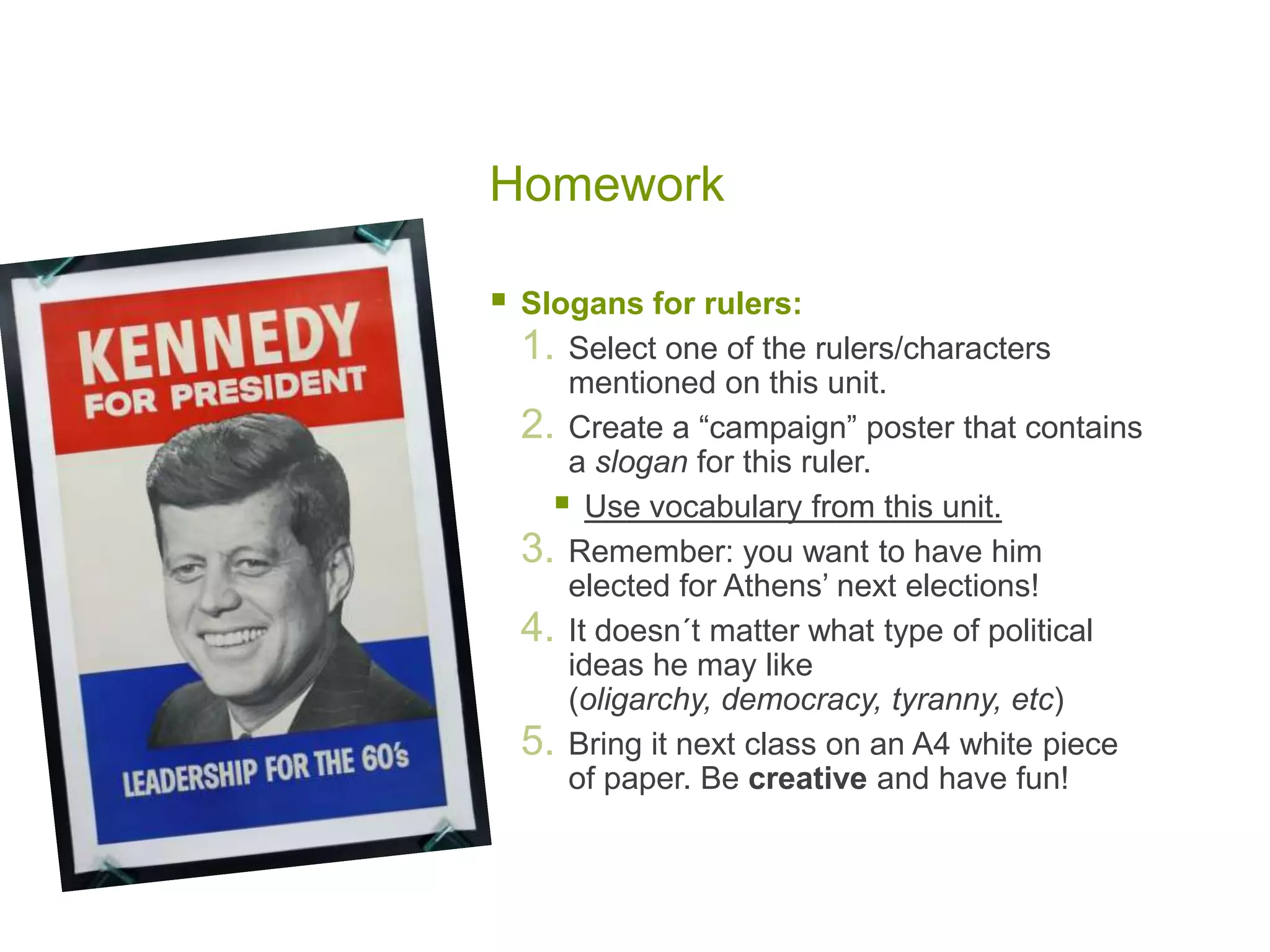
    2. Create a “campaign” poster that contains
       a slogan for this ruler.
       Use vocabulary from this unit.
    3. Remember: you want to have him
       elected for Athens’ next elections!
    4. It doesn´t matter what type of political
       ideas he may like
       (oligarchy, democracy, tyranny, etc)
    5. Bring it next class on an A4 white piece
       of paper. Be creative and have fun!
Homework examples:
Bibliography

   Mr Donn. (n.d.). Sparta. Retrieved 07 20,
    2012, from Mr Donn:
    http://greece.mrdonn.org/sparta.html

   Mr Donn. (n.d.). Athens. Retrieved 07 2012,
    2012, from Mr Donn:
    http://greece.mrdonn.org/athens.html

   Images taken from Google.

Government in Athens

  • 1.
    Government in Athens Social Studies for 9th E.G.B. | Teacher: Mauricio Torres
  • 2.
    Democracy  Type of government in which people rule themselves.  The word comes from: “the rule of the people”.
  • 3.
    Rule by the“Few”  Even Athens, the city where democracy was born, began with a different type of government.  First, kings ruled.  Later, a group of rich landowners, aristocrats, took power.  A government in which a few people have power is called an oligarchy.  These people ran business, served as generals, judges and dominated Athenian society.
  • 4.
    First signs ofdissent  In the 600s BC, a group of rebels sought to overthrow the aristocrats. They failed!  However, a man named Draco created a set of very harsh laws for Athens. Even the simplest of crimes could be punishable by death.  That’s is why today, when we have very strict or harsh laws, we call the “Draconian Measures”.  Later on the 590s BC, a man named Solon, created another set of laws, which were less harsh.  One of these first laws declared that all free men living in Athens were to become citizens (people who had the right to participate in government).
  • 5.
    The Rise ofthe Tyrants  In 546 a noble named Peisistratus overthrew the oligarchy and became the ruler of Athens.  He held power through the use of force, making him a tyrant.  Today this term is used to call a ruler who is harsh.  Back in Athens, they were usually good leaders: they had support from the people.  He brought peace and prosperity to the city.
  • 6.
    Athens creates Democracy  After the tyrants vanished, aristocrats came back to power.  In 500 BC, one of them: Cleisthenes gained power.  He was an aristocrat who thought they had too much influence.  With the support of the people he overthrew the aristocracy, once and for all.  Under his leadership, they developed the first democracy.
  • 7.
    Democracy 1.0  All citizens had the right to participate in assemblies, gatherings to create laws.  The assembly met outside so that everyone could attend.  Every citizen had the right to speak or give an opinion.  After the meetings were over, people voted.  They raised their hands or voted secretly.
  • 8.
    Changes in Democracy  Pericles, a brilliant leader, encouraged people to take part in democracy and have pride in their city.  He believed participating in government was just as important as defending the city during war.  He began to pay people who served in public offices or juries.  Pericles encouraged the people to introduce democracy all around Greece.
  • 9.
    The Bitter End  In the mid 330s BC, Macedonians conquered Athens.  Phillip II was their king.  The Macedonians kept a tight grip on their subjects and would leave little space for them to maneuver.  The Athenians kept a democratic government, but with very limited powers.  They weren’t happy with this situation, but they did not want to make Philip angry.
  • 10.
    Ask Yourselves  Describe  What were Greek tyrants like?  What is a tyrant?  Who were the following:  Draco, Pericles, Cleisthenes and Peisistratus?  Explain:  Why was Athens at one point considered an Oligarchy?  How was democracy finally installed in Athens?  Draw Conclusions:  Why did many Athenians support the rule of tyrants?  Why doesn’t Ecuador establish a direct democracy?
  • 11.
    Homework  Slogans for rulers: 1. Select one of the rulers/characters mentioned on this unit. 2. Create a “campaign” poster that contains a slogan for this ruler.  Use vocabulary from this unit. 3. Remember: you want to have him elected for Athens’ next elections! 4. It doesn´t matter what type of political ideas he may like (oligarchy, democracy, tyranny, etc) 5. Bring it next class on an A4 white piece of paper. Be creative and have fun!
  • 12.
  • 13.
    Bibliography  Mr Donn. (n.d.). Sparta. Retrieved 07 20, 2012, from Mr Donn: http://greece.mrdonn.org/sparta.html  Mr Donn. (n.d.). Athens. Retrieved 07 2012, 2012, from Mr Donn: http://greece.mrdonn.org/athens.html  Images taken from Google.