
GLOBALIZATION & INTERNATIONALIZATION
PRESENTED BY:- SANJAY
SAMAD
AJEET
GLOBALIZATION
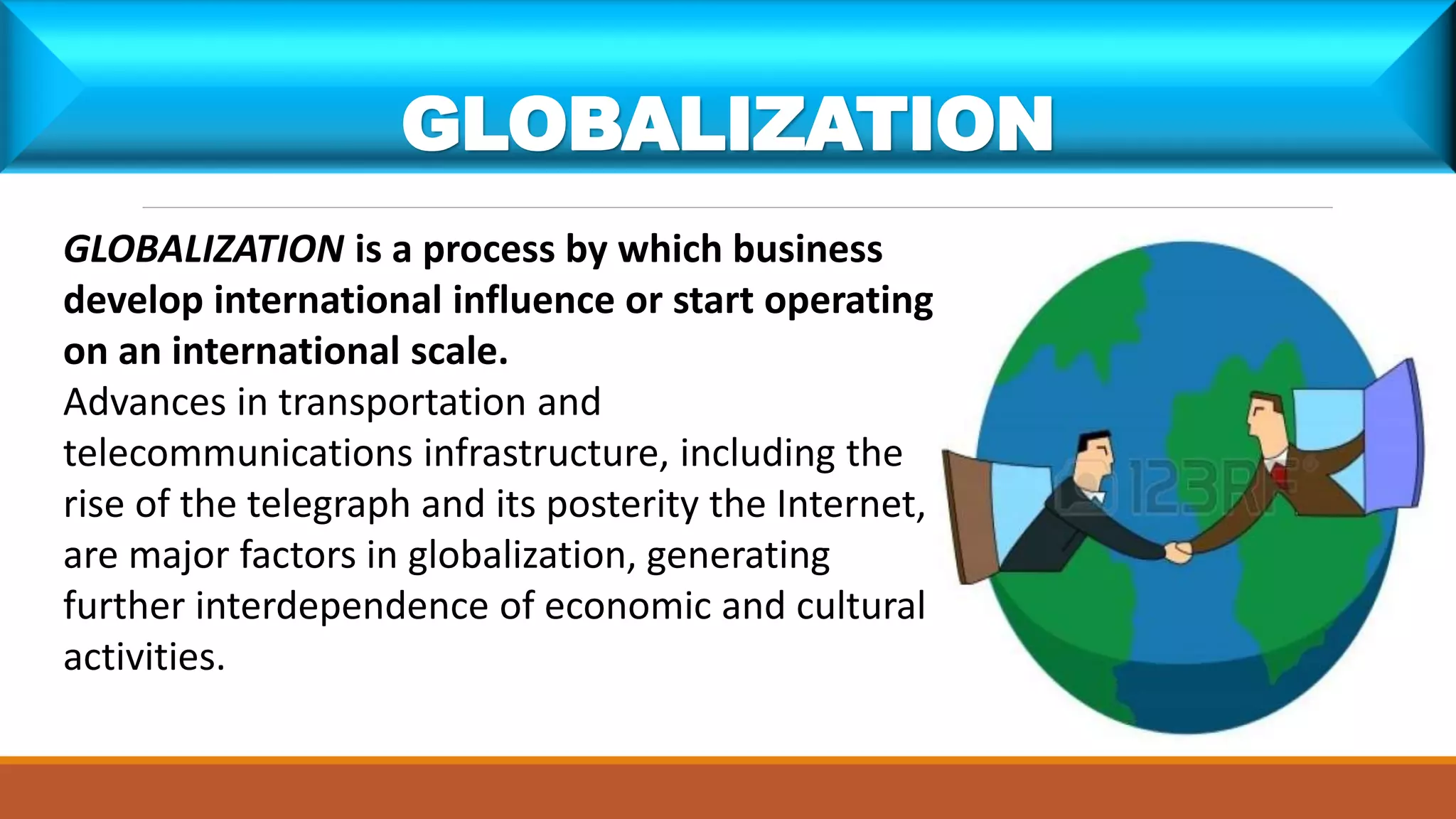
GLOBALIZATION is a process by which business
develop international influence or start operating
on an international scale.
Advances in transportation and
telecommunications infrastructure, including the
rise of the telegraph and its posterity the Internet,
are major factors in globalization, generating
further interdependence of economic and cultural
activities.
MAIN ADVANTAGES
Developing
international trade
and companies
Enhancing
information speed
Reducing the
probability of
beginning a
war
Consumers to get much wider variety of products to choose from.
Consumers get the product they want at more competitive prices.
Companies are able to procure input goods and services required at most
competitive prices.
Companies get access to much wider markets.
It promotes understanding and goodwill among different countries.
Businesses and investors get much wider opportunities for investment.
Adverse impact of fluctuations in agricultural productions in one area can be
reduced by pooling of production of different areas.
OTHER ADVANTAGES
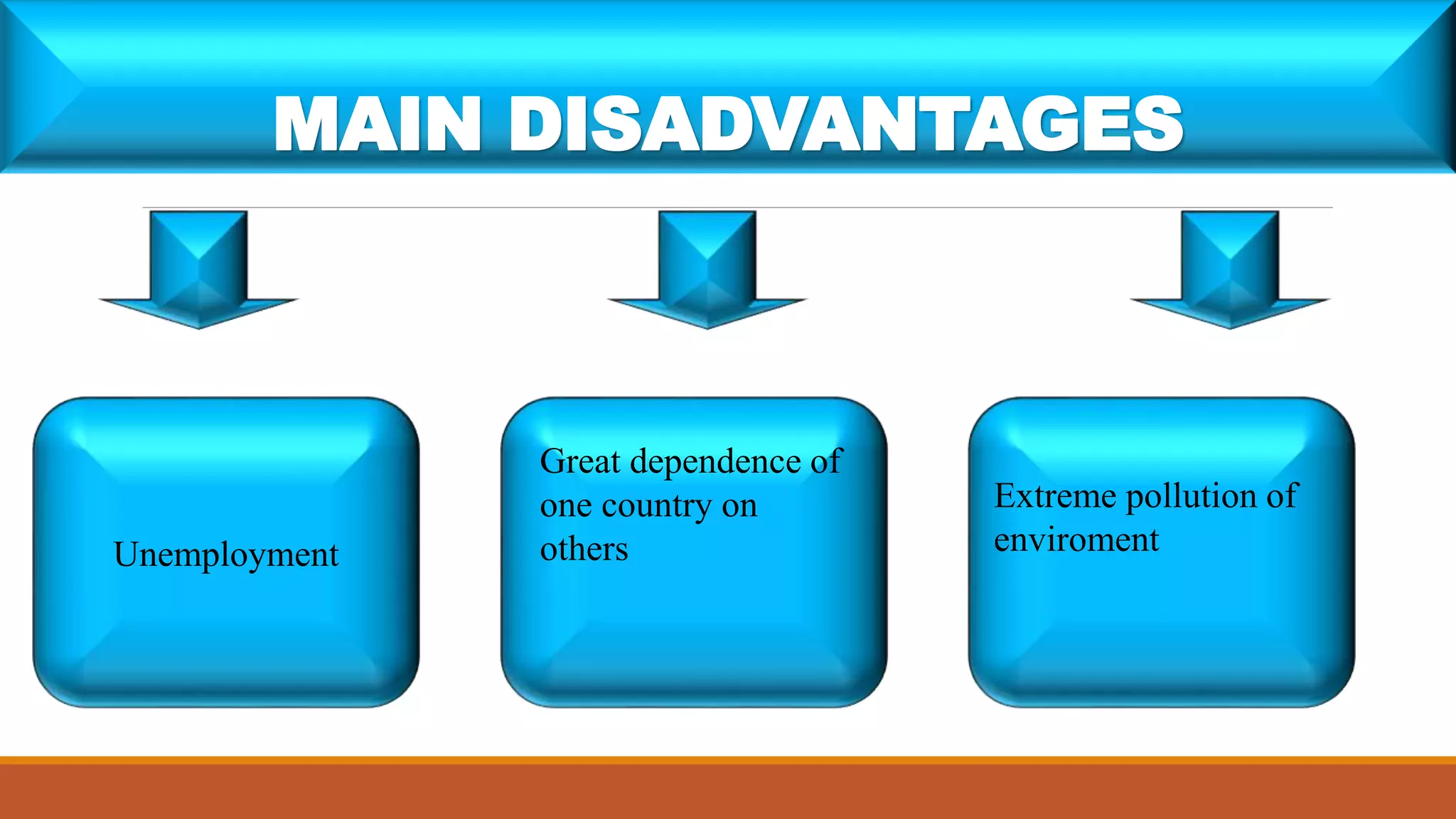
MAIN DISADVANTAGES
Unemployment
Great dependence of
one country on
others
Extreme pollution of
enviroment
Developed countries can stifle development of undeveloped and under-developed countries.
Economic depression in one country can trigger adverse reaction across the globe.
It can increase spread of communicable diseases.
Companies face much greater competition. This can put smaller companies, at a disadvantage as they do not
have resources to compete at global scale.
OTHER DISADVANTAGES
INTERNATIONALIZATION is the process of increasing involvement of enterprises in international markets.
IT IS THE PROCESS OF LEADING TO IDENTIFYING AND ENTERING INTERNATIONAL MARKETS.
INTERNATIONALIZATION
JOB CREATION
ATTRACTING INVESTMENT
NEW TECHNOLOGY & MATERIALS
MEETING OUR NEEDS
ADVANTAGES OF
INTERNATIONALIZATION
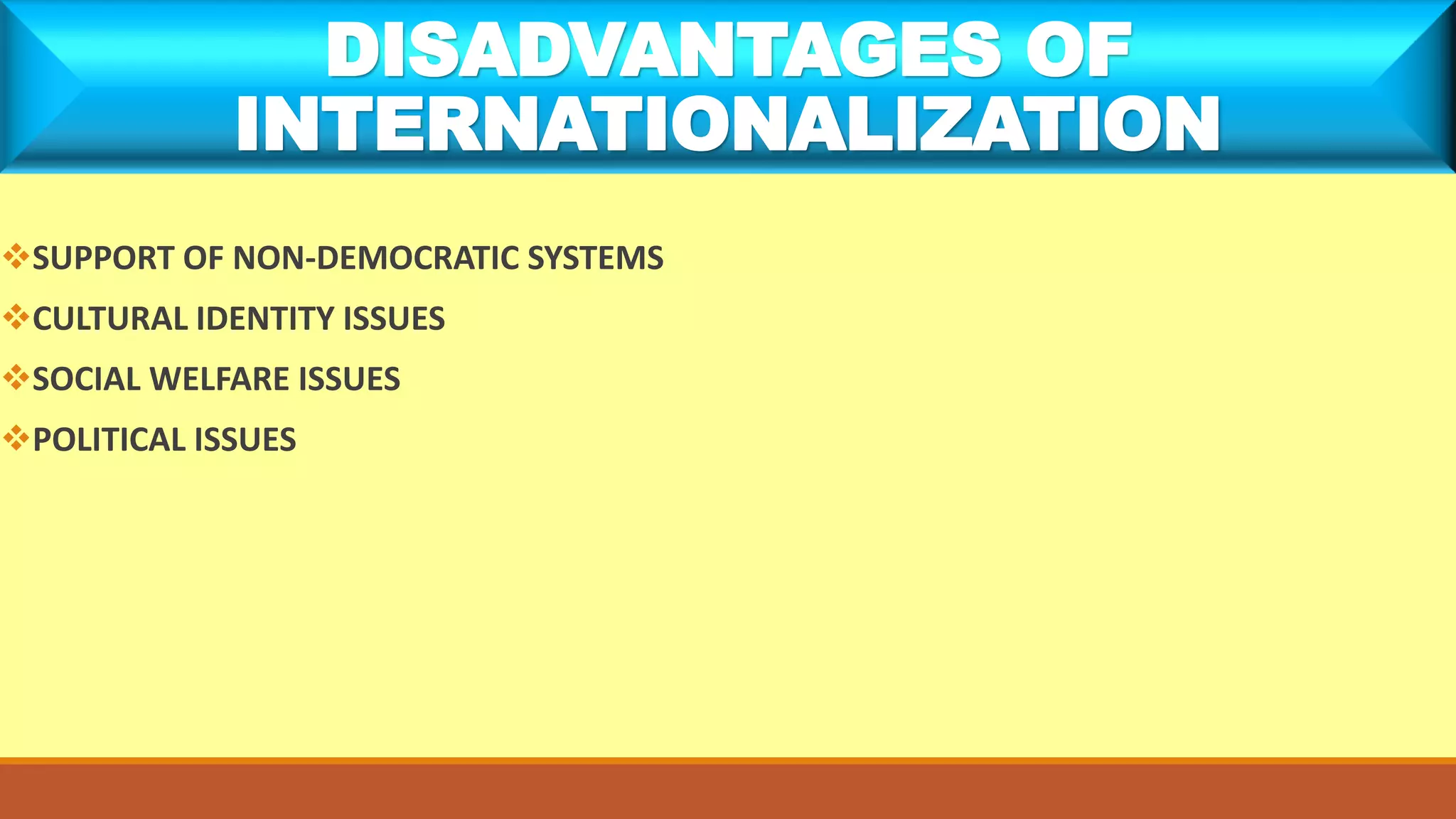
SUPPORT OF NON-DEMOCRATIC SYSTEMS
CULTURAL IDENTITY ISSUES
SOCIAL WELFARE ISSUES
POLITICAL ISSUES
DISADVANTAGES OF
INTERNATIONALIZATION
THANK
YOU

Globalization & internationalization

  • 1.
  • 2.
    GLOBALIZATION GLOBALIZATION is aprocess by which business develop international influence or start operating on an international scale. Advances in transportation and telecommunications infrastructure, including the rise of the telegraph and its posterity the Internet, are major factors in globalization, generating further interdependence of economic and cultural activities.
  • 3.
    MAIN ADVANTAGES Developing international trade andcompanies Enhancing information speed Reducing the probability of beginning a war
  • 4.
    Consumers to getmuch wider variety of products to choose from. Consumers get the product they want at more competitive prices. Companies are able to procure input goods and services required at most competitive prices. Companies get access to much wider markets. It promotes understanding and goodwill among different countries. Businesses and investors get much wider opportunities for investment. Adverse impact of fluctuations in agricultural productions in one area can be reduced by pooling of production of different areas. OTHER ADVANTAGES
  • 5.
    MAIN DISADVANTAGES Unemployment Great dependenceof one country on others Extreme pollution of enviroment
  • 6.
    Developed countries canstifle development of undeveloped and under-developed countries. Economic depression in one country can trigger adverse reaction across the globe. It can increase spread of communicable diseases. Companies face much greater competition. This can put smaller companies, at a disadvantage as they do not have resources to compete at global scale. OTHER DISADVANTAGES
  • 7.
    INTERNATIONALIZATION is theprocess of increasing involvement of enterprises in international markets. IT IS THE PROCESS OF LEADING TO IDENTIFYING AND ENTERING INTERNATIONAL MARKETS. INTERNATIONALIZATION
  • 8.
    JOB CREATION ATTRACTING INVESTMENT NEWTECHNOLOGY & MATERIALS MEETING OUR NEEDS ADVANTAGES OF INTERNATIONALIZATION
  • 9.
    SUPPORT OF NON-DEMOCRATICSYSTEMS CULTURAL IDENTITY ISSUES SOCIAL WELFARE ISSUES POLITICAL ISSUES DISADVANTAGES OF INTERNATIONALIZATION
  • 10.