PHILOSOPHIES OF
BUSINESS
PRACTICES
WEEK5
MELC: Identify the classical philosophies and

their implication for business principles and
practices
LEARNING COMPETENCY:
Illustrate how these philosophies
are reflected into business
practices
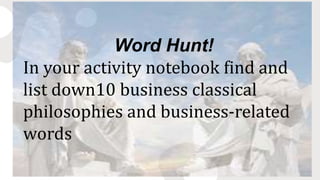
Word Hunt!
In your activity notebook find and
list down10 business classical
philosophies and business-related
words
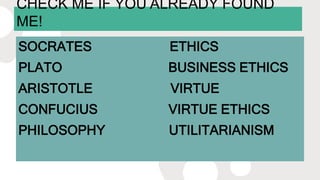
CHECK ME IF YOU ALREADY FOUND
ME!
SOCRATES ETHICS
PLATO BUSINESS ETHICS
ARISTOTLE VIRTUE
CONFUCIUS VIRTUE ETHICS
PHILOSOPHY UTILITARIANISM
THE CLASSICAL
PHILOSOPHIES AND
THEIR IMPLICATION ON
BUSINESS
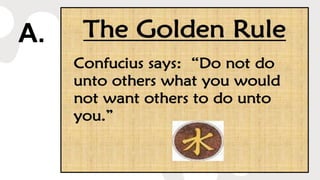
A.
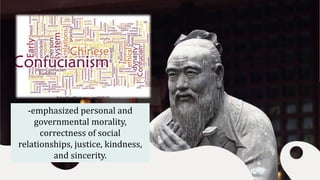
-emphasized personal and
governmental morality,
correctness of social
relationships, justice, kindness,
and sincerity.
It has been argued that Confucian values
such as obedience, respect for
authority and emotional control are not
naturally compatible components of a
common entrepreneurial standard,
however;
(1)
• These and other Confucian values can play a positive
role in entrepreneurial prosperity for China and the
rest of the world if applied correctly.
• Confucian entrepreneurs can be defined as those who
apply traditional Chinese cultural values in respect to
maintaining the moral beliefs of Confucianism in all
aspects of business practice.
(2)
• Confucian values were applicable to positive interpersonal
relations in business practice and in the workplace, in
regards to successful human resource management in
particular.
• These values included: trustworthiness, Ren (compassion,
humanness), Li (ritual, etiquette), harmony and tolerance of
others.
• These values of interpersonal relations can generate a more
successful human resource management.
Confucian values can
aid in the creation of
entrepreneurs who are
true leaders of
society.
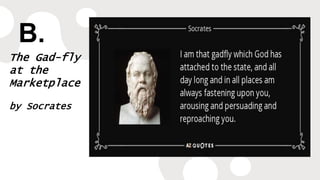
B.
The Gad-fly
at the
Marketplace
by Socrates
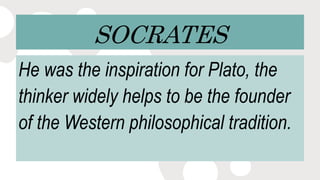
SOCRATES
He was the inspiration for Plato, the
thinker widely helps to be the founder
of the Western philosophical tradition.
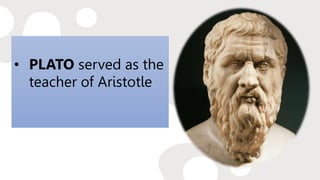
• PLATO served as the
teacher of Aristotle
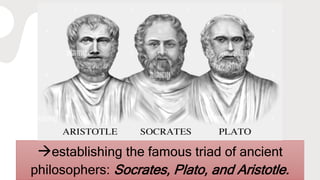
establishing the famous triad of ancient
philosophers: Socrates, Plato, and Aristotle.
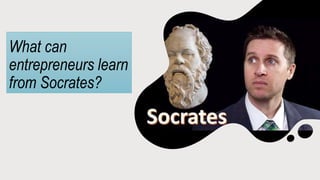
What can
entrepreneurs learn
from Socrates?
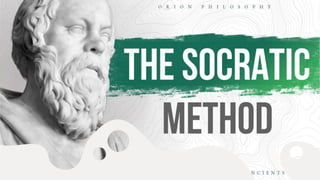
• The Socratic Method is a way of thinking that
allows individuals to define their own purpose
for learning and explore this purpose through
open-minded questioning of what they hold
to be true.
• Entrepreneurs can find value in Socratic
Method because they, too, are bombarded by
assumptions based on what others and they
themselves believe to be the best plan of
action for pursuing a business idea.
• Entrepreneurial Learning or the acquisition of
knowledge necessary for creating a business
venture is built around the constant
questioning and testing of these assumptions
theories about what we hold to be true for
validity.
•These assumptions can range from
beliefs about what the market wants,
where opportunities lie, to the
effectiveness of a new product feature
C.
•He was the student of
Socrates and the teacher
of Aristotle
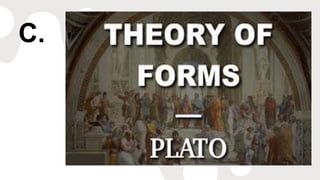
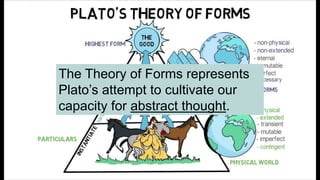
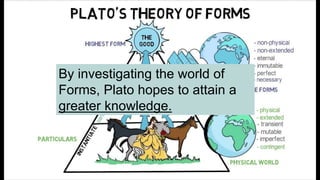
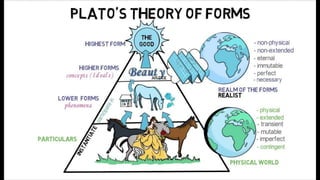
The Theory of Forms represents
Plato’s attempt to cultivate our
capacity for abstract thought.
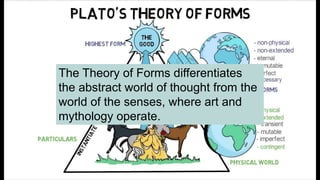
The Theory of Forms differentiates
the abstract world of thought from the
world of the senses, where art and
mythology operate.
By investigating the world of
Forms, Plato hopes to attain a
greater knowledge.
Education for the Health of the
State
• Plato identifies education as one of the most
important aspects of a healthy state.
• Plato thinks that a child’s education is the last
thing that should be left to chance or parental
whim since the young mind is so easily
molded.
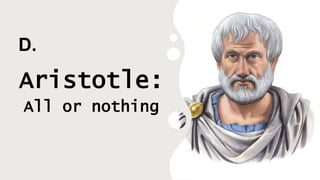
D.
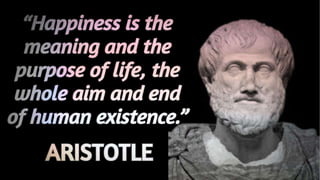
Aristotle:
All or nothing
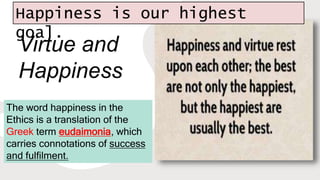
Virtue and
Happiness
The word happiness in the
Ethics is a translation of the
Greek term eudaimonia, which
carries connotations of success
and fulfilment.
Happiness is our highest
goal.
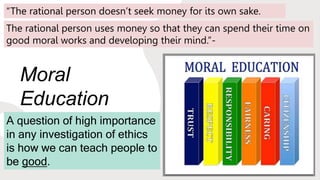
Moral
Education
A question of high importance
in any investigation of ethics
is how we can teach people to
be good.
“The rational person doesn’t seek money for its own sake.
The rational person uses money so that they can spend their time on
good moral works and developing their mind.”-
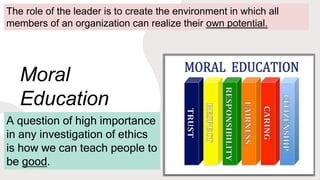
Moral
Education
A question of high importance
in any investigation of ethics
is how we can teach people to
be good.
The role of the leader is to create the environment in which all
members of an organization can realize their own potential.
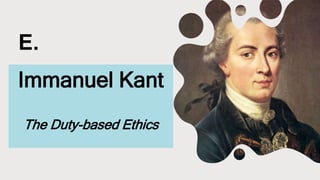
E.
Immanuel Kant
The Duty-based Ethics
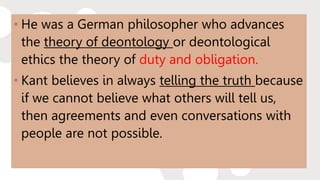
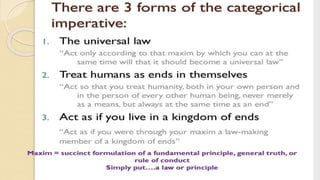
• He was a German philosopher who advances
the theory of deontology or deontological
ethics the theory of duty and obligation.
• Kant believes in always telling the truth because
if we cannot believe what others will tell us,
then agreements and even conversations with
people are not possible.
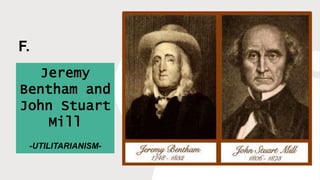
F.
Jeremy
Bentham and
John Stuart
Mill
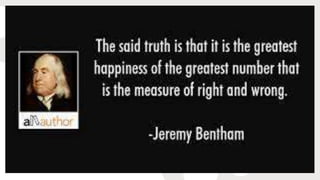
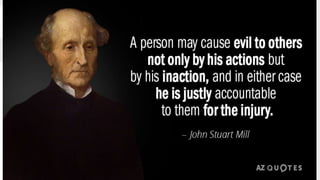
-UTILITARIANISM-
BENTHAM-He is primarily
known today for his moral
philosophy
-principle of utilitarianism,
which evaluates actions based
upon their consequences.
“Happiness is thus a
matter of experiencing
pleasure and lack of pain.”
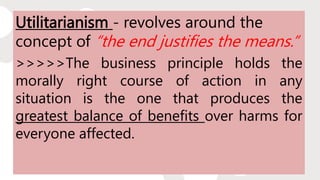
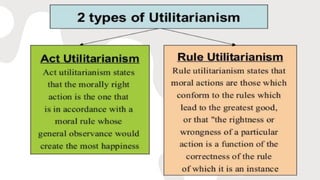
Utilitarianism - revolves around the
concept of “the end justifies the means.”
>>>>>The business principle holds the
morally right course of action in any
situation is the one that produces the
greatest balance of benefits over harms for
everyone affected.
Since ethics is universal
and the same for all,
companies should obey the
same ethical rules whenever
they operate.
For instance, they should respect
the rights of workers, should not
engage in bribery, should protect the
environment and not undermine the
local culture, and so forth.
COMPARING CLASSICAL
PHILOSOPHIES IN
RELATION TO THE
BUSINESS SETTING
WEEK5.pptx

WEEK5.pptx

  • 1.
    PHILOSOPHIES OF BUSINESS PRACTICES WEEK5 MELC: Identifythe classical philosophies and their implication for business principles and practices
  • 2.
    LEARNING COMPETENCY: Illustrate howthese philosophies are reflected into business practices
  • 3.
    Word Hunt! In youractivity notebook find and list down10 business classical philosophies and business-related words
  • 5.
    CHECK ME IFYOU ALREADY FOUND ME! SOCRATES ETHICS PLATO BUSINESS ETHICS ARISTOTLE VIRTUE CONFUCIUS VIRTUE ETHICS PHILOSOPHY UTILITARIANISM
  • 6.
    THE CLASSICAL PHILOSOPHIES AND THEIRIMPLICATION ON BUSINESS
  • 7.
  • 9.
    -emphasized personal and governmentalmorality, correctness of social relationships, justice, kindness, and sincerity.
  • 10.
    It has beenargued that Confucian values such as obedience, respect for authority and emotional control are not naturally compatible components of a common entrepreneurial standard, however;
  • 11.
    (1) • These andother Confucian values can play a positive role in entrepreneurial prosperity for China and the rest of the world if applied correctly. • Confucian entrepreneurs can be defined as those who apply traditional Chinese cultural values in respect to maintaining the moral beliefs of Confucianism in all aspects of business practice.
  • 12.
    (2) • Confucian valueswere applicable to positive interpersonal relations in business practice and in the workplace, in regards to successful human resource management in particular. • These values included: trustworthiness, Ren (compassion, humanness), Li (ritual, etiquette), harmony and tolerance of others. • These values of interpersonal relations can generate a more successful human resource management.
  • 13.
    Confucian values can aidin the creation of entrepreneurs who are true leaders of society.
  • 14.
  • 17.
    SOCRATES He was theinspiration for Plato, the thinker widely helps to be the founder of the Western philosophical tradition.
  • 18.
    • PLATO servedas the teacher of Aristotle
  • 19.
    establishing the famoustriad of ancient philosophers: Socrates, Plato, and Aristotle.
  • 20.
  • 21.
    • The SocraticMethod is a way of thinking that allows individuals to define their own purpose for learning and explore this purpose through open-minded questioning of what they hold to be true.
  • 22.
    • Entrepreneurs canfind value in Socratic Method because they, too, are bombarded by assumptions based on what others and they themselves believe to be the best plan of action for pursuing a business idea.
  • 23.
    • Entrepreneurial Learningor the acquisition of knowledge necessary for creating a business venture is built around the constant questioning and testing of these assumptions theories about what we hold to be true for validity.
  • 24.
    •These assumptions canrange from beliefs about what the market wants, where opportunities lie, to the effectiveness of a new product feature
  • 25.
  • 27.
    •He was thestudent of Socrates and the teacher of Aristotle
  • 28.
    The Theory ofForms represents Plato’s attempt to cultivate our capacity for abstract thought.
  • 29.
    The Theory ofForms differentiates the abstract world of thought from the world of the senses, where art and mythology operate.
  • 30.
    By investigating theworld of Forms, Plato hopes to attain a greater knowledge.
  • 32.
    Education for theHealth of the State • Plato identifies education as one of the most important aspects of a healthy state. • Plato thinks that a child’s education is the last thing that should be left to chance or parental whim since the young mind is so easily molded.
  • 33.
  • 35.
    Virtue and Happiness The wordhappiness in the Ethics is a translation of the Greek term eudaimonia, which carries connotations of success and fulfilment. Happiness is our highest goal.
  • 36.
    Moral Education A question ofhigh importance in any investigation of ethics is how we can teach people to be good. “The rational person doesn’t seek money for its own sake. The rational person uses money so that they can spend their time on good moral works and developing their mind.”-
  • 37.
    Moral Education A question ofhigh importance in any investigation of ethics is how we can teach people to be good. The role of the leader is to create the environment in which all members of an organization can realize their own potential.
  • 38.
  • 40.
    • He wasa German philosopher who advances the theory of deontology or deontological ethics the theory of duty and obligation. • Kant believes in always telling the truth because if we cannot believe what others will tell us, then agreements and even conversations with people are not possible.
  • 42.
  • 44.
    BENTHAM-He is primarily knowntoday for his moral philosophy -principle of utilitarianism, which evaluates actions based upon their consequences.
  • 45.
    “Happiness is thusa matter of experiencing pleasure and lack of pain.”
  • 47.
    Utilitarianism - revolvesaround the concept of “the end justifies the means.” >>>>>The business principle holds the morally right course of action in any situation is the one that produces the greatest balance of benefits over harms for everyone affected.
  • 49.
    Since ethics isuniversal and the same for all, companies should obey the same ethical rules whenever they operate.
  • 50.
    For instance, theyshould respect the rights of workers, should not engage in bribery, should protect the environment and not undermine the local culture, and so forth.
  • 51.