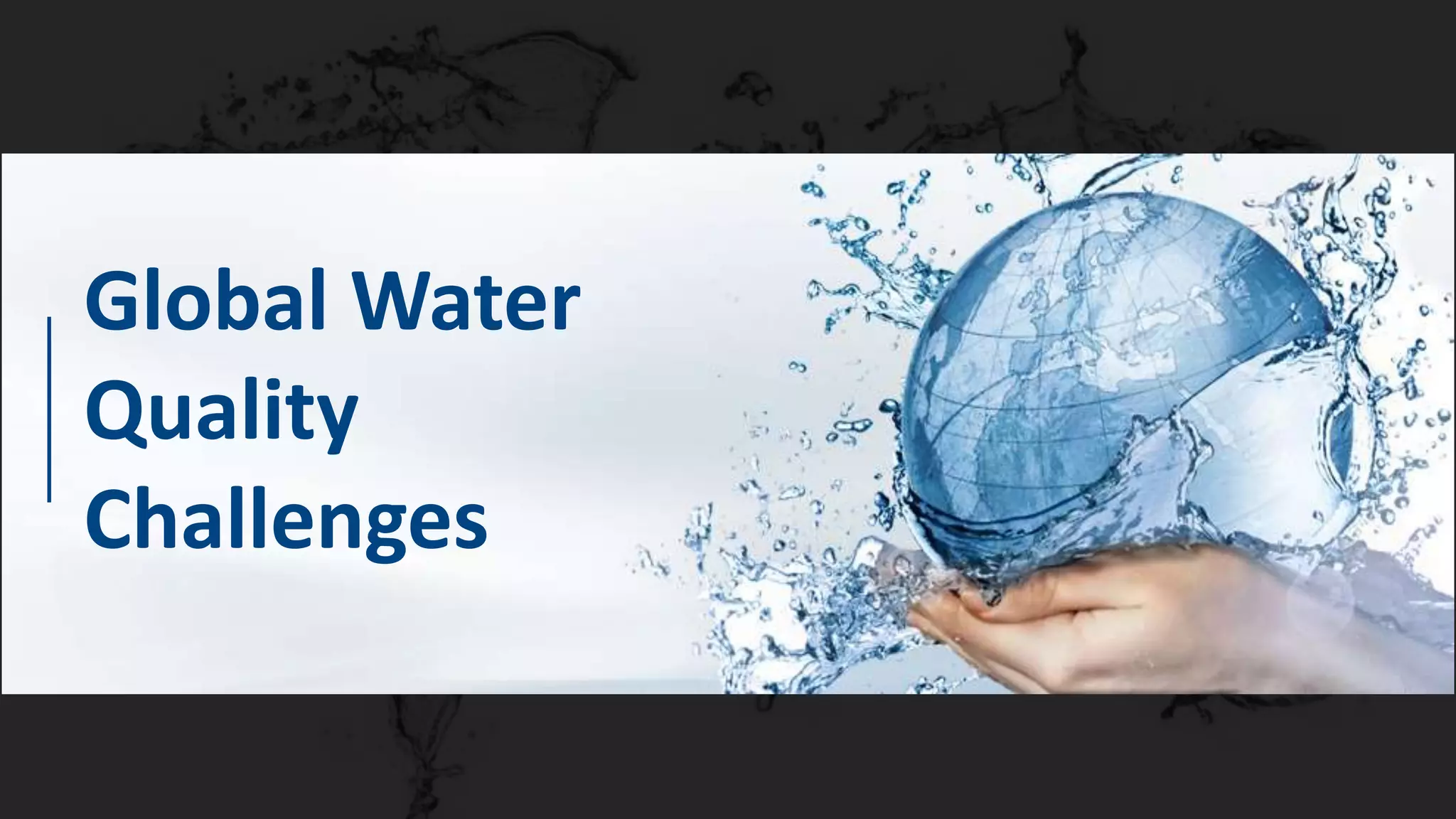
Global Water
Quality
Challenges
Water is a necessary element for sustainable development.
It serves a crucial link between the environment and society and the heart the
heart of adaptation to climate change.
Water is critical for human survival, healthy ecosystem, food production,
energy production, and socio-economic development. Increasing population,
limited water resources, and our dependence on water has given rise to global
water quality challenges.
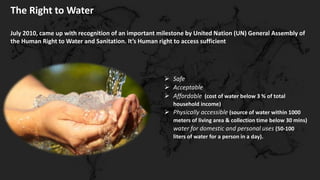
The Right to Water
July 2010, came up with recognition of an important milestone by United Nation (UN) General Assembly of
the Human Right to Water and Sanitation. It’s Human right to access sufficient
 Safe
 Acceptable
 Affordable (cost of water below 3 % of total
household income)
 Physically accessible (source of water within 1000
meters of living area & collection time below 30 mins)
water for domestic and personal uses (50-100
liters of water for a person in a day).
Water Quality Facts
More than 2.1 billion people are lacking
access to safe drinking water services
Safe sanitation services are not availed
by more than 4.5 billion people.
As per
WHO/
UNICEF
data,
2017
Water Quality Facts
As per WHO/UNICEF data, 2015 – Every year
more than 3, 50,000 children under the age of 5,
die from diarrheal diseases.
As per WHO data, 4 out of every 10 people
are affected by water scarcity
As per UNISDR – 90% of all the disasters
are water related
Water Quality Facts
As per WHO/UNICEF, Joint Monitoring Program for Water
Supply and Sanitation - More than 1.8 billion population
use drinking water from a feces-contaminated source, giving
rise to health issues like polio, typhoid, cholera, and
dysentery. Furthermore, even a greater number of
population than this are drinking water from a system which
is not protected adequately from sanitary hazards.
As per UNESCO, 2017 - Almost 80% of wastewater enters the ecosystem again without treatment.
Water, Sanitation, and Hygiene - Global Water Pollution
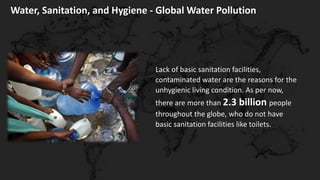
Lack of basic sanitation facilities,
contaminated water are the reasons for the
unhygienic living condition. As per now,
there are more than 2.3 billion people
throughout the globe, who do not have
basic sanitation facilities like toilets.
Unclean water and Child mortality
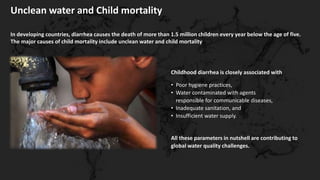
In developing countries, diarrhea causes the death of more than 1.5 million children every year below the age of five.
The major causes of child mortality include unclean water and child mortality
Childhood diarrhea is closely associated with
• Poor hygiene practices,
• Water contaminated with agents
responsible for communicable diseases,
• Inadequate sanitation, and
• Insufficient water supply.
All these parameters in nutshell are contributing to
global water quality challenges.
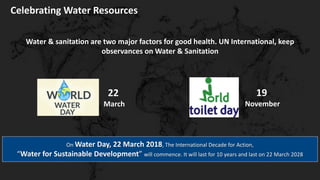
Celebrating Water Resources
Water & sanitation are two major factors for good health. UN International, keep
observances on Water & Sanitation
On Water Day, 22 March 2018, The International Decade for Action,
“Water for Sustainable Development” will commence. It will last for 10 years and last on 22 March 2028
22
March
19
November
THANK YOU

Global water quality challenges

  • 1.
  • 2.
    Water is anecessary element for sustainable development. It serves a crucial link between the environment and society and the heart the heart of adaptation to climate change. Water is critical for human survival, healthy ecosystem, food production, energy production, and socio-economic development. Increasing population, limited water resources, and our dependence on water has given rise to global water quality challenges.
  • 3.
    The Right toWater July 2010, came up with recognition of an important milestone by United Nation (UN) General Assembly of the Human Right to Water and Sanitation. It’s Human right to access sufficient  Safe  Acceptable  Affordable (cost of water below 3 % of total household income)  Physically accessible (source of water within 1000 meters of living area & collection time below 30 mins) water for domestic and personal uses (50-100 liters of water for a person in a day).
  • 4.
    Water Quality Facts Morethan 2.1 billion people are lacking access to safe drinking water services Safe sanitation services are not availed by more than 4.5 billion people. As per WHO/ UNICEF data, 2017
  • 5.
    Water Quality Facts Asper WHO/UNICEF data, 2015 – Every year more than 3, 50,000 children under the age of 5, die from diarrheal diseases. As per WHO data, 4 out of every 10 people are affected by water scarcity As per UNISDR – 90% of all the disasters are water related
  • 6.
    Water Quality Facts Asper WHO/UNICEF, Joint Monitoring Program for Water Supply and Sanitation - More than 1.8 billion population use drinking water from a feces-contaminated source, giving rise to health issues like polio, typhoid, cholera, and dysentery. Furthermore, even a greater number of population than this are drinking water from a system which is not protected adequately from sanitary hazards. As per UNESCO, 2017 - Almost 80% of wastewater enters the ecosystem again without treatment.
  • 7.
    Water, Sanitation, andHygiene - Global Water Pollution Lack of basic sanitation facilities, contaminated water are the reasons for the unhygienic living condition. As per now, there are more than 2.3 billion people throughout the globe, who do not have basic sanitation facilities like toilets.
  • 8.
    Unclean water andChild mortality In developing countries, diarrhea causes the death of more than 1.5 million children every year below the age of five. The major causes of child mortality include unclean water and child mortality Childhood diarrhea is closely associated with • Poor hygiene practices, • Water contaminated with agents responsible for communicable diseases, • Inadequate sanitation, and • Insufficient water supply. All these parameters in nutshell are contributing to global water quality challenges.
  • 9.
    Celebrating Water Resources Water& sanitation are two major factors for good health. UN International, keep observances on Water & Sanitation On Water Day, 22 March 2018, The International Decade for Action, “Water for Sustainable Development” will commence. It will last for 10 years and last on 22 March 2028 22 March 19 November
  • 10.