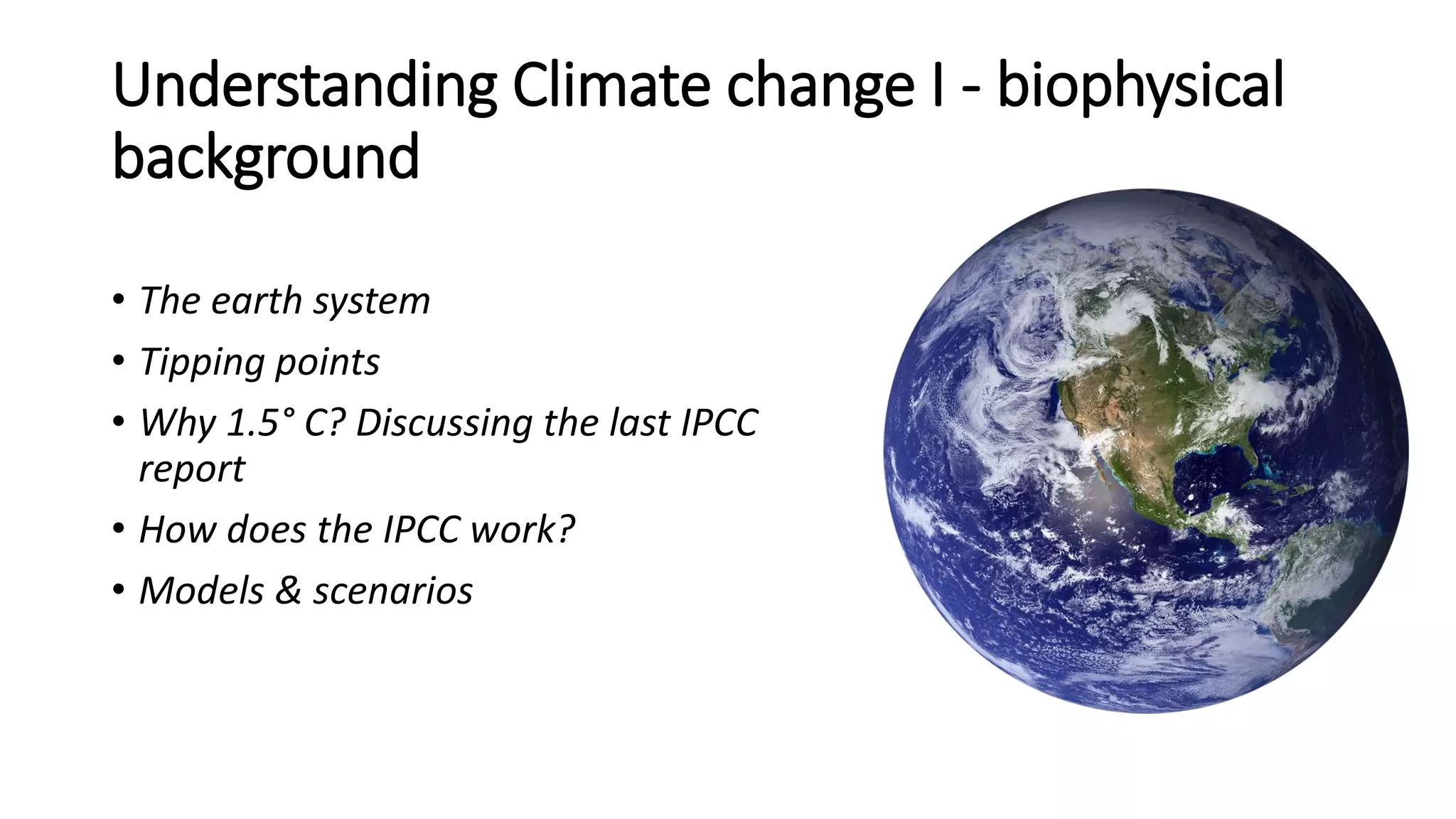
Understanding Climate change I - biophysical
background
• The earth system
• Tipping points
• Why 1.5° C? Discussing the last IPCC
report
• How does the IPCC work?
• Models & scenarios
Introduction to Earth System Science
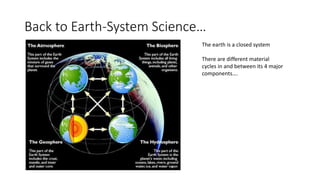
Back to Earth-System Science…
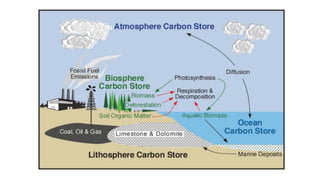
The earth is a closed system
There are different material
cycles in and between its 4 major
components….
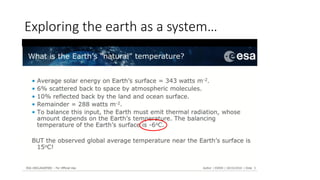
Exploring the earth as a system…
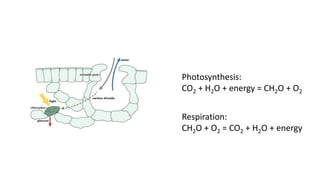
Photosynthesis:
CO2 + H2O + energy = CH2O + O2
Respiration:
CH2O + O2 = CO2 + H2O + energy
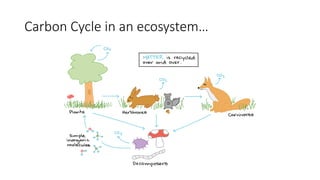
Carbon Cycle in an ecosystem…
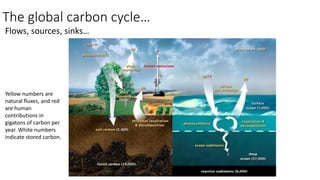
The global carbon cycle…
Flows, sources, sinks…
Yellow numbers are
natural fluxes, and red
are human
contributions in
gigatons of carbon per
year. White numbers
indicate stored carbon.
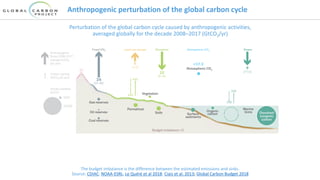
Anthropogenic perturbation of the global carbon cycle
Perturbation of the global carbon cycle caused by anthropogenic activities,
averaged globally for the decade 2008–2017 (GtCO2/yr)
The budget imbalance is the difference between the estimated emissions and sinks.
Source: CDIAC; NOAA-ESRL; Le Quéré et al 2018; Ciais et al. 2013; Global Carbon Budget 2018
Understanding Climate change I - biophysical
background
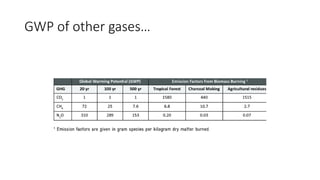
GWP of other gases…
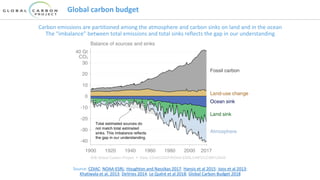
Global carbon budget
Carbon emissions are partitioned among the atmosphere and carbon sinks on land and in the ocean
The “imbalance” between total emissions and total sinks reflects the gap in our understanding
Source: CDIAC; NOAA-ESRL; Houghton and Nassikas 2017; Hansis et al 2015; Joos et al 2013;
Khatiwala et al. 2013; DeVries 2014; Le Quéré et al 2018; Global Carbon Budget 2018
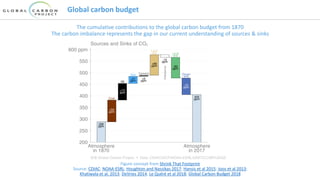
Global carbon budget
The cumulative contributions to the global carbon budget from 1870
The carbon imbalance represents the gap in our current understanding of sources & sinks
Figure concept from Shrink That Footprint
Source: CDIAC; NOAA-ESRL; Houghton and Nassikas 2017; Hansis et al 2015; Joos et al 2013;
Khatiwala et al. 2013; DeVries 2014; Le Quéré et al 2018; Global Carbon Budget 2018
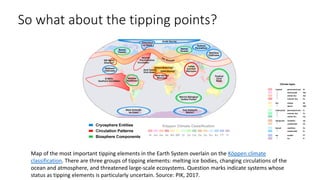
So what about the tipping points?
Map of the most important tipping elements in the Earth System overlain on the Köppen climate
classification. There are three groups of tipping elements: melting ice bodies, changing circulations of the
ocean and atmosphere, and threatened large-scale ecosystems. Question marks indicate systems whose
status as tipping elements is particularly uncertain. Source: PIK, 2017.
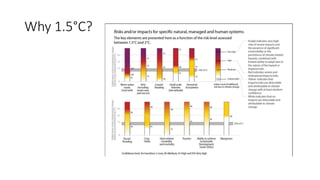
Why 1.5°C?
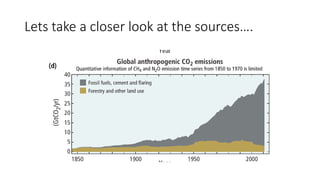
Lets take a closer look at the sources….
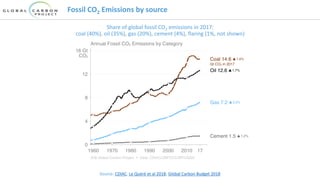
Fossil CO2 Emissions by source
Share of global fossil CO2 emissions in 2017:
coal (40%), oil (35%), gas (20%), cement (4%), flaring (1%, not shown)
Source: CDIAC; Le Quéré et al 2018; Global Carbon Budget 2018
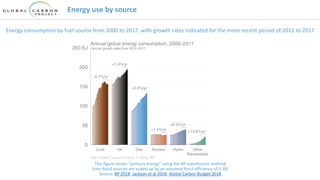
Energy use by source
Energy consumption by fuel source from 2000 to 2017, with growth rates indicated for the more recent period of 2012 to 2017
This figure shows “primary energy” using the BP substitution method
(non-fossil sources are scaled up by an assumed fossil efficiency of 0.38)
Source: BP 2018; Jackson et al 2018; Global Carbon Budget 2018
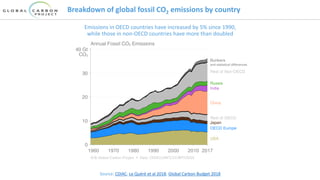
Breakdown of global fossil CO2 emissions by country
Emissions in OECD countries have increased by 5% since 1990,
while those in non-OECD countries have more than doubled
Source: CDIAC; Le Quéré et al 2018; Global Carbon Budget 2018
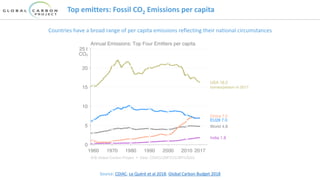
Top emitters: Fossil CO2 Emissions per capita
Countries have a broad range of per capita emissions reflecting their national circumstances
Source: CDIAC; Le Quéré et al 2018; Global Carbon Budget 2018
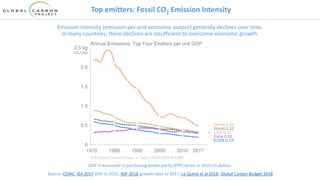
Top emitters: Fossil CO2 Emission Intensity
Emission intensity (emission per unit economic output) generally declines over time.
In many countries, these declines are insufficient to overcome economic growth.
GDP is measured in purchasing power parity (PPP) terms in 2010 US dollars.
Source: CDIAC; IEA 2017 GDP to 2015, IMF 2018 growth rates to 2017; Le Quéré et al 2018; Global Carbon Budget 2018
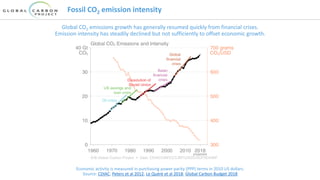
Fossil CO2 emission intensity
Global CO2 emissions growth has generally resumed quickly from financial crises.
Emission intensity has steadily declined but not sufficiently to offset economic growth.
Economic activity is measured in purchasing power parity (PPP) terms in 2010 US dollars.
Source: CDIAC; Peters et al 2012; Le Quéré et al 2018; Global Carbon Budget 2018
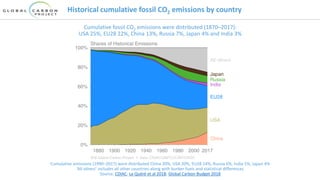
Historical cumulative fossil CO2 emissions by country
Cumulative fossil CO2 emissions were distributed (1870–2017):
USA 25%, EU28 22%, China 13%, Russia 7%, Japan 4% and India 3%
Cumulative emissions (1990–2017) were distributed China 20%, USA 20%, EU28 14%, Russia 6%, India 5%, Japan 4%
‘All others’ includes all other countries along with bunker fuels and statistical differences
Source: CDIAC; Le Quéré et al 2018; Global Carbon Budget 2018
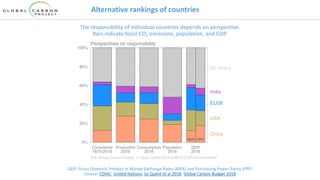
Alternative rankings of countries
The responsibility of individual countries depends on perspective.
Bars indicate fossil CO2 emissions, population, and GDP.
GDP: Gross Domestic Product in Market Exchange Rates (MER) and Purchasing Power Parity (PPP)
Source: CDIAC; United Nations; Le Quéré et al 2018; Global Carbon Budget 2018
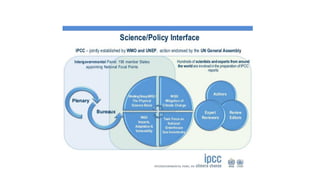
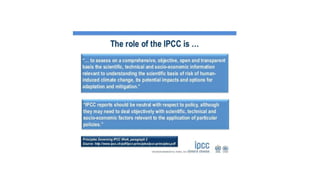
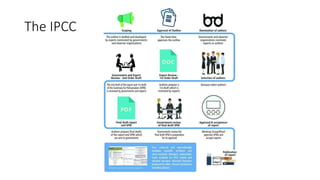
The IPCC
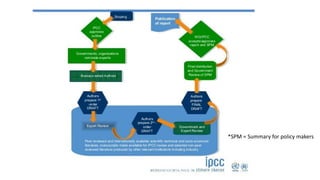
*SPM = Summary for policy makers
How does the IPCC deal with uncertanity…
Uncertainty
A state of incomplete knowledge that can result from a lack of information or
from disagreement about what is known or even knowable.
It may have many types of sources, from imprecision in the data to
ambiguously defined concepts or terminology, incomplete understanding
of critical processes, or uncertain projections of human behaviour.
Uncertainty can therefore be represented by quantitative measures (e.g., a
probability density function) or by qualitative statements (e.g., reflecting the
judgment of a team of experts) (see Moss and Schneider, 2000; IPCC, 2004;
Mastrandrea et al., 2010). See also Confidence and Likelihood.
Confidence
The robustness of a finding based on the type, amount, quality and
consistency of evidence (e.g., mechanistic understanding, theory, data,
models, expert judgment) and on the degree of agreement across
multiple lines of evidence. In this report, confidence is expressed
qualitatively (Mastrandrea et al., 2010)
See:
https://wg1.ipcc.ch/AR6/documents/AR5_Uncertainty_Guidance_Note
.pdf
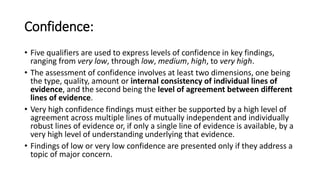
Confidence:
• Five qualifiers are used to express levels of confidence in key findings,
ranging from very low, through low, medium, high, to very high.
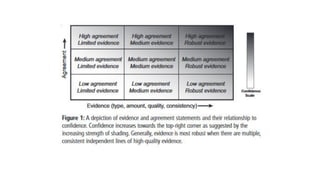
• The assessment of confidence involves at least two dimensions, one being
the type, quality, amount or internal consistency of individual lines of
evidence, and the second being the level of agreement between different
lines of evidence.
• Very high confidence findings must either be supported by a high level of
agreement across multiple lines of mutually independent and individually
robust lines of evidence or, if only a single line of evidence is available, by a

very high level of understanding underlying that evidence.
• Findings of low or very low confidence are presented only if they address a
topic of major concern.
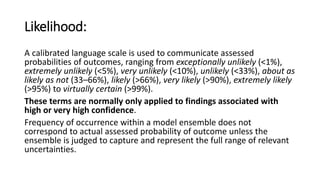
Likelihood:
A calibrated language scale is used to communicate assessed
probabilities of outcomes, ranging from exceptionally unlikely (<1%),
extremely unlikely (<5%), very unlikely (<10%), unlikely (<33%), about as
likely as not (33–66%), likely (>66%), very likely (>90%), extremely likely
(>95%) to virtually certain (>99%).
These terms are normally only applied to findings associated with
high or very high confidence.
Frequency of occurrence within a model ensemble does not
correspond to actual assessed probability of outcome unless the
ensemble is judged to capture and represent the full range of relevant
uncertainties.
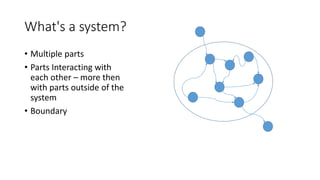
What's a system?
• Multiple parts
• Parts Interacting with
each other – more then
with parts outside of the
system
• Boundary
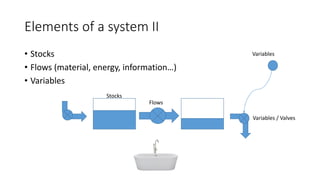
Elements of a system II
• Stocks
• Flows (material, energy, information…)
• Variables
Stocks
Flows
Variables / Valves
Variables
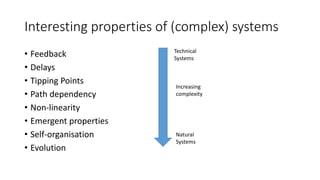
Interesting properties of (complex) systems
• Feedback
• Delays
• Tipping Points
• Path dependency
• Non-linearity
• Emergent properties
• Self-organisation
• Evolution
Increasing
complexity
Technical
Systems
Natural
Systems
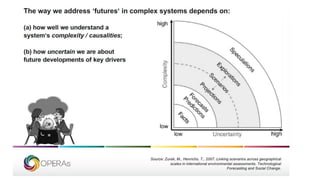
Models & Scenarios
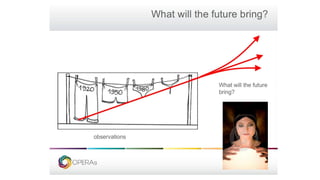
The problem with studying the future:
• We cant observe it
• We know that it will be different (probably)
• We can not use traditional scientific methods
• We need a set of tools to tackle the unknowns and the uncertainties
of the future
What are scenarios?
• A tool to address uncertainty
• Presented through stories or narratives
• Describing drivers of change – social, economic, policy, technology,
governance,…
• They may be both qualitative (narratives) and quantitative (models)
• They are no predictions
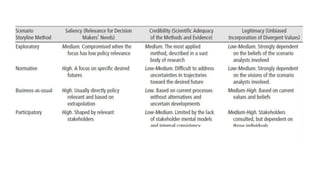
Global climate change unit1

Global climate change unit1

  • 1.
    Understanding Climate changeI - biophysical background • The earth system • Tipping points • Why 1.5° C? Discussing the last IPCC report • How does the IPCC work? • Models & scenarios
  • 3.
    Introduction to EarthSystem Science
  • 4.
    Back to Earth-SystemScience… The earth is a closed system There are different material cycles in and between its 4 major components….
  • 5.
    Exploring the earthas a system…
  • 9.
    Photosynthesis: CO2 + H2O+ energy = CH2O + O2 Respiration: CH2O + O2 = CO2 + H2O + energy
  • 10.
    Carbon Cycle inan ecosystem…
  • 11.
    The global carboncycle… Flows, sources, sinks… Yellow numbers are natural fluxes, and red are human contributions in gigatons of carbon per year. White numbers indicate stored carbon.
  • 13.
    Anthropogenic perturbation ofthe global carbon cycle Perturbation of the global carbon cycle caused by anthropogenic activities, averaged globally for the decade 2008–2017 (GtCO2/yr) The budget imbalance is the difference between the estimated emissions and sinks. Source: CDIAC; NOAA-ESRL; Le Quéré et al 2018; Ciais et al. 2013; Global Carbon Budget 2018
  • 15.
    Understanding Climate changeI - biophysical background
  • 16.
    GWP of othergases…
  • 19.
    Global carbon budget Carbonemissions are partitioned among the atmosphere and carbon sinks on land and in the ocean The “imbalance” between total emissions and total sinks reflects the gap in our understanding Source: CDIAC; NOAA-ESRL; Houghton and Nassikas 2017; Hansis et al 2015; Joos et al 2013; Khatiwala et al. 2013; DeVries 2014; Le Quéré et al 2018; Global Carbon Budget 2018
  • 20.
    Global carbon budget Thecumulative contributions to the global carbon budget from 1870 The carbon imbalance represents the gap in our current understanding of sources & sinks Figure concept from Shrink That Footprint Source: CDIAC; NOAA-ESRL; Houghton and Nassikas 2017; Hansis et al 2015; Joos et al 2013; Khatiwala et al. 2013; DeVries 2014; Le Quéré et al 2018; Global Carbon Budget 2018
  • 21.
    So what aboutthe tipping points? Map of the most important tipping elements in the Earth System overlain on the Köppen climate classification. There are three groups of tipping elements: melting ice bodies, changing circulations of the ocean and atmosphere, and threatened large-scale ecosystems. Question marks indicate systems whose status as tipping elements is particularly uncertain. Source: PIK, 2017.
  • 22.
  • 26.
    Lets take acloser look at the sources….
  • 27.
    Fossil CO2 Emissionsby source Share of global fossil CO2 emissions in 2017: coal (40%), oil (35%), gas (20%), cement (4%), flaring (1%, not shown) Source: CDIAC; Le Quéré et al 2018; Global Carbon Budget 2018
  • 28.
    Energy use bysource Energy consumption by fuel source from 2000 to 2017, with growth rates indicated for the more recent period of 2012 to 2017 This figure shows “primary energy” using the BP substitution method (non-fossil sources are scaled up by an assumed fossil efficiency of 0.38) Source: BP 2018; Jackson et al 2018; Global Carbon Budget 2018
  • 29.
    Breakdown of globalfossil CO2 emissions by country Emissions in OECD countries have increased by 5% since 1990, while those in non-OECD countries have more than doubled Source: CDIAC; Le Quéré et al 2018; Global Carbon Budget 2018
  • 30.
    Top emitters: FossilCO2 Emissions per capita Countries have a broad range of per capita emissions reflecting their national circumstances Source: CDIAC; Le Quéré et al 2018; Global Carbon Budget 2018
  • 31.
    Top emitters: FossilCO2 Emission Intensity Emission intensity (emission per unit economic output) generally declines over time. In many countries, these declines are insufficient to overcome economic growth. GDP is measured in purchasing power parity (PPP) terms in 2010 US dollars. Source: CDIAC; IEA 2017 GDP to 2015, IMF 2018 growth rates to 2017; Le Quéré et al 2018; Global Carbon Budget 2018
  • 32.
    Fossil CO2 emissionintensity Global CO2 emissions growth has generally resumed quickly from financial crises. Emission intensity has steadily declined but not sufficiently to offset economic growth. Economic activity is measured in purchasing power parity (PPP) terms in 2010 US dollars. Source: CDIAC; Peters et al 2012; Le Quéré et al 2018; Global Carbon Budget 2018
  • 33.
    Historical cumulative fossilCO2 emissions by country Cumulative fossil CO2 emissions were distributed (1870–2017): USA 25%, EU28 22%, China 13%, Russia 7%, Japan 4% and India 3% Cumulative emissions (1990–2017) were distributed China 20%, USA 20%, EU28 14%, Russia 6%, India 5%, Japan 4% ‘All others’ includes all other countries along with bunker fuels and statistical differences Source: CDIAC; Le Quéré et al 2018; Global Carbon Budget 2018
  • 34.
    Alternative rankings ofcountries The responsibility of individual countries depends on perspective. Bars indicate fossil CO2 emissions, population, and GDP. GDP: Gross Domestic Product in Market Exchange Rates (MER) and Purchasing Power Parity (PPP) Source: CDIAC; United Nations; Le Quéré et al 2018; Global Carbon Budget 2018
  • 38.
  • 39.
    *SPM = Summaryfor policy makers
  • 42.
    How does theIPCC deal with uncertanity… Uncertainty A state of incomplete knowledge that can result from a lack of information or from disagreement about what is known or even knowable. It may have many types of sources, from imprecision in the data to ambiguously defined concepts or terminology, incomplete understanding of critical processes, or uncertain projections of human behaviour. Uncertainty can therefore be represented by quantitative measures (e.g., a probability density function) or by qualitative statements (e.g., reflecting the judgment of a team of experts) (see Moss and Schneider, 2000; IPCC, 2004; Mastrandrea et al., 2010). See also Confidence and Likelihood.
  • 43.
    Confidence The robustness ofa finding based on the type, amount, quality and consistency of evidence (e.g., mechanistic understanding, theory, data, models, expert judgment) and on the degree of agreement across multiple lines of evidence. In this report, confidence is expressed qualitatively (Mastrandrea et al., 2010) See: https://wg1.ipcc.ch/AR6/documents/AR5_Uncertainty_Guidance_Note .pdf
  • 44.
    Confidence: • Five qualifiersare used to express levels of confidence in key findings, ranging from very low, through low, medium, high, to very high. • The assessment of confidence involves at least two dimensions, one being the type, quality, amount or internal consistency of individual lines of evidence, and the second being the level of agreement between different lines of evidence. • Very high confidence findings must either be supported by a high level of agreement across multiple lines of mutually independent and individually robust lines of evidence or, if only a single line of evidence is available, by a very high level of understanding underlying that evidence. • Findings of low or very low confidence are presented only if they address a topic of major concern.
  • 46.
    Likelihood: A calibrated languagescale is used to communicate assessed probabilities of outcomes, ranging from exceptionally unlikely (<1%), extremely unlikely (<5%), very unlikely (<10%), unlikely (<33%), about as likely as not (33–66%), likely (>66%), very likely (>90%), extremely likely (>95%) to virtually certain (>99%). These terms are normally only applied to findings associated with high or very high confidence. Frequency of occurrence within a model ensemble does not correspond to actual assessed probability of outcome unless the ensemble is judged to capture and represent the full range of relevant uncertainties.
  • 47.
    What's a system? •Multiple parts • Parts Interacting with each other – more then with parts outside of the system • Boundary
  • 48.
    Elements of asystem II • Stocks • Flows (material, energy, information…) • Variables Stocks Flows Variables / Valves Variables
  • 49.
    Interesting properties of(complex) systems • Feedback • Delays • Tipping Points • Path dependency • Non-linearity • Emergent properties • Self-organisation • Evolution Increasing complexity Technical Systems Natural Systems
  • 50.
  • 52.
    The problem withstudying the future: • We cant observe it • We know that it will be different (probably) • We can not use traditional scientific methods • We need a set of tools to tackle the unknowns and the uncertainties of the future
  • 54.
    What are scenarios? •A tool to address uncertainty • Presented through stories or narratives • Describing drivers of change – social, economic, policy, technology, governance,… • They may be both qualitative (narratives) and quantitative (models) • They are no predictions