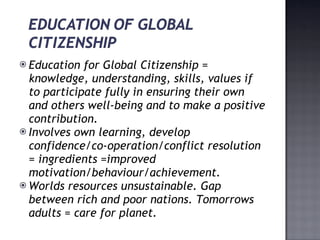
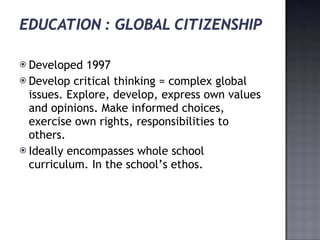
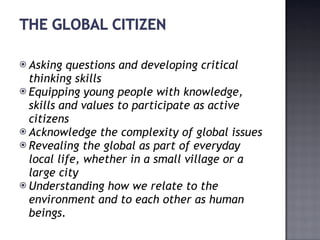
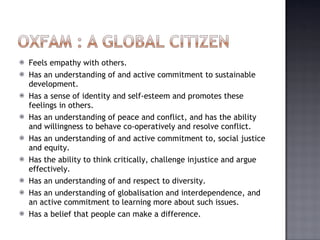
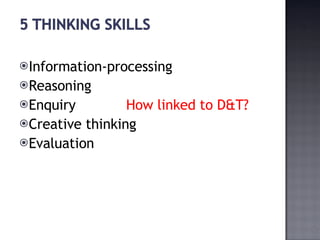
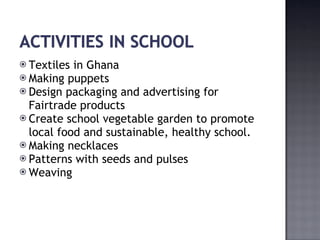
Education for global citizenship aims to provide students with the knowledge, skills, and values to participate in ensuring their own and others' well-being and make a positive global impact. This involves developing students' self-confidence, cooperation skills, and ability to resolve conflicts, which improves their motivation, behavior, and academic achievement. As the world's resources are unsustainable and inequality exists between rich and poor nations, tomorrow's adults need to learn to care for the planet. Developing critical thinking allows students to explore complex global issues, express their own opinions, and make informed choices that consider their responsibilities towards others.


![Toshiba__CO2_Balance_project[1]Schools](https://cdn.slidesharecdn.com/ss_thumbnails/79481fb5-4a59-4bd1-8b28-e5a84f041588-160517142616-thumbnail.jpg?width=640&height=640&fit=bounds)


