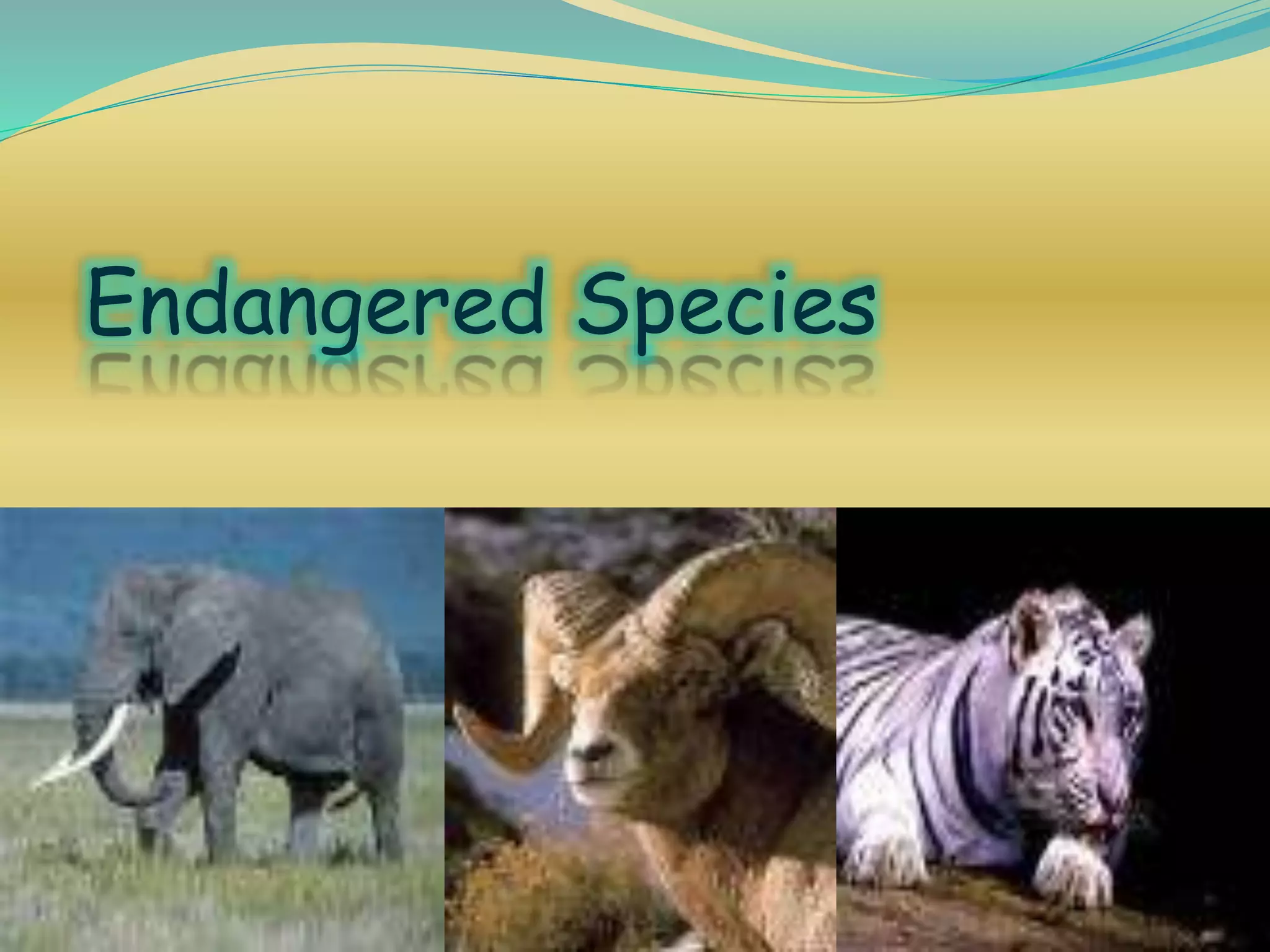
Endangered Species
The international union for conservation of nature and natural
resources have given us a classification of existing plants and animal
kingdom based on their characteristics and the threat they are facing
due to human intervention and many other specific factors causing
their loss:
- Normal Species: species whose population levels are considered
to be normal for their survival, such a cattle, Sal, pine, rodents, etc.
- Endangered Species: these are species which are in danger of
extinction. The survival of such species is difficult if the negative
factors that have led to a decline in their population continue to
operate. The examples of such species are black buck, crocodile, etc.
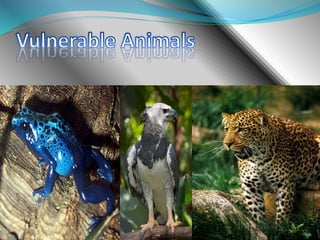
- Vulnerable Species: These are species whose population has
declined to levels from where it is likely to move into the endangered
category in the near future if the negative factors continue to operate.
The examples of such species are blue sheep, Asiatic elephant,
Genetic dolphin, etc.
-Rare Species: Species with small population may move into the
endangered or vulnerable category if the negative factors affecting
them continue to operate. The examples of such species are the
Himalayan brown bear, wild Asiatic buffalo, desert fox and
hornbill, etc.
-Endemic Species: These are species which are only found in some
particular areas usually isolated by natural or geographical
barriers. Examples of such species are the Andaman teal, Nicobar
pigeon, Andaman wild pig, mithun in Arunachal Pradesh.
-Extinct Species: These are species which are not found after
searches of known or likely areas where they may occur. A species
may be extinct from a local area, region, country, continent or the
entire earth. Examples of such species are the Asiatic cheetah,
pink head duck.
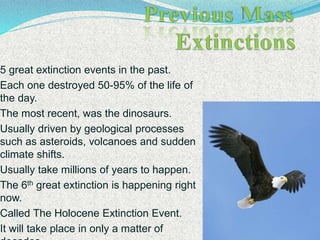
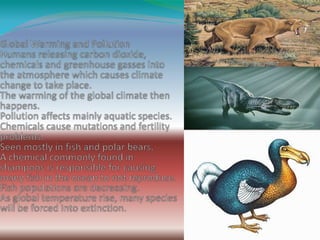
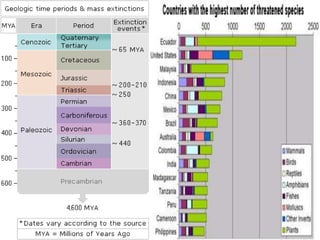
5 great extinction events in the past.
Each one destroyed 50-95% of the life of
the day.
The most recent, was the dinosaurs.
Usually driven by geological processes
such as asteroids, volcanoes and sudden
climate shifts.
Usually take millions of years to happen.
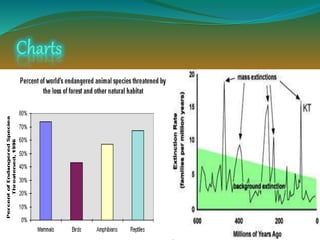
The 6th great extinction is happening right
now.
Called The Holocene Extinction Event.
It will take place in only a matter of
Today, carbon dioxide is coming from our industrial
activities and lifestyle.
Estimated at the end of this century there will be a 6
degree Celsius increase in global temp. if we don’t make
changes.
Global warming is already affecting timing of seasons
and animals bearing young earlier than at beginning of
20th century.
If 95% of species die out then, humans will be one of
them.
-These factors lead to the endangerment
and extinction of species.
-Habitat Destruction
-Fast paced changes= little or no time for
species to react and adjust to new
circumstances.
-Primary cause of species endangerment.
-Humans are what cause this destruction.
-Tropical forests are highly susceptible to
destruction.
-Examples of habitat destruction: Clear
cutting, destroying by fire, logging, mining,
expanding human settlements and building
new towns and cities.
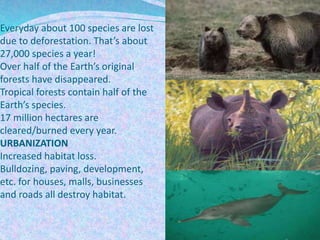
Everyday about 100 species are lost
due to deforestation. That’s about
27,000 species a year!
Over half of the Earth’s original
forests have disappeared.
Tropical forests contain half of the
Earth’s species.
17 million hectares are
cleared/burned every year.
URBANIZATION
Increased habitat loss.
Bulldozing, paving, development,
etc. for houses, malls, businesses
and roads all destroy habitat.
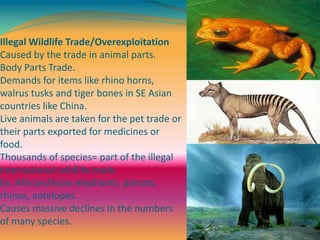
Illegal Wildlife Trade/Overexploitation
Caused by the trade in animal parts.
Body Parts Trade.
Demands for items like rhino horns,
walrus tusks and tiger bones in SE Asian
countries like China.
Live animals are taken for the pet trade or
their parts exported for medicines or
food.
Thousands of species= part of the illegal
international wildlife trade.
Ex. African/Asian elephants, parrots,
rhinos, antelopes.
Causes massive declines in the numbers
of many species.
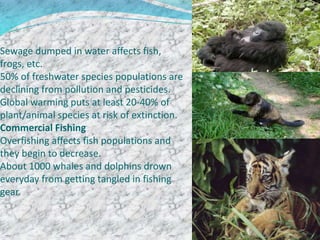
Sewage dumped in water affects fish,
frogs, etc.
50% of freshwater species populations are
declining from pollution and pesticides.
Global warming puts at least 20-40% of
plant/animal species at risk of extinction.
Commercial Fishing
Overfishing affects fish populations and
they begin to decrease.
About 1000 whales and dolphins drown
everyday from getting tangled in fishing
gear.
I. Visit a national park or wildlife reserve and appreciate the
animals. Follow the guidelines, like fire regulations, don’t
litter and leave flowers and plants where you find them.
II. Make space for wildlife. Build a birdhouse or have a
birdbath, plant a tree, compost your wastes and don’t use
harmful chemicals in your home or garden.
III. Recycle, Reduce and Reuse. Carpool, take public
transportation, walk, ride bikes.
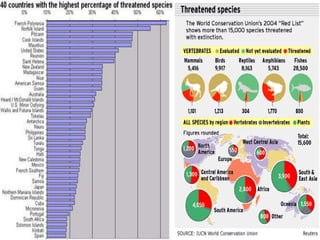
There are more than 1000 endangered species worldwide.
There are more than 3500 protected wildlife areas in the
world. They cover 5 million sq. miles or 3% of our total land
area.
More than 16,000 of the world’s mammals, birds and
plants are threatened with extinction.
¼ of the known 5487 wild mammal species on the planet
are threatened with extinction. That’s 1372 mammals,
almost gone from the face of the Earth.
Most species in the world, will become extinct before they
are even known to man.
• 12% of all birds, 33% of amphibians and 50% of palm
trees are threatened with extinction.
• Climate change alone could lead to further extinction of
15-37% of all species by the end of the century.
• Between 1960 and 2000, human population of the world
has doubled but the animal populations have declined
by 30%.
• 137 species are estimated to go extinct each day.
• 50,000 species are estimated to go extinct each year.
• 95% of known plant species have not yet been screened
for their medicinal values.
More than 3 million heart disease sufferers would die within 72
hours of a heart attack, without a drug from the purple fox grove.
AGRICULTURAL VALUES
80,000 edible plants in the world. Humans depend on 20 species of
these, like corn and wheat to provide 90% of the world’s food.
ECOLOGICAL
Plant and animal species are the foundation of healthy ecosystems.
Humans depend on ecosystems like prairie grasslands and ancient
forests to supply us with food and purify the air.
When species become endangered it means the ecosystems are
not healthy
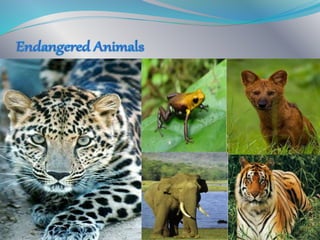
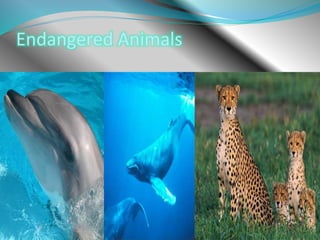
Endangered Animals
Learn as much as you can about endangered species in your
area
Visit a nearby national wildlife refuge or nature center
Volunteer to help
Don’t buy species illegally taken from the wild
Don’t buy products made from threatened or endangered
species.
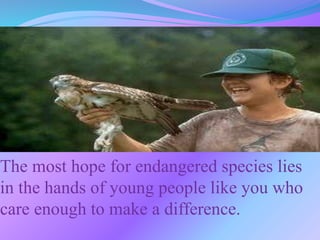
The most hope for endangered species lies
in the hands of young people like you who
care enough to make a difference.
Thank you
Rudraksha Saraswat (x-A)

Endangered species

  • 1.
  • 2.
    The international unionfor conservation of nature and natural resources have given us a classification of existing plants and animal kingdom based on their characteristics and the threat they are facing due to human intervention and many other specific factors causing their loss: - Normal Species: species whose population levels are considered to be normal for their survival, such a cattle, Sal, pine, rodents, etc. - Endangered Species: these are species which are in danger of extinction. The survival of such species is difficult if the negative factors that have led to a decline in their population continue to operate. The examples of such species are black buck, crocodile, etc. - Vulnerable Species: These are species whose population has declined to levels from where it is likely to move into the endangered category in the near future if the negative factors continue to operate. The examples of such species are blue sheep, Asiatic elephant, Genetic dolphin, etc.
  • 3.
    -Rare Species: Specieswith small population may move into the endangered or vulnerable category if the negative factors affecting them continue to operate. The examples of such species are the Himalayan brown bear, wild Asiatic buffalo, desert fox and hornbill, etc. -Endemic Species: These are species which are only found in some particular areas usually isolated by natural or geographical barriers. Examples of such species are the Andaman teal, Nicobar pigeon, Andaman wild pig, mithun in Arunachal Pradesh. -Extinct Species: These are species which are not found after searches of known or likely areas where they may occur. A species may be extinct from a local area, region, country, continent or the entire earth. Examples of such species are the Asiatic cheetah, pink head duck.
  • 4.
    5 great extinctionevents in the past. Each one destroyed 50-95% of the life of the day. The most recent, was the dinosaurs. Usually driven by geological processes such as asteroids, volcanoes and sudden climate shifts. Usually take millions of years to happen. The 6th great extinction is happening right now. Called The Holocene Extinction Event. It will take place in only a matter of
  • 5.
    Today, carbon dioxideis coming from our industrial activities and lifestyle. Estimated at the end of this century there will be a 6 degree Celsius increase in global temp. if we don’t make changes. Global warming is already affecting timing of seasons and animals bearing young earlier than at beginning of 20th century. If 95% of species die out then, humans will be one of them.
  • 7.
    -These factors leadto the endangerment and extinction of species. -Habitat Destruction -Fast paced changes= little or no time for species to react and adjust to new circumstances. -Primary cause of species endangerment. -Humans are what cause this destruction. -Tropical forests are highly susceptible to destruction. -Examples of habitat destruction: Clear cutting, destroying by fire, logging, mining, expanding human settlements and building new towns and cities.
  • 8.
    Everyday about 100species are lost due to deforestation. That’s about 27,000 species a year! Over half of the Earth’s original forests have disappeared. Tropical forests contain half of the Earth’s species. 17 million hectares are cleared/burned every year. URBANIZATION Increased habitat loss. Bulldozing, paving, development, etc. for houses, malls, businesses and roads all destroy habitat.
  • 9.
    Illegal Wildlife Trade/Overexploitation Causedby the trade in animal parts. Body Parts Trade. Demands for items like rhino horns, walrus tusks and tiger bones in SE Asian countries like China. Live animals are taken for the pet trade or their parts exported for medicines or food. Thousands of species= part of the illegal international wildlife trade. Ex. African/Asian elephants, parrots, rhinos, antelopes. Causes massive declines in the numbers of many species.
  • 11.
    Sewage dumped inwater affects fish, frogs, etc. 50% of freshwater species populations are declining from pollution and pesticides. Global warming puts at least 20-40% of plant/animal species at risk of extinction. Commercial Fishing Overfishing affects fish populations and they begin to decrease. About 1000 whales and dolphins drown everyday from getting tangled in fishing gear.
  • 15.
    I. Visit anational park or wildlife reserve and appreciate the animals. Follow the guidelines, like fire regulations, don’t litter and leave flowers and plants where you find them. II. Make space for wildlife. Build a birdhouse or have a birdbath, plant a tree, compost your wastes and don’t use harmful chemicals in your home or garden. III. Recycle, Reduce and Reuse. Carpool, take public transportation, walk, ride bikes.
  • 16.
    There are morethan 1000 endangered species worldwide. There are more than 3500 protected wildlife areas in the world. They cover 5 million sq. miles or 3% of our total land area. More than 16,000 of the world’s mammals, birds and plants are threatened with extinction. ¼ of the known 5487 wild mammal species on the planet are threatened with extinction. That’s 1372 mammals, almost gone from the face of the Earth. Most species in the world, will become extinct before they are even known to man.
  • 17.
    • 12% ofall birds, 33% of amphibians and 50% of palm trees are threatened with extinction. • Climate change alone could lead to further extinction of 15-37% of all species by the end of the century. • Between 1960 and 2000, human population of the world has doubled but the animal populations have declined by 30%. • 137 species are estimated to go extinct each day. • 50,000 species are estimated to go extinct each year. • 95% of known plant species have not yet been screened for their medicinal values.
  • 19.
    More than 3million heart disease sufferers would die within 72 hours of a heart attack, without a drug from the purple fox grove. AGRICULTURAL VALUES 80,000 edible plants in the world. Humans depend on 20 species of these, like corn and wheat to provide 90% of the world’s food. ECOLOGICAL Plant and animal species are the foundation of healthy ecosystems. Humans depend on ecosystems like prairie grasslands and ancient forests to supply us with food and purify the air. When species become endangered it means the ecosystems are not healthy
  • 22.
  • 24.
    Learn as muchas you can about endangered species in your area Visit a nearby national wildlife refuge or nature center Volunteer to help Don’t buy species illegally taken from the wild Don’t buy products made from threatened or endangered species.
  • 25.
    The most hopefor endangered species lies in the hands of young people like you who care enough to make a difference.
  • 26.