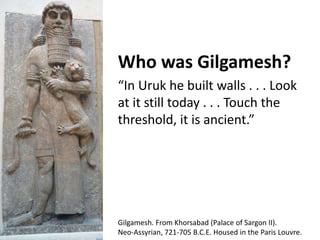
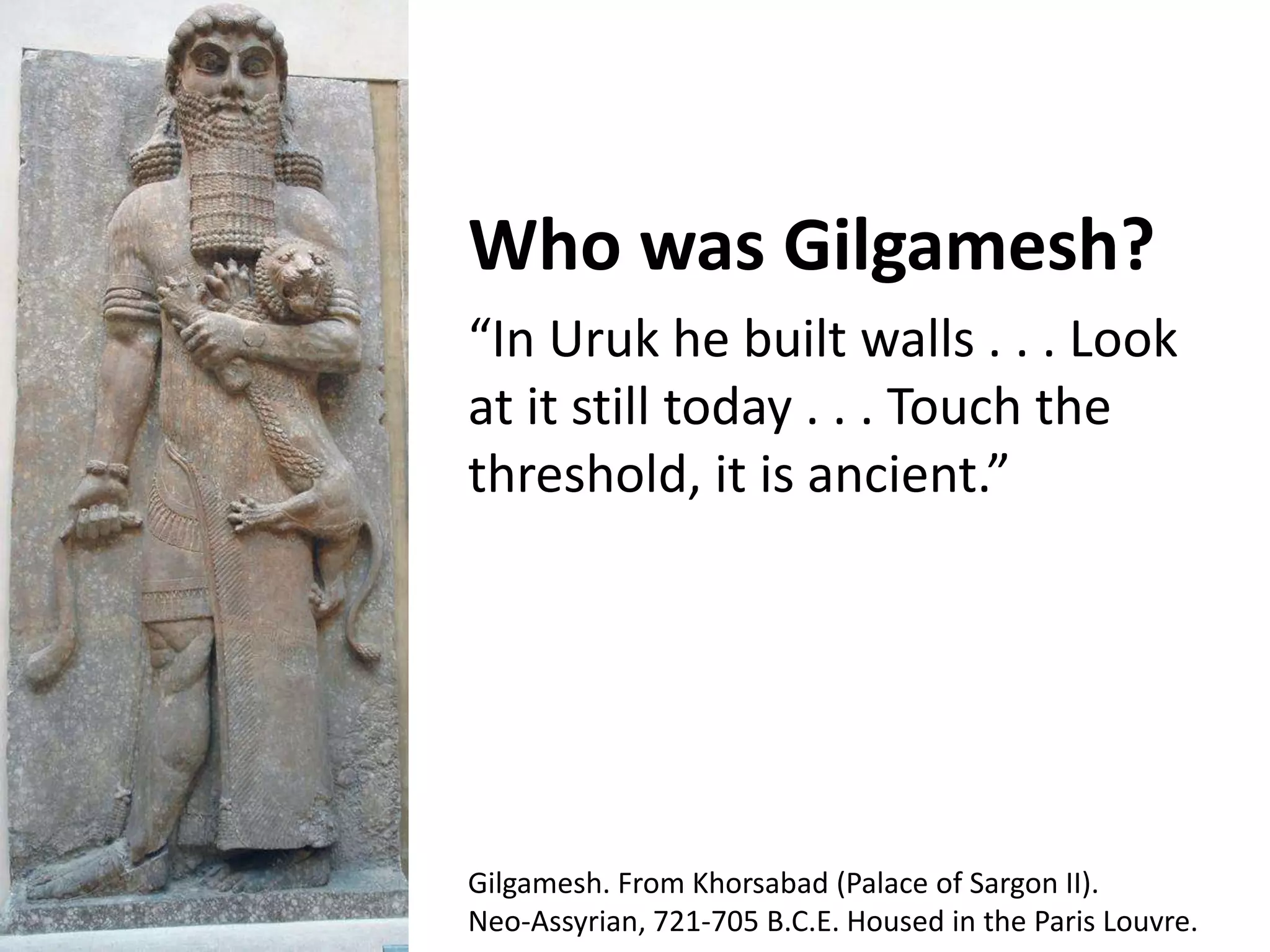


Who was Gilgamesh? 
“In Uruk he built walls . . . Look 
at it still today . . . Touch the 
threshold, it is ancient.” 
Gilgamesh. From Khorsabad (Palace of Sargon II). 
Neo-Assyrian, 721-705 B.C.E. Housed in the Paris Louvre.
THE CITY
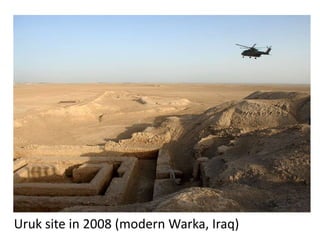
Uruk site in 2008 (modern Warka, Iraq)
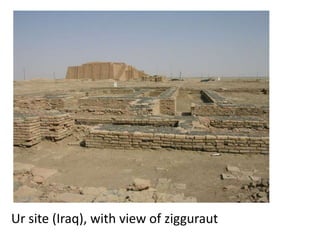
Ur site (Iraq), with view of zigguraut
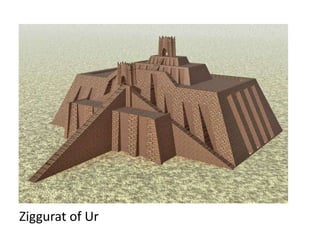
Ziggurat of Ur
THE EPIC
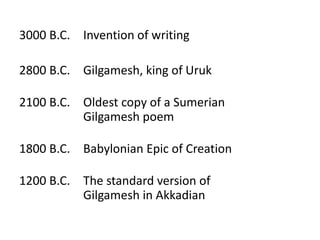
3000 B.C. Invention of writing 
2800 B.C. Gilgamesh, king of Uruk 
2100 B.C. Oldest copy of a Sumerian 
Gilgamesh poem 
1800 B.C. Babylonian Epic of Creation 
1200 B.C. The standard version of 
Gilgamesh in Akkadian
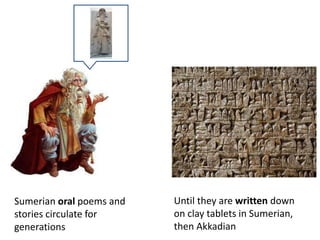
Sumerian oral poems and 
stories circulate for 
generations 
Until they are written down 
on clay tablets in Sumerian, 
then Akkadian
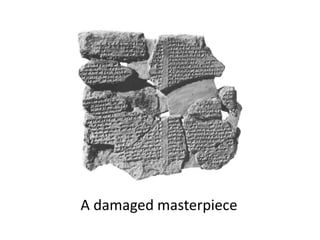
A damaged masterpiece
Tablet I. The Coming of Enkidu 
He who saw the Deep, the country’s 
foundation 
[who] knew…, was wise in all manners! 
[Gilgamesh, who] saw the Deep, the 
country’s foundation, 
[who] knew…, was wise in all matters! 
[He] … everywhere… 
and [learnt] of everything the sum of 
wisdom. 
He saw what was secret, discovered what 
was hidden, 
he brought back a tale of before the 
Deluge. 
Translated by Andrew George (1999) 
Prologue 
Gilgamesh King in Uruk 
I will proclaim to the world the deeds of 
Gilgamesh. This was the man to whom all 
things were known; this was the king who 
knew the countries of the world. He was 
wise, he saw mysteries and knew secret 
things, he brought us a tale of the days 
before the flood. He went on a long 
journey, was weary, worn-out with labour, 
returning he rested, he engraved on a 
stone the whole story. 
Translated by N. K. Sanders
THE GODS
• Anu – sky god, principal god of Uruk 
• Ishtar – goddess of love and war, Venus; 
principal goddess of Uruk 
• Enlil – god of earth, wind, and spirit; one of 
the supreme deities 
• Shamash – sun god 
• Humbaba – giant montster, guardian of the 
Forest of Cedar
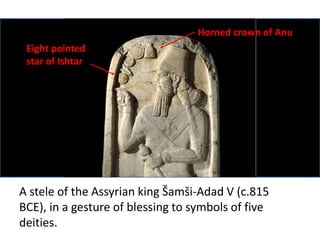
Horned crown of Anu 
Eight pointed 
star of Ishtar 
A stele of the Assyrian king Šamši-Adad V (c.815 
BCE), in a gesture of blessing to symbols of five 
deities.
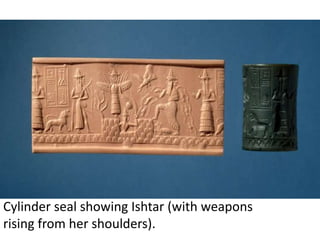
Cylinder seal showing Ishtar (with weapons 
rising from her shoulders).
Questions 
• Why was this story written down? Why is 
Gilgamesh an important hero to the people of 
the Mesopotamian civilizations? 
• What patterns in this epic will we see 
continued in later epics and narratives? Do 
we recognize any of these patterns in stories 
that continue to be told today?

Gilgamesh

  • 1.
    Who was Gilgamesh? “In Uruk he built walls . . . Look at it still today . . . Touch the threshold, it is ancient.” Gilgamesh. From Khorsabad (Palace of Sargon II). Neo-Assyrian, 721-705 B.C.E. Housed in the Paris Louvre.
  • 2.
  • 4.
    Uruk site in2008 (modern Warka, Iraq)
  • 5.
    Ur site (Iraq),with view of zigguraut
  • 6.
  • 7.
  • 8.
    3000 B.C. Inventionof writing 2800 B.C. Gilgamesh, king of Uruk 2100 B.C. Oldest copy of a Sumerian Gilgamesh poem 1800 B.C. Babylonian Epic of Creation 1200 B.C. The standard version of Gilgamesh in Akkadian
  • 9.
    Sumerian oral poemsand stories circulate for generations Until they are written down on clay tablets in Sumerian, then Akkadian
  • 10.
  • 11.
    Tablet I. TheComing of Enkidu He who saw the Deep, the country’s foundation [who] knew…, was wise in all manners! [Gilgamesh, who] saw the Deep, the country’s foundation, [who] knew…, was wise in all matters! [He] … everywhere… and [learnt] of everything the sum of wisdom. He saw what was secret, discovered what was hidden, he brought back a tale of before the Deluge. Translated by Andrew George (1999) Prologue Gilgamesh King in Uruk I will proclaim to the world the deeds of Gilgamesh. This was the man to whom all things were known; this was the king who knew the countries of the world. He was wise, he saw mysteries and knew secret things, he brought us a tale of the days before the flood. He went on a long journey, was weary, worn-out with labour, returning he rested, he engraved on a stone the whole story. Translated by N. K. Sanders
  • 12.
  • 13.
    • Anu –sky god, principal god of Uruk • Ishtar – goddess of love and war, Venus; principal goddess of Uruk • Enlil – god of earth, wind, and spirit; one of the supreme deities • Shamash – sun god • Humbaba – giant montster, guardian of the Forest of Cedar
  • 14.
    Horned crown ofAnu Eight pointed star of Ishtar A stele of the Assyrian king Šamši-Adad V (c.815 BCE), in a gesture of blessing to symbols of five deities.
  • 15.
    Cylinder seal showingIshtar (with weapons rising from her shoulders).
  • 16.
    Questions • Whywas this story written down? Why is Gilgamesh an important hero to the people of the Mesopotamian civilizations? • What patterns in this epic will we see continued in later epics and narratives? Do we recognize any of these patterns in stories that continue to be told today?