Dr Renata Giedych
Department of Landscape Architecture
Warsaw University of Life Sciences

Urban agriculture: structure,
functions, future challenges
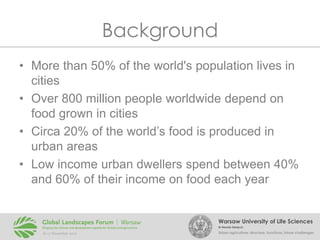
Background
• More than 50% of the world's population lives in
cities
• Over 800 million people worldwide depend on
food grown in cities
• Circa 20% of the world’s food is produced in
urban areas
• Low income urban dwellers spend between 40%
and 60% of their income on food each year

Warsaw University of Life Sciences
Dr Renata Giedych

Urban agriculture: structure, functions, future challenges
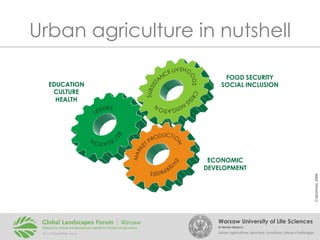
Urban agriculture in nutshell

TIO N
TIG A
MI

ECONOMIC
DEVELOPMENT
Cabannes, 2006

EN

MAR
K

N

DUCT I O
RO
P

RI SES
RP
TE

RE

ET

IS

SURE
LEI

FOOD SECURITY
SOCIAL INCLUSION

CR
IS

SUB S

IST

LIV EHO
ODS

EDUCATION
CULTURE
HEALTH

E
NC
A

Warsaw University of Life Sciences
Dr Renata Giedych

Urban agriculture: structure, functions, future challenges

C

TI O
R EA N
http://blogs.worldwatch.org/

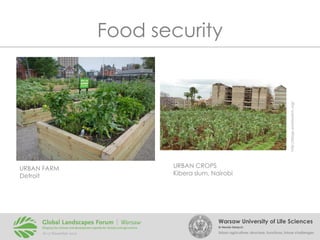
Food security

URBAN FARM
Detroit

URBAN CROPS
Kibera slum, Nairobi

Warsaw University of Life Sciences
Dr Renata Giedych

Urban agriculture: structure, functions, future challenges
http://inhabitat.com/

http://www.edenprairienews.com/

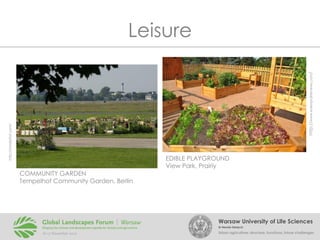
Leisure

EDIBLE PLAYGROUND
View Park, Prairiy
COMMUNITY GARDEN
Tempelhof Community Garden, Berlin

Warsaw University of Life Sciences
Dr Renata Giedych

Urban agriculture: structure, functions, future challenges
http://inhabitat.com/

http://www.brooklyngrangefarm.com/

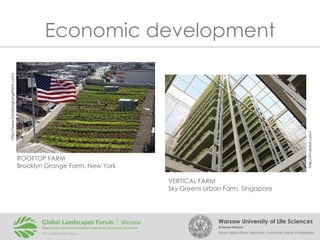
Economic development

ROOFTOP FARM
Brooklyn Grange Farm, New York
VERTICAL FARM
Sky Greens Urban Farm, Singapore

Warsaw University of Life Sciences
Dr Renata Giedych

Urban agriculture: structure, functions, future challenges
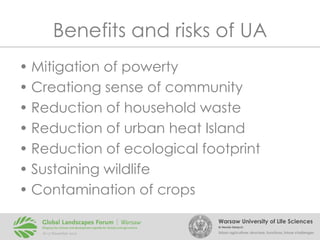
Benefits and risks of UA
• Mitigation of powerty
• Creationg sense of community
• Reduction of household waste
• Reduction of urban heat Island
• Reduction of ecological footprint
• Sustaining wildlife
• Contamination of crops
Warsaw University of Life Sciences
Dr Renata Giedych

Urban agriculture: structure, functions, future challenges
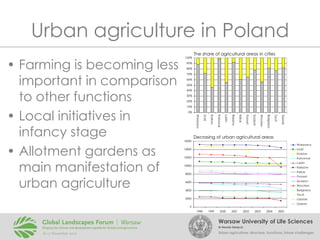
Urban agriculture in Poland
The share of agricultural areas in cities

90%
80%
70%
60%
50%
40%
30%

Agricultural lands

20%

Other areas

10%
0%

Gdańsk

Toruń

Bydgoszcz

Wrocław

Szczecin

Poznań

Kielce

Rzeszów

Lublin

Katowice

Kraków

16000

Łódź

Warszawa

• Farming is becoming less
important in comparison
to other functions
• Local initiatives in
infancy stage
• Allotment gardens as
main manifestation of
urban agriculture

100%

Decrasing of urban agricultural areas
Warszawa

14000

Łódź
Kraków

12000

Katowice
Lublin

10000

Rzeszów
Kielce

8000

Poznań
Szczecin

6000

Wrocław
Bydgoszcz

4000

Toruń
2000

Gdańsk
Gdynia

0
1998

1999

2000

2001

2002

2003

2004

2005

Warsaw University of Life Sciences
Dr Renata Giedych

Urban agriculture: structure, functions, future challenges
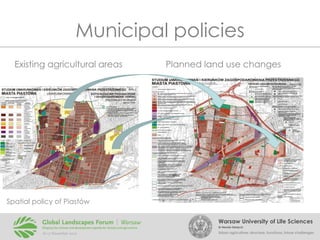
Municipal policies
Existing agricultural areas

Planned land use changes

Spatial policy of Piastów
Warsaw University of Life Sciences
Dr Renata Giedych

Urban agriculture: structure, functions, future challenges
http://metromsn.gazeta.pl

http://kwiatkibratki.pl/wp-content/

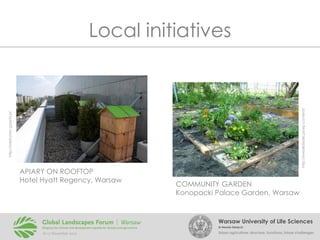
Local initiatives

APIARY ON ROOFTOP
Hotel Hyatt Regency, Warsaw

COMMUNITY GARDEN
Konopacki Palace Garden, Warsaw

Warsaw University of Life Sciences
Dr Renata Giedych

Urban agriculture: structure, functions, future challenges
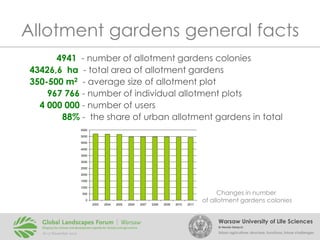
Allotment gardens general facts
4941 - number of allotment gardens colonies
43426,6 ha - total area of allotment gardens
350-500 m2 - average size of allotment plot
967 766 - number of individual allotment plots
4 000 000 - number of users
88% - the share of urban allotment gardens in total
5500
5000
4500
4000
3500
3000
2500
2000
1500
1000
500
0
2003

2004

2005

2006

2007

2008

2009

2010

2011

Changes in number
of allotment gardens colonies
Warsaw University of Life Sciences
Dr Renata Giedych

Urban agriculture: structure, functions, future challenges
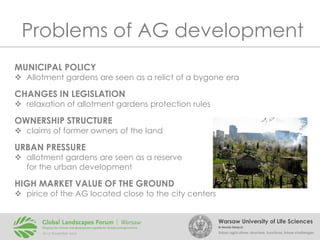
Problems of AG development
MUNICIPAL POLICY

 Allotment gardens are seen as a relict of a bygone era

CHANGES IN LEGISLATION

 relaxation of allotment gardens protection rules

OWNERSHIP STRUCTURE

 claims of former owners of the land

URBAN PRESSURE

 allotment gardens are seen as a reserve
for the urban development

HIGH MARKET VALUE OF THE GROUND

 pirice of the AG located close to the city centers
Warsaw University of Life Sciences
Dr Renata Giedych

Urban agriculture: structure, functions, future challenges
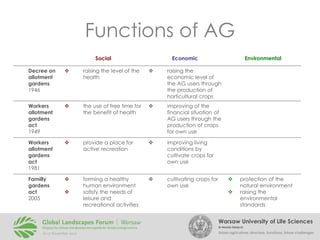
Functions of AG
Social

Economic

Environmental

Decree on
allotment
gardens
1946



raising the level of the
health



raising the
economic level of
the AG users through
the production of
horticultural crops

Workers
allotment
gardens
act
1949



the use of free time for
the benefit of health



improving of the
financial situation of
AG users through the
production of crops
for own use

Workers
allotment
gardens
act
1981



provide a place for
active recreation



improving living
conditions by
cultivate crops for
own use

Familly
gardens
act
2005



forming a healthy
human environment
satisfy the needs of
leisure and
recreational activities



cultivating crops for
own use






protection of the
natural environment
raising the
environmental
standards

Warsaw University of Life Sciences
Dr Renata Giedych

Urban agriculture: structure, functions, future challenges
Final remarks
• UA in Poland is not yet considered as a
tool of sustainable development of the
city
• It should find place in municipal
policies as a measure to improove the
quality of life
• UA can play an important role in
building more resilient and livabe cities
Warsaw University of Life Sciences
Dr Renata Giedych

Urban agriculture: structure, functions, future challenges
Thanks for your attention!
contact: renata_giedych@sggw.pl

Urban agriculture: structure, functions, future challenges

  • 1.
    Dr Renata Giedych Departmentof Landscape Architecture Warsaw University of Life Sciences Urban agriculture: structure, functions, future challenges
  • 2.
    Background • More than50% of the world's population lives in cities • Over 800 million people worldwide depend on food grown in cities • Circa 20% of the world’s food is produced in urban areas • Low income urban dwellers spend between 40% and 60% of their income on food each year Warsaw University of Life Sciences Dr Renata Giedych Urban agriculture: structure, functions, future challenges
  • 3.
    Urban agriculture innutshell TIO N TIG A MI ECONOMIC DEVELOPMENT Cabannes, 2006 EN MAR K N DUCT I O RO P RI SES RP TE RE ET IS SURE LEI FOOD SECURITY SOCIAL INCLUSION CR IS SUB S IST LIV EHO ODS EDUCATION CULTURE HEALTH E NC A Warsaw University of Life Sciences Dr Renata Giedych Urban agriculture: structure, functions, future challenges C TI O R EA N
  • 4.
    http://blogs.worldwatch.org/ Food security URBAN FARM Detroit URBANCROPS Kibera slum, Nairobi Warsaw University of Life Sciences Dr Renata Giedych Urban agriculture: structure, functions, future challenges
  • 5.
    http://inhabitat.com/ http://www.edenprairienews.com/ Leisure EDIBLE PLAYGROUND View Park,Prairiy COMMUNITY GARDEN Tempelhof Community Garden, Berlin Warsaw University of Life Sciences Dr Renata Giedych Urban agriculture: structure, functions, future challenges
  • 6.
    http://inhabitat.com/ http://www.brooklyngrangefarm.com/ Economic development ROOFTOP FARM BrooklynGrange Farm, New York VERTICAL FARM Sky Greens Urban Farm, Singapore Warsaw University of Life Sciences Dr Renata Giedych Urban agriculture: structure, functions, future challenges
  • 7.
    Benefits and risksof UA • Mitigation of powerty • Creationg sense of community • Reduction of household waste • Reduction of urban heat Island • Reduction of ecological footprint • Sustaining wildlife • Contamination of crops Warsaw University of Life Sciences Dr Renata Giedych Urban agriculture: structure, functions, future challenges
  • 8.
    Urban agriculture inPoland The share of agricultural areas in cities 90% 80% 70% 60% 50% 40% 30% Agricultural lands 20% Other areas 10% 0% Gdańsk Toruń Bydgoszcz Wrocław Szczecin Poznań Kielce Rzeszów Lublin Katowice Kraków 16000 Łódź Warszawa • Farming is becoming less important in comparison to other functions • Local initiatives in infancy stage • Allotment gardens as main manifestation of urban agriculture 100% Decrasing of urban agricultural areas Warszawa 14000 Łódź Kraków 12000 Katowice Lublin 10000 Rzeszów Kielce 8000 Poznań Szczecin 6000 Wrocław Bydgoszcz 4000 Toruń 2000 Gdańsk Gdynia 0 1998 1999 2000 2001 2002 2003 2004 2005 Warsaw University of Life Sciences Dr Renata Giedych Urban agriculture: structure, functions, future challenges
  • 9.
    Municipal policies Existing agriculturalareas Planned land use changes Spatial policy of Piastów Warsaw University of Life Sciences Dr Renata Giedych Urban agriculture: structure, functions, future challenges
  • 10.
    http://metromsn.gazeta.pl http://kwiatkibratki.pl/wp-content/ Local initiatives APIARY ONROOFTOP Hotel Hyatt Regency, Warsaw COMMUNITY GARDEN Konopacki Palace Garden, Warsaw Warsaw University of Life Sciences Dr Renata Giedych Urban agriculture: structure, functions, future challenges
  • 11.
    Allotment gardens generalfacts 4941 - number of allotment gardens colonies 43426,6 ha - total area of allotment gardens 350-500 m2 - average size of allotment plot 967 766 - number of individual allotment plots 4 000 000 - number of users 88% - the share of urban allotment gardens in total 5500 5000 4500 4000 3500 3000 2500 2000 1500 1000 500 0 2003 2004 2005 2006 2007 2008 2009 2010 2011 Changes in number of allotment gardens colonies Warsaw University of Life Sciences Dr Renata Giedych Urban agriculture: structure, functions, future challenges
  • 12.
    Problems of AGdevelopment MUNICIPAL POLICY  Allotment gardens are seen as a relict of a bygone era CHANGES IN LEGISLATION  relaxation of allotment gardens protection rules OWNERSHIP STRUCTURE  claims of former owners of the land URBAN PRESSURE  allotment gardens are seen as a reserve for the urban development HIGH MARKET VALUE OF THE GROUND  pirice of the AG located close to the city centers Warsaw University of Life Sciences Dr Renata Giedych Urban agriculture: structure, functions, future challenges
  • 13.
    Functions of AG Social Economic Environmental Decreeon allotment gardens 1946  raising the level of the health  raising the economic level of the AG users through the production of horticultural crops Workers allotment gardens act 1949  the use of free time for the benefit of health  improving of the financial situation of AG users through the production of crops for own use Workers allotment gardens act 1981  provide a place for active recreation  improving living conditions by cultivate crops for own use Familly gardens act 2005  forming a healthy human environment satisfy the needs of leisure and recreational activities  cultivating crops for own use    protection of the natural environment raising the environmental standards Warsaw University of Life Sciences Dr Renata Giedych Urban agriculture: structure, functions, future challenges
  • 14.
    Final remarks • UAin Poland is not yet considered as a tool of sustainable development of the city • It should find place in municipal policies as a measure to improove the quality of life • UA can play an important role in building more resilient and livabe cities Warsaw University of Life Sciences Dr Renata Giedych Urban agriculture: structure, functions, future challenges
  • 15.
    Thanks for yourattention! contact: renata_giedych@sggw.pl