
Mammoth
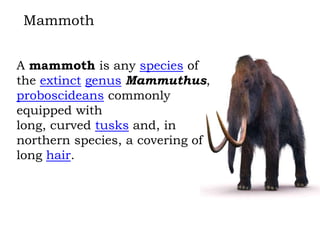
A mammoth is any species of
the extinct genus Mammuthus,
proboscideans commonly
equipped with
long, curved tusks and, in
northern species, a covering of
long hair.
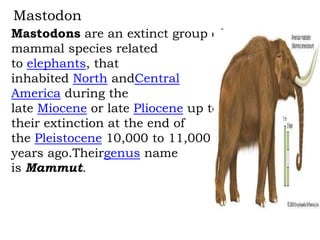
Mastodon
Mastodons are an extinct group of
mammal species related
to elephants, that
inhabited North andCentral
America during the
late Miocene or late Pliocene up to
their extinction at the end of
the Pleistocene 10,000 to 11,000
years ago.Theirgenus name
is Mammut.
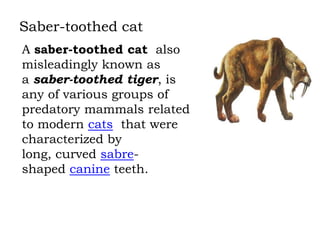
Saber-toothed cat
A saber-toothed cat also
misleadingly known as
a saber-toothed tiger, is
any of various groups of
predatory mammals related
to modern cats that were
characterized by
long, curved sabreshaped canine teeth.
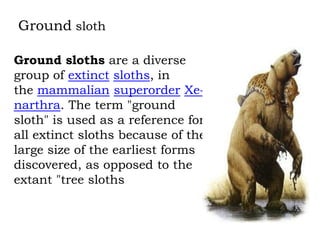
Ground sloth
Ground sloths are a diverse
group of extinct sloths, in
the mammalian superorder Xenarthra. The term "ground
sloth" is used as a reference for
all extinct sloths because of the
large size of the earliest forms
discovered, as opposed to the
extant "tree sloths
First Hominids
Megalodon
Ramapithecus
Rhinos
Tapirs
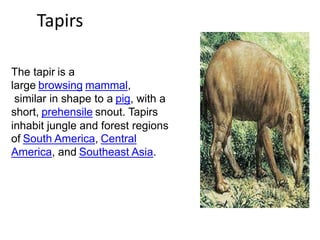
The tapir is a
large browsing mammal,
similar in shape to a pig, with a
short, prehensile snout. Tapirs
inhabit jungle and forest regions
of South America, Central
America, and Southeast Asia.
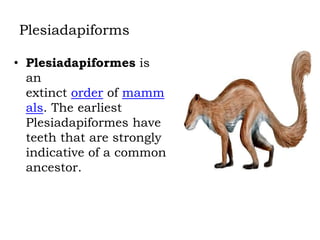
Plesiadapiforms
• Plesiadapiformes is
an
extinct order of mamm
als. The earliest
Plesiadapiformes have
teeth that are strongly
indicative of a common
ancestor.
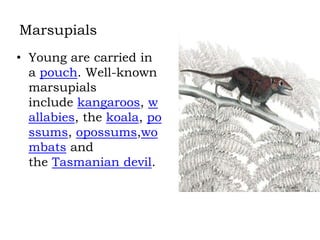
Marsupials
• Young are carried in
a pouch. Well-known
marsupials
include kangaroos, w
allabies, the koala, po
ssums, opossums,wo
mbats and
the Tasmanian devil.
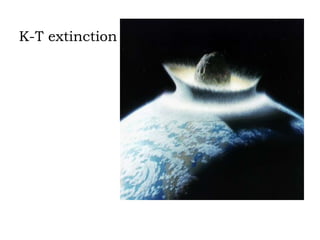
K-T extinction
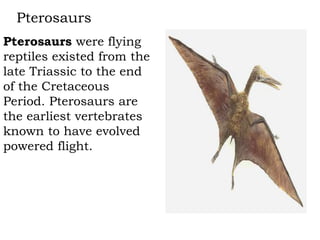
Pterosaurs
Pterosaurs were flying
reptiles existed from the
late Triassic to the end
of the Cretaceous
Period. Pterosaurs are
the earliest vertebrates
known to have evolved
powered flight.
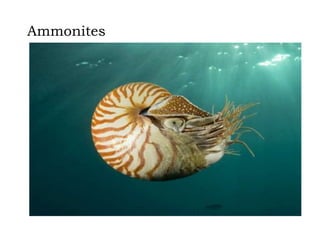
Ammonites
Crocodilians
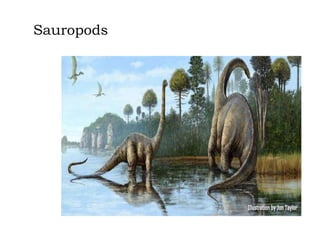
Sauropods
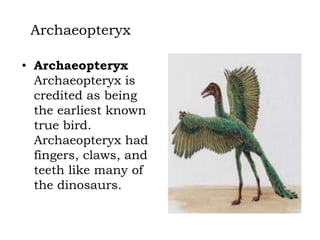
Archaeopteryx
• Archaeopteryx
Archaeopteryx is
credited as being
the earliest known
true bird.
Archaeopteryx had
fingers, claws, and
teeth like many of
the dinosaurs.
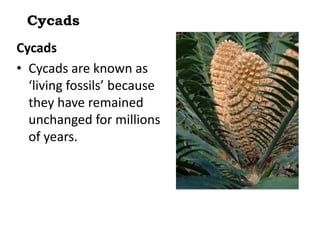
Cycads
Cycads
• Cycads are known as
‘living fossils’ because
they have remained
unchanged for millions
of years.
Gingkos
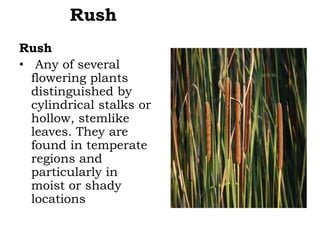
Rush
Rush
• Any of several
flowering plants
distinguished by
cylindrical stalks or
hollow, stemlike
leaves. They are
found in temperate
regions and
particularly in
moist or shady
locations
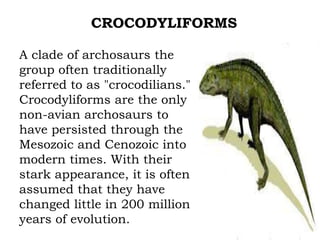
CROCODYLIFORMS
A clade of archosaurs the
group often traditionally
referred to as "crocodilians."
Crocodyliforms are the only
non-avian archosaurs to
have persisted through the
Mesozoic and Cenozoic into
modern times. With their
stark appearance, it is often
assumed that they have
changed little in 200 million
years of evolution.
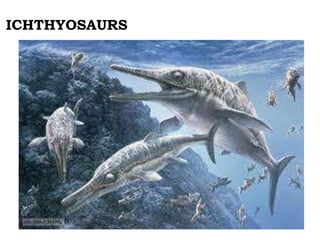
ICHTHYOSAURS
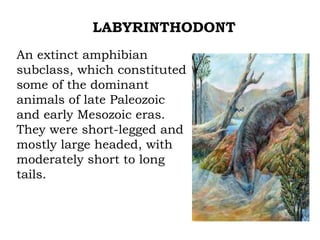
LABYRINTHODONT
An extinct amphibian
subclass, which constituted
some of the dominant
animals of late Paleozoic
and early Mesozoic eras.
They were short-legged and
mostly large headed, with
moderately short to long
tails.
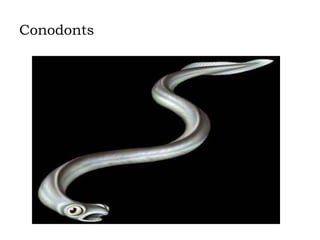
Conodonts
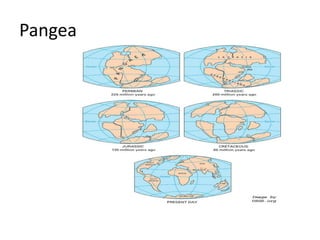
Pangea
Stoneflies
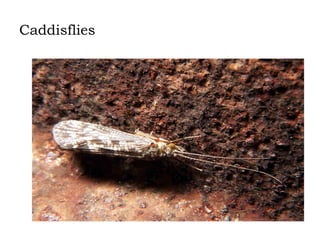
Caddisflies
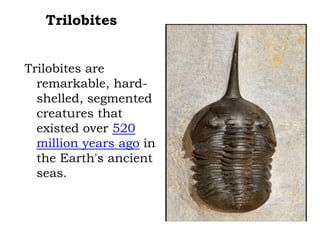
Trilobites
Trilobites are
remarkable, hardshelled, segmented
creatures that
existed over 520
million years ago in
the Earth's ancient
seas.
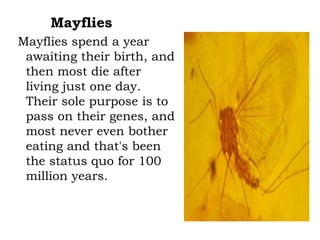
Mayflies
Mayflies spend a year
awaiting their birth, and
then most die after
living just one day.
Their sole purpose is to
pass on their genes, and
most never even bother
eating and that's been
the status quo for 100
million years.
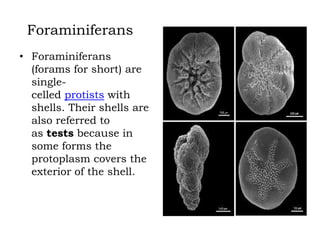
Foraminiferans
• Foraminiferans
(forams for short) are
singlecelled protists with
shells. Their shells are
also referred to
as tests because in
some forms the
protoplasm covers the
exterior of the shell.
Bryozoans
The Bryozoa, also known as
Polyzoa, Ectoprocta or
commonly as moss animals,[5]
are a phylum of aquatic
invertebrate animals. Typically
about 0.5 millimetres
(0.020 in) long, they are filter
feeders that sieve food
particles out of the water using
a retractable lophophore, a
"crown" of tentacles lined with
cilia.
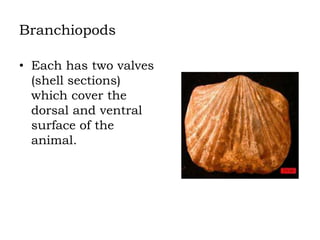
Branchiopods
• Each has two valves
(shell sections)
which cover the
dorsal and ventral
surface of the
animal.
Blastoids
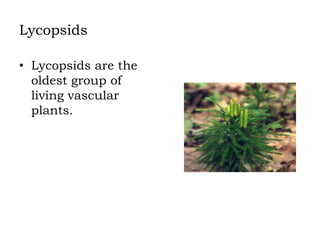
Lycopsids
• Lycopsids are the
oldest group of
living vascular
plants.
Tetrapods
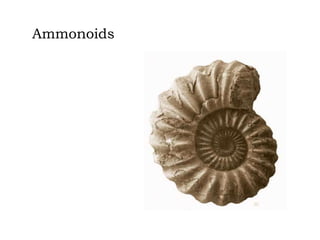
Ammonoids
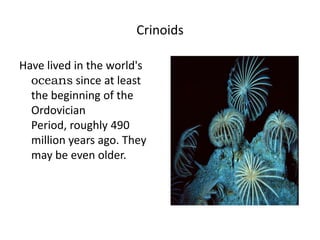
Crinoids
Have lived in the world's
oceans since at least
the beginning of the
Ordovician
Period, roughly 490
million years ago. They
may be even older.
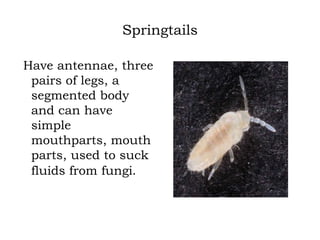
Springtails
Have antennae, three
pairs of legs, a
segmented body
and can have
simple
mouthparts, mouth
parts, used to suck
fluids from fungi.
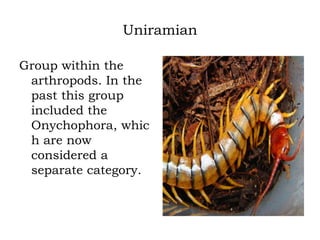
Uniramian
Group within the
arthropods. In the
past this group
included the
Onychophora, whic
h are now
considered a
separate category.
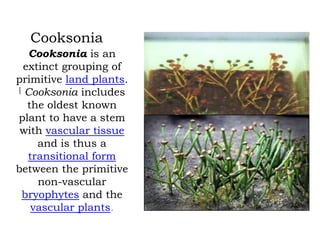
Cooksonia
Cooksonia is an
extinct grouping of
primitive land plants.
[ Cooksonia includes
the oldest known
plant to have a stem
with vascular tissue
and is thus a
transitional form
between the primitive
non-vascular
bryophytes and the
vascular plants.
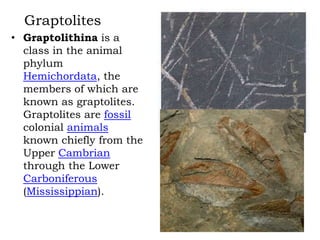
Graptolites
• Graptolithina is a
class in the animal
phylum
Hemichordata, the
members of which are
known as graptolites.
Graptolites are fossil
colonial animals
known chiefly from the
Upper Cambrian
through the Lower
Carboniferous
(Mississippian).
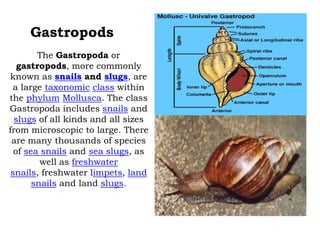
Gastropods
The Gastropoda or
gastropods, more commonly
known as snails and slugs, are
a large taxonomic class within
the phylum Mollusca. The class
Gastropoda includes snails and
slugs of all kinds and all sizes
from microscopic to large. There
are many thousands of species
of sea snails and sea slugs, as
well as freshwater
snails, freshwater limpets, land
snails and land slugs.
Echinoids
Echinoderms
Rodinia
Nautiloids

geologic time table in biology

  • 1.
    Mammoth A mammoth isany species of the extinct genus Mammuthus, proboscideans commonly equipped with long, curved tusks and, in northern species, a covering of long hair.
  • 2.
    Mastodon Mastodons are anextinct group of mammal species related to elephants, that inhabited North andCentral America during the late Miocene or late Pliocene up to their extinction at the end of the Pleistocene 10,000 to 11,000 years ago.Theirgenus name is Mammut.
  • 3.
    Saber-toothed cat A saber-toothedcat also misleadingly known as a saber-toothed tiger, is any of various groups of predatory mammals related to modern cats that were characterized by long, curved sabreshaped canine teeth.
  • 4.
    Ground sloth Ground slothsare a diverse group of extinct sloths, in the mammalian superorder Xenarthra. The term "ground sloth" is used as a reference for all extinct sloths because of the large size of the earliest forms discovered, as opposed to the extant "tree sloths
  • 5.
  • 6.
  • 7.
  • 8.
  • 9.
    Tapirs The tapir isa large browsing mammal, similar in shape to a pig, with a short, prehensile snout. Tapirs inhabit jungle and forest regions of South America, Central America, and Southeast Asia.
  • 10.
    Plesiadapiforms • Plesiadapiformes is an extinctorder of mamm als. The earliest Plesiadapiformes have teeth that are strongly indicative of a common ancestor.
  • 11.
    Marsupials • Young arecarried in a pouch. Well-known marsupials include kangaroos, w allabies, the koala, po ssums, opossums,wo mbats and the Tasmanian devil.
  • 12.
  • 13.
    Pterosaurs Pterosaurs were flying reptilesexisted from the late Triassic to the end of the Cretaceous Period. Pterosaurs are the earliest vertebrates known to have evolved powered flight.
  • 14.
  • 15.
  • 16.
  • 17.
    Archaeopteryx • Archaeopteryx Archaeopteryx is creditedas being the earliest known true bird. Archaeopteryx had fingers, claws, and teeth like many of the dinosaurs.
  • 18.
    Cycads Cycads • Cycads areknown as ‘living fossils’ because they have remained unchanged for millions of years.
  • 19.
  • 20.
    Rush Rush • Any ofseveral flowering plants distinguished by cylindrical stalks or hollow, stemlike leaves. They are found in temperate regions and particularly in moist or shady locations
  • 21.
    CROCODYLIFORMS A clade ofarchosaurs the group often traditionally referred to as "crocodilians." Crocodyliforms are the only non-avian archosaurs to have persisted through the Mesozoic and Cenozoic into modern times. With their stark appearance, it is often assumed that they have changed little in 200 million years of evolution.
  • 22.
  • 23.
    LABYRINTHODONT An extinct amphibian subclass,which constituted some of the dominant animals of late Paleozoic and early Mesozoic eras. They were short-legged and mostly large headed, with moderately short to long tails.
  • 24.
  • 25.
  • 26.
  • 27.
  • 28.
    Trilobites Trilobites are remarkable, hardshelled,segmented creatures that existed over 520 million years ago in the Earth's ancient seas.
  • 29.
    Mayflies Mayflies spend ayear awaiting their birth, and then most die after living just one day. Their sole purpose is to pass on their genes, and most never even bother eating and that's been the status quo for 100 million years.
  • 30.
    Foraminiferans • Foraminiferans (forams forshort) are singlecelled protists with shells. Their shells are also referred to as tests because in some forms the protoplasm covers the exterior of the shell.
  • 31.
    Bryozoans The Bryozoa, alsoknown as Polyzoa, Ectoprocta or commonly as moss animals,[5] are a phylum of aquatic invertebrate animals. Typically about 0.5 millimetres (0.020 in) long, they are filter feeders that sieve food particles out of the water using a retractable lophophore, a "crown" of tentacles lined with cilia.
  • 32.
    Branchiopods • Each hastwo valves (shell sections) which cover the dorsal and ventral surface of the animal.
  • 33.
  • 34.
    Lycopsids • Lycopsids arethe oldest group of living vascular plants.
  • 35.
  • 36.
  • 37.
    Crinoids Have lived inthe world's oceans since at least the beginning of the Ordovician Period, roughly 490 million years ago. They may be even older.
  • 38.
    Springtails Have antennae, three pairsof legs, a segmented body and can have simple mouthparts, mouth parts, used to suck fluids from fungi.
  • 39.
    Uniramian Group within the arthropods.In the past this group included the Onychophora, whic h are now considered a separate category.
  • 40.
    Cooksonia Cooksonia is an extinctgrouping of primitive land plants. [ Cooksonia includes the oldest known plant to have a stem with vascular tissue and is thus a transitional form between the primitive non-vascular bryophytes and the vascular plants.
  • 41.
    Graptolites • Graptolithina isa class in the animal phylum Hemichordata, the members of which are known as graptolites. Graptolites are fossil colonial animals known chiefly from the Upper Cambrian through the Lower Carboniferous (Mississippian).
  • 42.
    Gastropods The Gastropoda or gastropods,more commonly known as snails and slugs, are a large taxonomic class within the phylum Mollusca. The class Gastropoda includes snails and slugs of all kinds and all sizes from microscopic to large. There are many thousands of species of sea snails and sea slugs, as well as freshwater snails, freshwater limpets, land snails and land slugs.
  • 43.
  • 44.
  • 45.
  • 46.