Question 1 (Geography)
Identify four factors (social, political, economic and/or environmental) that contributed to the migration of large
numbers of people from Europe to the United States in the late 19th century.

Write your answer in the Answer Document. (4 points)


Question 2 (Geography)
Consider the following changes that occurred in the United States in the late 19th century:


   Increases in immigration

   Widespread industrialization

   Improvements in agricultural technology


What was one result of these developments during this time period?

       A. the growth of large cities
       B. the decline of labor unions
       C. the spread of plantation agriculture
       D. the construction of interstate highways

Question 3 (Geography)
The term “Latin America” is generally used to describe a unique cultural region which includes all of South America,
Central America, and Mexico. What characteristic helps define Latin America as a region?

       A. Islam is the most widely practiced religion.
       B. Most countries in this region have command economies.
       C. Spanish and Portuguese are the most widely spoken languages.
       D. Most countries in this region are former colonies of France or Italy.

Question 4 (Geography)
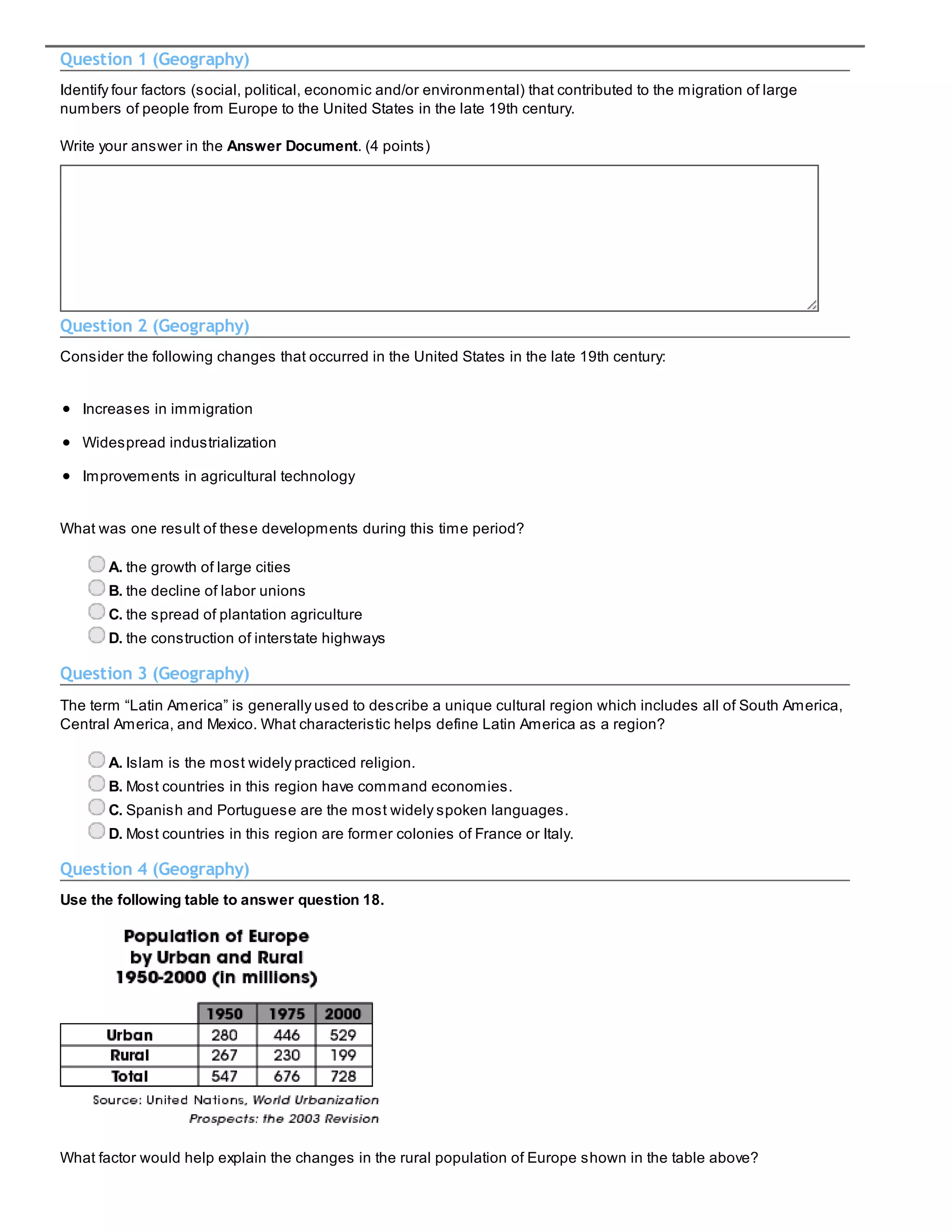
Use the following table to answer question 18.


What factor would help explain the changes in the rural population of Europe shown in the table above?
A. People have moved from rural to urban areas.
       B. The overall population of Europe has decreased.
       C. Birth rates have increased in both urban and rural areas.
       D. People have immigrated to Europe from other regions of the world.

Question 5 (Geography)
Many people from the region of Southern and Eastern Europe, such as Italians and Russians, immigrated to the
United States between the Civil War and World War I. Identify two factors in their home region that led them to move
to the United States.

Write your answer in the Answer Document. (2 points)


Question 6 (Geography)
The majority of people in Spain speak Spanish as their first language, but in the Basque region of Spain many
people speak Basque as their first language. This is one reason many people in the Basque region believe they
should separate from Spain and become an independent country.

Which would be an argument of supporters of this idea?

       A. Boundaries once settled should remain in place.
       B. Economic considerations will promote national unity.
       C. Political boundaries should reflect cultural characteristics.
       D. Natural boundaries should determine political boundaries.

Question 7 (Geography)
What economic factor primarily contributed to the movement of African-Americans from the South to the North in the
late 19th and early 20th centuries?

       A. greater employment opportunities in urban areas
       B. increased imports from newly-acquired U.S. territories
       C. the availability of free land under the Homestead Act
       D. the need for agricultural workers to feed a growing population

Question 8 (Geography)
Which factor contributed to increased migration of people among regions of the United States in the second half of
the 20th century?

       A. new restrictions on immigration from Asia
       B. increases in the number of small family farms
       C. the construction of the Interstate Highway system
       D. increased immigration from Northern and Western Europe

Question 9 (Geography)
The North American Free Trade Agreement (NAFTA) is a treaty designed to remove tariffs and other trade barriers
between Canada, Mexico and the United States. This helped establish an economic region among those nations
because
A. participants enlarged their dependence on domestic markets.
       B. participants terminated trade relationships with other regions.
       C. participants imposed tariffs on goods imported from other countries.
       D. trade among participants increased, making their economies more interdependent.

Question 10 (Geography)
The growth of suburbs has caused the economic value of land around many U.S. cities to increase. One result of
this increase in land value has been a decrease in

       A. U.S. food production for export.
       B. the availability of agricultural labor in urban regions.
       C. the construction of roads, water lines and sewer lines.
       D. the amount of land available for farming.

Question 11 (Geography)
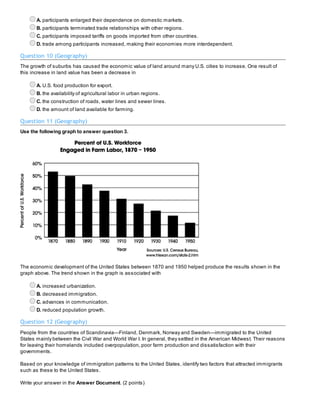
Use the following graph to answer question 3.


The economic development of the United States between 1870 and 1950 helped produce the results shown in the
graph above. The trend shown in the graph is associated with

       A. increased urbanization.
       B. decreased immigration.
       C. advances in communication.
       D. reduced population growth.

Question 12 (Geography)
People from the countries of Scandinavia—Finland, Denmark, Norway and Sweden—immigrated to the United
States mainly between the Civil War and World War I. In general, they settled in the American Midwest. Their reasons
for leaving their homelands included overpopulation, poor farm production and dissatisfaction with their
governments.

Based on your knowledge of immigration patterns to the United States, identify two factors that attracted immigrants
such as these to the United States.

Write your answer in the Answer Document. (2 points)
Question 13 (Geography)
In 1960, 8.9 million acres of land in northeast Alaska were designated as the Arctic National Wildlife Range. In 1980,
legislation doubled the size of the Range and renamed it the Arctic National Wildlife Refuge (ANWR). In recent years,
attempts have been made to open part of the ANWR to oil exploration. The reason for this proposal is that the

       A. need for oil has decreased.
       B. population of the region has increased.
       C. environmental features of the region have changed.
       D. perceived economic value of the region has changed.

Geography 1

  • 1.
    Question 1 (Geography) Identifyfour factors (social, political, economic and/or environmental) that contributed to the migration of large numbers of people from Europe to the United States in the late 19th century. Write your answer in the Answer Document. (4 points) Question 2 (Geography) Consider the following changes that occurred in the United States in the late 19th century: Increases in immigration Widespread industrialization Improvements in agricultural technology What was one result of these developments during this time period? A. the growth of large cities B. the decline of labor unions C. the spread of plantation agriculture D. the construction of interstate highways Question 3 (Geography) The term “Latin America” is generally used to describe a unique cultural region which includes all of South America, Central America, and Mexico. What characteristic helps define Latin America as a region? A. Islam is the most widely practiced religion. B. Most countries in this region have command economies. C. Spanish and Portuguese are the most widely spoken languages. D. Most countries in this region are former colonies of France or Italy. Question 4 (Geography) Use the following table to answer question 18. What factor would help explain the changes in the rural population of Europe shown in the table above?
  • 2.
    A. People havemoved from rural to urban areas. B. The overall population of Europe has decreased. C. Birth rates have increased in both urban and rural areas. D. People have immigrated to Europe from other regions of the world. Question 5 (Geography) Many people from the region of Southern and Eastern Europe, such as Italians and Russians, immigrated to the United States between the Civil War and World War I. Identify two factors in their home region that led them to move to the United States. Write your answer in the Answer Document. (2 points) Question 6 (Geography) The majority of people in Spain speak Spanish as their first language, but in the Basque region of Spain many people speak Basque as their first language. This is one reason many people in the Basque region believe they should separate from Spain and become an independent country. Which would be an argument of supporters of this idea? A. Boundaries once settled should remain in place. B. Economic considerations will promote national unity. C. Political boundaries should reflect cultural characteristics. D. Natural boundaries should determine political boundaries. Question 7 (Geography) What economic factor primarily contributed to the movement of African-Americans from the South to the North in the late 19th and early 20th centuries? A. greater employment opportunities in urban areas B. increased imports from newly-acquired U.S. territories C. the availability of free land under the Homestead Act D. the need for agricultural workers to feed a growing population Question 8 (Geography) Which factor contributed to increased migration of people among regions of the United States in the second half of the 20th century? A. new restrictions on immigration from Asia B. increases in the number of small family farms C. the construction of the Interstate Highway system D. increased immigration from Northern and Western Europe Question 9 (Geography) The North American Free Trade Agreement (NAFTA) is a treaty designed to remove tariffs and other trade barriers between Canada, Mexico and the United States. This helped establish an economic region among those nations because
  • 3.
    A. participants enlargedtheir dependence on domestic markets. B. participants terminated trade relationships with other regions. C. participants imposed tariffs on goods imported from other countries. D. trade among participants increased, making their economies more interdependent. Question 10 (Geography) The growth of suburbs has caused the economic value of land around many U.S. cities to increase. One result of this increase in land value has been a decrease in A. U.S. food production for export. B. the availability of agricultural labor in urban regions. C. the construction of roads, water lines and sewer lines. D. the amount of land available for farming. Question 11 (Geography) Use the following graph to answer question 3. The economic development of the United States between 1870 and 1950 helped produce the results shown in the graph above. The trend shown in the graph is associated with A. increased urbanization. B. decreased immigration. C. advances in communication. D. reduced population growth. Question 12 (Geography) People from the countries of Scandinavia—Finland, Denmark, Norway and Sweden—immigrated to the United States mainly between the Civil War and World War I. In general, they settled in the American Midwest. Their reasons for leaving their homelands included overpopulation, poor farm production and dissatisfaction with their governments. Based on your knowledge of immigration patterns to the United States, identify two factors that attracted immigrants such as these to the United States. Write your answer in the Answer Document. (2 points)
  • 4.
    Question 13 (Geography) In1960, 8.9 million acres of land in northeast Alaska were designated as the Arctic National Wildlife Range. In 1980, legislation doubled the size of the Range and renamed it the Arctic National Wildlife Refuge (ANWR). In recent years, attempts have been made to open part of the ANWR to oil exploration. The reason for this proposal is that the A. need for oil has decreased. B. population of the region has increased. C. environmental features of the region have changed. D. perceived economic value of the region has changed.