Phenotypic Expression Varies

• Complete Dominance
• Codominance
• Incomplete Dominance
• Sex-Linked
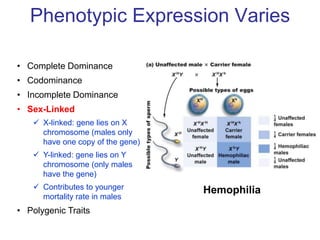
    X-linked: gene lies on X
     chromosome (males only
     have one copy of the gene)
    Y-linked: gene lies on Y
     chromosome (only males
     have the gene)
    Contributes to younger       Hemophilia
     mortality rate in males
• Polygenic Traits
Phenotypic Expression Varies

• Complete Dominance
• Codominance
• Incomplete Dominance
• Sex-Linked
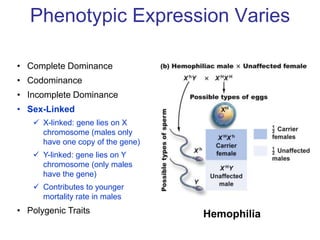
    X-linked: gene lies on X
     chromosome (males only
     have one copy of the gene)
    Y-linked: gene lies on Y
     chromosome (only males
     have the gene)
    Contributes to younger
     mortality rate in males
• Polygenic Traits                Hemophilia
Phenotypic Expression Varies

• Complete Dominance
• Codominance
• Incomplete Dominance
• Sex-Linked
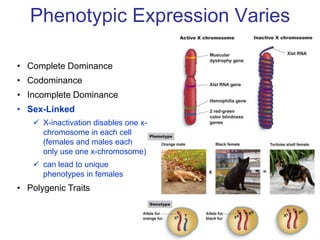
    X-inactivation disables one x-
     chromosome in each cell
     (females and males each
     only use one x-chromosome)
    can lead to unique
     phenotypes in females
• Polygenic Traits
Practice
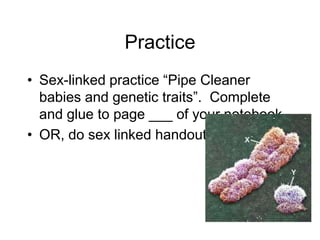
• Sex-linked practice “Pipe Cleaner
  babies and genetic traits”. Complete
  and glue to page ___ of your notebook
• OR, do sex linked handout
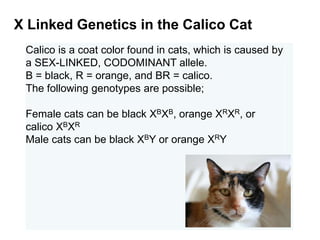
X Linked Genetics in the Calico Cat
 Calico is a coat color found in cats, which is caused by
 a SEX-LINKED, CODOMINANT allele.
 B = black, R = orange, and BR = calico.
 The following genotypes are possible;

 Female cats can be black XBXB, orange XRXR, or
 calico XBXR
 Male cats can be black XBY or orange XRY
Phenotypic Expression Varies

• Complete Dominance
• Codominance
• Incomplete Dominance
• Sex-Linked
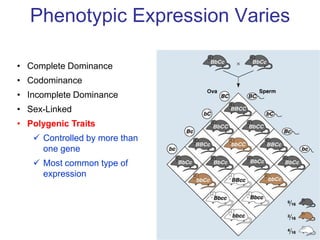
• Polygenic Traits
    Controlled by more than
     one gene
    Most common type of
     expression
Pedigree Rules
• What is a pedigree?

• *A pedigree is a chart that shows all
  family members and how they are
  related. It follows certain rules and
  shows genotypes and phenotypes.
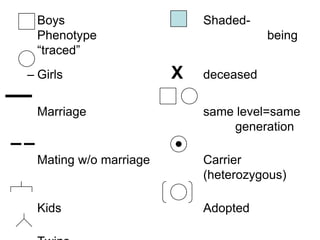
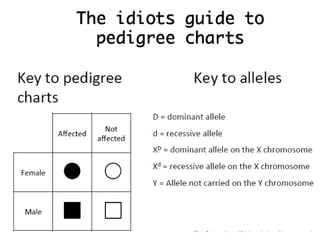
– Boys                     Shaded-
  Phenotype                           being
  “traced”
– Girls                X   deceased

 Marriage                  same level=same
                               generation

 Mating w/o marriage       Carrier
                           (heterozygous)

 Kids                      Adopted
• Draw a pedigree for your immediate
  family (mom, dad, step parents,
  siblings, etc)
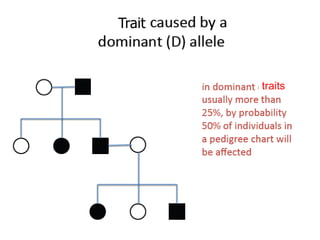
Trait
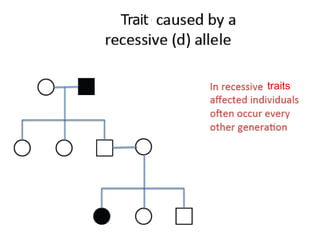
Trait
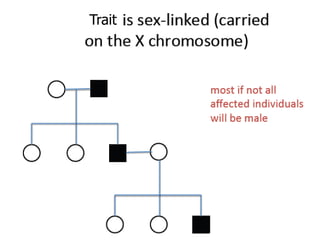
Trait


        traits
Trait


        traits
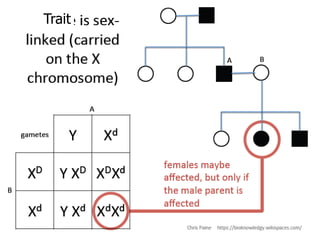
Trait
Trait
Pedigrees
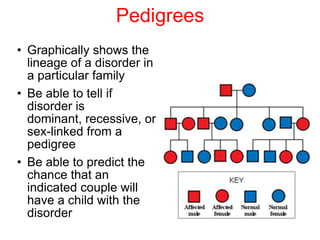
• Graphically shows the
  lineage of a disorder in
  a particular family
• Be able to tell if
  disorder is
  dominant, recessive, or
  sex-linked from a
  pedigree
• Be able to predict the
  chance that an
  indicated couple will
  have a child with the
  disorder
Pedigrees
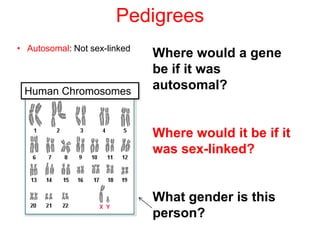
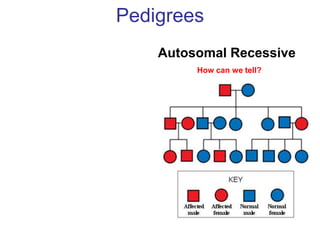
• Autosomal: Not sex-linked
                              Where would a gene
                              be if it was
 Human Chromosomes
                              autosomal?


                              Where would it be if it
                              was sex-linked?


                              What gender is this
                              person?
Pedigrees
• Autosomal: Not sex-linked
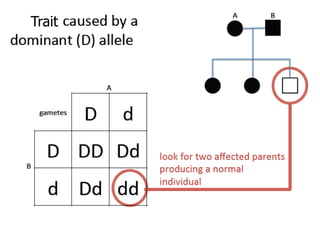
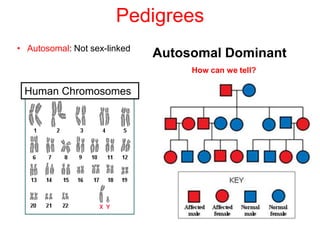
                              Autosomal Dominant
                                   How can we tell?

 Human Chromosomes
Pedigrees
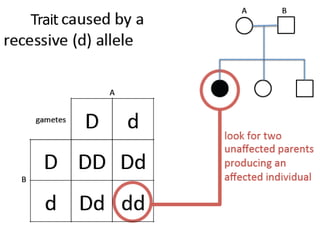
    Autosomal Recessive
         How can we tell?
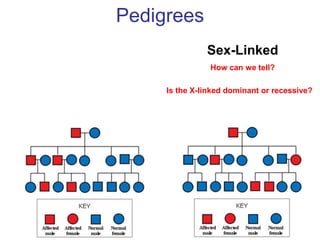
Pedigrees
               Sex-Linked
                How can we tell?

     Is the X-linked dominant or recessive?
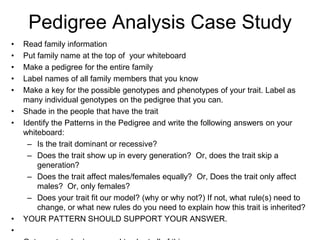
Pedigree Analysis Case Study
•   Read family information
•   Put family name at the top of your whiteboard
•   Make a pedigree for the entire family
•   Label names of all family members that you know
•   Make a key for the possible genotypes and phenotypes of your trait. Label as
    many individual genotypes on the pedigree that you can.
•   Shade in the people that have the trait
•   Identify the Patterns in the Pedigree and write the following answers on your
    whiteboard:
     – Is the trait dominant or recessive?
     – Does the trait show up in every generation? Or, does the trait skip a
        generation?
     – Does the trait affect males/females equally? Or, Does the trait only affect
        males? Or, only females?
     – Does your trait fit our model? (why or why not?) If not, what rule(s) need to
        change, or what new rules do you need to explain how this trait is inherited?
•   YOUR PATTERN SHOULD SUPPORT YOUR ANSWER.
•

Genetics model 2012 fieldspart 4

  • 1.
    Phenotypic Expression Varies •Complete Dominance • Codominance • Incomplete Dominance • Sex-Linked  X-linked: gene lies on X chromosome (males only have one copy of the gene)  Y-linked: gene lies on Y chromosome (only males have the gene)  Contributes to younger Hemophilia mortality rate in males • Polygenic Traits
  • 2.
    Phenotypic Expression Varies •Complete Dominance • Codominance • Incomplete Dominance • Sex-Linked  X-linked: gene lies on X chromosome (males only have one copy of the gene)  Y-linked: gene lies on Y chromosome (only males have the gene)  Contributes to younger mortality rate in males • Polygenic Traits Hemophilia
  • 3.
    Phenotypic Expression Varies •Complete Dominance • Codominance • Incomplete Dominance • Sex-Linked  X-inactivation disables one x- chromosome in each cell (females and males each only use one x-chromosome)  can lead to unique phenotypes in females • Polygenic Traits
  • 4.
    Practice • Sex-linked practice“Pipe Cleaner babies and genetic traits”. Complete and glue to page ___ of your notebook • OR, do sex linked handout
  • 5.
    X Linked Geneticsin the Calico Cat Calico is a coat color found in cats, which is caused by a SEX-LINKED, CODOMINANT allele. B = black, R = orange, and BR = calico. The following genotypes are possible; Female cats can be black XBXB, orange XRXR, or calico XBXR Male cats can be black XBY or orange XRY
  • 6.
    Phenotypic Expression Varies •Complete Dominance • Codominance • Incomplete Dominance • Sex-Linked • Polygenic Traits  Controlled by more than one gene  Most common type of expression
  • 7.
    Pedigree Rules • Whatis a pedigree? • *A pedigree is a chart that shows all family members and how they are related. It follows certain rules and shows genotypes and phenotypes.
  • 8.
    – Boys Shaded- Phenotype being “traced” – Girls X deceased Marriage same level=same generation Mating w/o marriage Carrier (heterozygous) Kids Adopted
  • 9.
    • Draw apedigree for your immediate family (mom, dad, step parents, siblings, etc)
  • 11.
  • 12.
  • 13.
    Trait traits
  • 14.
    Trait traits
  • 15.
  • 16.
  • 18.
    Pedigrees • Graphically showsthe lineage of a disorder in a particular family • Be able to tell if disorder is dominant, recessive, or sex-linked from a pedigree • Be able to predict the chance that an indicated couple will have a child with the disorder
  • 19.
    Pedigrees • Autosomal: Notsex-linked Where would a gene be if it was Human Chromosomes autosomal? Where would it be if it was sex-linked? What gender is this person?
  • 20.
    Pedigrees • Autosomal: Notsex-linked Autosomal Dominant How can we tell? Human Chromosomes
  • 21.
    Pedigrees Autosomal Recessive How can we tell?
  • 22.
    Pedigrees Sex-Linked How can we tell? Is the X-linked dominant or recessive?
  • 23.
    Pedigree Analysis CaseStudy • Read family information • Put family name at the top of your whiteboard • Make a pedigree for the entire family • Label names of all family members that you know • Make a key for the possible genotypes and phenotypes of your trait. Label as many individual genotypes on the pedigree that you can. • Shade in the people that have the trait • Identify the Patterns in the Pedigree and write the following answers on your whiteboard: – Is the trait dominant or recessive? – Does the trait show up in every generation? Or, does the trait skip a generation? – Does the trait affect males/females equally? Or, Does the trait only affect males? Or, only females? – Does your trait fit our model? (why or why not?) If not, what rule(s) need to change, or what new rules do you need to explain how this trait is inherited? • YOUR PATTERN SHOULD SUPPORT YOUR ANSWER. •