WHAT IS A GMO?• GMOs are organisms that have had their characteristics changed through the
modification of their DNA.
• GMO stands for genetically modified organism
• Genetically modified (GM) organisms are organisms that have had
their genomes changed in a way that does not happen naturally.
• By changing an organism’s genome we can change its characteristics.
• Any organism could be genetically modified, but laws restrict the creation of
genetically modified humans, and the production and distribution of other GMOs is
tightly regulated.
• Common examples of GMOs are GM crops used in agriculture and GM model
organisms? used in medical research.
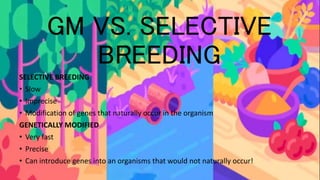
GM VS. SELECTIVE
BREEDING
SELECTIVE BREEDING
• Slow
• Imprecise
• Modification of genes that naturally occur in the organism
GENETICALLY MODIFIED
• Very fast
• Precise
• Can introduce genes into an organisms that would not naturally occur!
Genetic Engineering VS.
Agricultural Breeding
• Artificial selection has influenced the genetic makeup of livestock and crops for
thousands of years.
• Proponents of GM crops say GM foods are safe.
• Critics of GM foods say:
• Traditional breeding uses genes from the same species.
• Selective breeding deals with whole organisms, not just genes.
• In traditional breeding, genes come together on their own.
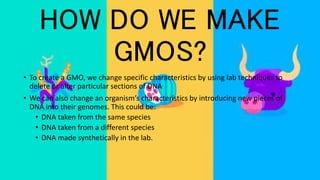
HOW DO WE MAKE
GMOS?
• To create a GMO, we change specific characteristics by using lab techniques to
delete or alter particular sections of DNA.
• We can also change an organism’s characteristics by introducing new pieces of
DNA into their genomes. This could be:
• DNA taken from the same species
• DNA taken from a different species
• DNA made synthetically in the lab.
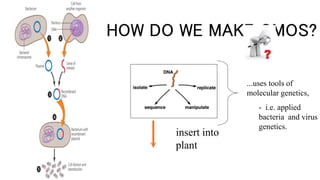
insert into
plant
...uses tools of
molecular genetics,
- i.e. applied
bacteria and virus
genetics.
HOW DO WE MAKE GMOS?
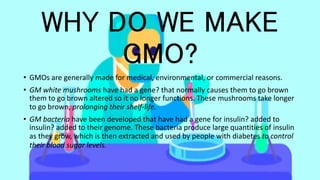
WHY DO WE MAKE
GMO?
• GMOs are generally made for medical, environmental, or commercial reasons.
• GM white mushrooms have had a gene? that normally causes them to go brown
them to go brown altered so it no longer functions. These mushrooms take longer
to go brown, prolonging their shelf-life.
• GM bacteria have been developed that have had a gene for insulin? added to
insulin? added to their genome. These bacteria produce large quantities of insulin
as they grow, which is then extracted and used by people with diabetes to control
their blood sugar levels.
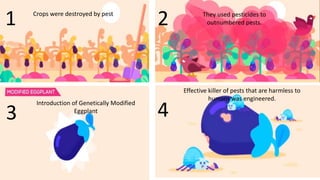
1 Crops were destroyed by pest
2 They used pesticides to
outnumbered pests.
3
Introduction of Genetically Modified
Eggplant
4
Effective killer of pests that are harmless to
humans was engineered.
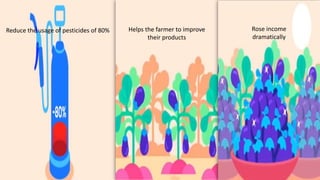
Reduce the usage of pesticides of 80% Helps the farmer to improve
their products
Rose income
dramatically
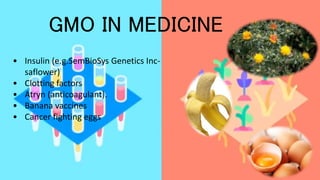
GMO IN MEDICINE
• Insulin (e.g.SemBioSys Genetics Inc-
saflower)
• Clotting factors
• Atryn (anticoagulant).
• Banana vaccines
• Cancer fighting eggs
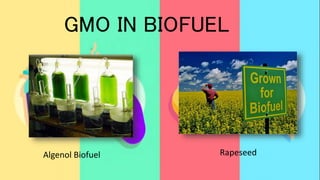
GMO IN BIOFUEL
Algenol Biofuel Rapeseed
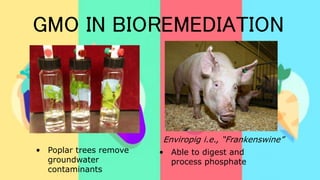
GMO IN BIOREMEDIATION
Enviropig i.e., “Frankenswine”
• Able to digest and
process phosphate
• Poplar trees remove
groundwater
contaminants
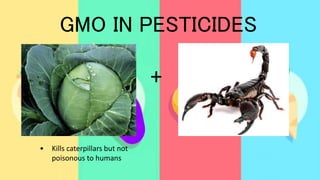
GMO IN PESTICIDES
• Kills caterpillars but not
poisonous to humans
+
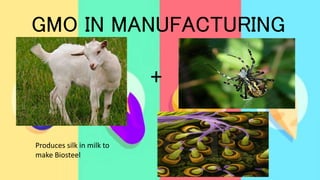
GMO IN MANUFACTURING
+
Produces silk in milk to
make Biosteel
Products
• Corn
• Canola
• Potatoes
• Tomatoes
• Squash
• Soybeans
• Flax
• Cottonseed oil
• Sugarbeets
COMMON GMO FOODS
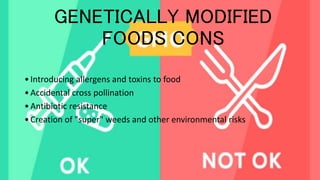
GENETICALLY MODIFIED
FOODS CONS
•Introducing allergens and toxins to food
•Accidental cross pollination
•Antibiotic resistance
•Creation of "super" weeds and other environmental risks
GENETICALLY MODIFIED
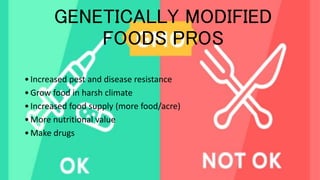
FOODS PROS
•Increased pest and disease resistance
•Grow food in harsh climate
•Increased food supply (more food/acre)
•More nutritional value
•Make drugs
•
REPORTERS:
IVAN REGIS ARCENA
ALVIN ABARQUEZ
JOLANRO MAR DANIEL DE VEYRA
JETRIC NIEGAS
JEFRY JAMIL

Genetically Modified Organisms (GMO) - Science, Biology

  • 2.
    WHAT IS AGMO?• GMOs are organisms that have had their characteristics changed through the modification of their DNA. • GMO stands for genetically modified organism • Genetically modified (GM) organisms are organisms that have had their genomes changed in a way that does not happen naturally. • By changing an organism’s genome we can change its characteristics. • Any organism could be genetically modified, but laws restrict the creation of genetically modified humans, and the production and distribution of other GMOs is tightly regulated. • Common examples of GMOs are GM crops used in agriculture and GM model organisms? used in medical research.
  • 3.
    GM VS. SELECTIVE BREEDING SELECTIVEBREEDING • Slow • Imprecise • Modification of genes that naturally occur in the organism GENETICALLY MODIFIED • Very fast • Precise • Can introduce genes into an organisms that would not naturally occur!
  • 4.
    Genetic Engineering VS. AgriculturalBreeding • Artificial selection has influenced the genetic makeup of livestock and crops for thousands of years. • Proponents of GM crops say GM foods are safe. • Critics of GM foods say: • Traditional breeding uses genes from the same species. • Selective breeding deals with whole organisms, not just genes. • In traditional breeding, genes come together on their own.
  • 5.
    HOW DO WEMAKE GMOS? • To create a GMO, we change specific characteristics by using lab techniques to delete or alter particular sections of DNA. • We can also change an organism’s characteristics by introducing new pieces of DNA into their genomes. This could be: • DNA taken from the same species • DNA taken from a different species • DNA made synthetically in the lab.
  • 6.
    insert into plant ...uses toolsof molecular genetics, - i.e. applied bacteria and virus genetics. HOW DO WE MAKE GMOS?
  • 7.
    WHY DO WEMAKE GMO? • GMOs are generally made for medical, environmental, or commercial reasons. • GM white mushrooms have had a gene? that normally causes them to go brown them to go brown altered so it no longer functions. These mushrooms take longer to go brown, prolonging their shelf-life. • GM bacteria have been developed that have had a gene for insulin? added to insulin? added to their genome. These bacteria produce large quantities of insulin as they grow, which is then extracted and used by people with diabetes to control their blood sugar levels.
  • 9.
    1 Crops weredestroyed by pest 2 They used pesticides to outnumbered pests. 3 Introduction of Genetically Modified Eggplant 4 Effective killer of pests that are harmless to humans was engineered.
  • 10.
    Reduce the usageof pesticides of 80% Helps the farmer to improve their products Rose income dramatically
  • 11.
    GMO IN MEDICINE •Insulin (e.g.SemBioSys Genetics Inc- saflower) • Clotting factors • Atryn (anticoagulant). • Banana vaccines • Cancer fighting eggs
  • 12.
    GMO IN BIOFUEL AlgenolBiofuel Rapeseed
  • 13.
    GMO IN BIOREMEDIATION Enviropigi.e., “Frankenswine” • Able to digest and process phosphate • Poplar trees remove groundwater contaminants
  • 14.
    GMO IN PESTICIDES •Kills caterpillars but not poisonous to humans +
  • 15.
    GMO IN MANUFACTURING + Producessilk in milk to make Biosteel
  • 16.
    Products • Corn • Canola •Potatoes • Tomatoes • Squash • Soybeans • Flax • Cottonseed oil • Sugarbeets COMMON GMO FOODS
  • 17.
    GENETICALLY MODIFIED FOODS CONS •Introducingallergens and toxins to food •Accidental cross pollination •Antibiotic resistance •Creation of "super" weeds and other environmental risks
  • 18.
    GENETICALLY MODIFIED FOODS PROS •Increasedpest and disease resistance •Grow food in harsh climate •Increased food supply (more food/acre) •More nutritional value •Make drugs
  • 19.
    • REPORTERS: IVAN REGIS ARCENA ALVINABARQUEZ JOLANRO MAR DANIEL DE VEYRA JETRIC NIEGAS JEFRY JAMIL