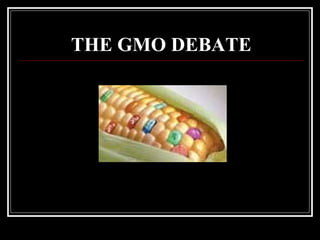
THE GMO DEBATE
WHAT ARE GMOS?
 Genetically Modified organisms, often
called genetically engineered (GE). The
correct scientific term is “transgenics.” This
is a process whereby the genes of one
species are inserted into another species.
For the purposes of this initiative, the term
does not include hybrids, selective
breeding, grafting or MAS (Marker Assisted
Selection).
Proponents
Proponents claim that genetically modified (GM)
crops:
 are safe to eat and more nutritious
 benefit the environment
 reduce use of herbicides and insecticides
 increase crop yields, thereby helping farmers and
solving the food crisis
 create a more affluent, stable economy
 are just an extension of natural breeding, and
have no risks different from naturally bred crops.
Opponents
However, a large and growing body of scientific
research and on-the-ground experience indicate
that
 GMOs fail to live up to these claims. Instead, GM
crops:
 can be toxic, allergenic or less nutritious than their
natural counterparts
 can disrupt the ecosystem, damage vulnerable
wild plant and animal populations and harm
biodiversity
Opponents
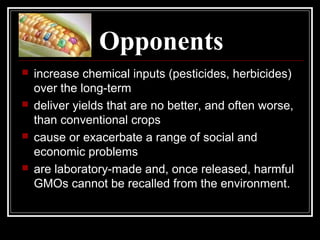
 increase chemical inputs (pesticides, herbicides)
over the long-term
 deliver yields that are no better, and often worse,
than conventional crops
 cause or exacerbate a range of social and
economic problems
 are laboratory-made and, once released, harmful
GMOs cannot be recalled from the environment.
Human Guinea Pigs?
 “There were no human trials conducted
before Genetically Modified crops were
introduced into the U.S. food supply. The
health effects of most GM food products
have never been fully tested.”
http://labelgmos.org
Eating an Insecticide?
 “Genetically Modified Corn is regulated by
the Environmental Protection Agency as an
Insecticide. It has been genetically modified
to produce pesticides in its own tissue. [
EPA Pesticides]”
http://labelgmos.org
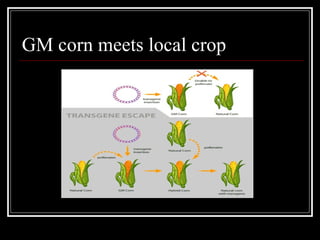
GM corn meets local crop
POLL
 Should Belizean authorities permit the
cultivation of Genetically Modified corn
and other such genetically-engineered
agricultural produce here?
Options:
 YES
 NO
POLL
 Should Belizean authorities permit the
cultivation of Genetically Modified corn
and other such genetically-engineered
agricultural produce here?
Options:
 YES
 NO

What are GMOs

  • 1.
  • 2.
    WHAT ARE GMOS? Genetically Modified organisms, often called genetically engineered (GE). The correct scientific term is “transgenics.” This is a process whereby the genes of one species are inserted into another species. For the purposes of this initiative, the term does not include hybrids, selective breeding, grafting or MAS (Marker Assisted Selection).
  • 3.
    Proponents Proponents claim thatgenetically modified (GM) crops:  are safe to eat and more nutritious  benefit the environment  reduce use of herbicides and insecticides  increase crop yields, thereby helping farmers and solving the food crisis  create a more affluent, stable economy  are just an extension of natural breeding, and have no risks different from naturally bred crops.
  • 4.
    Opponents However, a largeand growing body of scientific research and on-the-ground experience indicate that  GMOs fail to live up to these claims. Instead, GM crops:  can be toxic, allergenic or less nutritious than their natural counterparts  can disrupt the ecosystem, damage vulnerable wild plant and animal populations and harm biodiversity
  • 5.
    Opponents  increase chemicalinputs (pesticides, herbicides) over the long-term  deliver yields that are no better, and often worse, than conventional crops  cause or exacerbate a range of social and economic problems  are laboratory-made and, once released, harmful GMOs cannot be recalled from the environment.
  • 6.
    Human Guinea Pigs? “There were no human trials conducted before Genetically Modified crops were introduced into the U.S. food supply. The health effects of most GM food products have never been fully tested.” http://labelgmos.org
  • 7.
    Eating an Insecticide? “Genetically Modified Corn is regulated by the Environmental Protection Agency as an Insecticide. It has been genetically modified to produce pesticides in its own tissue. [ EPA Pesticides]” http://labelgmos.org
  • 8.
    GM corn meetslocal crop
  • 9.
    POLL  Should Belizeanauthorities permit the cultivation of Genetically Modified corn and other such genetically-engineered agricultural produce here? Options:  YES  NO
  • 10.
    POLL  Should Belizeanauthorities permit the cultivation of Genetically Modified corn and other such genetically-engineered agricultural produce here? Options:  YES  NO