GENERAL
PHYSICAL
EXAMINATION IN
CNS
CHAIRPERSON: Dr. RAM K
STUDENT: Dr. ZAHURA
 ATTITUDE
 LEVEL OF CONSCIOUSNESS
 STATURE
 HEAD
 FACIES
 EYE,EAR,NOSE,ORAL CAVITY
 NECK
 SKIN
 EXTREMETIES
 SPINE
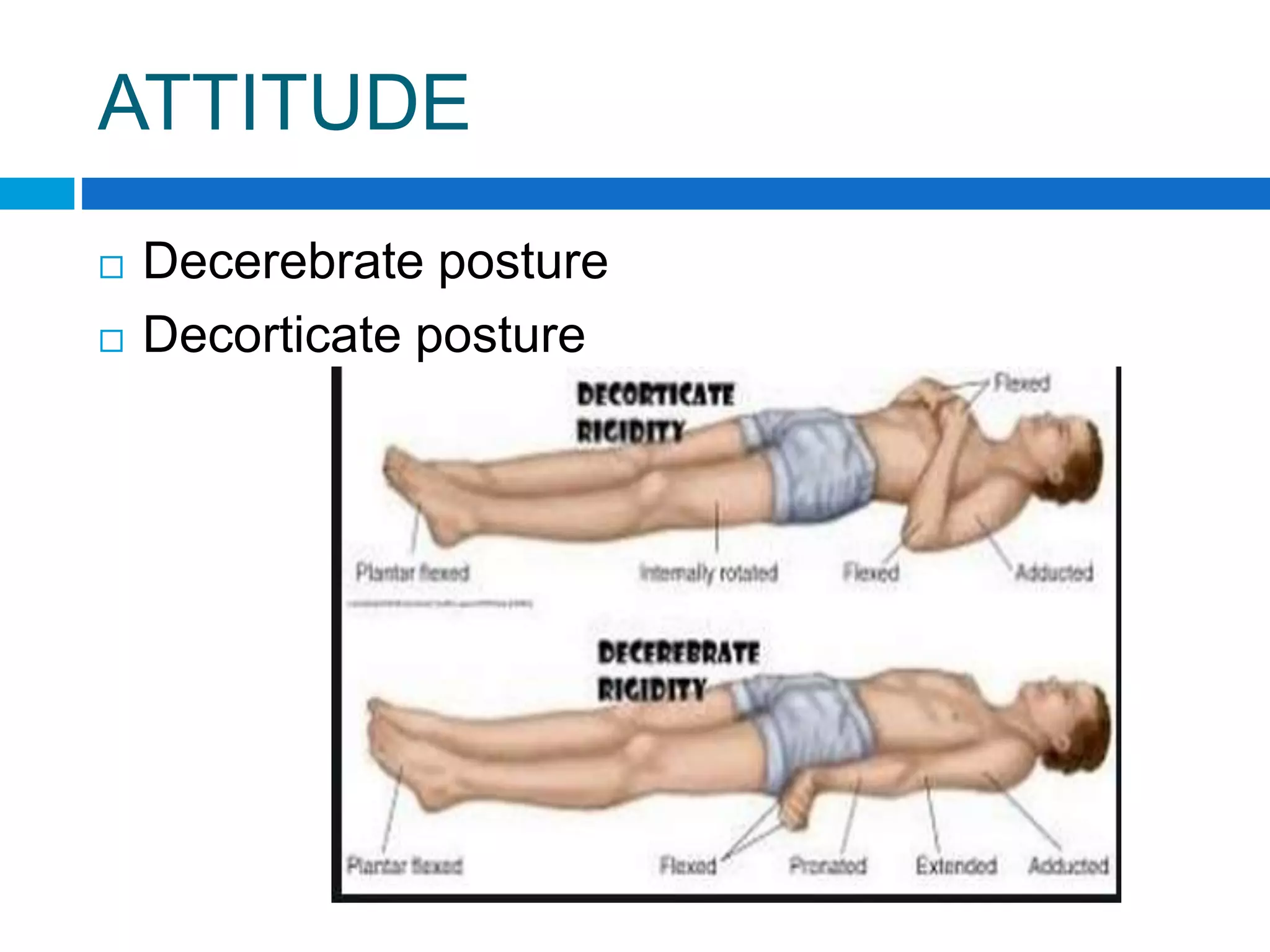
ATTITUDE
 Decerebrate posture
 Decorticate posture
contd...
 Hemiplegia
contd...
 Opisthotonus
contd...
 Parkinsonian
contd...
 Cerebellar
LEVEL OF CONSCIOUSNESS
 Consciousness
 Confusion
 Somnolence
 Stupor
 Coma
STATURE
Arm span > stature
 Homocystinuria
 Klinefelters syndrome
SHORT TALL
CRETINISM HOMOCYSTINURIA
DOWNS SYNDROME KLINEFELTERS SYNDROME
NUTRITION
 Weight loss and evidence of malnutrition may
indicate hyperthyroidism, Alzheimer’s disease,
Whipple’s disease, celiac disease, or
amyloidosis.
 Obesity
• Prader Willi
• Laurence Moon Biedl
• Cohens
• Carpenters
HEAD
CRANIOSYNOSTOSIS
contd...
Plagiocephaly
 produces a flattening of the forehead and the
brow on the affected side, with the forehead
tending to be excessively prominent on the
opposite side
contd...
Trigonocephaly
 Early closure of this suture may result in a
prominent ridge running down the forehead.
The forehead looks quite pointed, like a
triangle, with closely placed eyes
(hypotelorism).
contd...
Scaphocephaly
 This is the most common type of synostosis.
This suture runs front to back, down the middle
of the top of the head. This fusion causes a
long, narrow skull.
contd...
 Premature closure of cranial sutures can
produce a wide variety of abnormally shaped
skulls.
CLINICAL FEATURES
Increased ICP Strabismus amblyopia
Orbital
hypertelorism
Proptosis
Restricted eye ball
movement
Poor visual acquity
Orbital
hypotelorism
corneal exposure Dacrocystitis
contd...
PRIMARY CAUSES
 Craniosynostosis usually occurs as an isolated
condition, but there are numerous syndromes
in Crouzon’s, Apert’s, and Carpenter’s
syndrome.
contd...
 SECONDARY CAUSES
contd...
contd...
 Palpation of the skull may disclose deformities
due to old trauma, burr hole, or craniotomy
defects, tenderness, or scars.
 The size and patency of the fontanelles is
important in infants as bulging of the
fontanelles & suture separation can occur with
increased ICP in children.
contd...
 Meningoceles and encephaloceles may cause
palpable skull defects.
 Potts puffy tumour
contd...
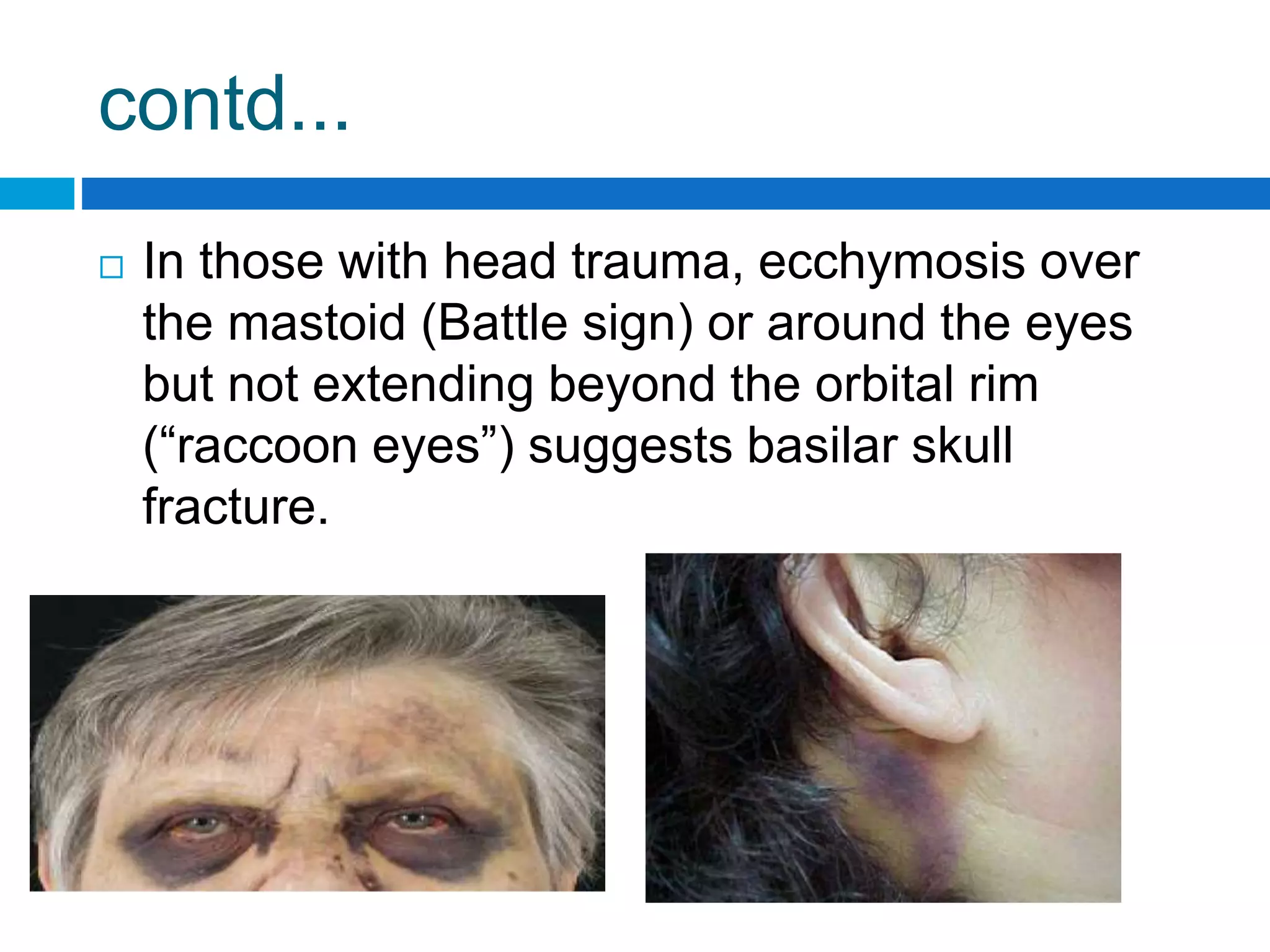
 In those with head trauma, ecchymosis over
the mastoid (Battle sign) or around the eyes
but not extending beyond the orbital rim
(“raccoon eyes”) suggests basilar skull
fracture.
contd...
 Neurofibromas of the scalp occur in von
Recklinghausen’s disease.
 Exostoses may indicate an underlying
meningioma
 Bruits may be heard best over the temporal
regions of the skull, the eyeballs, and the
mastoids.
 Cephalic bruits may occur with angiomas,
aneurysms, arteriovenous malformations,
neoplasms that compress large arteries.
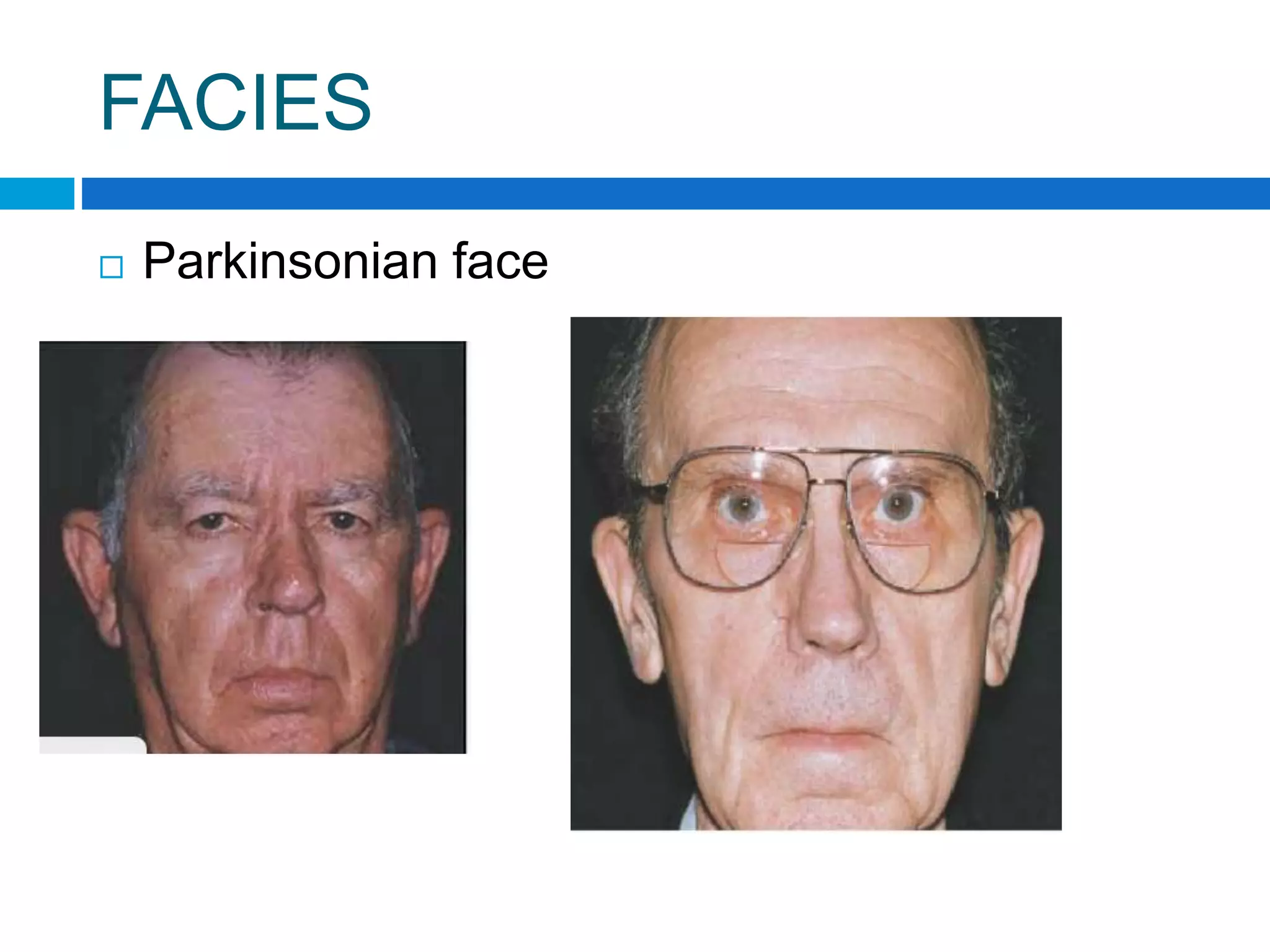
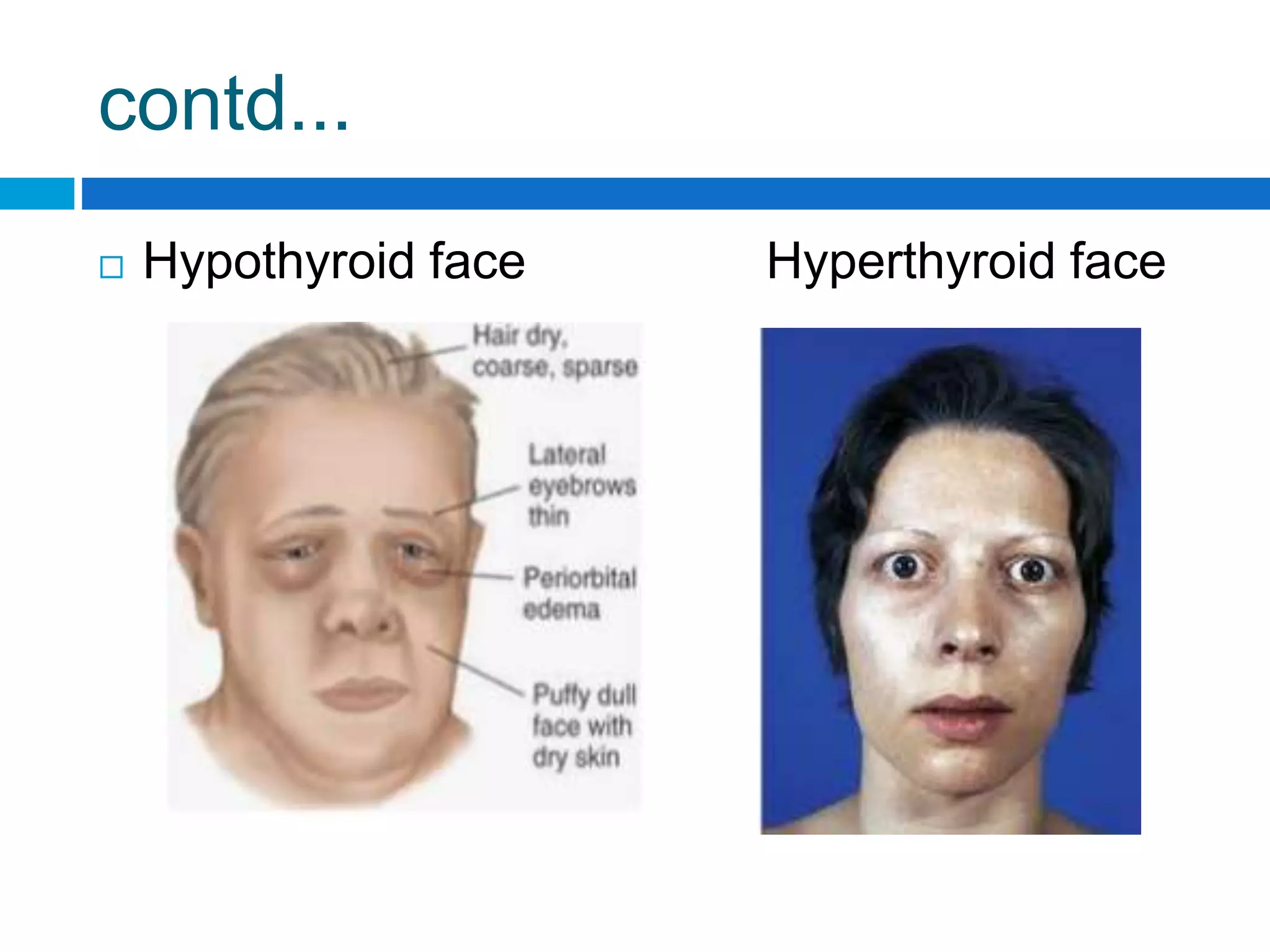
FACIES
 Parkinsonian face
contd...
 Hypothyroid face Hyperthyroid face
contd...
 Leonine facies Myasthenic
facies
contd...
 Myotonic dystrophy
contd...
 FASCIO-SCAPULO-HUMERAL MUSCULAR
DYSTROPHY
contd...
 Bells palsy
contd...
 RISUS SARDONICUS IN TETANUS
contd...
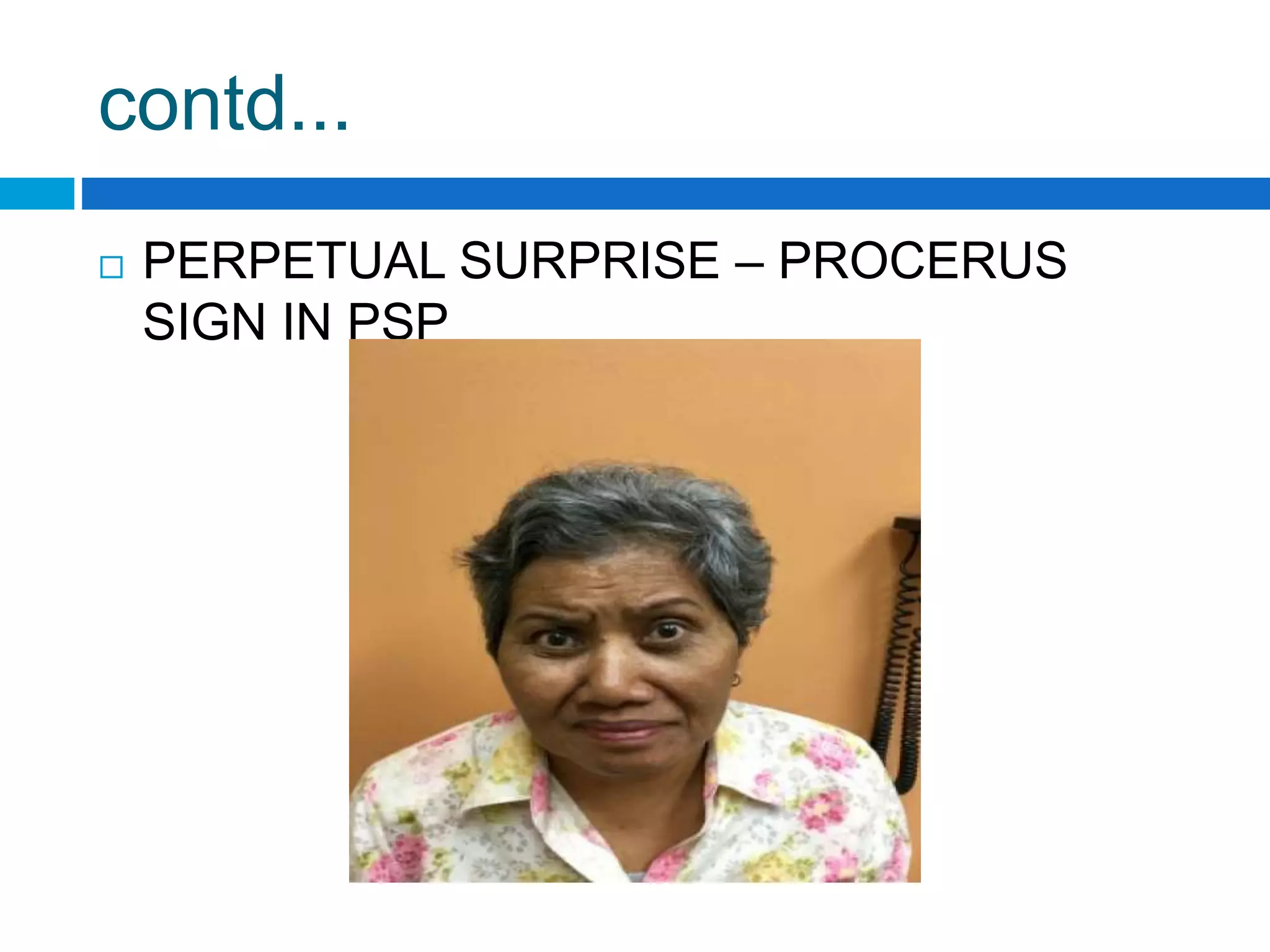
 PERPETUAL SURPRISE – PROCERUS
SIGN IN PSP
contd...
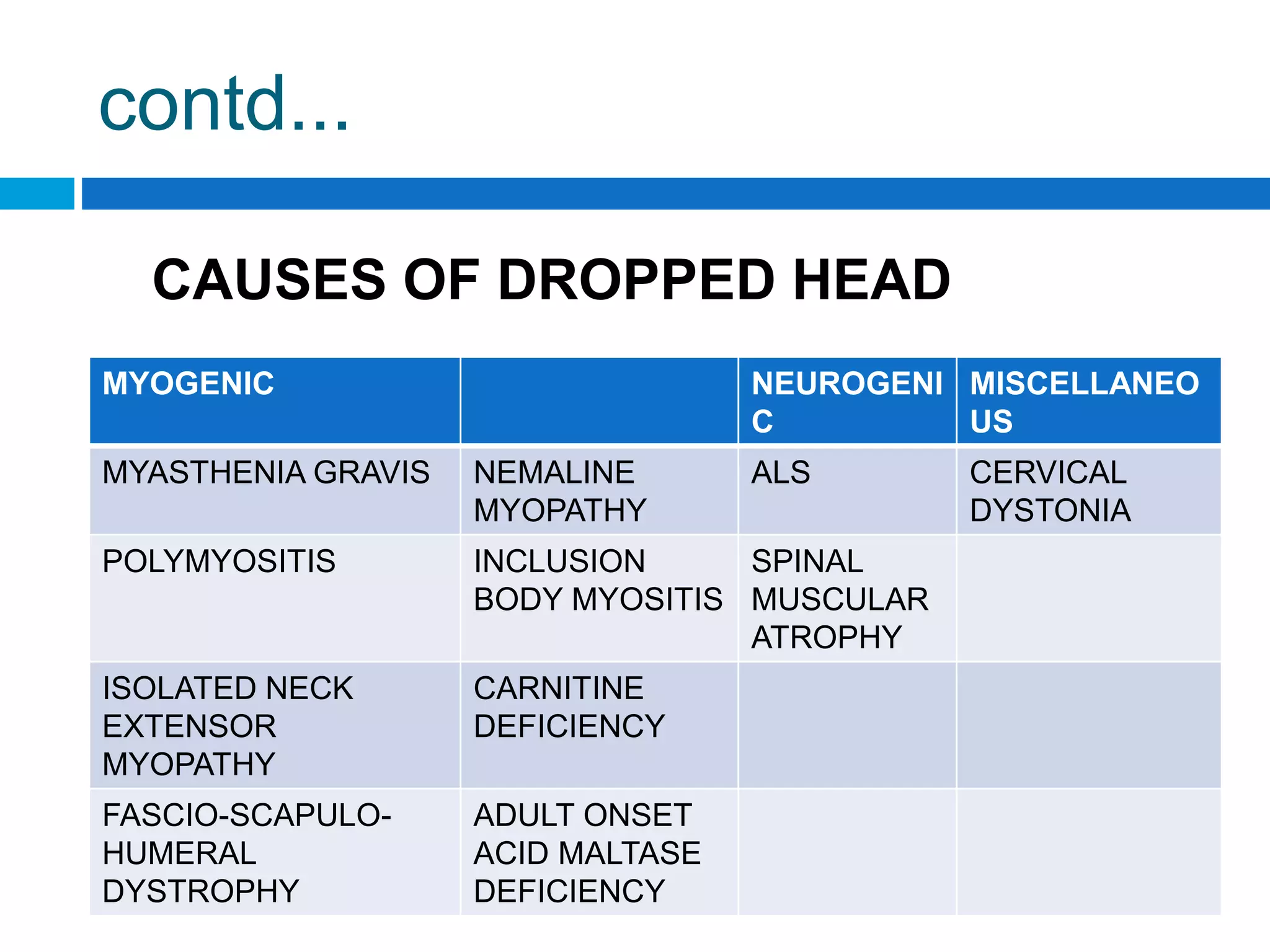
 DROPPED HEAD
contd...
MYOGENIC NEUROGENI
C
MISCELLANEO
US
MYASTHENIA GRAVIS NEMALINE
MYOPATHY
ALS CERVICAL
DYSTONIA
POLYMYOSITIS INCLUSION
BODY MYOSITIS
SPINAL
MUSCULAR
ATROPHY
ISOLATED NECK
EXTENSOR
MYOPATHY
CARNITINE
DEFICIENCY
FASCIO-SCAPULO-
HUMERAL
DYSTROPHY
ADULT ONSET
ACID MALTASE
DEFICIENCY
CAUSES OF DROPPED HEAD
FACE
Wrinkling of forehead
 Myasthenia gravis
 Third nerve palsy
 Horners syndrome
Absence of wrinkling of forehead
 Bells palsy
 Myotonic dystrophy
 Hyperthyroidism
Eyebrows and eye lashes
 Hypothyroidism
 Secondary syphilis
 Leprosy
 Generalized alopecia
EYE BALL
 Optic glioma
Eyelids
PTOSIS
 This is drooping of the upper lid to a level that
covers >2 mm of the superior cornea.
contd...
Causes
 1. Congenital
 2. Acquired
(i) neurogenic
(ii) myogenic
(iii) aponeurotic
(iv) mechanical
contd...
Neurogenic ptosis
 3rd nerve palsy
 Horner’s syndrome
 Multiple sclerosis
Myogenic/N-M junction
 Myasthenia gravis
 Snake bite
 Myotonic dystrophy
 Eaton lambert myasthenic syndrome
 Oculo-pharyngial muscular dystrophy
CONJUNCTIVA
 Phlyctenular keratoconjunctivitis
 Bitot’s spots
 Telangiectasia bulbar conjunctiva
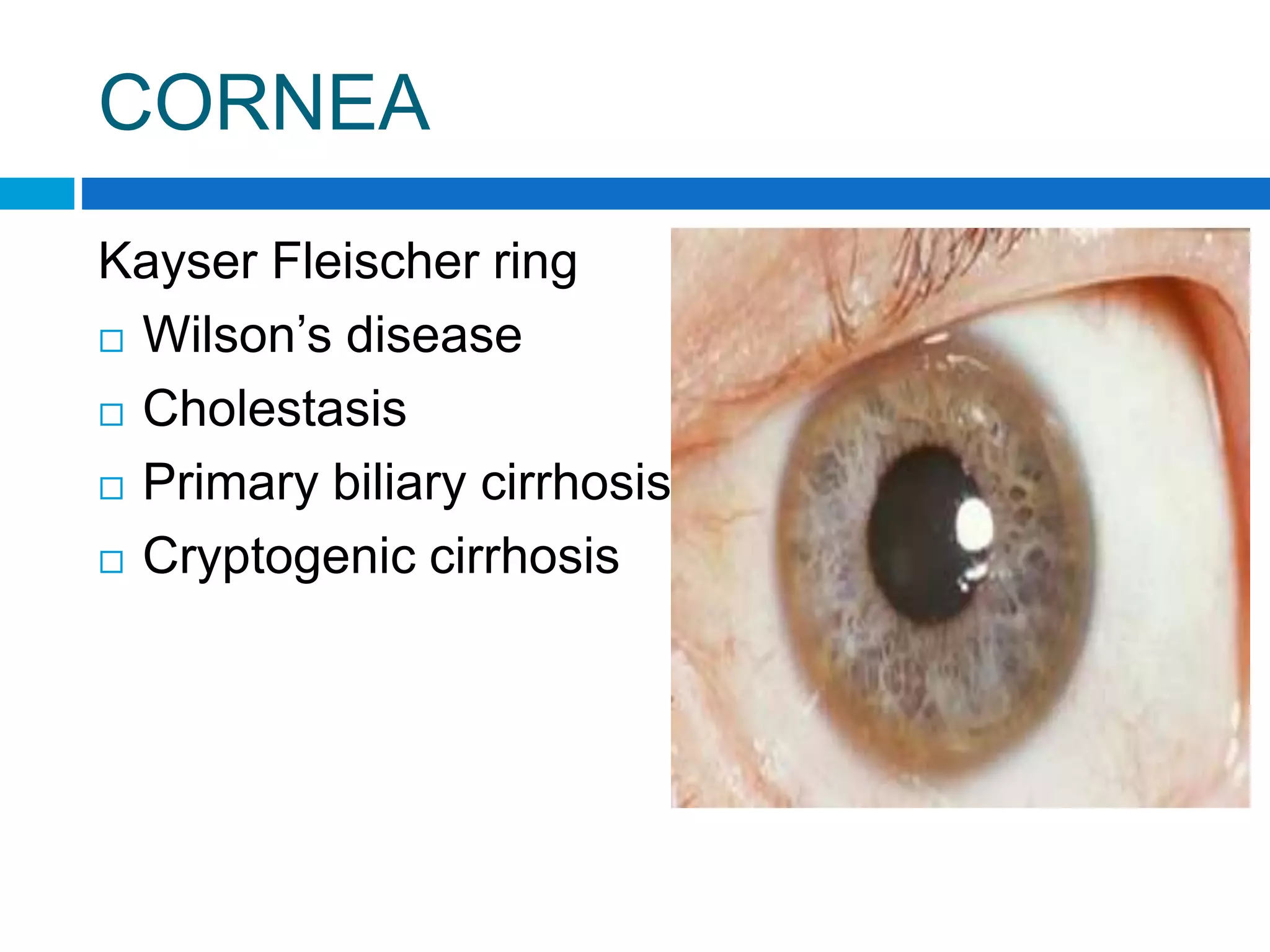
CORNEA
Kayser Fleischer ring
 Wilson’s disease
 Cholestasis
 Primary biliary cirrhosis
 Cryptogenic cirrhosis
 Corneal opacities
mucopolysaccharidosis
contd...
Corneal ulcers
 Bells palsy
 Trigeminal nerve palsy
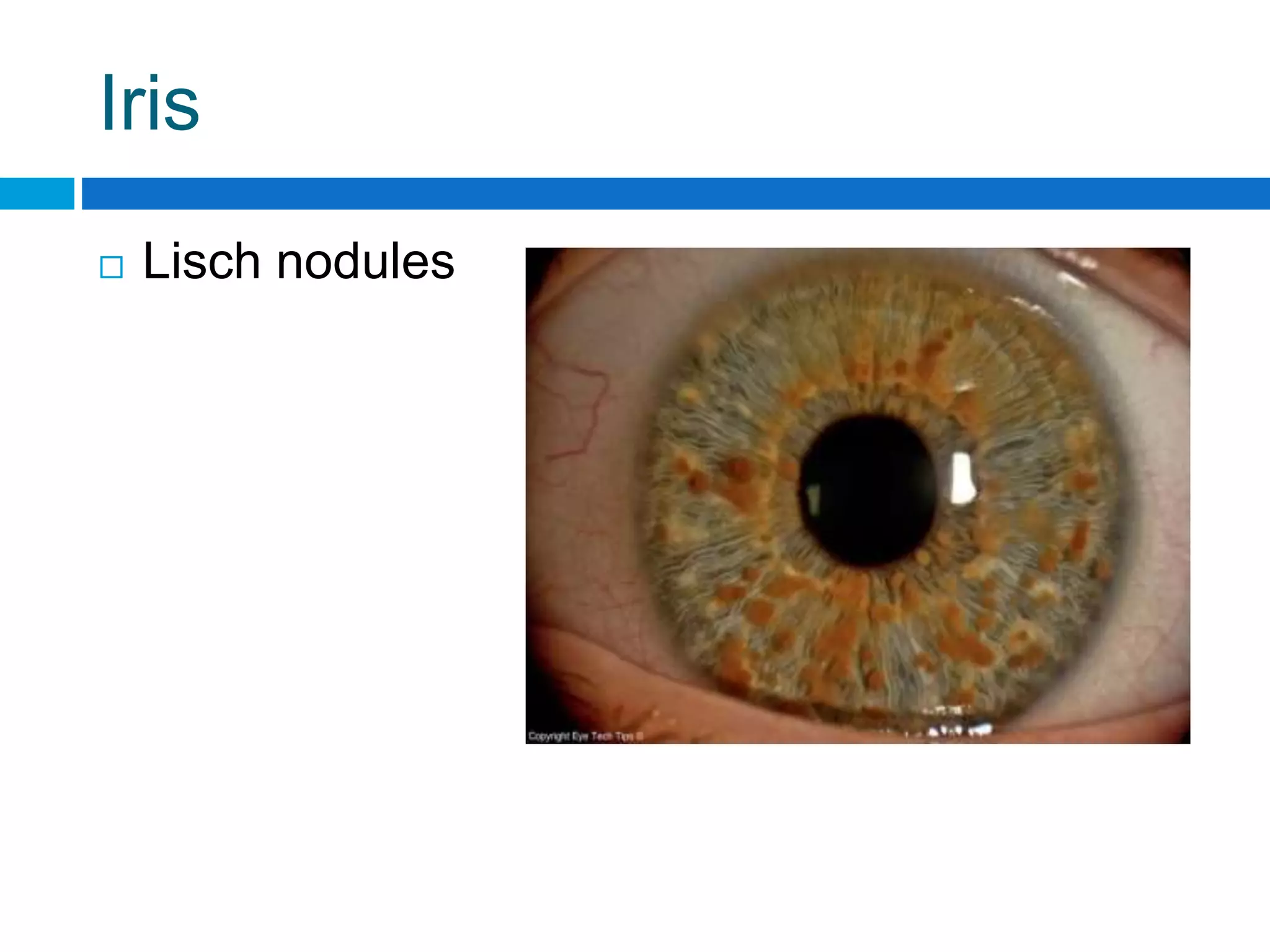
Iris
 Lisch nodules
contd...
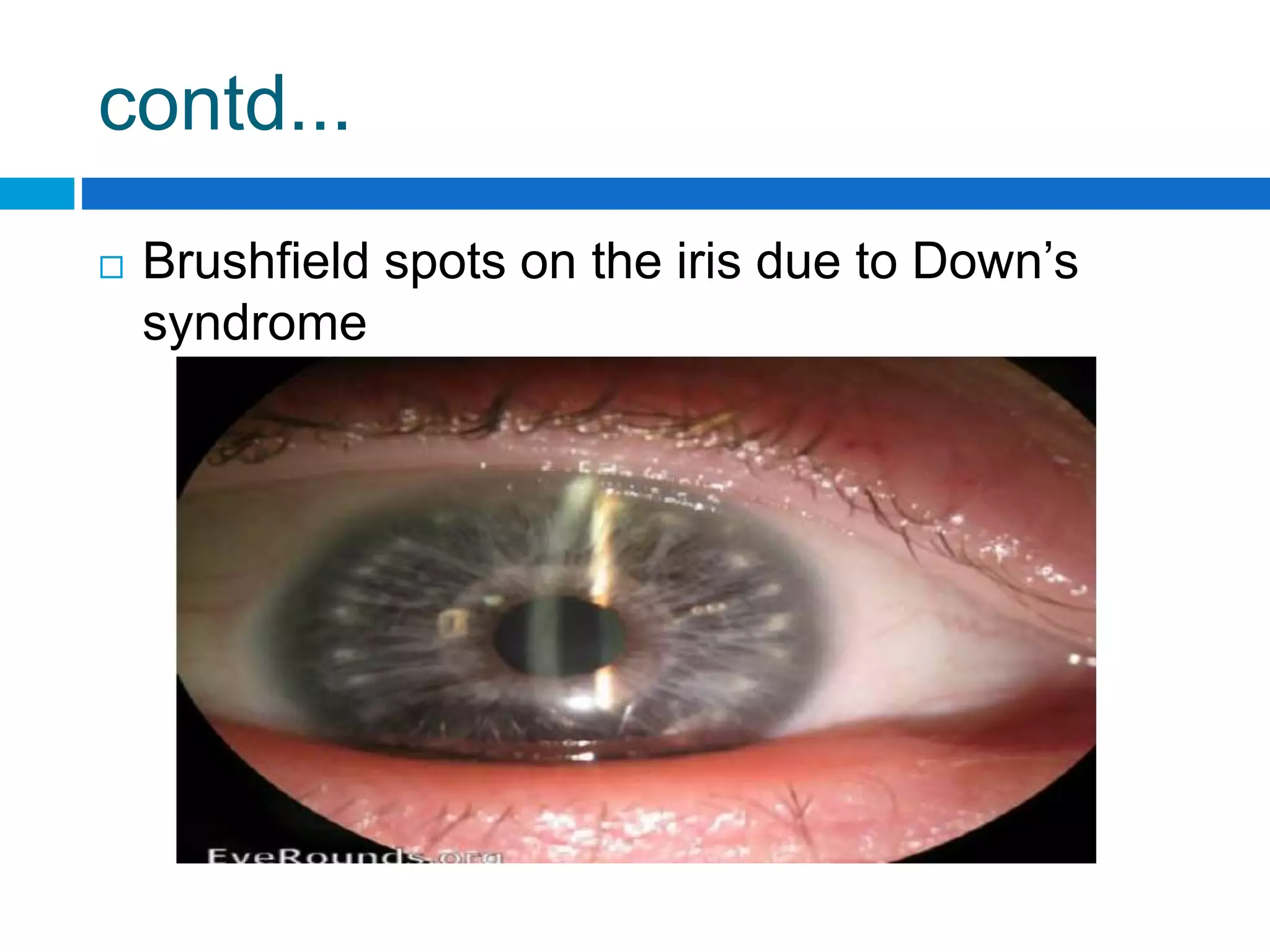
 Brushfield spots on the iris due to Down’s
syndrome
LENS
 HOMOCYSTINURIA
Cataract
 Most cataracts are age-related
 Underlying systemic diseases will result in
presenile cataract formation-
• Muscular dystrophy
• Neurofibromatosis
• Congenital rubella
• Hypoparathyroidism
contd...
Parkinsonism
 Infrequent blinking
 Impaired pursuit movement
 Hypometric saccades
 Reflex blepharospasm(Myersons sign)
 Oculogyric crisis
 Reverse Argyll Robertson pupil
 Blepharoclonus
ORAL CAVITY
 Lead line along the gums in lead toxicity
 Notched teeth are a sign of congenital syphilis
(Hutchinson teeth).
TONGUE
Macroglossia
 Downs syndrome
 Myxedema
Microglossia
 Psudobulbar palsy
contd...
 Scarlet red tongue- niacin deficiency
 Dark red bald tongue- riboflavin deficiency
 In thiamine defi ciency, the tongue is smooth,
shiny, atrophic, and reddened
 Triple furrowed tongue is seen in myasthenia
gravis
 Lingua plicata in Melkersson-Rosenthal
syndrome
contd...
 Fasciculation- motor neuron
disease,syringomyelia
 Myotonia- myotonic dystrophy
 Deviation of tongue to same side on protrusion
– hypoglossal nerve palsy
EAR
 Examination of the ears is particularly
important in patients with hearing loss or
vertigo.
 Examination of the ear canal may reveal a
 glomus tumor in a patient with jugular foramen
syndrome
 vesicles due to herpes zoster infection
 evidence of a posterior fossa cholesteatoma.
contd...
 Cerebrospinal fluid(CSF) otorrhea may cause
a clear or bloody ear discharge.
 Hemorrhage into the middle ear may cause a
bulging, blue-red tympanic membrane in
patients with basilar skull fracture.
contd...
Hitzelberger’s sign
 Seen in acoustic neuroma.
 It occurs due to involvement of the 7th cranial
nerve.
 There is early involvement of the sensory
fibers which causes hypoesthesia of the
posterior meatal wall.
NOSE
 Perforation of the nasal septum may be a clue
to cocaine abuse,leprosy.
 A saddle nose may be a sign of congenital
syphilis
 Evidence of bacterial infection in dangerous
area of face may be a sign of cavernous sinus
thrombosis
 Watery drainage may be due to CSF
rhinorrhea.
NECK
 Meningeal irritation may cause nuchal rigidity,
head retraction, and opisthotonos.
 Neck movement may also be restricted with
cervical spondylosis, cervical radiculopathy,
and dystonias.
 In meningeal irritation the primary limitation is
in neck flexion; in spondylosis the limitation is
either global or primarily in rotation and lateral
bending
contd...
 In the Klippel-Feil syndrome, syringomyelia,
and platybasia, the neck may be short and
broad, movement limited, and the hairline low.
contd...
 The carotid arteries should be cautiously and
lightly palpated bilaterally, one at a time, and,
followed by auscultation for carotid bruits.
TITUBATION
 Cerebellar disease
 Multiple sclerosis
 Friedreichs ataxia
PERIPHERAL NERVES
contd...
Causes of nerve enlargement
SKIN
 Cafe-au-lait macules--Dark brown
hypermelanotic macules with smooth or
irregular borders, commonly seen in back,
buttocks and trunk.
 Seen in neurofibromatosis.
 Also seen in Albright's synd, Fanconi anemia,
Bloom syndrome.
contd...
 Neurofibromas
contd...
Freckles
 similar small round spots in axilla and inguinal
areas are pathognomonic in NF.
contd...
Ash leaf hypopigmented macule
 Hypomelanotic polygonal macules grow upto 5
cm over trunk and buttocks.
 >3 lesions are seen in 90% of TS patients.
 Also seen in MEN1, vitiligo, nevus anemicus,
koyanagi syndrome
contd...
contd...
Adenoma sebaceum
 Numerous discrete smooth glistening round
rubbery papules pinhead to pea size, over
butterfly area in the face and nasolabial folds,
cheeks, nose, chin.
 slow growing angiofibroma.
contd...
Shagreen patch
 These are Connective tissue naevi.
 Skin colored irregular lumpy cobblestone- like
plaques in lumbosacral areas which grow to
the size of a palm.
contd...
 Satellite papules grow around a central plaque
with orange peel like indentation.
 Seen in 70% of pts in TS.
 Also seen in MEN1, Cowden syndrome and
Hunter's syndrome.
contd...
 Confetti lesions
contd...
 Port wine stain
contd...
 Leprosy – tuberculoid/ borderline tuberculoid
contd...
 Tuft of hair over lower lumbar region
contd...
 Xanthoma
contd...
Diabetic dermopathy
Necrobiosis lipoidica diabeticorum
Scleredema diabeticorum
contd...
 Uremic frost
contd...
Cassals collar in pellagra Angular stomatitis
contd...
Dermatomyositis
 Grotton’s Sign: An erythematous, scaly
eruption over the extensor surfaces of the
metacarpophalangeal joints and digits
contd...
Heliotrope rash:
 A reddish-purple eruption on the upper Eyelid
accompanied by swelling of the eyelid
 Most specific rash in DM
 Only present in a minority of patients.
contd...
 Shawl Sign and V sign
contd...
 Spider angiomas in alcohol abuse
 Erythema chronicum migrans in lyme disease
 Purpura and petechiae in thrombotic
thrombocytopenic purpura, meningococcemia,
and rocky mountain spotted fever
contd...
 Livedo reticularis in antiphospholipid syndrome
and cryoglobulinemia
 Hyperpigmentation in nelson’s syndrome,
Carotenemia or addison’s disease
 Herpes zoster causes a vesicular eruption in
the distribution of the involved root.
contd...
 Hemangiomas of the spinal cord may be
accompanied by skin nevi in the same
metamere.
 Symmetrically placed, painless, recurring,
poorly healing lesions of the extremities may
occur in syringomyelia and hereditary sensory
neuropathy.
 Peripheral nerve disease, tabes dorsalis, and
myelopathy may produce trophic changes in
the skin.
NAILS
Ungual/periungual fibroma
 Firm pink to skin colored papules, nodules
from under the nail bed in toe & finger nails.
Seen in 90% of patients in TS.
contd...
 White nail
contd...
Clubbing
 Hemiplegia
 Syringomyelia
GYNAECOMASTIA
 Klinefelters syndrome
 Lepromatous leprosy
 Kennedy syndrome
SPINE
 Tuberculosis and neoplasms of the spine may
cause a marked kyphosis (gibbus)
 Muscular dystrophy often results in an
increased lumbar lordosis
 Scoliosis is common in syringomyelia and
friedreich’s ataxia.
contd...
 Localized rigidity with a slight scoliosis and
absence of the normal lordosis are symptoms
of lumbosacral radiculopathy.
 Tenderness to percussion over the spinous
processes, can occur with localized processes
such as spinal epidural hematoma or abscess.
EXTREMETIES
 Claw hand
 Wrist drop
 Pes cavus(claw foot)
• Peroneal muscular dystrophy
• Friederichs ataxia
• Syringomyelia
• Spina bifida occulta
• Anterior poliomyelitis
contd...
contd...
 Painless arthropathy (Charcot joint) occurs when a
joint is deafferented
 Painless enlargement of the shoulder has been
reported as the presenting manifestation of
syringomyelia.
 Decreased peripheral pulses occur in Takayasu’s
disease as well as atherosclerosis.
 Acrocyanosis occurs in ergotism.
 Diseases of the nervous system are found in
association with such skeletal and developmental
anomalies as syndactyly, polydactyly, and
arachnodactyly.
REFERENCES
 Dejongs neurologic examination , 7th edition
 Bickerstaffs neurology examination, 6th edition
 Physical diagnosis-Golwalla, 16th edition
 Manual of practical medicine- Alagappan,5th
edition
 Harrisons principles of internal medicine.20th
edition
General Physical Examination in Neurological Diseases

General Physical Examination in Neurological Diseases

Editor's Notes

  • #13 involves fusion of either the right or left side of the coronal suture that runs from ear to ear.
  • #49 Metabolic abnormalities: Poorly controlled diabetes. Phosphofructokinase deficiency. G6PD deficiency. Hyperuricaemia