General Chemistry
Principles and Modern Applications
Petrucci • Harwood • Herring
8th Edition

Chapter 1: Matter—Its Properties and
Measurement
Philip Dutton
University of Windsor, Canada
Prentice-Hall © 2002

Slide 1 of 19

Prentice-Hall ©
General Chemistry: Chapter 1
Contents





Physical properties and states of matter
Système International Units
Uncertainty and significant figures
Dimensional analysis
http://cwx.prenhall.com/petrucci/chapter1/deluxe.html

Slide 2 of 19

Prentice-Hall ©
General Chemistry: Chapter 1
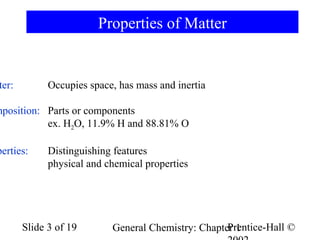
Properties of Matter

ter:

Occupies space, has mass and inertia

mposition: Parts or components
ex. H2O, 11.9% H and 88.81% O

perties:

Distinguishing features
physical and chemical properties

Slide 3 of 19

Prentice-Hall ©
General Chemistry: Chapter 1
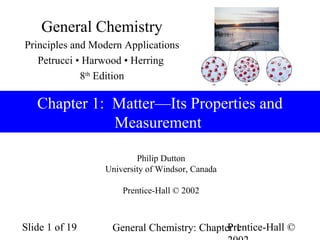
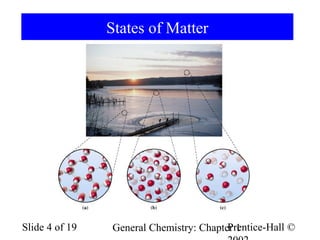
States of Matter

Slide 4 of 19

Prentice-Hall ©
General Chemistry: Chapter 1
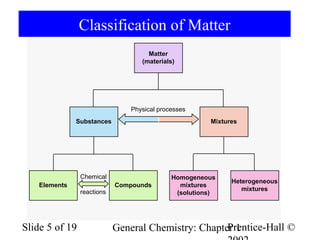
Classification of Matter

1_15

Matter
(materials)

Physical processes
Substances

Mixtures

Chemical
Elements

Slide 5 of 19

reactions

Compounds

Homogeneous
mixtures
(solutions)

Heterogeneous
mixtures

Prentice-Hall ©
General Chemistry: Chapter 1
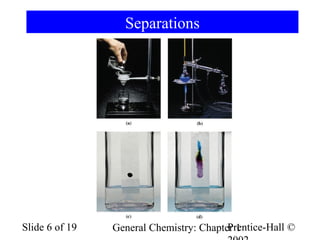
Separations

Slide 6 of 19

Prentice-Hall ©
General Chemistry: Chapter 1
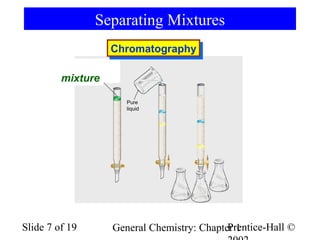
Separating Mixtures
Chromatography
Chromatography
1_17

Substances to
be separated
dissolved in liquid

mixture

Pure
liquid

A

Slide 7 of 19

B

C

Prentice-Hall ©
General Chemistry: Chapter 1
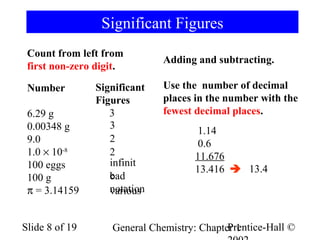
Significant Figures
Count from left from
first non-zero digit.
Number
6.29 g
0.00348 g
9.0
1.0 × 10⁻⁸
100 eggs
100 g
π = 3.14159
Slide 8 of 19

Significant
Figures
3
3
2
2
infinit
e ad
b
notation
various

Adding and subtracting.
Use the number of decimal
places in the number with the
fewest decimal places.
1.14
0.6
11.676
13.416  13.4

Prentice-Hall ©
General Chemistry: Chapter 1
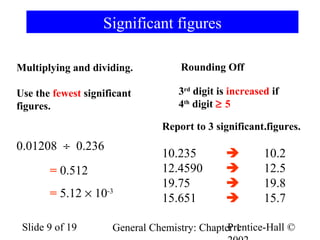
Significant figures
Multiplying and dividing.

Rounding Off

Use the fewest significant
figures.

3rd digit is increased if
4th digit ≥ 5
Report to 3 significant.figures.

0.01208 ÷ 0.236
= 0.512
= 5.12 × 10⁻³
Slide 9 of 19

10.235
12.4590
19.75
15.651






10.2
12.5
19.8
15.7

Prentice-Hall ©
General Chemistry: Chapter 1
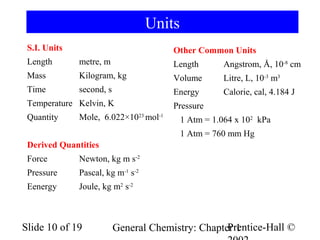
Units
S.I. Units

Other Common Units

Length

metre, m

Length

Angstrom, Å, 10-8 cm

Mass

Kilogram, kg

Volume

Litre, L, 10-3 m3

Time

second, s

Energy

Calorie, cal, 4.184 J

Temperature Kelvin, K
Quantity

Mole, 6.022×10²³ mol-1

Pressure
1 Atm = 1.064 x 10² kPa
1 Atm = 760 mm Hg

Derived Quantities
Force

Newton, kg m s-2

Pressure

Pascal, kg m-1 s-2

Eenergy

Joule, kg m2 s-2

Slide 10 of 19

Prentice-Hall ©
General Chemistry: Chapter 1
Slide 11 of 19

Prentice-Hall ©
General Chemistry: Chapter 1
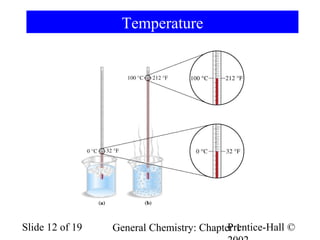
Temperature

Slide 12 of 19

Prentice-Hall ©
General Chemistry: Chapter 1
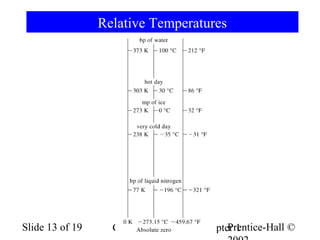
Relative Temperatures

Slide 13 of 19

Prentice-Hall ©
General Chemistry: Chapter 1
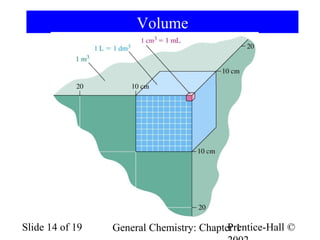
Volume

Slide 14 of 19

Prentice-Hall ©
General Chemistry: Chapter 1
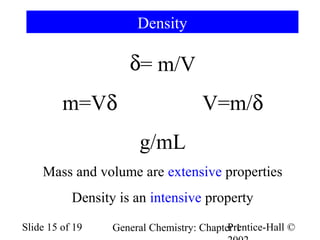
Density

δ= m/V
m=Vδ

V=m/δ
g/mL

Mass and volume are extensive properties
Density is an intensive property
Slide 15 of 19

Prentice-Hall ©
General Chemistry: Chapter 1
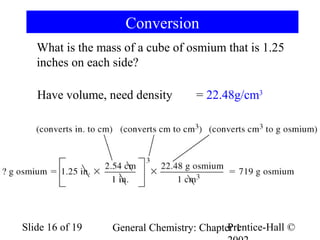
Conversion
What is the mass of a cube of osmium that is 1.25
inches on each side?
Have volume, need density

Slide 16 of 19

= 22.48g/cm3

Prentice-Hall ©
General Chemistry: Chapter 1
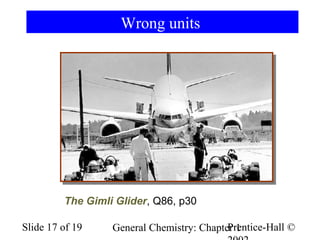
Wrong units

The Gimli Glider, Q86, p30
Slide 17 of 19

Prentice-Hall ©
General Chemistry: Chapter 1
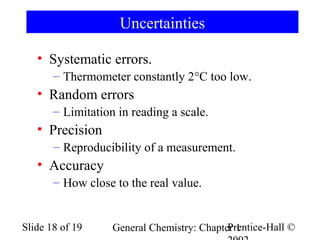
Uncertainties
• Systematic errors.
– Thermometer constantly 2°C too low.

• Random errors
– Limitation in reading a scale.

• Precision
– Reproducibility of a measurement.

• Accuracy
– How close to the real value.

Slide 18 of 19

Prentice-Hall ©
General Chemistry: Chapter 1
End of Chapter Questions

1, 3, 5, 12, 14, 17,
18, 20, 30, 41, 49,
50, 61, 72, 74, 79

Slide 19 of 19

Prentice-Hall ©
General Chemistry: Chapter 1

general chemistry ch1

  • 1.
    General Chemistry Principles andModern Applications Petrucci • Harwood • Herring 8th Edition Chapter 1: Matter—Its Properties and Measurement Philip Dutton University of Windsor, Canada Prentice-Hall © 2002 Slide 1 of 19 Prentice-Hall © General Chemistry: Chapter 1
  • 2.
    Contents     Physical properties andstates of matter Système International Units Uncertainty and significant figures Dimensional analysis http://cwx.prenhall.com/petrucci/chapter1/deluxe.html Slide 2 of 19 Prentice-Hall © General Chemistry: Chapter 1
  • 3.
    Properties of Matter ter: Occupiesspace, has mass and inertia mposition: Parts or components ex. H2O, 11.9% H and 88.81% O perties: Distinguishing features physical and chemical properties Slide 3 of 19 Prentice-Hall © General Chemistry: Chapter 1
  • 4.
    States of Matter Slide4 of 19 Prentice-Hall © General Chemistry: Chapter 1
  • 5.
    Classification of Matter 1_15 Matter (materials) Physicalprocesses Substances Mixtures Chemical Elements Slide 5 of 19 reactions Compounds Homogeneous mixtures (solutions) Heterogeneous mixtures Prentice-Hall © General Chemistry: Chapter 1
  • 6.
    Separations Slide 6 of19 Prentice-Hall © General Chemistry: Chapter 1
  • 7.
    Separating Mixtures Chromatography Chromatography 1_17 Substances to beseparated dissolved in liquid mixture Pure liquid A Slide 7 of 19 B C Prentice-Hall © General Chemistry: Chapter 1
  • 8.
    Significant Figures Count fromleft from first non-zero digit. Number 6.29 g 0.00348 g 9.0 1.0 × 10⁻⁸ 100 eggs 100 g π = 3.14159 Slide 8 of 19 Significant Figures 3 3 2 2 infinit e ad b notation various Adding and subtracting. Use the number of decimal places in the number with the fewest decimal places. 1.14 0.6 11.676 13.416  13.4 Prentice-Hall © General Chemistry: Chapter 1
  • 9.
    Significant figures Multiplying anddividing. Rounding Off Use the fewest significant figures. 3rd digit is increased if 4th digit ≥ 5 Report to 3 significant.figures. 0.01208 ÷ 0.236 = 0.512 = 5.12 × 10⁻³ Slide 9 of 19 10.235 12.4590 19.75 15.651     10.2 12.5 19.8 15.7 Prentice-Hall © General Chemistry: Chapter 1
  • 10.
    Units S.I. Units Other CommonUnits Length metre, m Length Angstrom, Å, 10-8 cm Mass Kilogram, kg Volume Litre, L, 10-3 m3 Time second, s Energy Calorie, cal, 4.184 J Temperature Kelvin, K Quantity Mole, 6.022×10²³ mol-1 Pressure 1 Atm = 1.064 x 10² kPa 1 Atm = 760 mm Hg Derived Quantities Force Newton, kg m s-2 Pressure Pascal, kg m-1 s-2 Eenergy Joule, kg m2 s-2 Slide 10 of 19 Prentice-Hall © General Chemistry: Chapter 1
  • 11.
    Slide 11 of19 Prentice-Hall © General Chemistry: Chapter 1
  • 12.
    Temperature Slide 12 of19 Prentice-Hall © General Chemistry: Chapter 1
  • 13.
    Relative Temperatures Slide 13of 19 Prentice-Hall © General Chemistry: Chapter 1
  • 14.
    Volume Slide 14 of19 Prentice-Hall © General Chemistry: Chapter 1
  • 15.
    Density δ= m/V m=Vδ V=m/δ g/mL Mass andvolume are extensive properties Density is an intensive property Slide 15 of 19 Prentice-Hall © General Chemistry: Chapter 1
  • 16.
    Conversion What is themass of a cube of osmium that is 1.25 inches on each side? Have volume, need density Slide 16 of 19 = 22.48g/cm3 Prentice-Hall © General Chemistry: Chapter 1
  • 17.
    Wrong units The GimliGlider, Q86, p30 Slide 17 of 19 Prentice-Hall © General Chemistry: Chapter 1
  • 18.
    Uncertainties • Systematic errors. –Thermometer constantly 2°C too low. • Random errors – Limitation in reading a scale. • Precision – Reproducibility of a measurement. • Accuracy – How close to the real value. Slide 18 of 19 Prentice-Hall © General Chemistry: Chapter 1
  • 19.
    End of ChapterQuestions 1, 3, 5, 12, 14, 17, 18, 20, 30, 41, 49, 50, 61, 72, 74, 79 Slide 19 of 19 Prentice-Hall © General Chemistry: Chapter 1