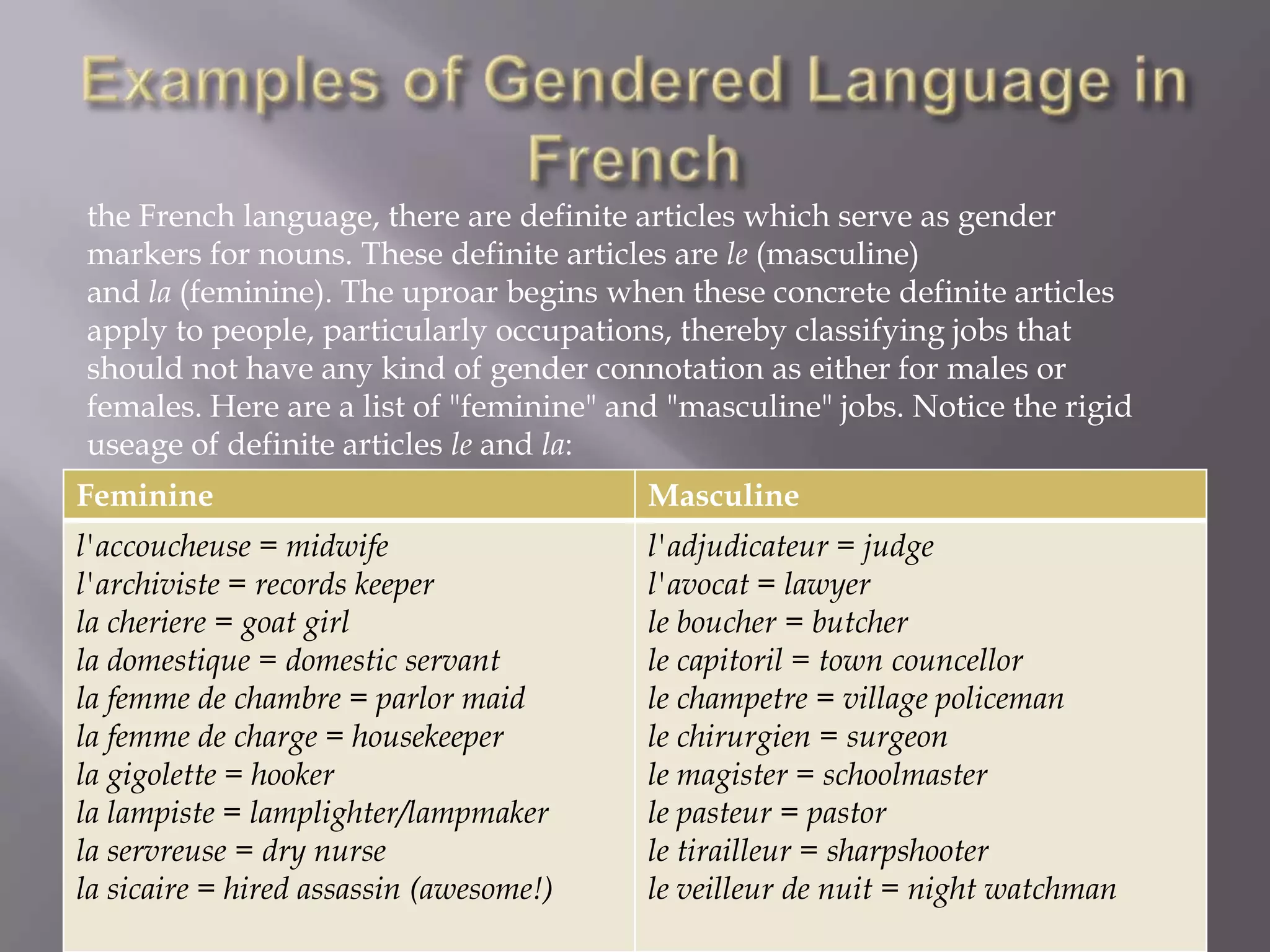
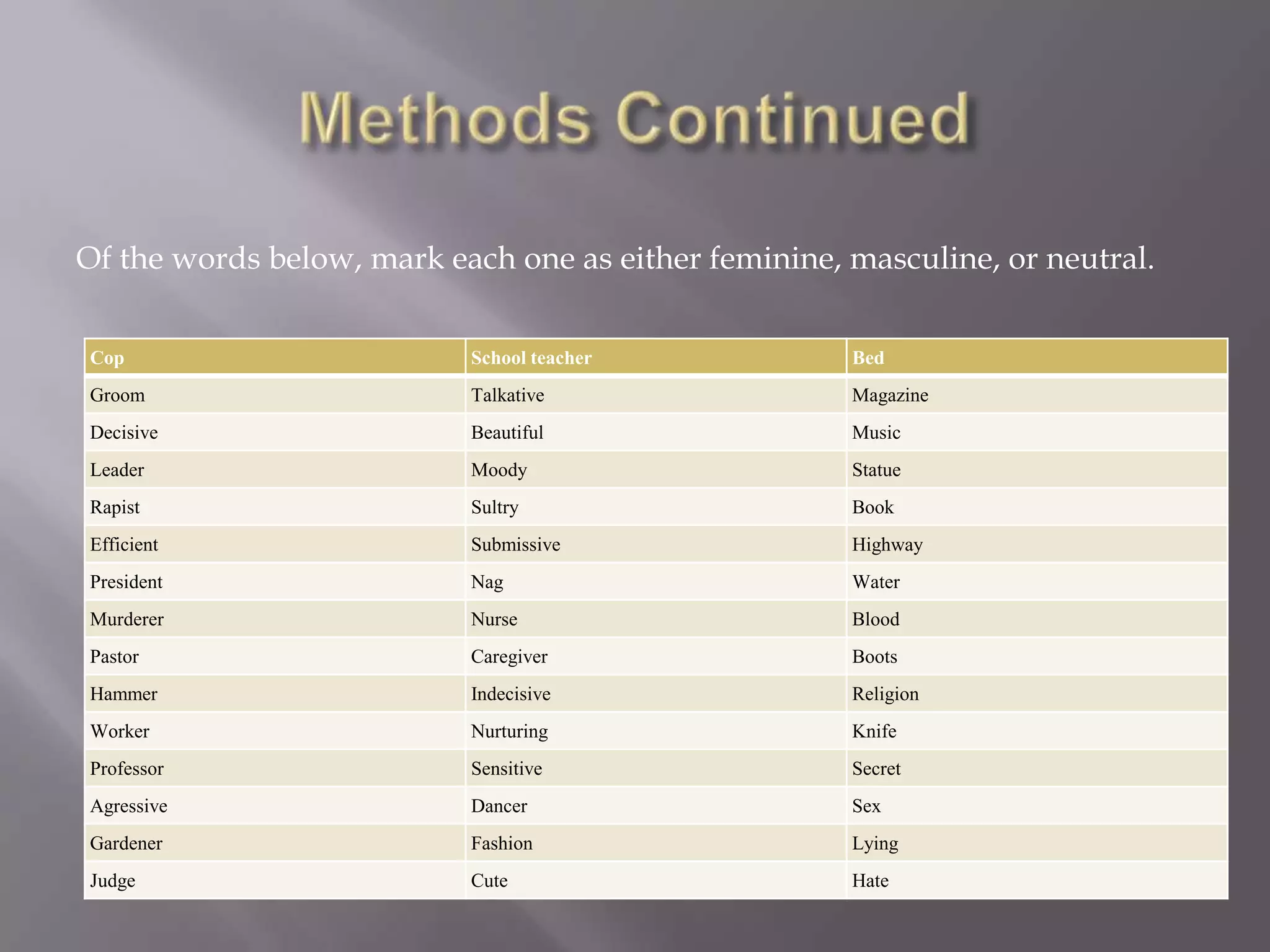
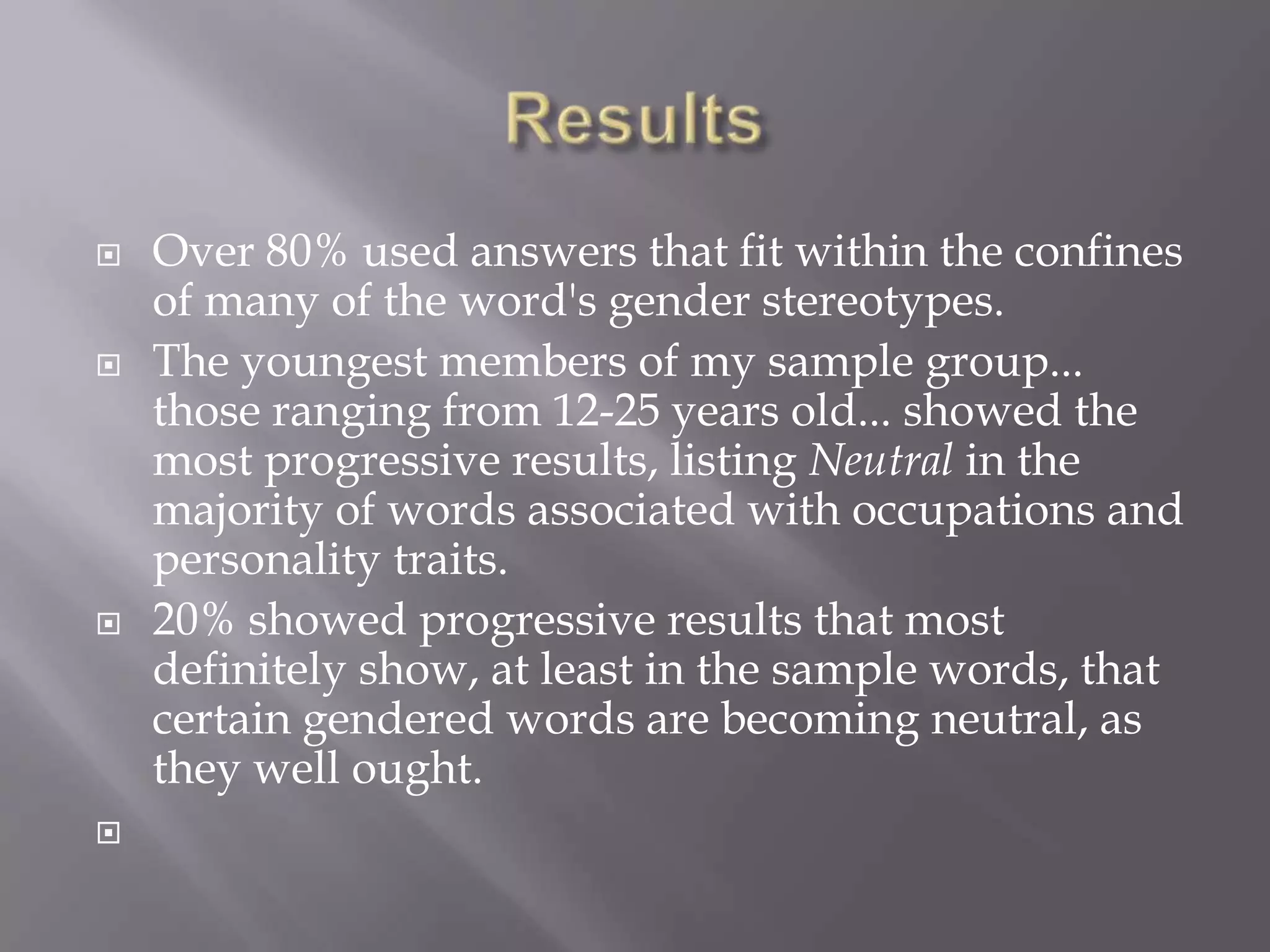
The document discusses how language shapes perceptions of gender and how gender is represented in language structures like semantics, morphology, and lexicon. It provides examples of gendered language in languages like Spanish, French, and German. The author administered a survey to examine if words still hold gendered connotations for different age groups, finding that the youngest group saw more words as neutral. The conclusion is that while gender inequality still exists, language is gradually becoming less rigidly gendered as new generations use it.