This document summarizes key points from a lecture on linguistic relativity and gender categories:
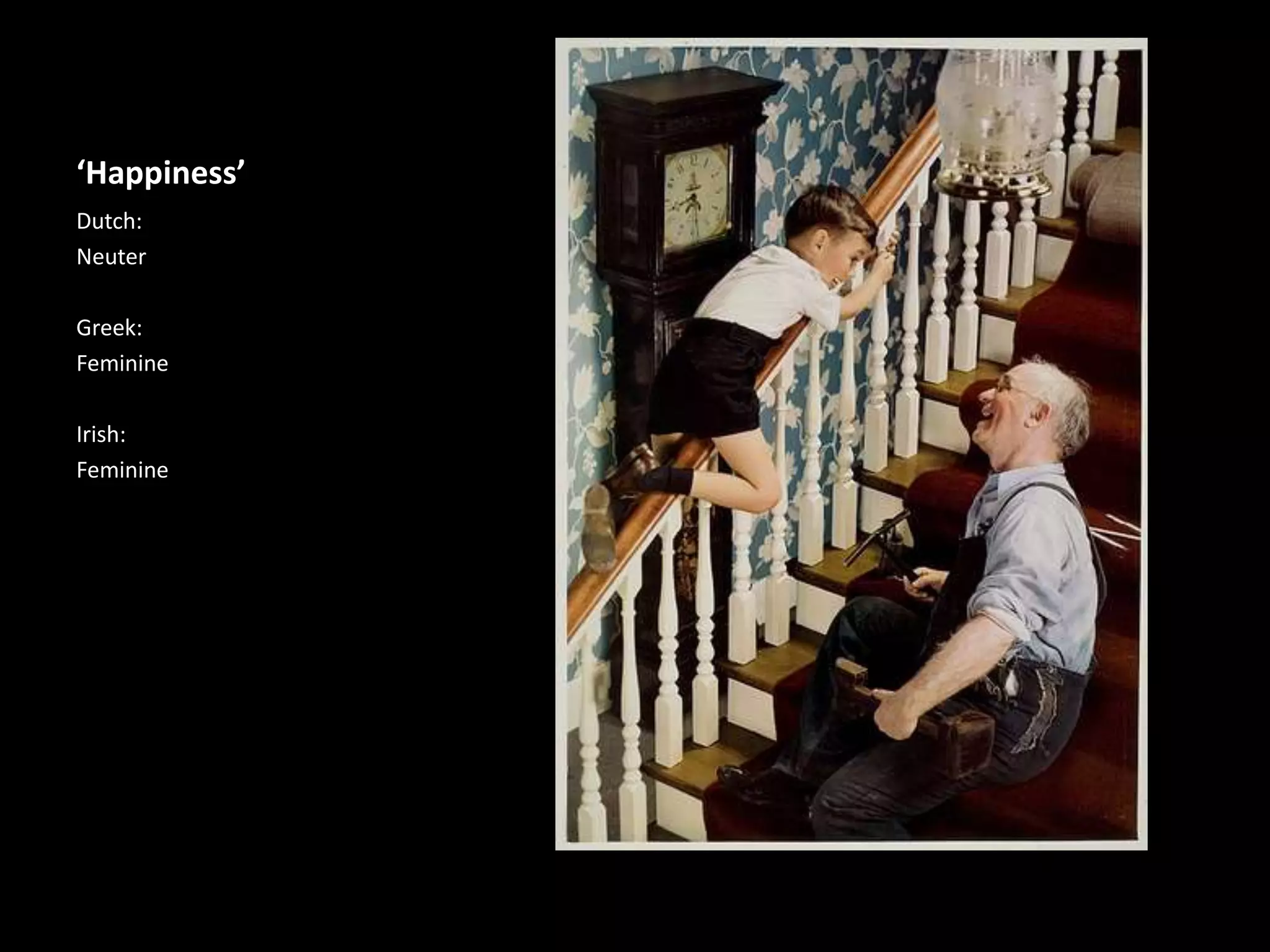
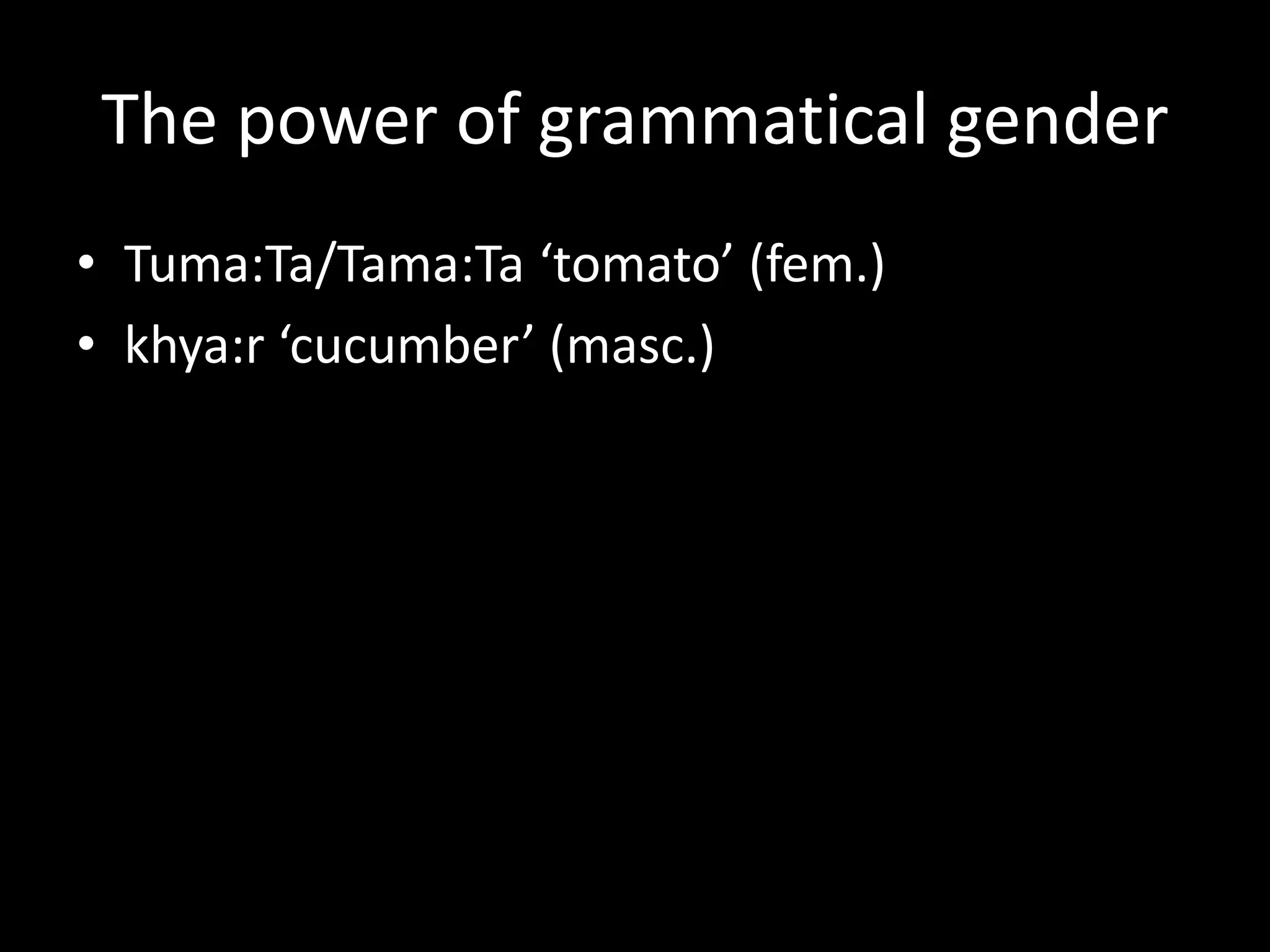
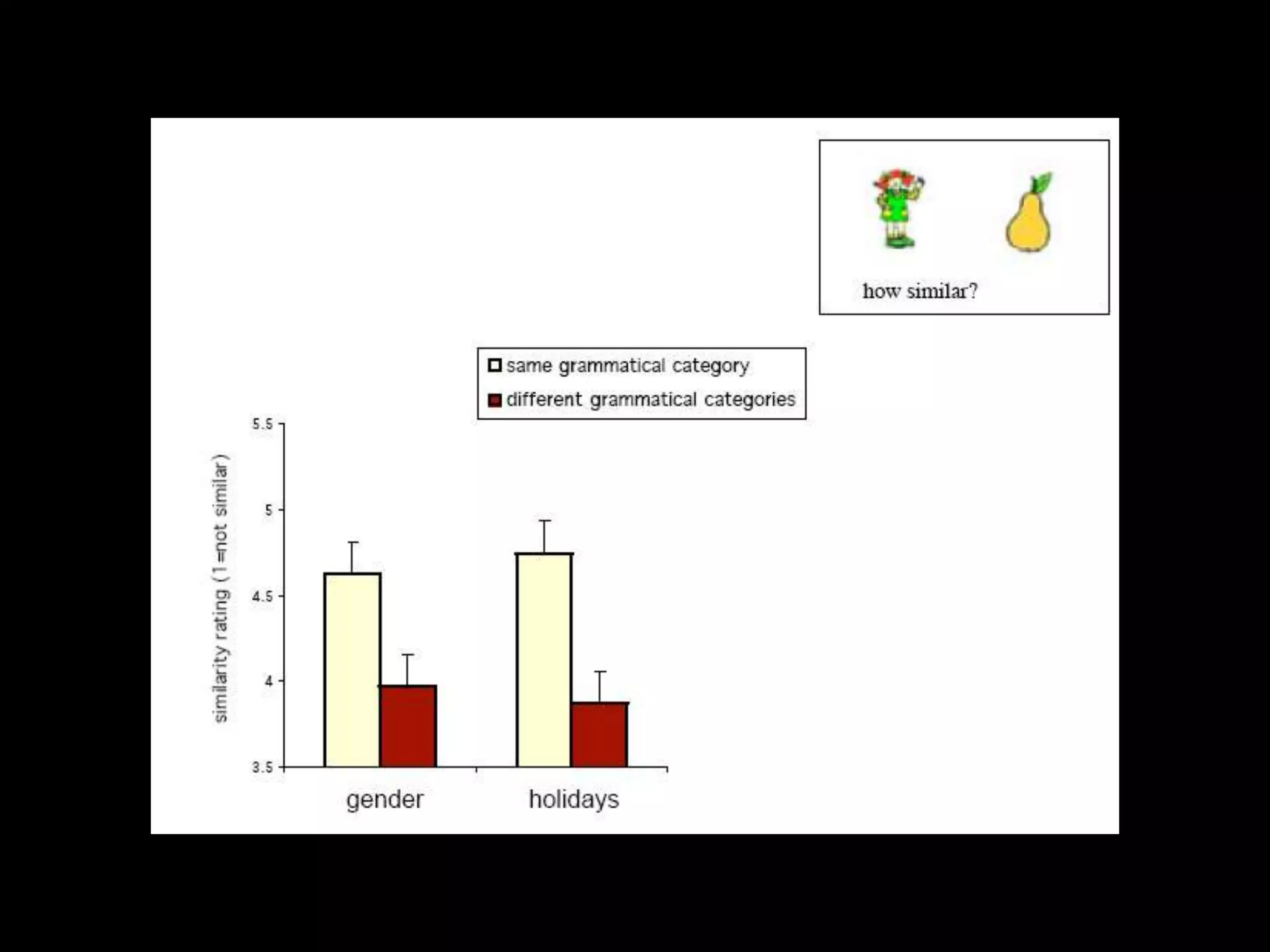
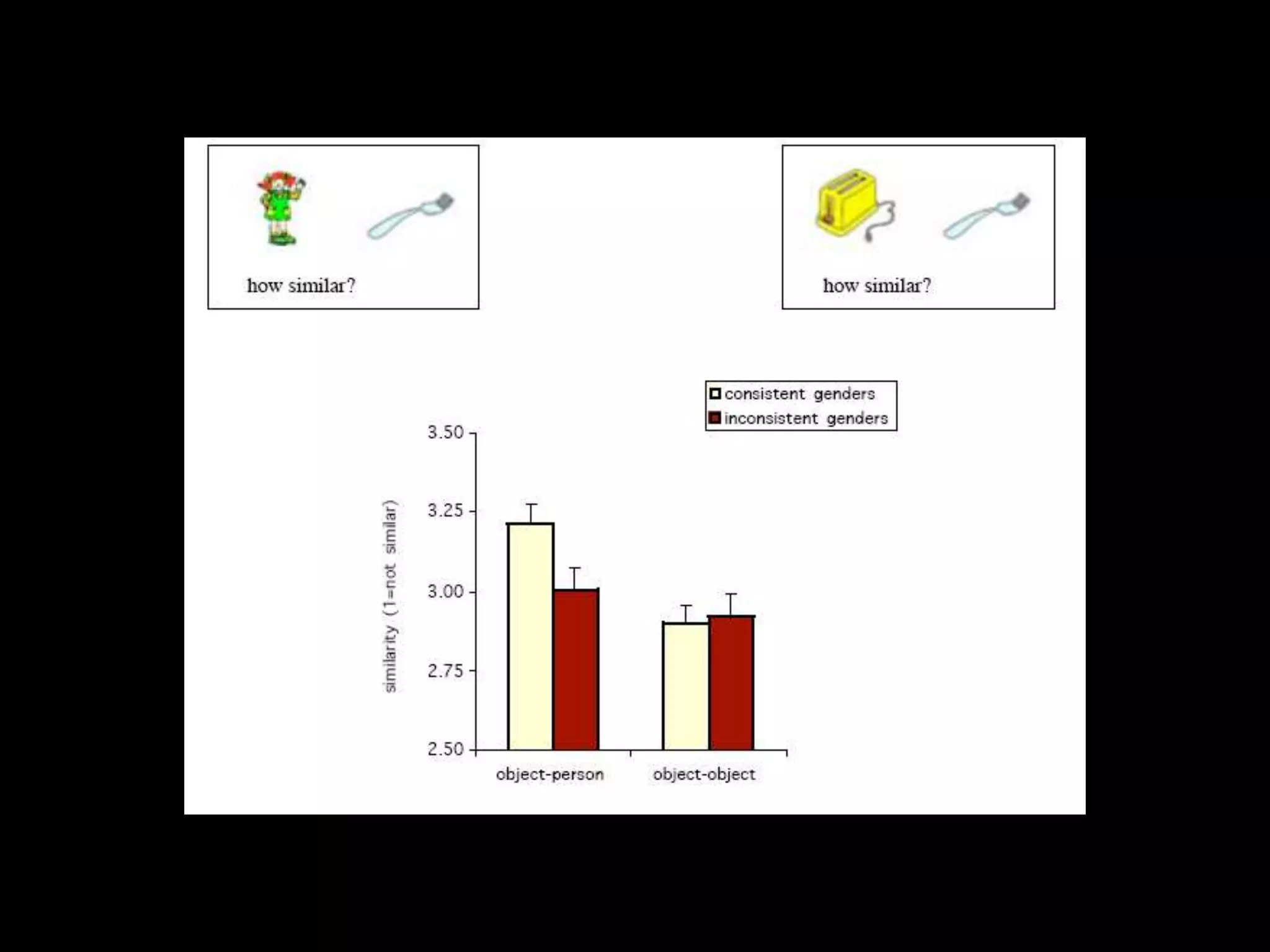
1) Studies show that speakers of different languages may think about gendered objects like bridges differently based on the grammatical gender of the words in their language. However, the effects are subtle and testing is challenging.
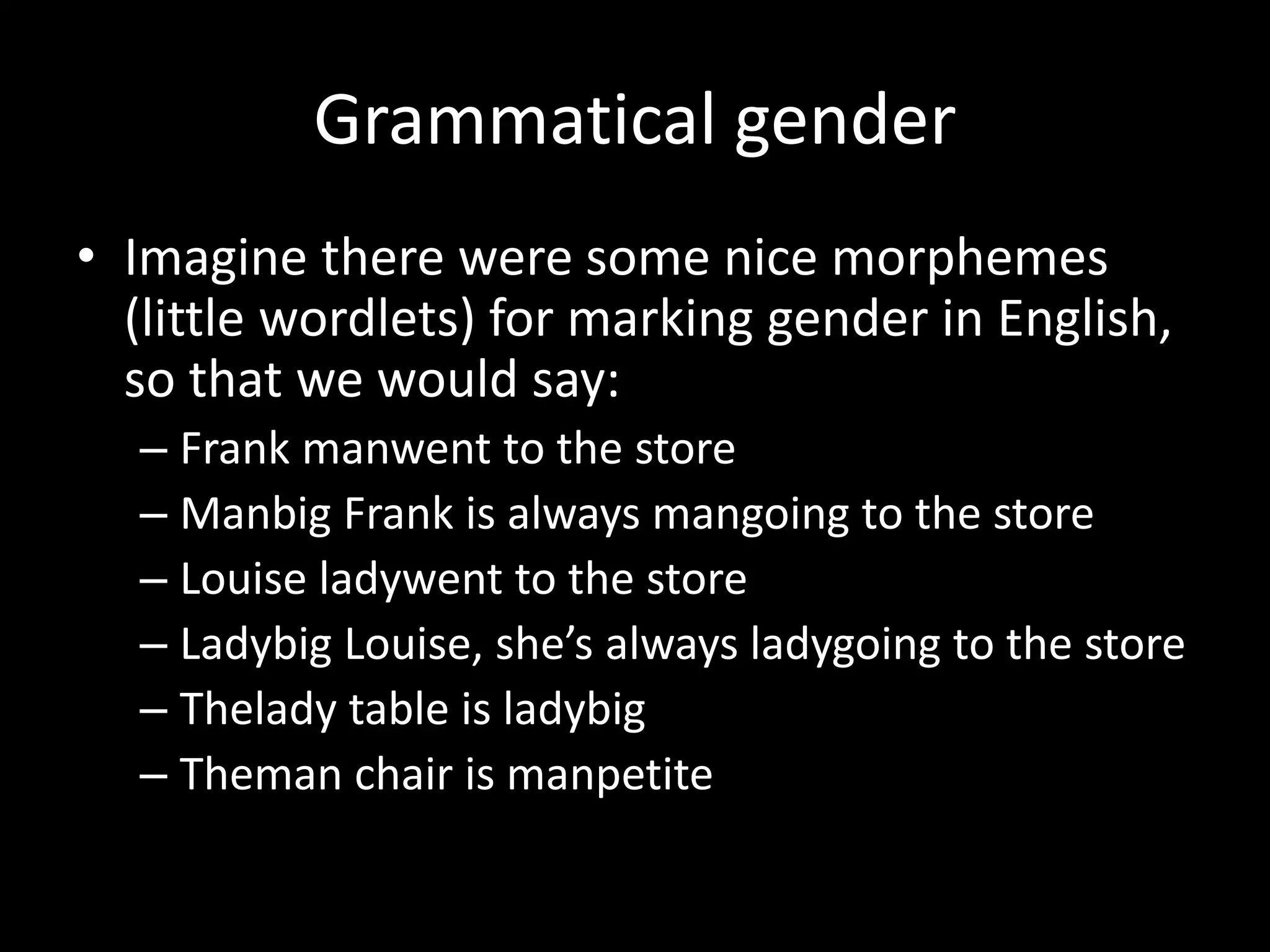
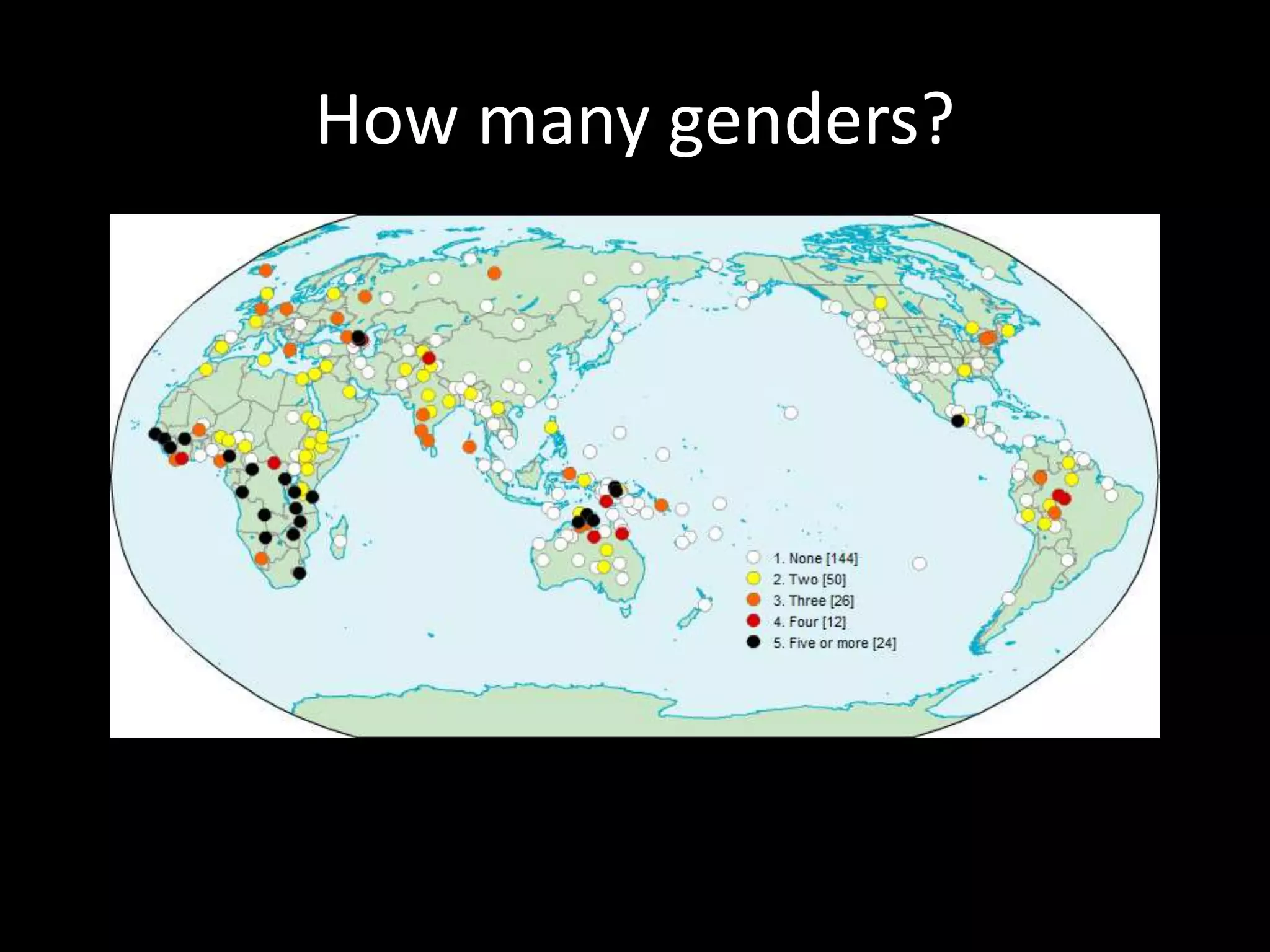
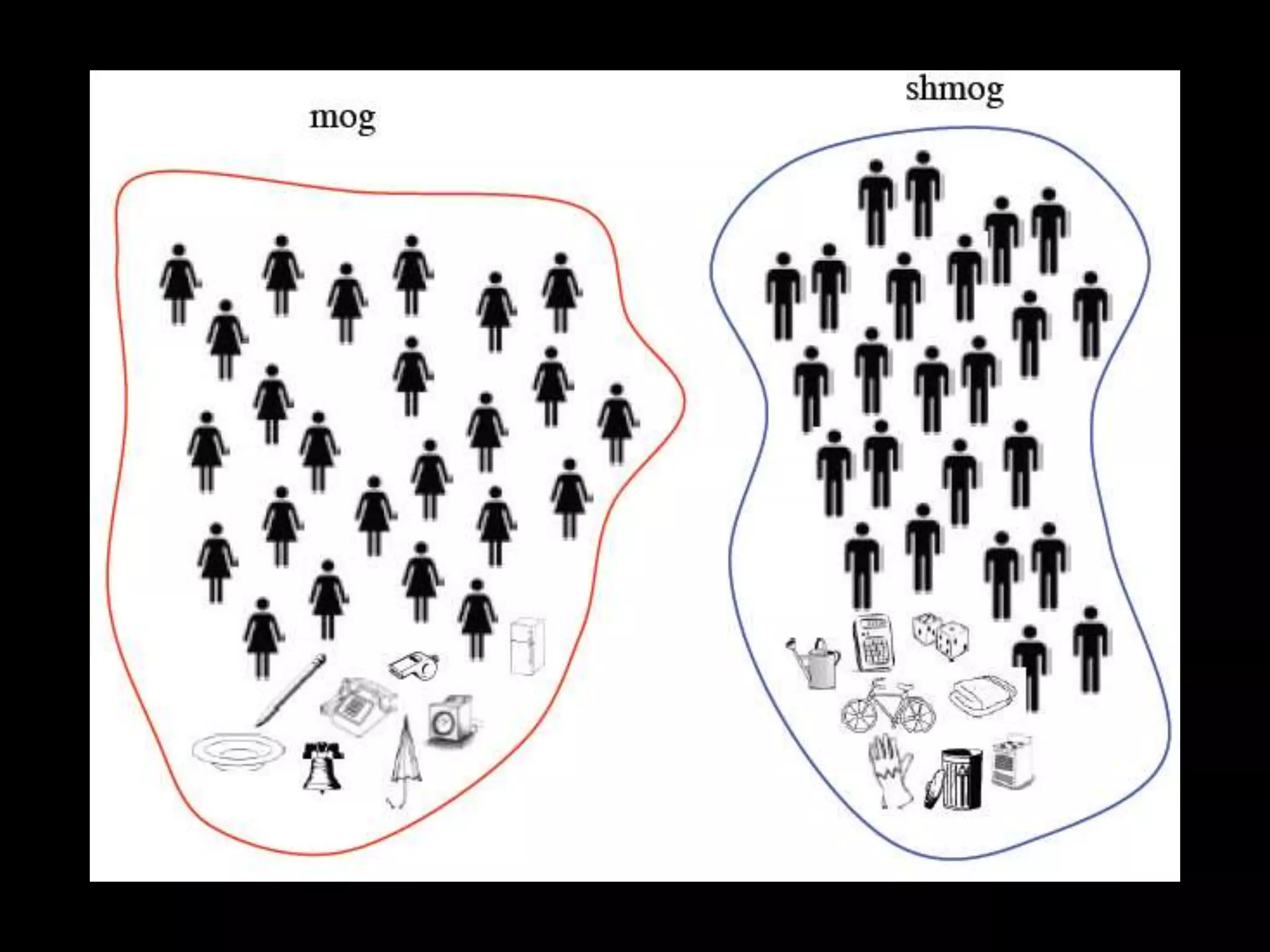
2) Languages encode gender in varied ways, sometimes dividing categories that English lumps together, like separating young women from other females. This reveals how gender is a social construct.
3) While grammatical gender alone may not determine thought, habitual patterns of thinking developed for speaking a language could still subtly influence cognition in other contexts. The impacts are debated.