Gender-Based Violence
SOCIAL WORK: MIGRATION AND REFUGEES
PREPARED BY: MAHMOUD MANDOU
SUPERVISED BY: PROF. DR. WEAL MASOUD
Community Based Interventions
in Social Work
Objectives
 Sex vs. Gender
 Gender-Based Violence
 Kinds of Power
 Ecological Model
 GBV Forms, Causes and Consequences
 Coping Mechanism
 Affected Populations
 Role of Social Worker
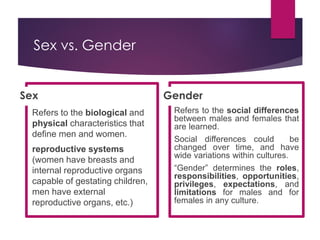
Sex vs. Gender
Refers to the biological and
physical characteristics that
define men and women.
reproductive systems
(women have breasts and
internal reproductive organs
capable of gestating children,
men have external
reproductive organs, etc.)
Sex Gender
Refers to the social differences
between males and females that
are learned.
Social differences could be
changed over time, and have
wide variations within cultures.
“Gender” determines the roles,
responsibilities, opportunities,
privileges, expectations, and
limitations for males and for
females in any culture.
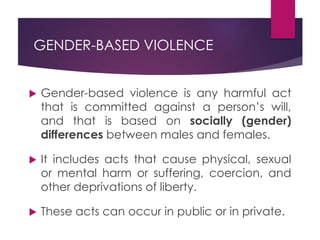
GENDER-BASED VIOLENCE
 Gender-based violence is any harmful act
that is committed against a person’s will,
and that is based on socially (gender)
differences between males and females.
 It includes acts that cause physical, sexual
or mental harm or suffering, coercion, and
other deprivations of liberty.
 These acts can occur in public or in private.
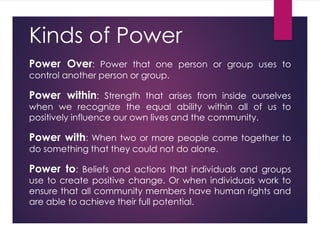
Kinds of Power
Power Over: Power that one person or group uses to
control another person or group.
Power within: Strength that arises from inside ourselves
when we recognize the equal ability within all of us to
positively influence our own lives and the community.
Power with: When two or more people come together to
do something that they could not do alone.
Power to: Beliefs and actions that individuals and groups
use to create positive change. Or when individuals work to
ensure that all community members have human rights and
are able to achieve their full potential.
Ecological Model
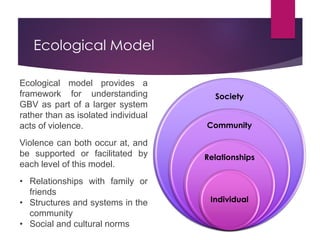
Ecological model provides a
framework for understanding
GBV as part of a larger system
rather than as isolated individual
acts of violence.
Violence can both occur at, and
be supported or facilitated by
each level of this model.
• Relationships with family or
friends
• Structures and systems in the
community
• Social and cultural norms
Society
Community
Relationships
Individual
Forms of (GBV)
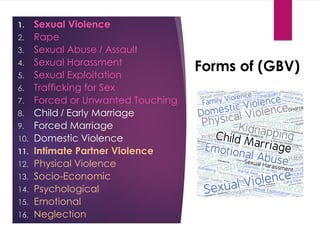
1. Sexual Violence
2. Rape
3. Sexual Abuse / Assault
4. Sexual Harassment
5. Sexual Exploitation
6. Trafficking for Sex
7. Forced or Unwanted Touching
8. Child / Early Marriage
9. Forced Marriage
10. Domestic Violence
11. Intimate Partner Violence
12. Physical Violence
13. Socio-Economic
14. Psychological
15. Emotional
16. Neglection
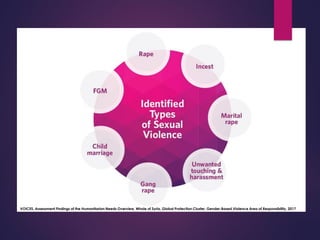
VOICES, Assessment Findings of the Humanitarian Needs Overview, Whole of Syria, Global Protection Cluster, Gender-Based Violence Area of Responsibility, 2017
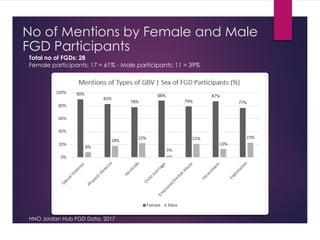
No of Mentions by Female and Male
FGD Participants
Total no of FGDs: 28
Female participants: 17 = 61% - Male participants: 11 = 39%
HNO Jordan Hub FGD Data, 2017
Causes of GBV
 Key factors
 Power Imbalances
 Religion
 Culture
 Traditions
 Gender Inequality
 Cofactors
 Alcohol and Drugs
 Conflict
 Natural Disasters
 Poverty
 Illiteracy
 Militarization
 Emergencies
 Family Separation
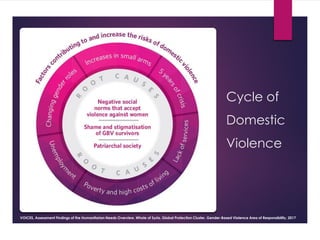
Cycle of
Domestic
Violence
VOICES, Assessment Findings of the Humanitarian Needs Overview, Whole of Syria, Global Protection Cluster, Gender-Based Violence Area of Responsibility, 2017
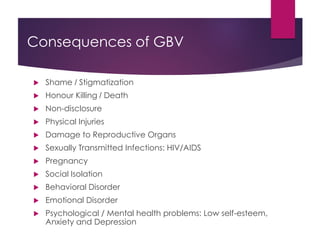
Consequences of GBV
 Shame / Stigmatization
 Honour Killing / Death
 Non-disclosure
 Physical Injuries
 Damage to Reproductive Organs
 Sexually Transmitted Infections: HIV/AIDS
 Pregnancy
 Social Isolation
 Behavioral Disorder
 Emotional Disorder
 Psychological / Mental health problems: Low self-esteem,
Anxiety and Depression
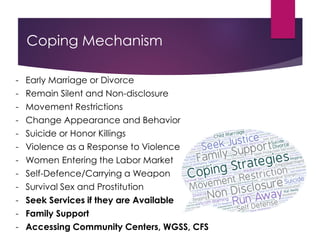
Coping Mechanism
- Early Marriage or Divorce
- Remain Silent and Non-disclosure
- Movement Restrictions
- Change Appearance and Behavior
- Suicide or Honor Killings
- Violence as a Response to Violence
- Women Entering the Labor Market
- Self-Defence/Carrying a Weapon
- Survival Sex and Prostitution
- Seek Services if they are Available
- Family Support
- Accessing Community Centers, WGSS, CFS
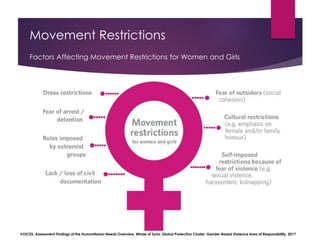
Movement Restrictions
Factors Affecting Movement Restrictions for Women and Girls
VOICES, Assessment Findings of the Humanitarian Needs Overview, Whole of Syria, Global Protection Cluster, Gender-Based Violence Area of Responsibility, 2017
“
”
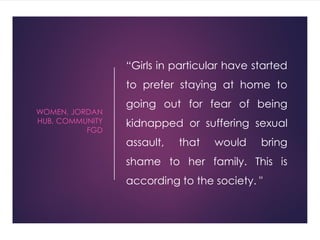
“Girls in particular have started
to prefer staying at home to
going out for fear of being
kidnapped or suffering sexual
assault, that would bring
shame to her family. This is
according to the society. "
WOMEN, JORDAN
HUB, COMMUNITY
FGD
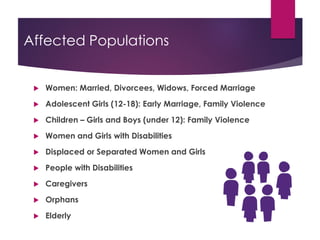
 Women: Married, Divorcees, Widows, Forced Marriage
 Adolescent Girls (12-18): Early Marriage, Family Violence
 Children – Girls and Boys (under 12): Family Violence
 Women and Girls with Disabilities
 Displaced or Separated Women and Girls
 People with Disabilities
 Caregivers
 Orphans
 Elderly
Affected Populations
Role of Social Worker
 Applying Social Work Profession Values and Ethics
 Address the Survivors Immediate Needs for Shelter and Health Care.
 Case Management
 Home Visits
 Support Reducing Risk of Further Abuse or Harm
 Be Aware of Local Laws
 Provide Information and Support the Survivor
 Influence Key Actors
 Assess the Safety Risks for the Survivors
 Help the Survivors to Identify the Supportive Persons
 Connect the Survivor to Services that will be Supportive and Useful
 Ensuring the Privacy and Confidentiality of the Survivors
 Advocacy and Research
Keep in Mind
Never Mediate a Case
Never Provide Fake Promises
THANK YOU FOR YOUR ATTENTION !
Questions?
Only for those who dare !

Gender-Based Violence

  • 1.
    Gender-Based Violence SOCIAL WORK:MIGRATION AND REFUGEES PREPARED BY: MAHMOUD MANDOU SUPERVISED BY: PROF. DR. WEAL MASOUD Community Based Interventions in Social Work
  • 2.
    Objectives  Sex vs.Gender  Gender-Based Violence  Kinds of Power  Ecological Model  GBV Forms, Causes and Consequences  Coping Mechanism  Affected Populations  Role of Social Worker
  • 3.
    Sex vs. Gender Refersto the biological and physical characteristics that define men and women. reproductive systems (women have breasts and internal reproductive organs capable of gestating children, men have external reproductive organs, etc.) Sex Gender Refers to the social differences between males and females that are learned. Social differences could be changed over time, and have wide variations within cultures. “Gender” determines the roles, responsibilities, opportunities, privileges, expectations, and limitations for males and for females in any culture.
  • 4.
    GENDER-BASED VIOLENCE  Gender-basedviolence is any harmful act that is committed against a person’s will, and that is based on socially (gender) differences between males and females.  It includes acts that cause physical, sexual or mental harm or suffering, coercion, and other deprivations of liberty.  These acts can occur in public or in private.
  • 5.
    Kinds of Power PowerOver: Power that one person or group uses to control another person or group. Power within: Strength that arises from inside ourselves when we recognize the equal ability within all of us to positively influence our own lives and the community. Power with: When two or more people come together to do something that they could not do alone. Power to: Beliefs and actions that individuals and groups use to create positive change. Or when individuals work to ensure that all community members have human rights and are able to achieve their full potential.
  • 6.
    Ecological Model Ecological modelprovides a framework for understanding GBV as part of a larger system rather than as isolated individual acts of violence. Violence can both occur at, and be supported or facilitated by each level of this model. • Relationships with family or friends • Structures and systems in the community • Social and cultural norms Society Community Relationships Individual
  • 7.
    Forms of (GBV) 1.Sexual Violence 2. Rape 3. Sexual Abuse / Assault 4. Sexual Harassment 5. Sexual Exploitation 6. Trafficking for Sex 7. Forced or Unwanted Touching 8. Child / Early Marriage 9. Forced Marriage 10. Domestic Violence 11. Intimate Partner Violence 12. Physical Violence 13. Socio-Economic 14. Psychological 15. Emotional 16. Neglection
  • 8.
    VOICES, Assessment Findingsof the Humanitarian Needs Overview, Whole of Syria, Global Protection Cluster, Gender-Based Violence Area of Responsibility, 2017
  • 9.
    No of Mentionsby Female and Male FGD Participants Total no of FGDs: 28 Female participants: 17 = 61% - Male participants: 11 = 39% HNO Jordan Hub FGD Data, 2017
  • 10.
    Causes of GBV Key factors  Power Imbalances  Religion  Culture  Traditions  Gender Inequality  Cofactors  Alcohol and Drugs  Conflict  Natural Disasters  Poverty  Illiteracy  Militarization  Emergencies  Family Separation
  • 11.
    Cycle of Domestic Violence VOICES, AssessmentFindings of the Humanitarian Needs Overview, Whole of Syria, Global Protection Cluster, Gender-Based Violence Area of Responsibility, 2017
  • 12.
    Consequences of GBV Shame / Stigmatization  Honour Killing / Death  Non-disclosure  Physical Injuries  Damage to Reproductive Organs  Sexually Transmitted Infections: HIV/AIDS  Pregnancy  Social Isolation  Behavioral Disorder  Emotional Disorder  Psychological / Mental health problems: Low self-esteem, Anxiety and Depression
  • 13.
    Coping Mechanism - EarlyMarriage or Divorce - Remain Silent and Non-disclosure - Movement Restrictions - Change Appearance and Behavior - Suicide or Honor Killings - Violence as a Response to Violence - Women Entering the Labor Market - Self-Defence/Carrying a Weapon - Survival Sex and Prostitution - Seek Services if they are Available - Family Support - Accessing Community Centers, WGSS, CFS
  • 14.
    Movement Restrictions Factors AffectingMovement Restrictions for Women and Girls VOICES, Assessment Findings of the Humanitarian Needs Overview, Whole of Syria, Global Protection Cluster, Gender-Based Violence Area of Responsibility, 2017
  • 15.
    “ ” “Girls in particularhave started to prefer staying at home to going out for fear of being kidnapped or suffering sexual assault, that would bring shame to her family. This is according to the society. " WOMEN, JORDAN HUB, COMMUNITY FGD
  • 16.
     Women: Married,Divorcees, Widows, Forced Marriage  Adolescent Girls (12-18): Early Marriage, Family Violence  Children – Girls and Boys (under 12): Family Violence  Women and Girls with Disabilities  Displaced or Separated Women and Girls  People with Disabilities  Caregivers  Orphans  Elderly Affected Populations
  • 17.
    Role of SocialWorker  Applying Social Work Profession Values and Ethics  Address the Survivors Immediate Needs for Shelter and Health Care.  Case Management  Home Visits  Support Reducing Risk of Further Abuse or Harm  Be Aware of Local Laws  Provide Information and Support the Survivor  Influence Key Actors  Assess the Safety Risks for the Survivors  Help the Survivors to Identify the Supportive Persons  Connect the Survivor to Services that will be Supportive and Useful  Ensuring the Privacy and Confidentiality of the Survivors  Advocacy and Research
  • 18.
    Keep in Mind NeverMediate a Case Never Provide Fake Promises
  • 19.
    THANK YOU FORYOUR ATTENTION ! Questions? Only for those who dare !