Reproductive Health
Background
Situation of Maternal & neonatal
health
Elements, policy, strategies and
Indicators
safe motherhood
obstetric referral system
REPRODUCTIVE HEALTH
Reproductive health (RH) is a state of
complete physical, mental and social well
being in all matters related to the
reproductive system and to its function and
processes. (ICPD, 1994)
Reproductive health therefore implies that
• People are able to have a satisfying and safe sex
life and that they have the capability to
reproduce and the freedom to decide if, when,
and how often to do so.
• The ability to minimize gynecologic disease and
risk throughout all stages of life
• In addition these, it also includes gender equity
and equality, empowerment of women and the
provision of universal access to appropriate
health services over the life cycle
• It is recognized that RH is a crucial part of overall
health and is central to human development which
affects every body; it involves intimate and highly
valued aspects of life.
• Not only is it a reflection of health in infancy,
childhood and adolescence, it also sets the
stage for health beyond the Reproductive years
for both women and men and has pronounced
effects from one generation to another.
Implicit in this last condition are the right of
men and women to be informed and have
access to safe, effective, affordable and
acceptable method of family planning of their
choices and the right to access to appropriate
health care services that will enable women to
go safely through pregnancy and childbirth
Guiding principle of Reproductive
health developed by ICPD:
• Empowerment of women
• Promote men’s participation in
• Involve women
• Women’s organization
• Integrated service
• Assure highest level of quality of care RH/FP
• Available effective methods of FP
COMPONENTS
1. Safe motherhood
2. Family planning.
3. Child health
4. Prevention and management of complications
of abortion
5. RTI/STI/HIV/AIDS
6. Prevention and management of sub fertility
7. Adolescent reproductive health
8. Problems of elderly women
9. Gender based violence
Scope of Reproductive Health
The reproductive health within the context of primary
health care includes following essential components:
• Family planning counseling, information, education,
communication and services (emphasizing the
prevention of unwanted pregnancy).
• Safe motherhood; education, and service for healthy
pregnancy, safe delivery and postnatal care including
breast feeding.
• Care of new born
• Prevention and management of complications of
abortion
Contd….
• Prevention and management of RTIs, STDs,
HIV/AIDS and other RH conditions.
• Information, education, and counseling, as
appropriate, on human sexuality, reproductive
health and responsible parenthood for
individuals, couples, and adolescent.
• Prevention and management of sub fertility
• Life-cycle issues including breast cancer, cancer of
the reproductive system and care of the elderly.
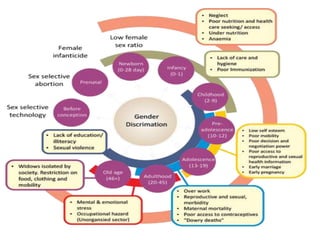
lifecycle approach
This lifecycle approach extends beyond women’s
reproductive role to encompass women’s health
at every stage and in every aspect of their lives.
Through this approach, other health issues
affecting women that were previously
overlooked, or thought not to exist, have become
more apparent.
Hereafter, the determinants and responses to
women’s health profile must consider all factors -
and not only biological ones- such as the
economic, social and cultural factors that affect
their status, as well as gender relations between
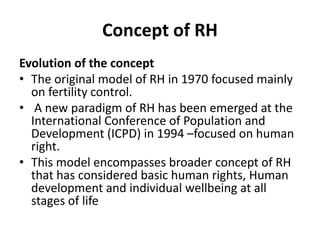
Concept of RH
Evolution of the concept
• The original model of RH in 1970 focused mainly
on fertility control.
• A new paradigm of RH has been emerged at the
International Conference of Population and
Development (ICPD) in 1994 –focused on human
right.
• This model encompasses broader concept of RH
that has considered basic human rights, Human
development and individual wellbeing at all
stages of life
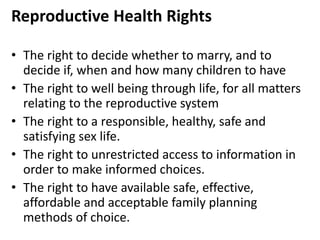
Reproductive Health Rights
• The right to decide whether to marry, and to
decide if, when and how many children to have
• The right to well being through life, for all matters
relating to the reproductive system
• The right to a responsible, healthy, safe and
satisfying sex life.
• The right to unrestricted access to information in
order to make informed choices.
• The right to have available safe, effective,
affordable and acceptable family planning
methods of choice.
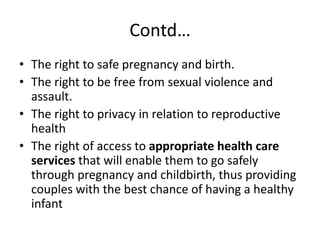
Contd…
• The right to safe pregnancy and birth.
• The right to be free from sexual violence and
assault.
• The right to privacy in relation to reproductive
health
• The right of access to appropriate health care
services that will enable them to go safely
through pregnancy and childbirth, thus providing
couples with the best chance of having a healthy
infant
Evolution of RH service in Nepal
• Family planning (private sector in 1958, public
policy in 1965.
• Family planning and MCH program in 1968 STD
and AIDS control programme in 1988. Safe
motherhood policy in 1994.
• Safe motherhood policy RH strategies in 1998
• National safe Motherhood Plan (2002-2017).
Approaches to address the RH problems
RH is not a new programme, but rather a new
approach which seeks to strengthen the existing
safe motherhood, family planning, HIV/AIDS,
STD, Child survival and nutrition programmes
with a holistic life cycle approach.
This calls for strengthening interdivisional linkages
within the department of health services as well
as between other sectors e.g. Education, and
women and development, local development at
the legal system.
National reproductive health strategy
• Implement the Integrated Reproductive Health
Package at all levels based on standardized
clinical protocols and operational guidelines.
• Enhance functional integration of RH activities
carried out by different divisions.
• Emphasize advocacy for the concept of RH
including inter and intra-sectoral collaboration.
• Review and develop IEC materials
• Review and update the existing training curricula
of various health workers.
• Ensure effective management system by
strengthening and revitalizing existing
committees at various levels.
Contd….
• Develop national RH research strategies which outlines
research priorities and work plans based on information
requirements of policy makers, planners, managers, and
service providers
• Construct /upgrade appropriate service delivery and
training facilities at the National, regional, District and
health post level.
• Institutional strengthening through structural planning,
monitoring/ Supervision and performance evaluation
review.
• Develop an appropriate RH programme for adolescents
• Support for national experts/consultants
• Promote inter-sectoral and multi-sectoral co- ordination.
Integrated health package
Based on the essential element of Comprehensive
Reproductive health Care, an integrated health care
package has been adopted for Nepal. The integrated
Reproductive health care package will include;
• Family planning
• Safe motherhood
• Child health (new born care)
• Prevention and, management of complications of abortion
• RTI/STD/HIV/AIDS
• Prevention and management of sub fertility
• Adolescent reproductive health
• Problem of elderly women, i.e. uterine prolapse, cervical
and breast cancers treatment at tertiary and private
sectors.
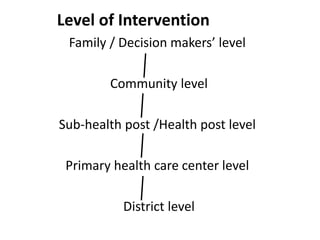
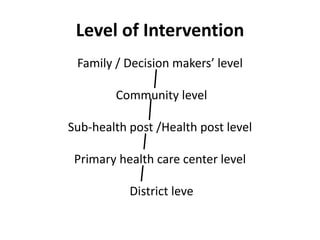
Level of Intervention
Family / Decision makers’ level
Community level
Sub-health post /Health post level
Primary health care center level
District level
Major problems related to RH
1. Maternal morbidities:
a. Immediate complications:
Sepsis, hypertensive disorders, hemorrhage etc.
b. Long term complications:
Vesicovaginal or rectovaginal fistula,
uterine prolapse,
Pelvic inflammatory diseases,
urinary or faecal incontinence.
Contd.
c. Indirect obstetric morbidity:
Resulted from diseases like anaemia, TB,
aggravated by the physiological effects of
pregnancy.
d. Psychological obstetric morbidity:
Postpartum psychosis or depression and other
mental health problems
Gynecological morbidity
Condition, disease or dysfunction of reproductive
system that is not related to pregnancy, abortion
or childbirth, but may be related to sexual
behavior.
a. Reproductive tract infection
i) STIs: Viral, bacterial, chlamydial infections,
gonorrhoea, trichomoniasis, syphilis, chancroid,
genital herpes, genital warts and HIV.
ii) Endogenous infections: overgrowth of organisms
normally present in the vagina e.g. bacterial
vaginosis and candidiasis
Contd…
III. atrogenic infections: introduction of
microorganism into the reproductive tract
through a medical procedure.
b. Endocrine or hormonal disorder: Metrorrhagia,
amenorrhea, menorrhagia, dysmenorrhoea,
oligomenorrhoeac. Infertility: WHO estimates 8-
12% of couples are infertile. causes: endocrinal
disorder, STI, puerperal sepsis, post abortion
sepsis,
c. Uterine prolaps
Contd.
e. Gynaecological cancers:
Cervical cancer
Breast cancer
Endometrial cancer
Ovarian cancer
Vaginal caner
Vulva cancer
fallopian tubes ca (rarely)
f. Sexual dysfunctiong
e. Menopausal problems
Level of Intervention
Family / Decision makers’ level
Community level
Sub-health post /Health post level
Primary health care center level
District leve
FAMILY / DICSISION MAKERSLEVEL
1. Family planning
• Need identification
• Knowledge of shops and institutions where contraceptives are
available.
2.Safe Motherhood
• Identification of pregnant woman and recognition of danger
signs
• Provide nutritious diet, supplements and adequate rest to
pregnant women.
• Encourage utilization of antenatal care services.
• Identify SBA for care during delivery.
• Birth preparedness and complication readiness including
arrangement of emergency funds and transport.
• Encourage utilization of postnatal care.
• Encourage registration of maternal death
Introduction to Safe motherhood
Motherhood should be a time of expectation and
joy for a woman, her family, and her community.
For women in developing countries, however,
the reality of motherhood is often grim. For
these women, motherhood is often marred
(Spoiled) by unforeseen complications of
pregnancy and childbirth. Some die in the prime
period of their lives and in great distress: from
hemorrhage, convulsions, obstructed labor, or
severe infection after delivery or unsafe
abortion.
Global maternal health situation
Globally, 80% of maternal deaths are due to
Direct obstetric complications such as:
• Haemorrhage (25%),
• Sepsis (15%)
• Unsafe abortion (13%)
• Hypertensive disorders of pregnancy Eclampsia (12%) and
• Obstructed labour (8%)
• Other direct causes like ectopic pregnancy, embolism, and
anaesthetic-related (7-8%) and
Indirect causes like malaria, anaemia and heart disease 20%
A mother's death carries profound consequences
not only for her family, especially her surviving
children, but also for her community and country.
In some developing countries, if the mother dies,
the risk of death for her children under age 5 is
doubled or tripled. In addition, because a woman
dies during her most productive years, her death
has a strong social and economic impact—her
family and community lose a productive worker
and a primary care giver.
Definition of safe motherhood
• Safe motherhood means ensuring that all women receive
the care they need to be safe and healthy throughout
pregnancy and childbirth and postpartum.
or
• Safe motherhood means creating the circumstances within
which a women is able to choose whether she becomes
pregnant, and if she does, ensuring that she receives care
for preventive and treatment of pregnancy complication
that she has access to trained birth assistance, and if she
needs it to emergency obstetric care, and care after birth,
to prevent death or disability from complication of
pregnancy and disability
The goal of safe mother hood is to ensure that every woman
has access to a full range of high- quality, affordable sexual
and reproductive health services, especially maternal care
and treatment of obstetric emergencies to reduce death
and disability.
Achieving Safe Motherhood Means:
• Woman should be able to become pregnant only when
they want to.
• Pregnant women should have access to high quality
prenatal care which they can afford, and where they care
treatment with respect. Prenatal should provide pregnant
women with care which has been shown to be effective,
and should also help women to plan the kind of delivery
they want and need.
• Women in labour should be cared for by someone who has
been trained to attend childbirth, whether this an
obstetrical doctor, nurse, midwife. All of these health
professionals have an important role in safe motherhood.
• Even healthy women can have complications and when
they do they need rapid access to high quality care. Note
that this requirement has two components-the care should
be of high quality and women have to be able to it and
afford it.
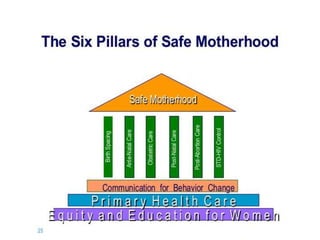
Pillars of safe motherhood
• Safe motherhood program should have following
six components. These components are also
called six pillars of safe motherhood. These six
pillars are not new topics but these should be
implemented in integrated approach especially
through primary health care approach and rest
on a foundation of greater equity for women.
• The basic principles of safe motherhood are
neither new nor controversial. They are
considered the “six pillars” of safe motherhood:
1. Family Planning-to ensure that individuals and couples
have the information and services to plan the timing,
number, and spacing of pregnancies.
2. Antenatal Care-to provide vitamin supplements,
vaccinations, and screen for risk factors in order to
prevent complications where possible, and to ensure
that complications of pregnancy are detected early and
treated appropriately.
3. Obstetric Care-to ensure that all birth attendants have
the knowledge, skills, and equipment to perform a clean
and safe delivery, and to ensure that emergency care for
high-risk pregnancies and complications is made
available to all women who need it.
4. Postnatal Care-to ensure that postpartum care is provided
to mother and baby, including lactation assistance,
provision of family planning services, and managing danger
signs.
5. Post abortion Care-to prevent complications where
possible and ensure that complications of abortion are
detected early and treated appropriately; to refer other
reproductive health problems; and to provide family
planning methods as needed.
6. STD/HIV/AIDS Control-to screen, prevent, and manage
transmission to baby; to assess risk for future infection; to
provide voluntary counseling and testing; to encourage
prevention; and where appropriate to expand services to
address mother to child transmission.
The Safe Motherhood Initiative
The Safe Motherhood Initiative emerged as a powerful
campaign for women’s health. It highlighted the potential
for improved care for pregnant women and better
functioning health services to reduce the burden of
maternal and newborn ill-health.
Global safe motherhood initiative was lunched at an
International conference held in Nairob, Keny in 1987.
Its aim was to draw attention to the dimension and
consequences of poor maternal health in developing
countries and to mobilize action to address high rate of
death and disability caused by complication of pregnancy
and childbirth.
The goal set out by initiative, and later adopted at
several United Nations conferences, was
-to reduce maternal mortality by half by the year
2000.
in this particular issue, commitment was done to
strive for reducing the mortality and morbidity
related to pregnancy and childbirth.
This commitment was reinforced in the ICPD
conference held in Cairo in 1994 where in
addition to the call to reduce maternal mortality
and morbidity by at least 50% by the turn of
century, safe motherhood (SM) was recognized as
one of the key component of reproductive health.
Global Safe Motherhood Policy
Traditional Approach
• Training of TBAs and
Community Health
Workers
• Primary health care
(Community based
approach)
• Focus on ANC
• Focused on child
care “Where is “M”
in MCH?
• Empowerment of
Community
Modern approach
• Training of SBAs
• EmOCs technology with community
midwives services and referrals
(Health System Development)
• Continuum of care from pre-
pregnancy through pregnancy,
childbirth and the postnatal period
into infancy and child
• Focus on both Maternal and
Neonatal Health
• Empowerment of Community,
families and Individuals of Eight
summit meeting in Japan next year.
Three Delays Model* which identifies three
groups of factors which may stop women and
girls accessing the maternal health care they
need:
1: Delay in decision to seek care
2: Delay in reaching care
3: Delay in receiving adequate health care
1: Delay in decision to seek care due to
• The low status of women
• Poor understanding of complications and risk
factors in pregnancy and when to seek
medical help
• Previous poor experience of health care
• Acceptance of maternal death
• Financial implications
2: Delay in reaching care due to;
• Distance to health centres and hospitals
• Availability of and cost of transportation
• Poor roads and infrastructure
• Geography e.g. mountainous terrain, rivers
3: Delay in receiving adequate health care due to;
• Poor facilities and lack of medical supplies
• Inadequately trained and poorly motivated medical
staff
• Inadequate referral systems
Safe motherhood initiative in Nepal
The safe motherhood programme is one of the priority
programmes of Nepal
The primary objectives of the National health policy (1991)
was to reduce maternal and neonatal mortality.
The safe motherhood approach has been adopted for
improving maternal health in a holistic way; therefore the
National maternity care guideline (NMCG) were developed
and published in 1996.
NMCG defines basic care for women and newborn during
pregnancy, delivery and postnatal period at all levels.
The establishment of safe motherhood Task force and
development of the National Safe Motherhood Plan of
Action (1994-97) demonstrated step towards improving
maternal health status in Nepal.
• 1994-97 SM policy document also gives very
high priority to improve maternal and neonatal
health status of the nation.
• In 1998, MoHP published the reproductive
Health strategy, which includes safe
motherhood in the integrated RH care package
• FHD initiated the maternal and morbidity
morbidity Study (MMMS) in 1998 is a landmark
study, which highlighted the magnitude of the
problem of the causes of maternal mortality in
the country and galvanized the attention and
resources for access to quality maternal health
services.
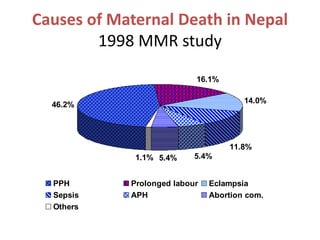
Causes of Maternal Death in Nepal
1998 MMR study
46.2%
16.1%
14.0%
11.8%
5.4%
5.4%
1.1%
PPH Prolonged labour Eclampsia
Sepsis APH Abortion com.
Others
This study gave a better understanding of the
causes of maternal deaths to be:
71% by direct causes (PPH 46.2%, obstructed
labou16.1%, eclampsia14%, puerperal sepsis
11.8% APH 5.4%and abortion 5.4% and other
direct causes 1.1
29% by indirect causes
Places of Maternal Death
68% home
11% on the way
21% in the health institutions.
Note: Most of the deaths occurs in the community 79% (68% at
home & 11% on the way)
Period of Maternal Death
Antenatal -28%
Natal - 10%
Post natal -62%
With 90% of the deliveries occurring at home
Only 9.9 % of the deliveries are attended by trained health
personnel
MMM study2008/09
• The 2006 Nepal Demographic and Health Survey (NDHS,
2006) indicated a substantial reduction in the MMR, to
281 deaths per 100,000 live births, indicating a degree of
success in safe motherhood efforts,
but also generating a good deal of discussion and debate
regarding levels of and factors affecting maternal
mortality in Nepal.
This 2008/09 MMM study was therefore initiated to further
investigate the story behind the maternal mortality
changes seen over the past 10 years, and to explore and
identify contributory factors and their relative
importance in different parts of the country.
The study will inform policy makers and programme
managers to help bolster and refocus the national effort
to avert maternal deaths.
• In 2008/9 Maternal morbidity and Mortality
Survey(MMMS) was carried out over the one
year period 13April 2008 to 13th April 2009
during which all death of the women of
reproductive are who are usually residing of
the 8 districts was done. This districts are
Sunsari, Rupandehi, Kailali, Okhaldhunga,
balglung, Surkhre, Rasuwa and jumla.
According to this MMMS Maternal health
situation of Nepal:
• The maternal Mortality Ratio (MMR) for Nepal is
281 deaths per 100000 lives births (NDHS 2006)
• The maternal Mortality Ratio (MMR) for Nepal is
229 deaths per 100000 lives births (MMMS 2008/9)
• A 2012 UN report estimated the 2010 MMR at 170
• Maternal causes accounted for 11% of all deaths of
women of reproductive age,
• There has been a dramatic increase in the
contribution of suicide (16%) to deaths of women
of reproductive age,
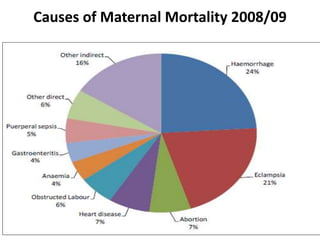
Causes of Maternal Mortality 2008/09
Maternal mortality and morbidity study reported that the
Direct causes of maternal mortality is 69% which are:
• Hemorrhage – 24% (APH5%, PPH 19%)
• Pre-eclampsia/eclampsia – 21%
• Abortion complications – 7 %
• Obstructed labour – 6 %
• Puerperal sepsis – 5%
• Others – 6%
Indirect cause of maternal Death - 31%
• Heart disease -7%
• Anaemia – 4%
• Gastroenteritis – 4%
• Other indirect -16%
The study also reported that the percentage of maternal death
during pregnancy, childbirth and puerperium are as follows
• Antepartum- 34%
• Intrapartum and up to 48 hours afterwards of delivery– 39% (24%
within 24 hours )
• Post partum – 28%)
The survey reported that among all the maternal deaths occur;
• At health facilities – 41% ( among then 46% public facility)
• At home own delivery – 40 %
• On the way– 14 %
-Transit from home to facilities – 7%
-Transit to facilities to facilities – 2%
-Transit to facilities to home – 5%
• Pharmacy -1%
• Home provider – 1%
• Others - 2%
Definition of maternity and obstetrical care
1. Basic Maternity Care
All pregnant women should receive basic maternal care.
What is Basic Maternity Care?
1. Antenatal care
2. Safe Delivery
3. Postnatal Care
4. Preventive measures
- Screening for anemia in pregnancy, treatment, referral
- Control of anemia in pregnancy (hookworm) and Malaria
- Dietary modification and Iron/Folate supplementation
5. Referral during antenatal, delivery and postnatal in case of
emergency care
6. Simple Measures (uterine massage, breast feeding) to
prevent post partum hemorrhage
2. Essential Obstetric Care
• Essential obstetric care is needed to those (approximately
40%) of all pregnant women who will develop complication
during pregnancy.
What is Essential Obstetric Care?
Essential Obstetric Care is the term used to describe the
elements of obstetric care needed for the management of
both normal and complicated pregnancy, delivery and post
partum period. Essential Obstetric care includes normal
care, basic emergency obstetrical care and comprehensive
emergency obstetric care.
Why Essential Obstetric Care
Ensuring access to essential obstetric care is especially
important in reducing maternal deaths.
3. Emergency Obstetric Care
Emergency Obstetric Care
15% of all pregnant women develop serious complication
and they require life-saving access (BEmOC and CEmOC) to
quality obstetric services.
What is emergency obstetric care
Emergency obstetric care refers to a series of signal
(indication) functions performed in health-care facilities
that can ensure timely access to care for women
experiencing Complications and prevent the death of a
woman who experiencing complications of pregnancy.
EmOC is a response to complications and is not standard
practice for all deliveries. The emergency obstetric care
functions are often divided into two categories:
Types of Emergency Obstetrical Care
I. Basic Emergency obstetrical care (BEmOC)
II. Comprehensive Emergency obstetric care (CEmOC)
OR
I. Basic Emergency obstetrical & neonatal care (BEmONC)
II. Comprehensive Emergency obstetric & neonatal care
(CEmONC)
Note: the term BEmOC and CEmOC replaceed by the term
BEmONC and CEmONC Because neonatal component
also have added in it
• Emergency obstetric and newborn care
(EmONC) is a package of medical interventions
to treat life-threatening complications during
pregnancy and childbirth. These services can
save the lives of the estimated 280,000
women and 3 million newborns who die
annually during pregnancy, childbirth, and the
postpartum period. Millions of disabling
conditions can also be prevented through
timely and effective EmONC.
Emergency obstetric care (EmOC) includes urgent
services to prevent maternal death (e.g., access to
essential pharmaceuticals, including antibiotics,
anticonvulsants, and uterotonics). EmOC has been
the primary focus of international research and
program development.
Emergency newborn care (EmNC) is a package of
life saving measures for newborns (e.g., clean cord
care and neonatal resuscitation).
Emergency obstetric and newborn care recognizes
the paradigm shift from care for mothers and
newborns independently, to a package of services
provided to the maternal-infant dyad.
Basic EmONC
Basic EmONC, Basic emergency obstetric and
newborn care (BEmONC) is defined as seven
essential medical interventions, or ‘signal
functions,’ that treat the major causes of
maternal and newborn morbidity and mortality,
which can be provided at a health centre by a
nurse, midwife or doctor without the need for an
operating theatre.
Seven essential medical interventions at
• Injectable oxytocins – to prevent and manage PPH.
• Injectable antibiotics – to treat infection
• Injectable sedatives/anticonvulsant – to prevent and manage
eclampsia/pre-eclampsia
• Manual removal of Placenta – to manage retained placenta
• Post Abortion Care (D and C and MVA) – to manage abortion
complications
• Instrumental delivery (Forceps/Vacuum) – to mange prolong
labour (Assisted vaginal delivery)
• Clean cord care and neonatal resuscitation
Other interventions
• IV infusion for to treat shock
• Ante hypertensive to manage hypertension in
pregnancy
Comprehensive EmONC
It is usually performed in district hospitals (first referral level)
CEmONC facilities should be able to provide :
• All BEmONC level care plus following Care;
• It refers to the ability to perform a more complex surgical
intervention, such as: Caesarean section to relieve
obstructed labour
• It requires an operating theatre for Operative delivery
under anesthesia,
• It also requires the ability to administer blood
transfusions to treat life threatening haemorrhages.
This requires the ability to safely collect, screen and
store blood.
• Neonatal intubation, advanced resuscitation and
respirator available
Prevalence:
Essential components of EmONC have been
widely accessible in developed countries for
decades. However, in low-income countries,
where 99% of maternal and neonatal deaths
occur, health systems may not have the capacity
to provide such emergency services. Therefore,
EmONC is viewed as a human rights issue in
health system preparedness, and a high-level
priority in the maternal health community for the
post-2015 global agenda.
Barriers identified EmONC program. These include,
but are not limited to:
• Inadequate training/skills mix to deliver high-quality
EmONC
• Drug procurement challenges and logistical problems
in health facilities;
• Personnel shortages and lack of equipment,
particularly to deliver CEmONC
• Referral coordination from multiple sectors with
competing interests, including health systems,
infrastructure and public works, transportation,
information and communication technologies;
• and, marginalized women’s health and rights through
restrictive policies.
Barriers must be overcome by following ways in order to institute
a successful:
• Improving the availability of services is a crucial first step in
accessing EmONC.
• In many cases only limited inputs are needed to expand existing
health facilities and enable them to provide EmOC services. These
interventions may include renovating an existing operating
theatre or equipping a new one
• Repairing or purchasing surgical and sterilization equipment
• Converting unused facilities within hospitals or health centres
• Training doctors and nurses in life-saving interventions
• Improving health services management. This includes ensuring
adequate training and distribution of personnel and reliable
access to equipment and supplies.
• It also means promoting monitoring and evaluation and
continuing improvement in the quality of existing services, as well
as ensuring that services are used by women and their families.
Current evidence-based recommendations: The following
evidence-based strategies can facilitate then development of
EmONC programs in weak health systems:
• Upgrade existing facilities emergency obstetric and neonatal
services to include the core signal functions of the EmONC
package;
• Bolster communities to demand improved EmONC in health
facilities, build local transportation networks, and monitor
the quality of care provided;
• Improve the monitoring and evaluation of EmONC programs
through implementing evidence-based, universal indicators;
• Target health policy reform at the local and national levels, in
order to increase funding and rigorous evaluation of EmONC
interventions;
• Advocate for EmONC as a health and human rights priority in
the post-2015 global agenda.
Identification of risk and obstetrical referral
system
The risk approach
• The risk assessment approach, introduce in the late 1970s
continue to be widely practiced. Health provider classified
pregnant women as "high risk" those who have greater
chances of developing complications in the current pregnancy
– based on physical characteristics and medical history ( too
young, too old, too short, number of previous
pregnancy).Those identify as risk are referred to a hospital for
medical care and for their delivery.
• A thorough review of data from around the world shows that
risk assessment does not predict who will and who will not
have an obstetrical emergency.
• It failed to diagnosed
Evidence suggested that the risk approach has
failed because:
• The majority of women who experience an
obstetrical emergency are assessed as not as risk.
• It failed to distinguish who will develop
complications and who will not
• Many women categorized as low risk to develop
complications but are never told how to recognize or
respond to them.
• Many women identified as at risk never developed
complications but utilize scarce resources (e.g.
mandated hospital deliveries for women who don't
really need them.
• Identification of special medical needs does not
guarantee appropriate action at the referral site
• The risk approach, adopted a way of identifying
women who are most likely to develop serious
complications, has been shown to have only
limited effectiveness that did not help in
decreasing maternal mortality.
• Evidence has shown that most women, who may
develop life threatening complications, have no
apparent risk factors, where as those identified as
being at risk generally end up with an uneventful
delivery.
The situation is calling out for a transition in our ANC
paradigm
• Recognize that "Every pregnancy is at risk"
• Ensure that we use ANC as an opportunity to
detect and treat existing problems.
• Ensure that services are available to respond to
obstetric emergencies when they occur
• Prepare women and their families for the
possibility of an emergency.
• The key to effective ANC is to use our powers
observation to really look at the condition of
each pregnant woman, use simple and effective
tests, and treat existing problem on the spot
rather than trying to gaze into a crystal ball and
predict who will have a complications.
Obstetrical referral system
Too often, referrals are understood as cases admitted
in the referral facility. At the other end of chain, a
referral means that advice has been given to a
patient to consult elsewhere, whether the patient
benefited from a higher level of care or not.
A referral should rather be conceptualized as an active
process, which begins at the doorstep of the
patient's household and which is theory would end
at the same place, after a transitory journey to the
referral facility.
Since in developing countries many deliveries still take
place at home most emergency referrals are self
referrals (decided by the patient her family, or a
community agent).
• Institutional referrals are those resulting from
professional advice, and should be ideally coupled with
first aid obstetric care for stabilizing the patient.
• For health managers, an effective referral should means
more than a life saved. Many painful and permanently
disabling morbidities, neonatal and infant death, and
consequents social suffering, can be avoided by effective
referrals.
• The ideal hospital would be a 24 hours-service facility,
with skilled staff, and adequate equipment, drugs etc
offering a numbers of medical interventions.
• However for a women and her community, geographical
accessibility, affordability, and perceived quality of care of
hospital based services are important determinants of an
effective referral.
• Any attempt to measure referral effectiveness must take
those criteria into account.
What do we mean by obstetric emergencies, and who should be
referred?
By obstetrical emergencies means, life threatening conditions
resulting from a pregnancy, whether before during or after
deliveries. It is commonly agreed that approximately 15% of all
pregnant women will develop serious complications.
Estimated average interval from onset of complication to death
for major obstetrical complication.
Complications Average time to death
• Antepartum haemorrhage 12 hours
• Post partum haemorrhage 2
hours
• Rupture uterus 1 day
• Eclapsia 2 days
• Obstructed labor 3days
• Puerperal sepsis 6 days

1 reproductive health

  • 1.
    Reproductive Health Background Situation ofMaternal & neonatal health Elements, policy, strategies and Indicators safe motherhood obstetric referral system
  • 2.
    REPRODUCTIVE HEALTH Reproductive health(RH) is a state of complete physical, mental and social well being in all matters related to the reproductive system and to its function and processes. (ICPD, 1994)
  • 3.
    Reproductive health thereforeimplies that • People are able to have a satisfying and safe sex life and that they have the capability to reproduce and the freedom to decide if, when, and how often to do so. • The ability to minimize gynecologic disease and risk throughout all stages of life • In addition these, it also includes gender equity and equality, empowerment of women and the provision of universal access to appropriate health services over the life cycle
  • 4.
    • It isrecognized that RH is a crucial part of overall health and is central to human development which affects every body; it involves intimate and highly valued aspects of life. • Not only is it a reflection of health in infancy, childhood and adolescence, it also sets the stage for health beyond the Reproductive years for both women and men and has pronounced effects from one generation to another.
  • 5.
    Implicit in thislast condition are the right of men and women to be informed and have access to safe, effective, affordable and acceptable method of family planning of their choices and the right to access to appropriate health care services that will enable women to go safely through pregnancy and childbirth
  • 6.
    Guiding principle ofReproductive health developed by ICPD: • Empowerment of women • Promote men’s participation in • Involve women • Women’s organization • Integrated service • Assure highest level of quality of care RH/FP • Available effective methods of FP
  • 7.
    COMPONENTS 1. Safe motherhood 2.Family planning. 3. Child health 4. Prevention and management of complications of abortion 5. RTI/STI/HIV/AIDS 6. Prevention and management of sub fertility 7. Adolescent reproductive health 8. Problems of elderly women 9. Gender based violence
  • 8.
    Scope of ReproductiveHealth The reproductive health within the context of primary health care includes following essential components: • Family planning counseling, information, education, communication and services (emphasizing the prevention of unwanted pregnancy). • Safe motherhood; education, and service for healthy pregnancy, safe delivery and postnatal care including breast feeding. • Care of new born • Prevention and management of complications of abortion
  • 9.
    Contd…. • Prevention andmanagement of RTIs, STDs, HIV/AIDS and other RH conditions. • Information, education, and counseling, as appropriate, on human sexuality, reproductive health and responsible parenthood for individuals, couples, and adolescent. • Prevention and management of sub fertility • Life-cycle issues including breast cancer, cancer of the reproductive system and care of the elderly.
  • 10.
    lifecycle approach This lifecycleapproach extends beyond women’s reproductive role to encompass women’s health at every stage and in every aspect of their lives. Through this approach, other health issues affecting women that were previously overlooked, or thought not to exist, have become more apparent. Hereafter, the determinants and responses to women’s health profile must consider all factors - and not only biological ones- such as the economic, social and cultural factors that affect their status, as well as gender relations between
  • 12.
    Concept of RH Evolutionof the concept • The original model of RH in 1970 focused mainly on fertility control. • A new paradigm of RH has been emerged at the International Conference of Population and Development (ICPD) in 1994 –focused on human right. • This model encompasses broader concept of RH that has considered basic human rights, Human development and individual wellbeing at all stages of life
  • 13.
    Reproductive Health Rights •The right to decide whether to marry, and to decide if, when and how many children to have • The right to well being through life, for all matters relating to the reproductive system • The right to a responsible, healthy, safe and satisfying sex life. • The right to unrestricted access to information in order to make informed choices. • The right to have available safe, effective, affordable and acceptable family planning methods of choice.
  • 14.
    Contd… • The rightto safe pregnancy and birth. • The right to be free from sexual violence and assault. • The right to privacy in relation to reproductive health • The right of access to appropriate health care services that will enable them to go safely through pregnancy and childbirth, thus providing couples with the best chance of having a healthy infant
  • 15.
    Evolution of RHservice in Nepal • Family planning (private sector in 1958, public policy in 1965. • Family planning and MCH program in 1968 STD and AIDS control programme in 1988. Safe motherhood policy in 1994. • Safe motherhood policy RH strategies in 1998 • National safe Motherhood Plan (2002-2017).
  • 16.
    Approaches to addressthe RH problems RH is not a new programme, but rather a new approach which seeks to strengthen the existing safe motherhood, family planning, HIV/AIDS, STD, Child survival and nutrition programmes with a holistic life cycle approach. This calls for strengthening interdivisional linkages within the department of health services as well as between other sectors e.g. Education, and women and development, local development at the legal system.
  • 17.
    National reproductive healthstrategy • Implement the Integrated Reproductive Health Package at all levels based on standardized clinical protocols and operational guidelines. • Enhance functional integration of RH activities carried out by different divisions. • Emphasize advocacy for the concept of RH including inter and intra-sectoral collaboration. • Review and develop IEC materials • Review and update the existing training curricula of various health workers. • Ensure effective management system by strengthening and revitalizing existing committees at various levels.
  • 18.
    Contd…. • Develop nationalRH research strategies which outlines research priorities and work plans based on information requirements of policy makers, planners, managers, and service providers • Construct /upgrade appropriate service delivery and training facilities at the National, regional, District and health post level. • Institutional strengthening through structural planning, monitoring/ Supervision and performance evaluation review. • Develop an appropriate RH programme for adolescents • Support for national experts/consultants • Promote inter-sectoral and multi-sectoral co- ordination.
  • 19.
    Integrated health package Basedon the essential element of Comprehensive Reproductive health Care, an integrated health care package has been adopted for Nepal. The integrated Reproductive health care package will include; • Family planning • Safe motherhood • Child health (new born care) • Prevention and, management of complications of abortion • RTI/STD/HIV/AIDS • Prevention and management of sub fertility • Adolescent reproductive health • Problem of elderly women, i.e. uterine prolapse, cervical and breast cancers treatment at tertiary and private sectors.
  • 20.
    Level of Intervention Family/ Decision makers’ level Community level Sub-health post /Health post level Primary health care center level District level
  • 21.
    Major problems relatedto RH 1. Maternal morbidities: a. Immediate complications: Sepsis, hypertensive disorders, hemorrhage etc. b. Long term complications: Vesicovaginal or rectovaginal fistula, uterine prolapse, Pelvic inflammatory diseases, urinary or faecal incontinence.
  • 22.
    Contd. c. Indirect obstetricmorbidity: Resulted from diseases like anaemia, TB, aggravated by the physiological effects of pregnancy. d. Psychological obstetric morbidity: Postpartum psychosis or depression and other mental health problems
  • 23.
    Gynecological morbidity Condition, diseaseor dysfunction of reproductive system that is not related to pregnancy, abortion or childbirth, but may be related to sexual behavior. a. Reproductive tract infection i) STIs: Viral, bacterial, chlamydial infections, gonorrhoea, trichomoniasis, syphilis, chancroid, genital herpes, genital warts and HIV. ii) Endogenous infections: overgrowth of organisms normally present in the vagina e.g. bacterial vaginosis and candidiasis
  • 24.
    Contd… III. atrogenic infections:introduction of microorganism into the reproductive tract through a medical procedure. b. Endocrine or hormonal disorder: Metrorrhagia, amenorrhea, menorrhagia, dysmenorrhoea, oligomenorrhoeac. Infertility: WHO estimates 8- 12% of couples are infertile. causes: endocrinal disorder, STI, puerperal sepsis, post abortion sepsis, c. Uterine prolaps
  • 25.
    Contd. e. Gynaecological cancers: Cervicalcancer Breast cancer Endometrial cancer Ovarian cancer Vaginal caner Vulva cancer fallopian tubes ca (rarely) f. Sexual dysfunctiong e. Menopausal problems
  • 26.
    Level of Intervention Family/ Decision makers’ level Community level Sub-health post /Health post level Primary health care center level District leve
  • 27.
    FAMILY / DICSISIONMAKERSLEVEL 1. Family planning • Need identification • Knowledge of shops and institutions where contraceptives are available. 2.Safe Motherhood • Identification of pregnant woman and recognition of danger signs • Provide nutritious diet, supplements and adequate rest to pregnant women. • Encourage utilization of antenatal care services. • Identify SBA for care during delivery. • Birth preparedness and complication readiness including arrangement of emergency funds and transport. • Encourage utilization of postnatal care. • Encourage registration of maternal death
  • 28.
    Introduction to Safemotherhood Motherhood should be a time of expectation and joy for a woman, her family, and her community. For women in developing countries, however, the reality of motherhood is often grim. For these women, motherhood is often marred (Spoiled) by unforeseen complications of pregnancy and childbirth. Some die in the prime period of their lives and in great distress: from hemorrhage, convulsions, obstructed labor, or severe infection after delivery or unsafe abortion.
  • 29.
    Global maternal healthsituation Globally, 80% of maternal deaths are due to Direct obstetric complications such as: • Haemorrhage (25%), • Sepsis (15%) • Unsafe abortion (13%) • Hypertensive disorders of pregnancy Eclampsia (12%) and • Obstructed labour (8%) • Other direct causes like ectopic pregnancy, embolism, and anaesthetic-related (7-8%) and Indirect causes like malaria, anaemia and heart disease 20%
  • 30.
    A mother's deathcarries profound consequences not only for her family, especially her surviving children, but also for her community and country. In some developing countries, if the mother dies, the risk of death for her children under age 5 is doubled or tripled. In addition, because a woman dies during her most productive years, her death has a strong social and economic impact—her family and community lose a productive worker and a primary care giver.
  • 31.
    Definition of safemotherhood • Safe motherhood means ensuring that all women receive the care they need to be safe and healthy throughout pregnancy and childbirth and postpartum. or • Safe motherhood means creating the circumstances within which a women is able to choose whether she becomes pregnant, and if she does, ensuring that she receives care for preventive and treatment of pregnancy complication that she has access to trained birth assistance, and if she needs it to emergency obstetric care, and care after birth, to prevent death or disability from complication of pregnancy and disability The goal of safe mother hood is to ensure that every woman has access to a full range of high- quality, affordable sexual and reproductive health services, especially maternal care and treatment of obstetric emergencies to reduce death and disability.
  • 32.
    Achieving Safe MotherhoodMeans: • Woman should be able to become pregnant only when they want to. • Pregnant women should have access to high quality prenatal care which they can afford, and where they care treatment with respect. Prenatal should provide pregnant women with care which has been shown to be effective, and should also help women to plan the kind of delivery they want and need. • Women in labour should be cared for by someone who has been trained to attend childbirth, whether this an obstetrical doctor, nurse, midwife. All of these health professionals have an important role in safe motherhood. • Even healthy women can have complications and when they do they need rapid access to high quality care. Note that this requirement has two components-the care should be of high quality and women have to be able to it and afford it.
  • 33.
    Pillars of safemotherhood • Safe motherhood program should have following six components. These components are also called six pillars of safe motherhood. These six pillars are not new topics but these should be implemented in integrated approach especially through primary health care approach and rest on a foundation of greater equity for women. • The basic principles of safe motherhood are neither new nor controversial. They are considered the “six pillars” of safe motherhood:
  • 35.
    1. Family Planning-toensure that individuals and couples have the information and services to plan the timing, number, and spacing of pregnancies. 2. Antenatal Care-to provide vitamin supplements, vaccinations, and screen for risk factors in order to prevent complications where possible, and to ensure that complications of pregnancy are detected early and treated appropriately. 3. Obstetric Care-to ensure that all birth attendants have the knowledge, skills, and equipment to perform a clean and safe delivery, and to ensure that emergency care for high-risk pregnancies and complications is made available to all women who need it.
  • 36.
    4. Postnatal Care-toensure that postpartum care is provided to mother and baby, including lactation assistance, provision of family planning services, and managing danger signs. 5. Post abortion Care-to prevent complications where possible and ensure that complications of abortion are detected early and treated appropriately; to refer other reproductive health problems; and to provide family planning methods as needed. 6. STD/HIV/AIDS Control-to screen, prevent, and manage transmission to baby; to assess risk for future infection; to provide voluntary counseling and testing; to encourage prevention; and where appropriate to expand services to address mother to child transmission.
  • 37.
    The Safe MotherhoodInitiative The Safe Motherhood Initiative emerged as a powerful campaign for women’s health. It highlighted the potential for improved care for pregnant women and better functioning health services to reduce the burden of maternal and newborn ill-health. Global safe motherhood initiative was lunched at an International conference held in Nairob, Keny in 1987. Its aim was to draw attention to the dimension and consequences of poor maternal health in developing countries and to mobilize action to address high rate of death and disability caused by complication of pregnancy and childbirth.
  • 38.
    The goal setout by initiative, and later adopted at several United Nations conferences, was -to reduce maternal mortality by half by the year 2000. in this particular issue, commitment was done to strive for reducing the mortality and morbidity related to pregnancy and childbirth. This commitment was reinforced in the ICPD conference held in Cairo in 1994 where in addition to the call to reduce maternal mortality and morbidity by at least 50% by the turn of century, safe motherhood (SM) was recognized as one of the key component of reproductive health.
  • 39.
    Global Safe MotherhoodPolicy Traditional Approach • Training of TBAs and Community Health Workers • Primary health care (Community based approach) • Focus on ANC • Focused on child care “Where is “M” in MCH? • Empowerment of Community Modern approach • Training of SBAs • EmOCs technology with community midwives services and referrals (Health System Development) • Continuum of care from pre- pregnancy through pregnancy, childbirth and the postnatal period into infancy and child • Focus on both Maternal and Neonatal Health • Empowerment of Community, families and Individuals of Eight summit meeting in Japan next year.
  • 40.
    Three Delays Model*which identifies three groups of factors which may stop women and girls accessing the maternal health care they need: 1: Delay in decision to seek care 2: Delay in reaching care 3: Delay in receiving adequate health care
  • 41.
    1: Delay indecision to seek care due to • The low status of women • Poor understanding of complications and risk factors in pregnancy and when to seek medical help • Previous poor experience of health care • Acceptance of maternal death • Financial implications
  • 42.
    2: Delay inreaching care due to; • Distance to health centres and hospitals • Availability of and cost of transportation • Poor roads and infrastructure • Geography e.g. mountainous terrain, rivers 3: Delay in receiving adequate health care due to; • Poor facilities and lack of medical supplies • Inadequately trained and poorly motivated medical staff • Inadequate referral systems
  • 43.
    Safe motherhood initiativein Nepal The safe motherhood programme is one of the priority programmes of Nepal The primary objectives of the National health policy (1991) was to reduce maternal and neonatal mortality. The safe motherhood approach has been adopted for improving maternal health in a holistic way; therefore the National maternity care guideline (NMCG) were developed and published in 1996. NMCG defines basic care for women and newborn during pregnancy, delivery and postnatal period at all levels. The establishment of safe motherhood Task force and development of the National Safe Motherhood Plan of Action (1994-97) demonstrated step towards improving maternal health status in Nepal.
  • 44.
    • 1994-97 SMpolicy document also gives very high priority to improve maternal and neonatal health status of the nation. • In 1998, MoHP published the reproductive Health strategy, which includes safe motherhood in the integrated RH care package • FHD initiated the maternal and morbidity morbidity Study (MMMS) in 1998 is a landmark study, which highlighted the magnitude of the problem of the causes of maternal mortality in the country and galvanized the attention and resources for access to quality maternal health services.
  • 45.
    Causes of MaternalDeath in Nepal 1998 MMR study 46.2% 16.1% 14.0% 11.8% 5.4% 5.4% 1.1% PPH Prolonged labour Eclampsia Sepsis APH Abortion com. Others
  • 46.
    This study gavea better understanding of the causes of maternal deaths to be: 71% by direct causes (PPH 46.2%, obstructed labou16.1%, eclampsia14%, puerperal sepsis 11.8% APH 5.4%and abortion 5.4% and other direct causes 1.1 29% by indirect causes
  • 47.
    Places of MaternalDeath 68% home 11% on the way 21% in the health institutions. Note: Most of the deaths occurs in the community 79% (68% at home & 11% on the way) Period of Maternal Death Antenatal -28% Natal - 10% Post natal -62% With 90% of the deliveries occurring at home Only 9.9 % of the deliveries are attended by trained health personnel
  • 48.
    MMM study2008/09 • The2006 Nepal Demographic and Health Survey (NDHS, 2006) indicated a substantial reduction in the MMR, to 281 deaths per 100,000 live births, indicating a degree of success in safe motherhood efforts, but also generating a good deal of discussion and debate regarding levels of and factors affecting maternal mortality in Nepal. This 2008/09 MMM study was therefore initiated to further investigate the story behind the maternal mortality changes seen over the past 10 years, and to explore and identify contributory factors and their relative importance in different parts of the country. The study will inform policy makers and programme managers to help bolster and refocus the national effort to avert maternal deaths.
  • 49.
    • In 2008/9Maternal morbidity and Mortality Survey(MMMS) was carried out over the one year period 13April 2008 to 13th April 2009 during which all death of the women of reproductive are who are usually residing of the 8 districts was done. This districts are Sunsari, Rupandehi, Kailali, Okhaldhunga, balglung, Surkhre, Rasuwa and jumla. According to this MMMS Maternal health situation of Nepal:
  • 50.
    • The maternalMortality Ratio (MMR) for Nepal is 281 deaths per 100000 lives births (NDHS 2006) • The maternal Mortality Ratio (MMR) for Nepal is 229 deaths per 100000 lives births (MMMS 2008/9) • A 2012 UN report estimated the 2010 MMR at 170 • Maternal causes accounted for 11% of all deaths of women of reproductive age, • There has been a dramatic increase in the contribution of suicide (16%) to deaths of women of reproductive age,
  • 51.
    Causes of MaternalMortality 2008/09
  • 52.
    Maternal mortality andmorbidity study reported that the Direct causes of maternal mortality is 69% which are: • Hemorrhage – 24% (APH5%, PPH 19%) • Pre-eclampsia/eclampsia – 21% • Abortion complications – 7 % • Obstructed labour – 6 % • Puerperal sepsis – 5% • Others – 6% Indirect cause of maternal Death - 31% • Heart disease -7% • Anaemia – 4% • Gastroenteritis – 4% • Other indirect -16%
  • 53.
    The study alsoreported that the percentage of maternal death during pregnancy, childbirth and puerperium are as follows • Antepartum- 34% • Intrapartum and up to 48 hours afterwards of delivery– 39% (24% within 24 hours ) • Post partum – 28%) The survey reported that among all the maternal deaths occur; • At health facilities – 41% ( among then 46% public facility) • At home own delivery – 40 % • On the way– 14 % -Transit from home to facilities – 7% -Transit to facilities to facilities – 2% -Transit to facilities to home – 5% • Pharmacy -1% • Home provider – 1% • Others - 2%
  • 54.
    Definition of maternityand obstetrical care 1. Basic Maternity Care All pregnant women should receive basic maternal care. What is Basic Maternity Care? 1. Antenatal care 2. Safe Delivery 3. Postnatal Care 4. Preventive measures - Screening for anemia in pregnancy, treatment, referral - Control of anemia in pregnancy (hookworm) and Malaria - Dietary modification and Iron/Folate supplementation 5. Referral during antenatal, delivery and postnatal in case of emergency care 6. Simple Measures (uterine massage, breast feeding) to prevent post partum hemorrhage
  • 55.
    2. Essential ObstetricCare • Essential obstetric care is needed to those (approximately 40%) of all pregnant women who will develop complication during pregnancy. What is Essential Obstetric Care? Essential Obstetric Care is the term used to describe the elements of obstetric care needed for the management of both normal and complicated pregnancy, delivery and post partum period. Essential Obstetric care includes normal care, basic emergency obstetrical care and comprehensive emergency obstetric care. Why Essential Obstetric Care Ensuring access to essential obstetric care is especially important in reducing maternal deaths.
  • 56.
    3. Emergency ObstetricCare Emergency Obstetric Care 15% of all pregnant women develop serious complication and they require life-saving access (BEmOC and CEmOC) to quality obstetric services. What is emergency obstetric care Emergency obstetric care refers to a series of signal (indication) functions performed in health-care facilities that can ensure timely access to care for women experiencing Complications and prevent the death of a woman who experiencing complications of pregnancy. EmOC is a response to complications and is not standard practice for all deliveries. The emergency obstetric care functions are often divided into two categories:
  • 57.
    Types of EmergencyObstetrical Care I. Basic Emergency obstetrical care (BEmOC) II. Comprehensive Emergency obstetric care (CEmOC) OR I. Basic Emergency obstetrical & neonatal care (BEmONC) II. Comprehensive Emergency obstetric & neonatal care (CEmONC) Note: the term BEmOC and CEmOC replaceed by the term BEmONC and CEmONC Because neonatal component also have added in it
  • 58.
    • Emergency obstetricand newborn care (EmONC) is a package of medical interventions to treat life-threatening complications during pregnancy and childbirth. These services can save the lives of the estimated 280,000 women and 3 million newborns who die annually during pregnancy, childbirth, and the postpartum period. Millions of disabling conditions can also be prevented through timely and effective EmONC.
  • 59.
    Emergency obstetric care(EmOC) includes urgent services to prevent maternal death (e.g., access to essential pharmaceuticals, including antibiotics, anticonvulsants, and uterotonics). EmOC has been the primary focus of international research and program development. Emergency newborn care (EmNC) is a package of life saving measures for newborns (e.g., clean cord care and neonatal resuscitation). Emergency obstetric and newborn care recognizes the paradigm shift from care for mothers and newborns independently, to a package of services provided to the maternal-infant dyad.
  • 60.
    Basic EmONC Basic EmONC,Basic emergency obstetric and newborn care (BEmONC) is defined as seven essential medical interventions, or ‘signal functions,’ that treat the major causes of maternal and newborn morbidity and mortality, which can be provided at a health centre by a nurse, midwife or doctor without the need for an operating theatre.
  • 61.
    Seven essential medicalinterventions at • Injectable oxytocins – to prevent and manage PPH. • Injectable antibiotics – to treat infection • Injectable sedatives/anticonvulsant – to prevent and manage eclampsia/pre-eclampsia • Manual removal of Placenta – to manage retained placenta • Post Abortion Care (D and C and MVA) – to manage abortion complications • Instrumental delivery (Forceps/Vacuum) – to mange prolong labour (Assisted vaginal delivery) • Clean cord care and neonatal resuscitation Other interventions • IV infusion for to treat shock • Ante hypertensive to manage hypertension in pregnancy
  • 62.
    Comprehensive EmONC It isusually performed in district hospitals (first referral level) CEmONC facilities should be able to provide : • All BEmONC level care plus following Care; • It refers to the ability to perform a more complex surgical intervention, such as: Caesarean section to relieve obstructed labour • It requires an operating theatre for Operative delivery under anesthesia, • It also requires the ability to administer blood transfusions to treat life threatening haemorrhages. This requires the ability to safely collect, screen and store blood. • Neonatal intubation, advanced resuscitation and respirator available
  • 63.
    Prevalence: Essential components ofEmONC have been widely accessible in developed countries for decades. However, in low-income countries, where 99% of maternal and neonatal deaths occur, health systems may not have the capacity to provide such emergency services. Therefore, EmONC is viewed as a human rights issue in health system preparedness, and a high-level priority in the maternal health community for the post-2015 global agenda.
  • 64.
    Barriers identified EmONCprogram. These include, but are not limited to: • Inadequate training/skills mix to deliver high-quality EmONC • Drug procurement challenges and logistical problems in health facilities; • Personnel shortages and lack of equipment, particularly to deliver CEmONC • Referral coordination from multiple sectors with competing interests, including health systems, infrastructure and public works, transportation, information and communication technologies; • and, marginalized women’s health and rights through restrictive policies.
  • 65.
    Barriers must beovercome by following ways in order to institute a successful: • Improving the availability of services is a crucial first step in accessing EmONC. • In many cases only limited inputs are needed to expand existing health facilities and enable them to provide EmOC services. These interventions may include renovating an existing operating theatre or equipping a new one • Repairing or purchasing surgical and sterilization equipment • Converting unused facilities within hospitals or health centres • Training doctors and nurses in life-saving interventions • Improving health services management. This includes ensuring adequate training and distribution of personnel and reliable access to equipment and supplies. • It also means promoting monitoring and evaluation and continuing improvement in the quality of existing services, as well as ensuring that services are used by women and their families.
  • 66.
    Current evidence-based recommendations:The following evidence-based strategies can facilitate then development of EmONC programs in weak health systems: • Upgrade existing facilities emergency obstetric and neonatal services to include the core signal functions of the EmONC package; • Bolster communities to demand improved EmONC in health facilities, build local transportation networks, and monitor the quality of care provided; • Improve the monitoring and evaluation of EmONC programs through implementing evidence-based, universal indicators; • Target health policy reform at the local and national levels, in order to increase funding and rigorous evaluation of EmONC interventions; • Advocate for EmONC as a health and human rights priority in the post-2015 global agenda.
  • 67.
    Identification of riskand obstetrical referral system The risk approach • The risk assessment approach, introduce in the late 1970s continue to be widely practiced. Health provider classified pregnant women as "high risk" those who have greater chances of developing complications in the current pregnancy – based on physical characteristics and medical history ( too young, too old, too short, number of previous pregnancy).Those identify as risk are referred to a hospital for medical care and for their delivery. • A thorough review of data from around the world shows that risk assessment does not predict who will and who will not have an obstetrical emergency. • It failed to diagnosed
  • 68.
    Evidence suggested thatthe risk approach has failed because: • The majority of women who experience an obstetrical emergency are assessed as not as risk. • It failed to distinguish who will develop complications and who will not • Many women categorized as low risk to develop complications but are never told how to recognize or respond to them. • Many women identified as at risk never developed complications but utilize scarce resources (e.g. mandated hospital deliveries for women who don't really need them. • Identification of special medical needs does not guarantee appropriate action at the referral site
  • 69.
    • The riskapproach, adopted a way of identifying women who are most likely to develop serious complications, has been shown to have only limited effectiveness that did not help in decreasing maternal mortality. • Evidence has shown that most women, who may develop life threatening complications, have no apparent risk factors, where as those identified as being at risk generally end up with an uneventful delivery.
  • 70.
    The situation iscalling out for a transition in our ANC paradigm • Recognize that "Every pregnancy is at risk" • Ensure that we use ANC as an opportunity to detect and treat existing problems. • Ensure that services are available to respond to obstetric emergencies when they occur • Prepare women and their families for the possibility of an emergency. • The key to effective ANC is to use our powers observation to really look at the condition of each pregnant woman, use simple and effective tests, and treat existing problem on the spot rather than trying to gaze into a crystal ball and predict who will have a complications.
  • 71.
    Obstetrical referral system Toooften, referrals are understood as cases admitted in the referral facility. At the other end of chain, a referral means that advice has been given to a patient to consult elsewhere, whether the patient benefited from a higher level of care or not. A referral should rather be conceptualized as an active process, which begins at the doorstep of the patient's household and which is theory would end at the same place, after a transitory journey to the referral facility. Since in developing countries many deliveries still take place at home most emergency referrals are self referrals (decided by the patient her family, or a community agent).
  • 72.
    • Institutional referralsare those resulting from professional advice, and should be ideally coupled with first aid obstetric care for stabilizing the patient. • For health managers, an effective referral should means more than a life saved. Many painful and permanently disabling morbidities, neonatal and infant death, and consequents social suffering, can be avoided by effective referrals. • The ideal hospital would be a 24 hours-service facility, with skilled staff, and adequate equipment, drugs etc offering a numbers of medical interventions. • However for a women and her community, geographical accessibility, affordability, and perceived quality of care of hospital based services are important determinants of an effective referral. • Any attempt to measure referral effectiveness must take those criteria into account.
  • 73.
    What do wemean by obstetric emergencies, and who should be referred? By obstetrical emergencies means, life threatening conditions resulting from a pregnancy, whether before during or after deliveries. It is commonly agreed that approximately 15% of all pregnant women will develop serious complications. Estimated average interval from onset of complication to death for major obstetrical complication. Complications Average time to death • Antepartum haemorrhage 12 hours • Post partum haemorrhage 2 hours • Rupture uterus 1 day • Eclapsia 2 days • Obstructed labor 3days • Puerperal sepsis 6 days