Gender Development Index
GDI
Introduction
• Origins:
• The Gender Development Index (GDI) was introduced in the 1995
Human Development Report by the United Nations Development
Programme (UNDP).
• It was developed to address the disparities between men and women
in human development achievements.
GDI measures gender inequalities in achievement
in three basic dimensions of human development
• Health, measured by female and male life expectancy at birth;
• Education, measured by female and male expected years of schooling for children
and female and male mean years of schooling for adults ages 25 years and older;
and
• command over economic resources, measured by female and male estimated
earned income.
Purpose:
• The GDI aims to measure gender gaps in human development
achievements by accounting for disparities in life expectancy,
education, and income between men and women.
• It highlights gender inequality and encourages policymakers to
address these disparities.
Measuring the Gender Development Index (GDI)
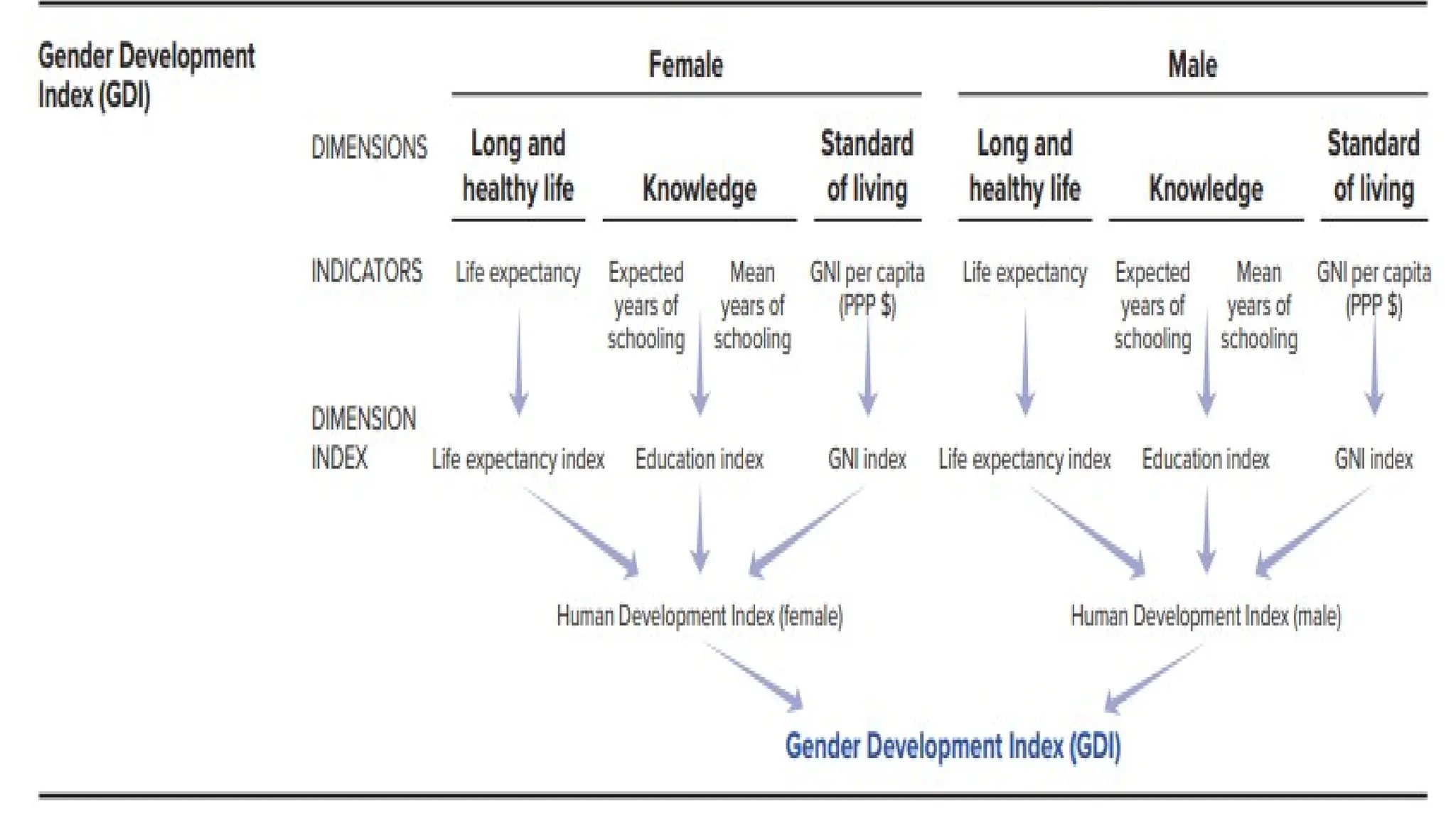
• The GDI uses the same dimensions as the Human Development Index (HDI),
but it adjusts them to reflect gender disparities. The three dimensions are:
• Health:
• Measured by life expectancy at birth for both males and females
• Education:
• Measured by the mean years of schooling for adults aged 25 and older and
the expected years of schooling for children entering school, for both males
and females.
• Standard of Living:
• Measured by estimated earned income for both males and females.
Calculation of the GDI
• Calculating Male and Female HDI:
Separate HDI values are calculated for males and females using
the same method as the HDI but with gender-disaggregated data for
life expectancy, education, and income.
• GDI Formula:
The GDI is then calculated as the ratio of the female HDI to the
male HDI.
Categories of the Gender Development Index
(GDI)
• GDI = 1:
Indicates perfect gender parity in human development achievements.
Both males and females have equal outcomes in life expectancy, education,
and income.
• GDI < 1:
Indicates gender disparity favoring males.
The closer the GDI is to 1, the smaller the gender gap.
The further the GDI is from 1, the larger the gender disparity, with males
having higher achievements in life expectancy, education, and income.
Continue…
• GDI > 1:
Although rare, a GDI greater than 1 would indicate gender
disparity favoring females.
This means females have higher achievements in life expectancy,
education, and income compared to males.
Evolution and Related Indices
1.Gender Inequality Index (GII):
1. In 2010, the UNDP introduced the Gender Inequality Index (GII) to provide a
more comprehensive measure of gender inequality.
2. The GII considers reproductive health, empowerment, and labor market
participation, offering a broader view of gender disparities.
2.Complementary Indices:
1. The GDI remains an important measure alongside other indices like the HDI
and GII, providing a focused assessment of gender disparities in human
development achievements.

Gender Development Index (GDI): Measures, Categories

  • 1.
  • 2.
    Introduction • Origins: • TheGender Development Index (GDI) was introduced in the 1995 Human Development Report by the United Nations Development Programme (UNDP). • It was developed to address the disparities between men and women in human development achievements.
  • 3.
    GDI measures genderinequalities in achievement in three basic dimensions of human development • Health, measured by female and male life expectancy at birth; • Education, measured by female and male expected years of schooling for children and female and male mean years of schooling for adults ages 25 years and older; and • command over economic resources, measured by female and male estimated earned income.
  • 5.
    Purpose: • The GDIaims to measure gender gaps in human development achievements by accounting for disparities in life expectancy, education, and income between men and women. • It highlights gender inequality and encourages policymakers to address these disparities.
  • 6.
    Measuring the GenderDevelopment Index (GDI) • The GDI uses the same dimensions as the Human Development Index (HDI), but it adjusts them to reflect gender disparities. The three dimensions are: • Health: • Measured by life expectancy at birth for both males and females • Education: • Measured by the mean years of schooling for adults aged 25 and older and the expected years of schooling for children entering school, for both males and females. • Standard of Living: • Measured by estimated earned income for both males and females.
  • 7.
    Calculation of theGDI • Calculating Male and Female HDI: Separate HDI values are calculated for males and females using the same method as the HDI but with gender-disaggregated data for life expectancy, education, and income. • GDI Formula: The GDI is then calculated as the ratio of the female HDI to the male HDI.
  • 8.
    Categories of theGender Development Index (GDI) • GDI = 1: Indicates perfect gender parity in human development achievements. Both males and females have equal outcomes in life expectancy, education, and income. • GDI < 1: Indicates gender disparity favoring males. The closer the GDI is to 1, the smaller the gender gap. The further the GDI is from 1, the larger the gender disparity, with males having higher achievements in life expectancy, education, and income.
  • 9.
    Continue… • GDI >1: Although rare, a GDI greater than 1 would indicate gender disparity favoring females. This means females have higher achievements in life expectancy, education, and income compared to males.
  • 10.
    Evolution and RelatedIndices 1.Gender Inequality Index (GII): 1. In 2010, the UNDP introduced the Gender Inequality Index (GII) to provide a more comprehensive measure of gender inequality. 2. The GII considers reproductive health, empowerment, and labor market participation, offering a broader view of gender disparities. 2.Complementary Indices: 1. The GDI remains an important measure alongside other indices like the HDI and GII, providing a focused assessment of gender disparities in human development achievements.