Concepts of National Income
Introduction
• - Definition of National Income
• - Importance in economic analysis and policymaking
Gross Domestic Product (GDP)
• Definition: The total value of all goods and services produced
within a country's borders. It includes the output of foreign-owned
businesses within the country but excludes the output of the
country’s businesses operating abroad.
• Components:
• - Consumption
• - Investment
• - Government Spending
• - Net Exports
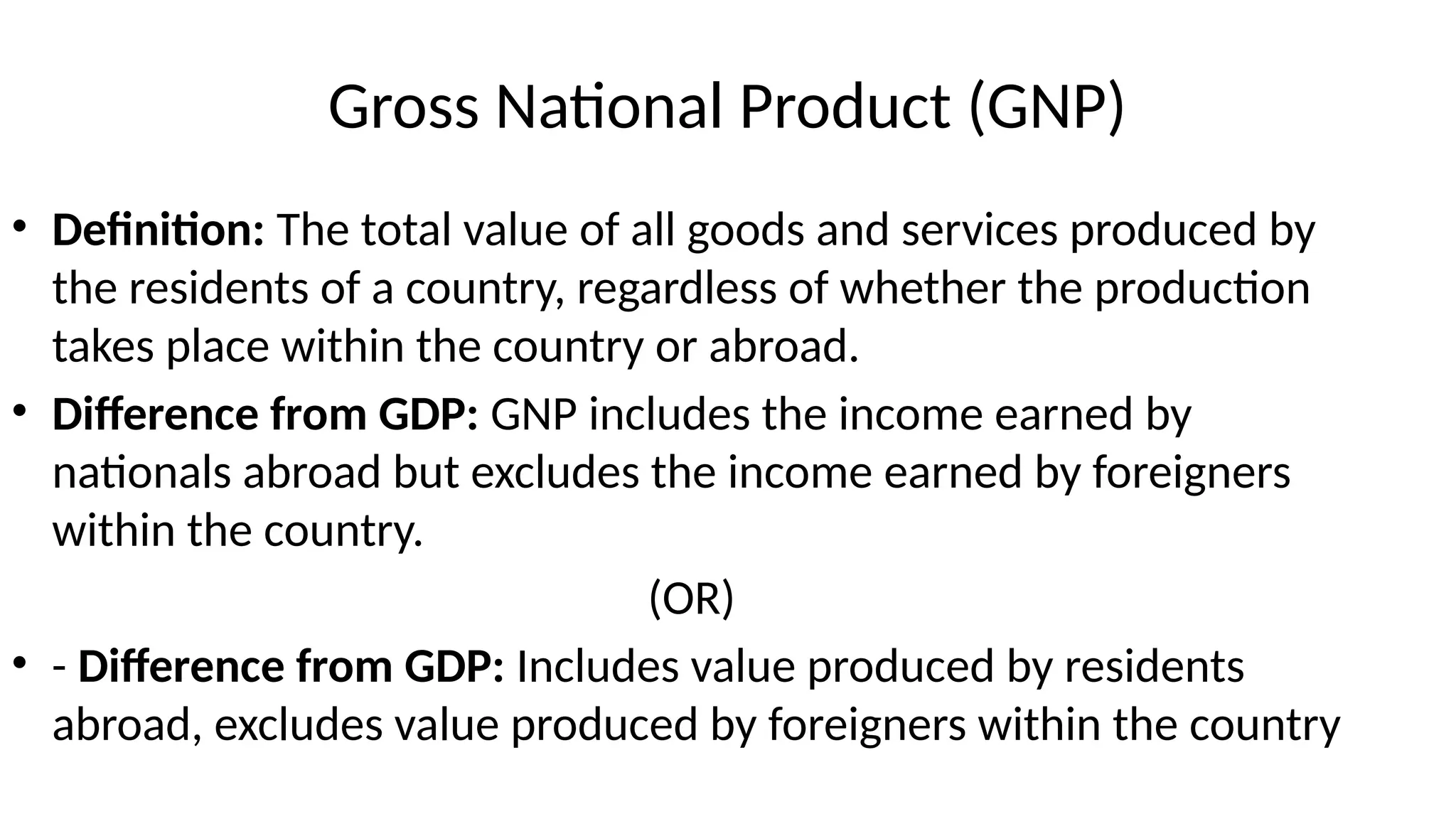
Gross National Product (GNP)
• Definition: The total value of all goods and services produced by
the residents of a country, regardless of whether the production
takes place within the country or abroad.
• Difference from GDP: GNP includes the income earned by
nationals abroad but excludes the income earned by foreigners
within the country.
(OR)
• - Difference from GDP: Includes value produced by residents
abroad, excludes value produced by foreigners within the country
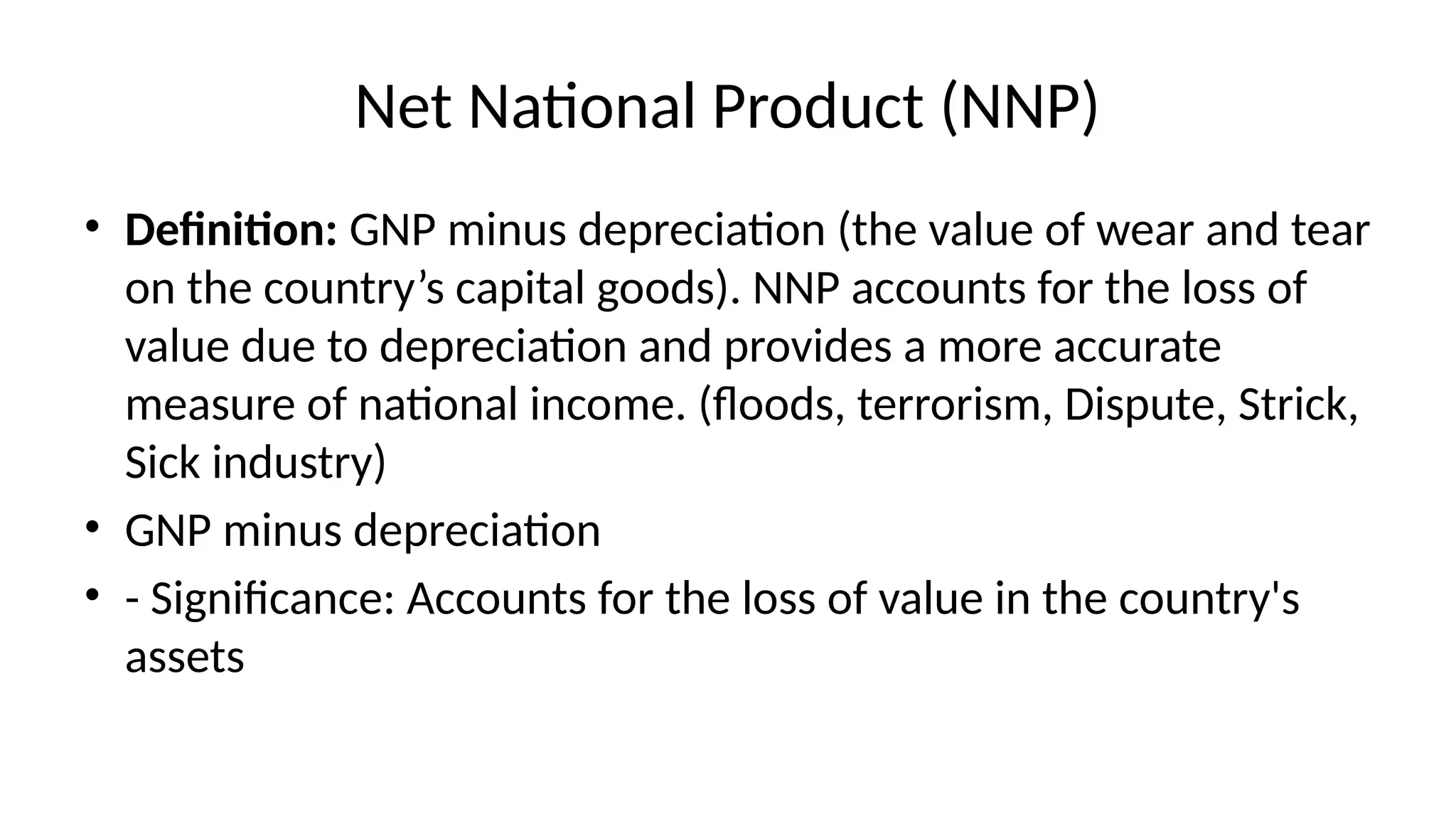
Net National Product (NNP)
• Definition: GNP minus depreciation (the value of wear and tear
on the country’s capital goods). NNP accounts for the loss of
value due to depreciation and provides a more accurate
measure of national income. (floods, terrorism, Dispute, Strick,
Sick industry)
• GNP minus depreciation
• - Significance: Accounts for the loss of value in the country's
assets
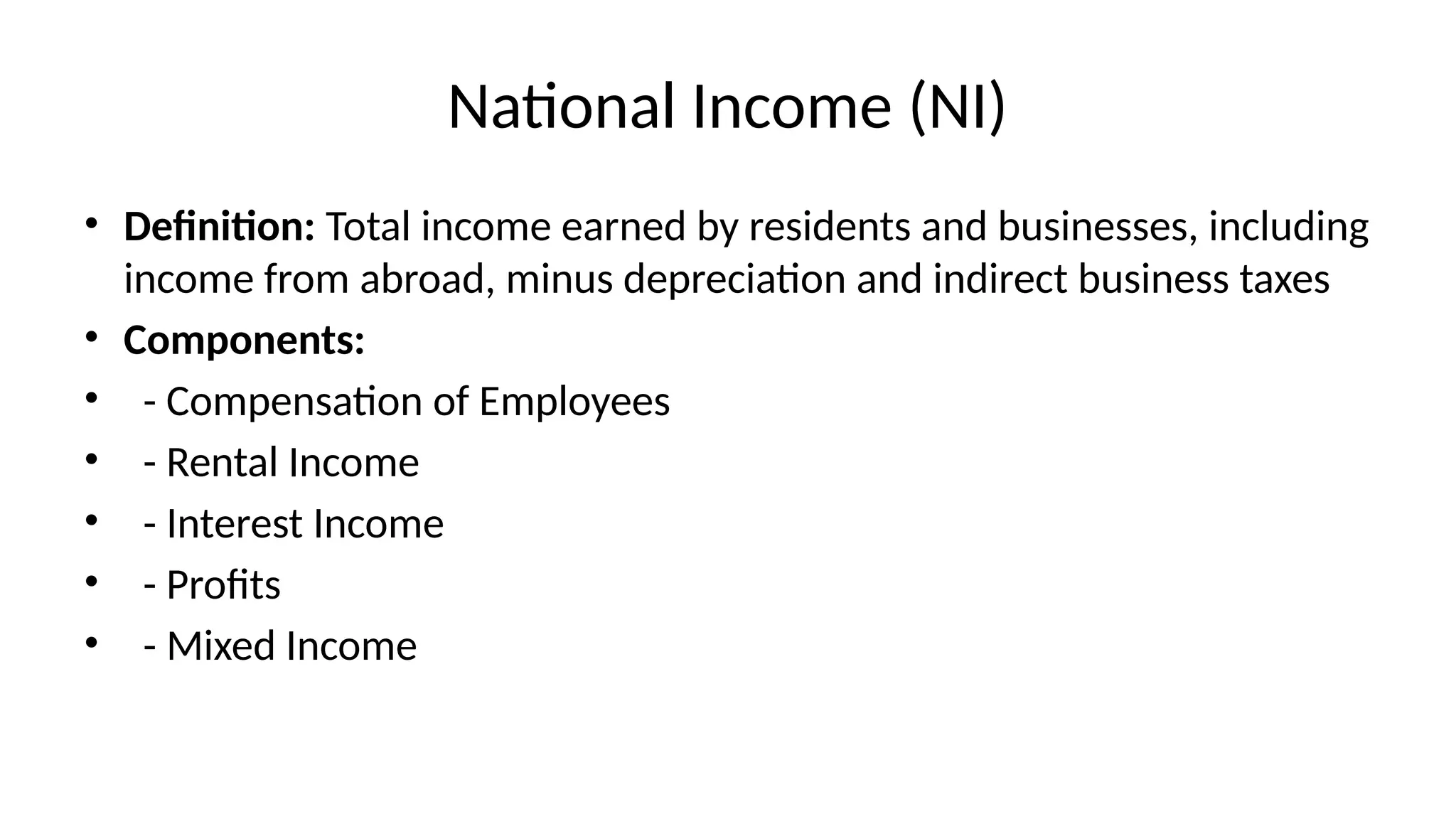
National Income (NI)
• Definition: Total income earned by residents and businesses, including
income from abroad, minus depreciation and indirect business taxes
• Components:
• - Compensation of Employees
• - Rental Income
• - Interest Income
• - Profits
• - Mixed Income
Personal Income (PI)
• Definition: Total income received by individuals and
households before personal taxes
• Components:
• Personal Income= National Income (NI) - corporate profits +
transfer payments
Disposable Personal Income (DPI)
• Definition: The amount of money that households have
available for spending and saving after paying taxes.
• Importance: Indicates the actual purchasing power of
individuals.
• It represents the income that is actually available for
households to spend on goods and services or save.
Per Capita Income
• Definition: National income divided by the population
• Significance: Measures average income and standard of living
Real vs. Nominal National Income
• Nominal National Income: Measured at current market prices
• Real National Income: Adjusted for inflation
• Importance: Reflects the true purchasing power over time
National Income at Factor Cost
• Definition: This measure adjusts GDP by adding subsidies and
subtracting indirect taxes.
• Importance: It represents the total income earned by factors
of production (labor, capital, land, and entrepreneurship)
within a nation.
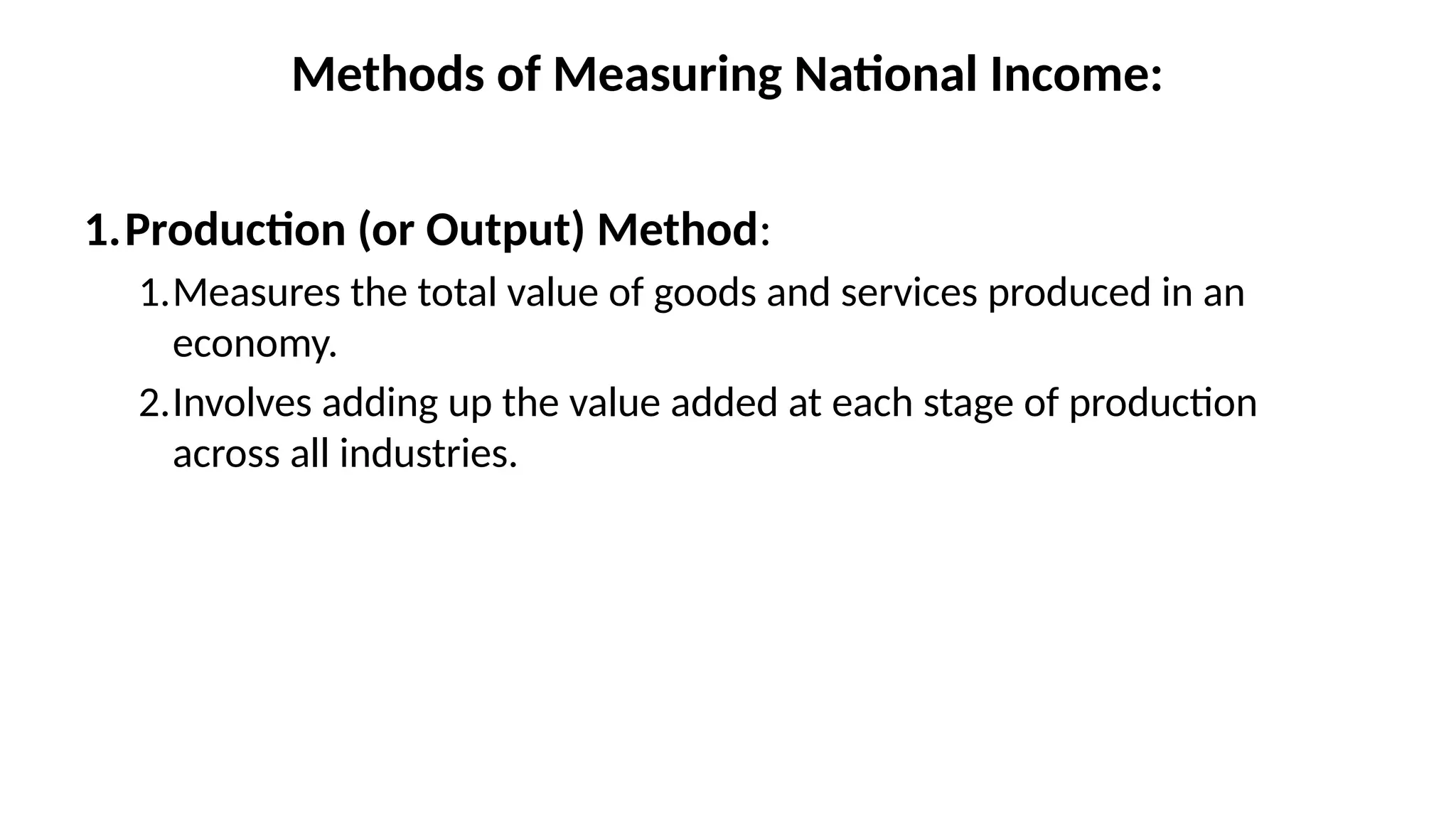
Methods of Measuring National Income:
1.Production (or Output) Method:
1.Measures the total value of goods and services produced in an
economy.
2.Involves adding up the value added at each stage of production
across all industries.
Continue..
2. Income Method:
1.Measures the total income earned by factors of production, including
wages, rent, interest, and profits.
2.Sums up the incomes earned by individuals and businesses in the
production process.
3. Expenditure Method:
3.Measures the total spending on final goods and services in an economy.
4.Includes consumption by households, investments by businesses,
government spending, and net exports (exports minus imports).

National_Income_Concepts_Presentation: Meaning, Measures

  • 1.
  • 2.
    Introduction • - Definitionof National Income • - Importance in economic analysis and policymaking
  • 3.
    Gross Domestic Product(GDP) • Definition: The total value of all goods and services produced within a country's borders. It includes the output of foreign-owned businesses within the country but excludes the output of the country’s businesses operating abroad. • Components: • - Consumption • - Investment • - Government Spending • - Net Exports
  • 4.
    Gross National Product(GNP) • Definition: The total value of all goods and services produced by the residents of a country, regardless of whether the production takes place within the country or abroad. • Difference from GDP: GNP includes the income earned by nationals abroad but excludes the income earned by foreigners within the country. (OR) • - Difference from GDP: Includes value produced by residents abroad, excludes value produced by foreigners within the country
  • 5.
    Net National Product(NNP) • Definition: GNP minus depreciation (the value of wear and tear on the country’s capital goods). NNP accounts for the loss of value due to depreciation and provides a more accurate measure of national income. (floods, terrorism, Dispute, Strick, Sick industry) • GNP minus depreciation • - Significance: Accounts for the loss of value in the country's assets
  • 6.
    National Income (NI) •Definition: Total income earned by residents and businesses, including income from abroad, minus depreciation and indirect business taxes • Components: • - Compensation of Employees • - Rental Income • - Interest Income • - Profits • - Mixed Income
  • 7.
    Personal Income (PI) •Definition: Total income received by individuals and households before personal taxes • Components: • Personal Income= National Income (NI) - corporate profits + transfer payments
  • 8.
    Disposable Personal Income(DPI) • Definition: The amount of money that households have available for spending and saving after paying taxes. • Importance: Indicates the actual purchasing power of individuals. • It represents the income that is actually available for households to spend on goods and services or save.
  • 9.
    Per Capita Income •Definition: National income divided by the population • Significance: Measures average income and standard of living
  • 10.
    Real vs. NominalNational Income • Nominal National Income: Measured at current market prices • Real National Income: Adjusted for inflation • Importance: Reflects the true purchasing power over time
  • 11.
    National Income atFactor Cost • Definition: This measure adjusts GDP by adding subsidies and subtracting indirect taxes. • Importance: It represents the total income earned by factors of production (labor, capital, land, and entrepreneurship) within a nation.
  • 12.
    Methods of MeasuringNational Income: 1.Production (or Output) Method: 1.Measures the total value of goods and services produced in an economy. 2.Involves adding up the value added at each stage of production across all industries.
  • 13.
    Continue.. 2. Income Method: 1.Measuresthe total income earned by factors of production, including wages, rent, interest, and profits. 2.Sums up the incomes earned by individuals and businesses in the production process. 3. Expenditure Method: 3.Measures the total spending on final goods and services in an economy. 4.Includes consumption by households, investments by businesses, government spending, and net exports (exports minus imports).