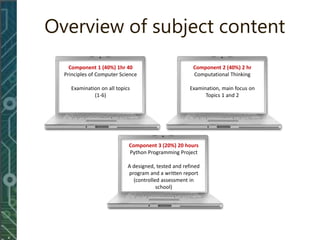
Overview of subject content
Component 1 (40%) 1hr 40
Principles of Computer Science
Examination on all topics
(1-6)
Component 2 (40%) 2 hr
Computational Thinking
Examination, main focus on
Topics 1 and 2
Component 3 (20%) 20 hours
Python Programming Project
A designed, tested and refined
program and a written report
(controlled assessment in
school)
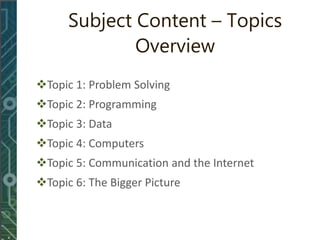
Subject Content – Topics
Overview
Topic 1: Problem Solving
Topic 2: Programming
Topic 3: Data
Topic 4: Computers
Topic 5: Communication and the Internet
Topic 6: The Bigger Picture
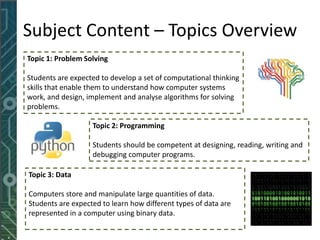
Subject Content – Topics Overview
Topic 1: Problem Solving
Students are expected to develop a set of computational thinking
skills that enable them to understand how computer systems
work, and design, implement and analyse algorithms for solving
problems.
Topic 2: Programming
Students should be competent at designing, reading, writing and
debugging computer programs.
Topic 3: Data
Computers store and manipulate large quantities of data.
Students are expected to learn how different types of data are
represented in a computer using binary data.
Subject Content – Topics Overview
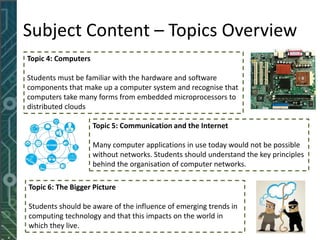
Topic 4: Computers
Students must be familiar with the hardware and software
components that make up a computer system and recognise that
computers take many forms from embedded microprocessors to
distributed clouds
Topic 5: Communication and the Internet
Many computer applications in use today would not be possible
without networks. Students should understand the key principles
behind the organisation of computer networks.
Topic 6: The Bigger Picture
Students should be aware of the influence of emerging trends in
computing technology and that this impacts on the world in
which they live.

GCSE Computer Science

  • 2.
    Overview of subjectcontent Component 1 (40%) 1hr 40 Principles of Computer Science Examination on all topics (1-6) Component 2 (40%) 2 hr Computational Thinking Examination, main focus on Topics 1 and 2 Component 3 (20%) 20 hours Python Programming Project A designed, tested and refined program and a written report (controlled assessment in school)
  • 3.
    Subject Content –Topics Overview Topic 1: Problem Solving Topic 2: Programming Topic 3: Data Topic 4: Computers Topic 5: Communication and the Internet Topic 6: The Bigger Picture
  • 4.
    Subject Content –Topics Overview Topic 1: Problem Solving Students are expected to develop a set of computational thinking skills that enable them to understand how computer systems work, and design, implement and analyse algorithms for solving problems. Topic 2: Programming Students should be competent at designing, reading, writing and debugging computer programs. Topic 3: Data Computers store and manipulate large quantities of data. Students are expected to learn how different types of data are represented in a computer using binary data.
  • 5.
    Subject Content –Topics Overview Topic 4: Computers Students must be familiar with the hardware and software components that make up a computer system and recognise that computers take many forms from embedded microprocessors to distributed clouds Topic 5: Communication and the Internet Many computer applications in use today would not be possible without networks. Students should understand the key principles behind the organisation of computer networks. Topic 6: The Bigger Picture Students should be aware of the influence of emerging trends in computing technology and that this impacts on the world in which they live.

Editor's Notes

  • #4 Not endorsed by Pearson ™. Terms & Conditions apply on Page 2.