


Gamification and the Human Condition
Marigo Raftopoulos
Who am I?
Reiss 2000: 16 core desires marigo@strategicgameslab.com
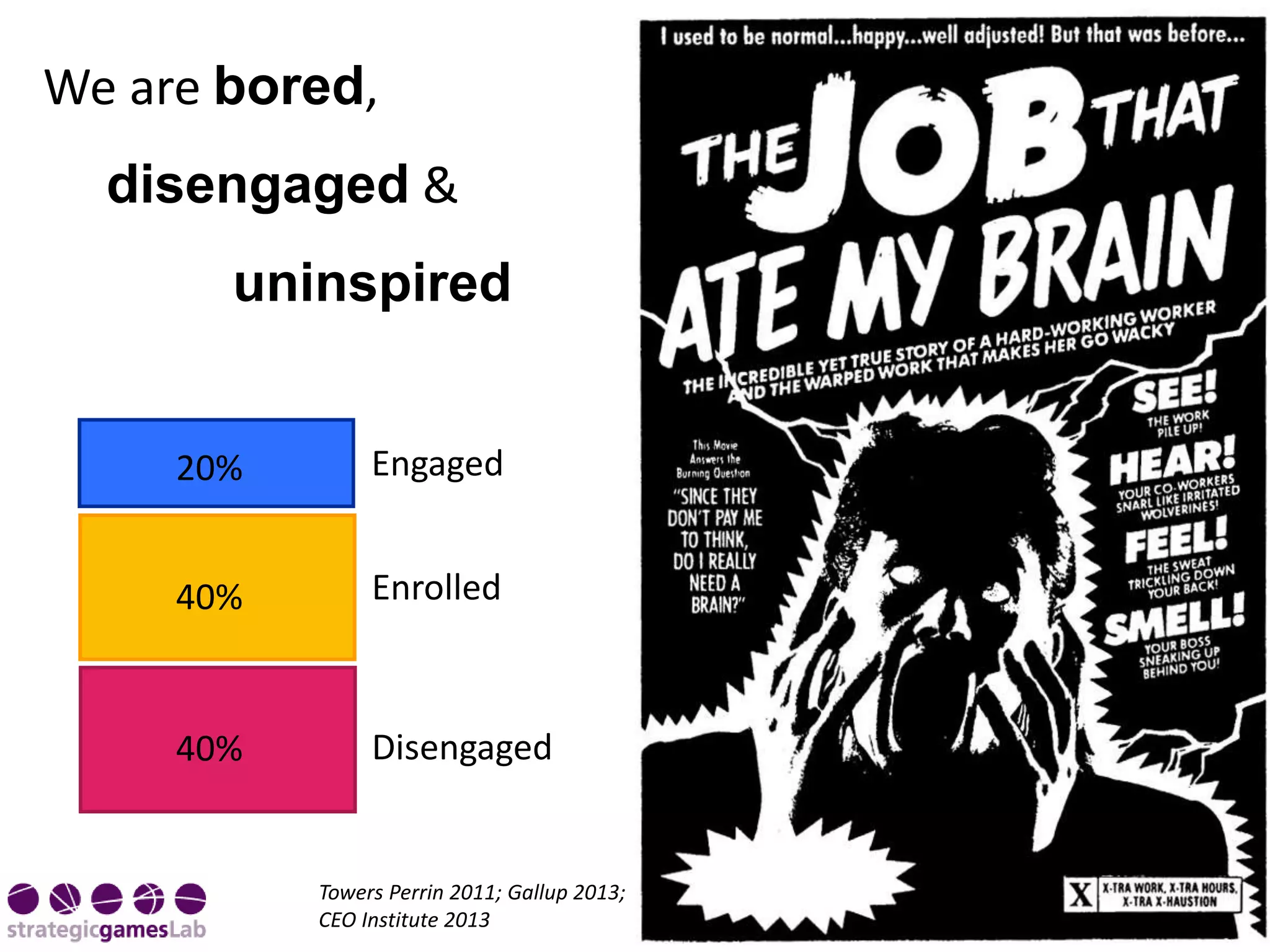
We are bored,
disengaged &
uninspired
Engaged
Disengaged
Enrolled
20%
40%
40%
Towers Perrin 2011; Gallup 2013;
CEO Institute 2013
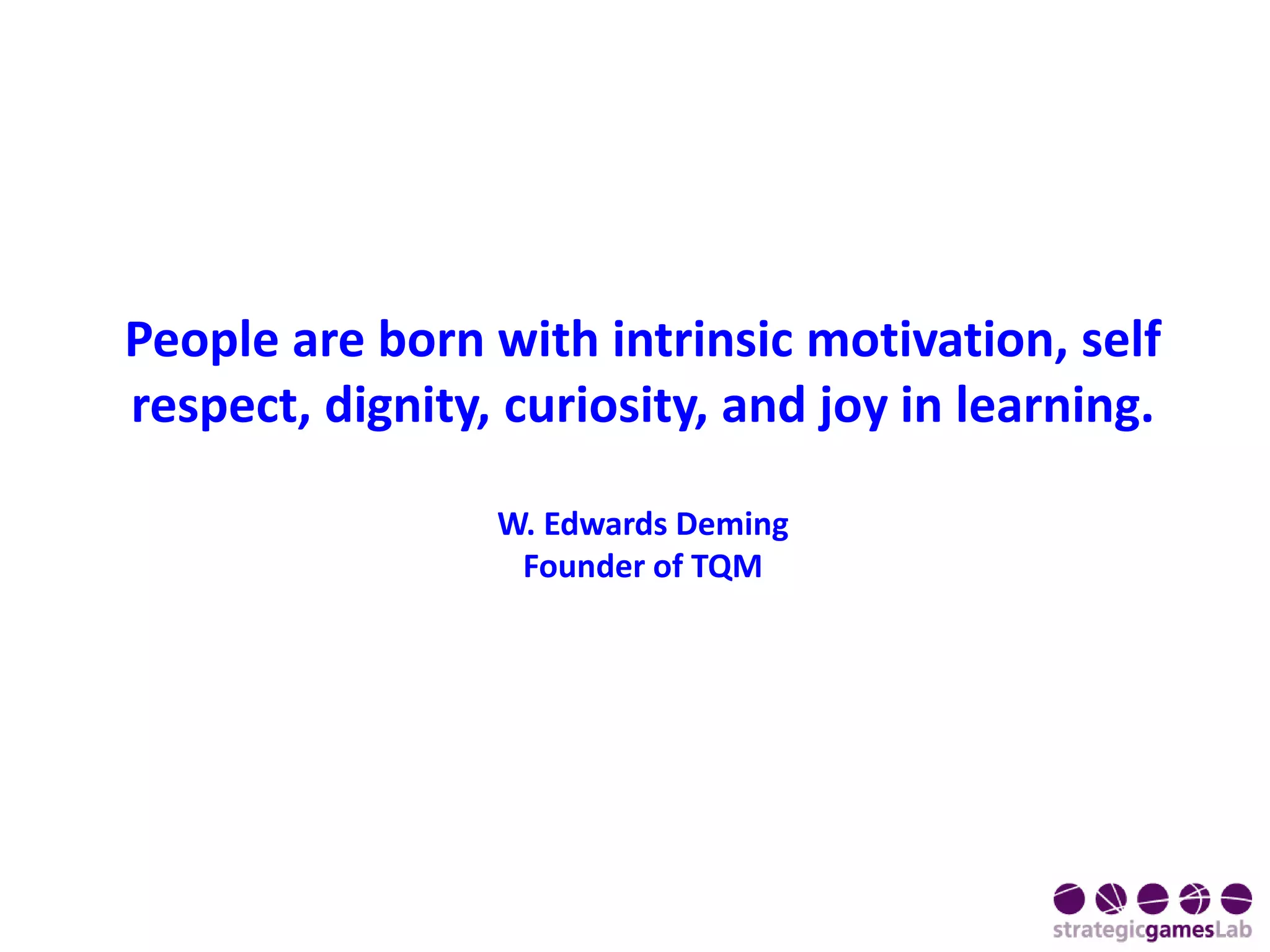
People are born with intrinsic motivation, self
respect, dignity, curiosity, and joy in learning.
W. Edwards Deming
Founder of TQM
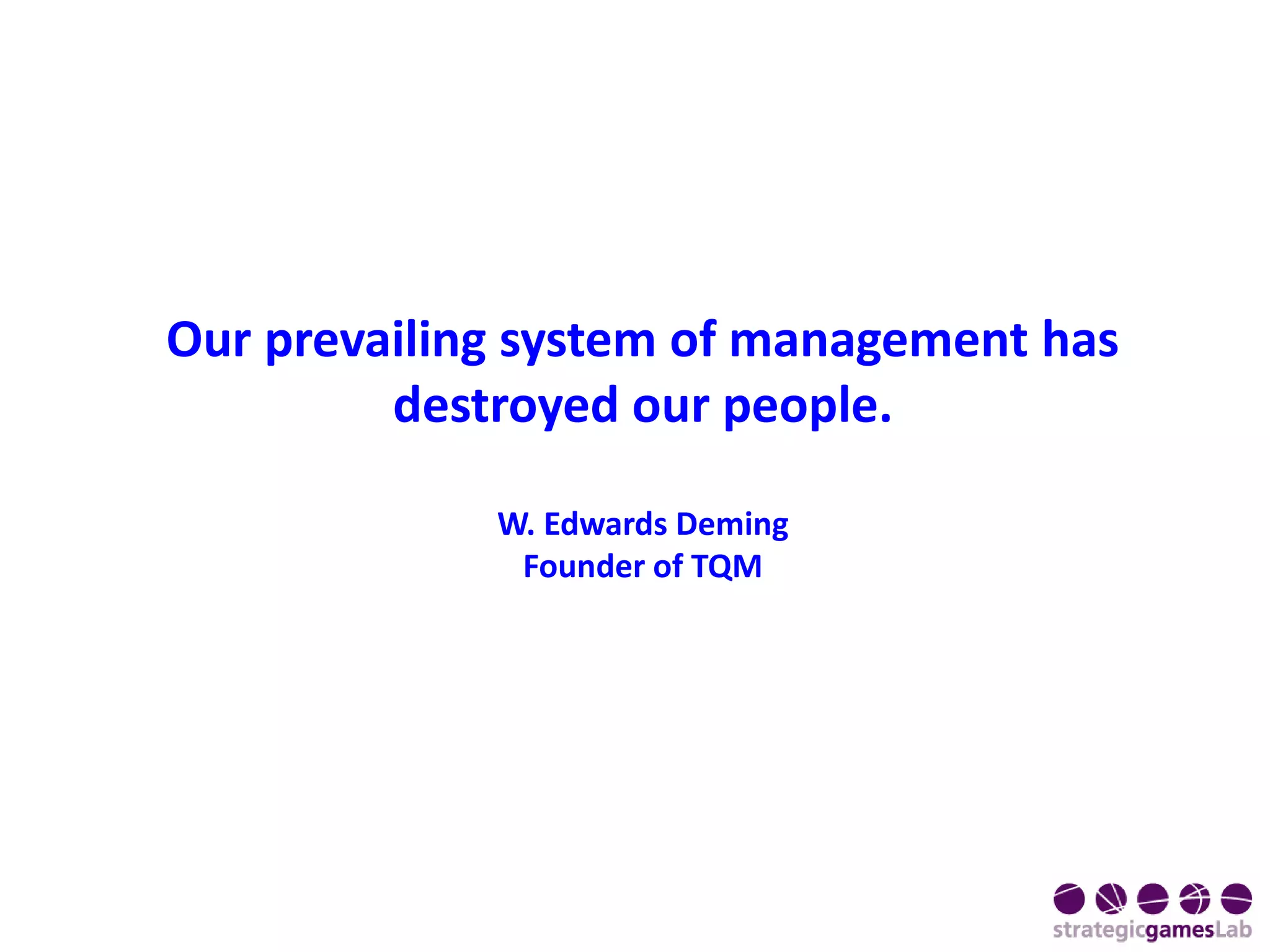
Our prevailing system of management has
destroyed our people.
W. Edwards Deming
Founder of TQM
Think like a game designer.
Carl Jung
Modern Psychology
Who Am I
Joseph Campbell
Hero’s Journey
Follow Your Bliss
marigo@strategicgameslab.com
This is what game designers
know…
7 examples, 7 core desires marigo@strategicgameslab.com
Power
marigo@strategicgameslab.com
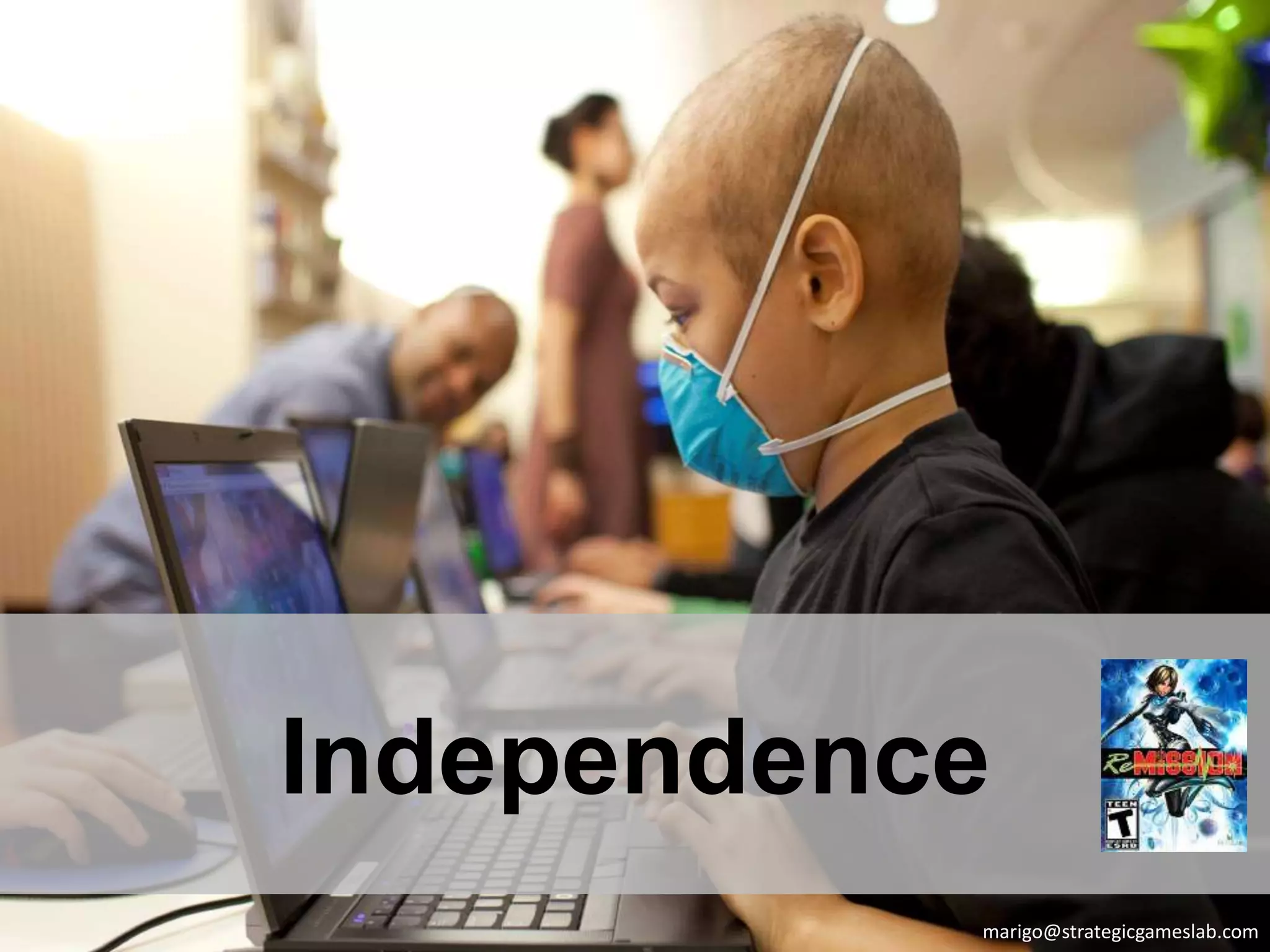
Independence
marigo@strategicgameslab.com
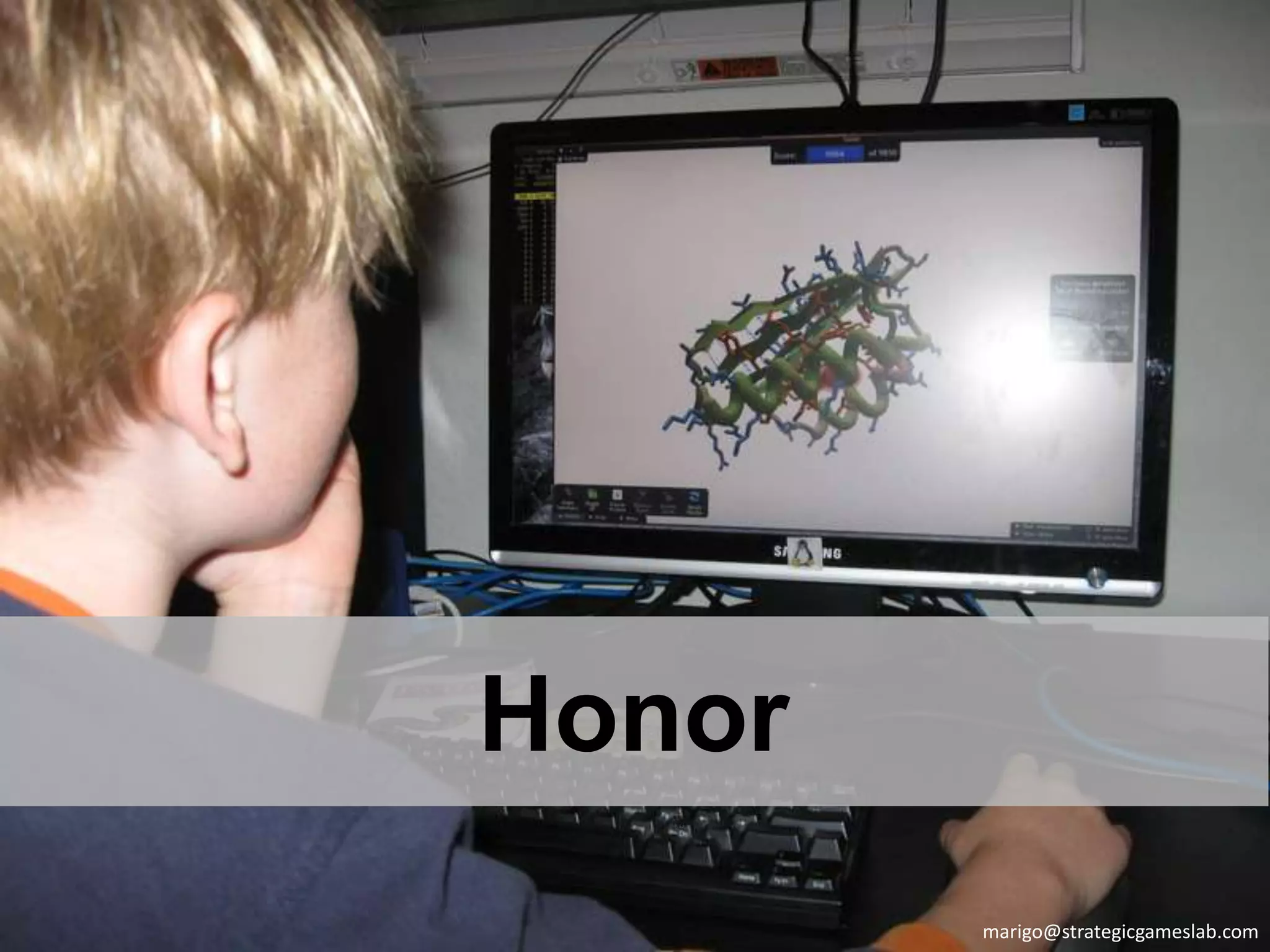
Honor
marigo@strategicgameslab.com
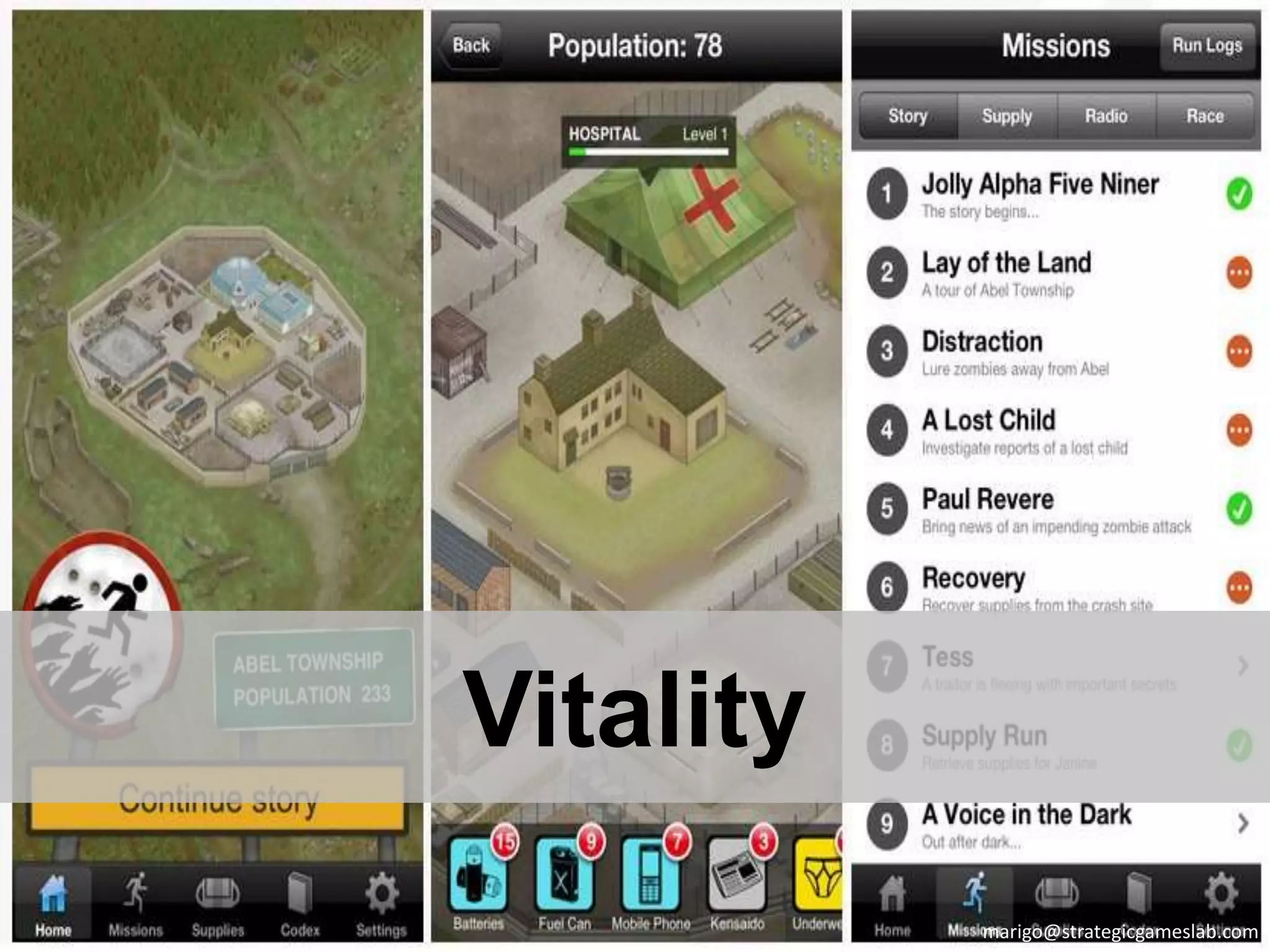
Vitality
marigo@strategicgameslab.com
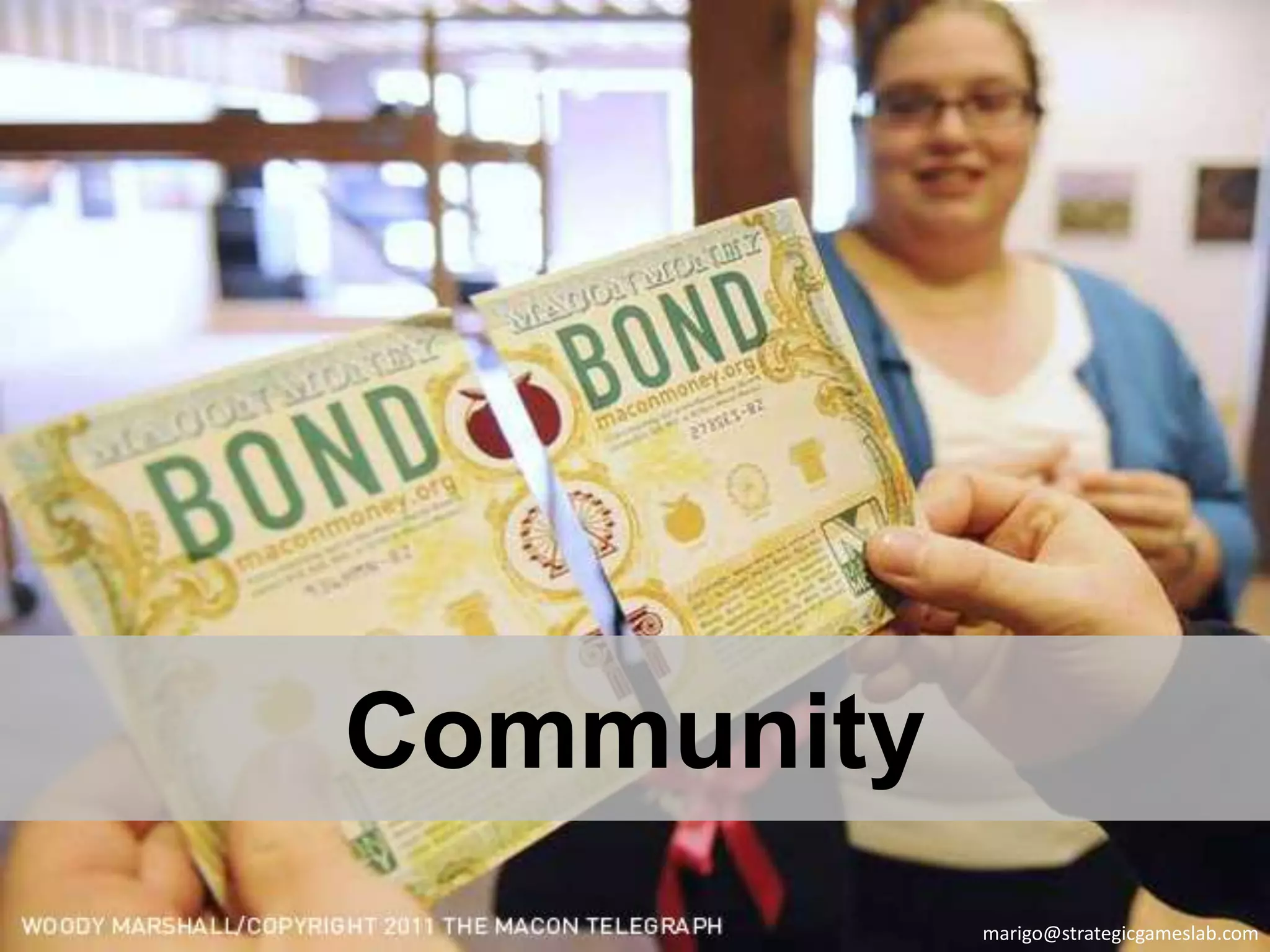
Community
marigo@strategicgameslab.com
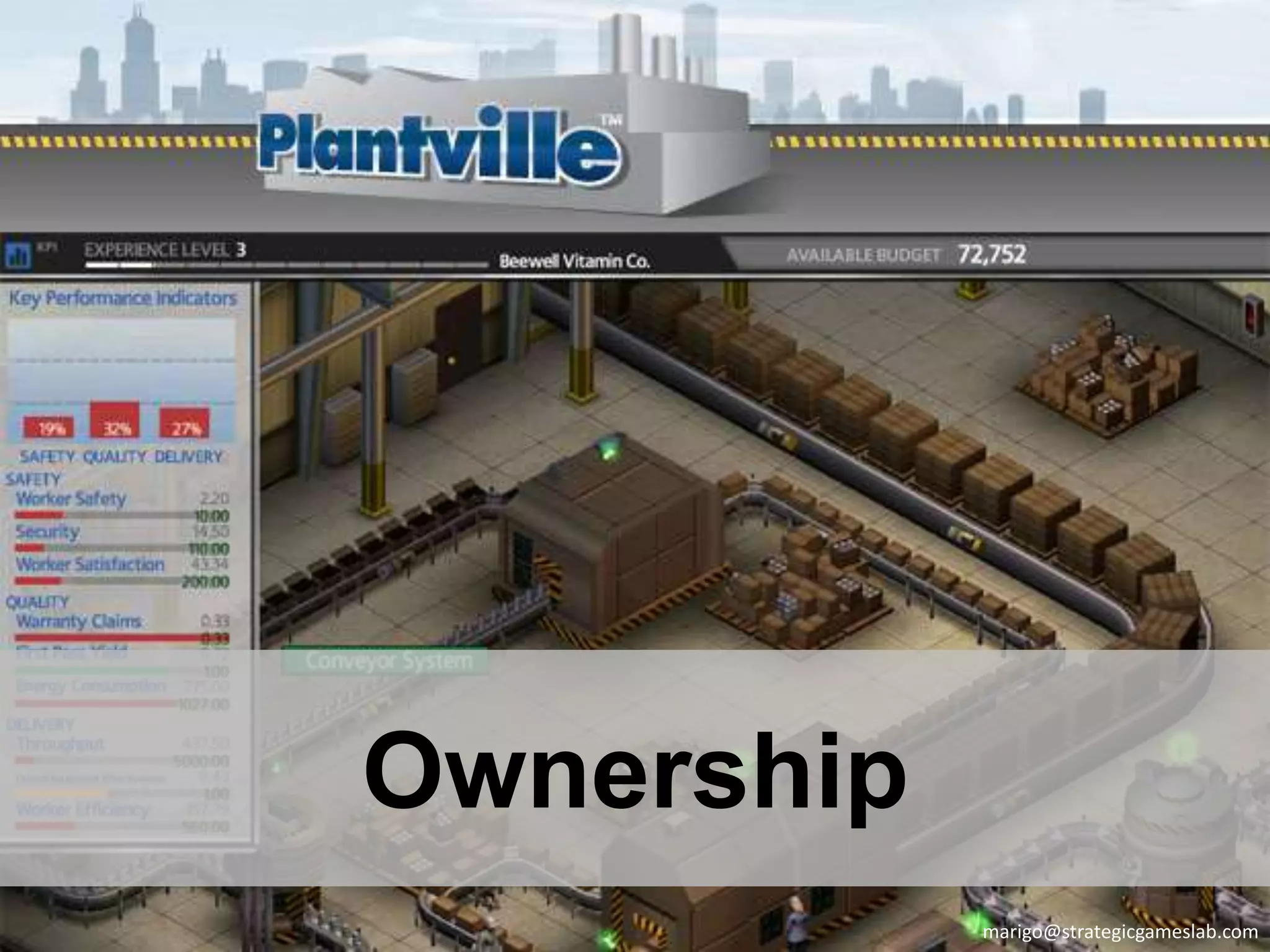
Ownership
marigo@strategicgameslab.com
Self confidence
marigo@strategicgameslab.com
How do you create experiences
that make people FEEL
something?
Human “Resources”
Human “Capital”
How does that make people
“FEEL”?
The HR Challenge:
What journey are we creating?
What experiences are we offering?
How do we want our staff to feel?
Game thinking in HR
In the future of work, you are
experience designers
You create possibility spaces
Experiences that facilitate learning,
performance, productivity &
innovation
marigo@strategicgameslab.com
Part 2: Enterprise Gamification
Research
Time to level up
marigo@strategicgameslab.com
Gamification in the enterprise
Literature review - Critique
- Design Methodology
Survey 304 global case studies - Taxonomy
In-depth survey 24 leading organisations – Enablers/Barriers
marigo@strategicgameslab.com
Doctoral researcher:
Marigo Raftopoulos
Enterprise
Gamification
Technology
Strategy
Games &
Simulations
Mobile apps
Gaming
platforms
Browser
based
Platforms
Vendor
Supplied
Self built
Product/Servi
ce
Modifications
Minor modsMajor mods
Playful
Experiences
Low/no tech
High tech
Technology options are wide & impact
design decisions differently
n=304
+ Secondary technologies:
• Augmented reality
• Virtual reality
• Social media
25%
47%
24%
23%
20%
8%
https://www.academia.edu/11951428/How_enterprises_play_Towards_a_taxonomy_for_enterprise_gamification
That which creates value, also destroys
value
https://www.academia.edu/9882613/Towards_Gamification_Transparency_A_conceptual_framework_for_the_development_of_responsible_gamified_systems
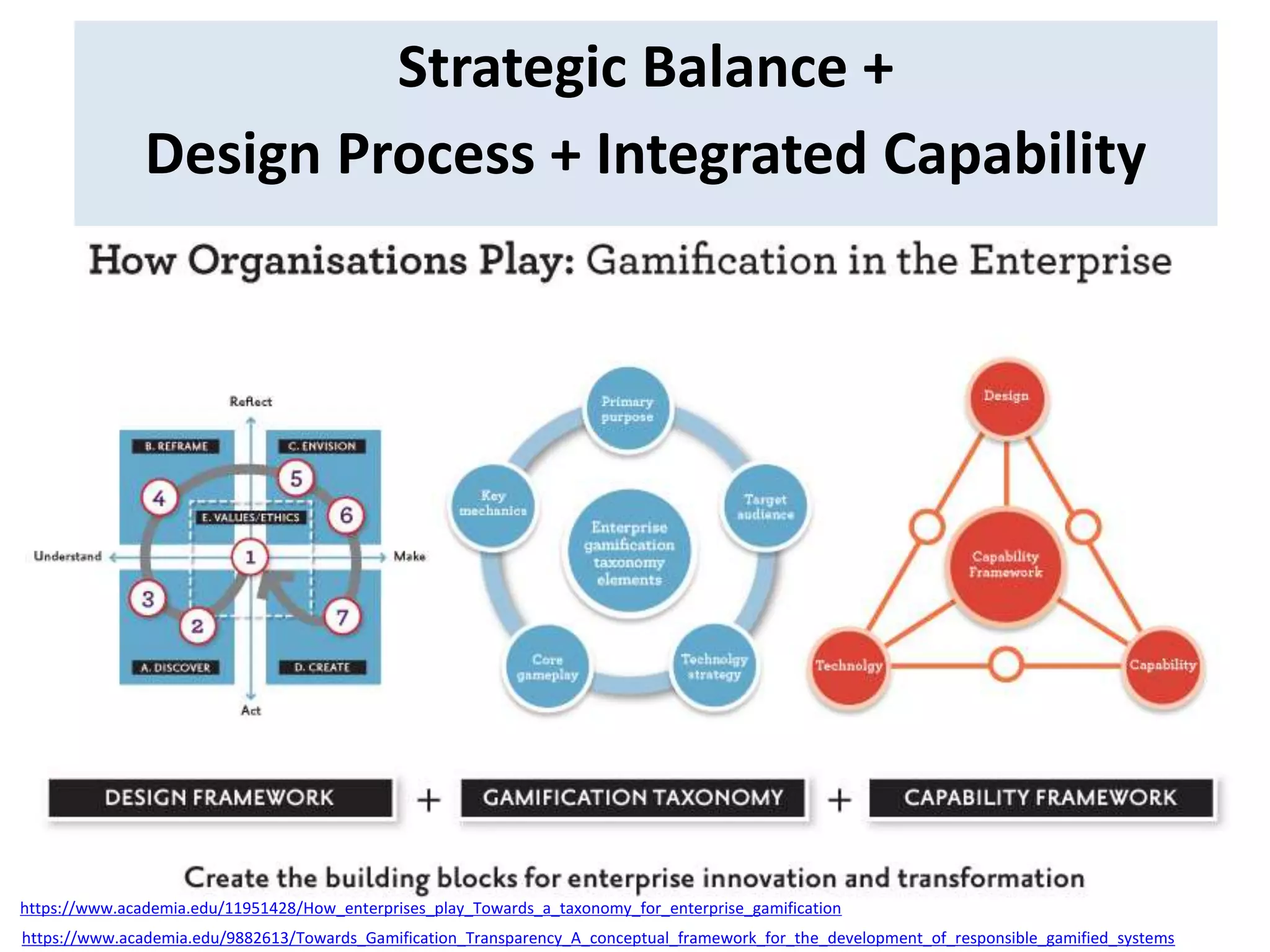
Strategic Balance +
Design Process + Integrated Capability
https://www.academia.edu/11951428/How_enterprises_play_Towards_a_taxonomy_for_enterprise_gamification
https://www.academia.edu/9882613/Towards_Gamification_Transparency_A_conceptual_framework_for_the_development_of_responsible_gamified_systems
Success
“Careful mapping of target
audience, use of the right
game elements, use of the
right analytics.”
“Analysis of the players.”
“Designing non-manipulative
game mechanics”
marigo@strategicgameslab.comEnterprise Gamification Experience Survey Responses
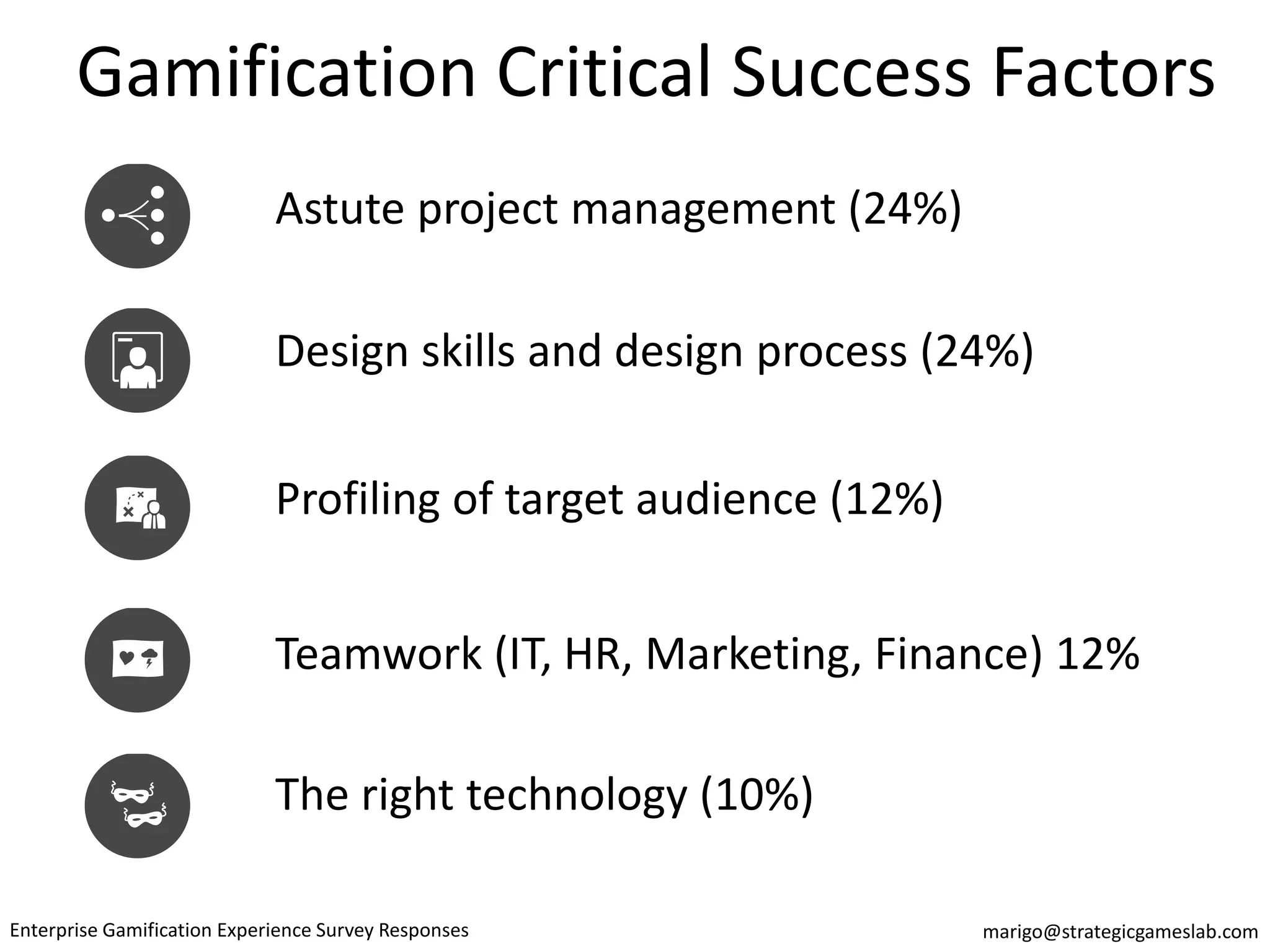
Gamification Critical Success Factors
Astute project management (24%)
Design skills and design process (24%)
Profiling of target audience (12%)
Teamwork (IT, HR, Marketing, Finance) 12%
The right technology (10%)
marigo@strategicgameslab.comEnterprise Gamification Experience Survey Responses
“Barriers were primarily
with technology. I do not
believe vendor solutions
are mature enough yet.”
“Meaningless and arbitrary
use of game mechanics.”
“Sometimes I felt like I was
playing the wrong game.”
Failures
marigo@strategicgameslab.comEnterprise Gamification Experience Survey Responses
Gamification Failures
Wrong technology (38%)
Poor project management (26%)
Unsuitable game play and mechanics (16%)
Poor design (12%)
Inadequate measures (8%)
marigo@strategicgameslab.comEnterprise Gamification Experience Survey Responses
A closer look at technology limits
• Vendor capability
• Platform restrictions
• Data integrity issues
• Limited reporting capabilities
• Vendors do not know the target market
• On time delivery
• Scalability issues
• Adoption of the platform
marigo@strategicgameslab.comEnterprise Gamification Experience Survey Responses
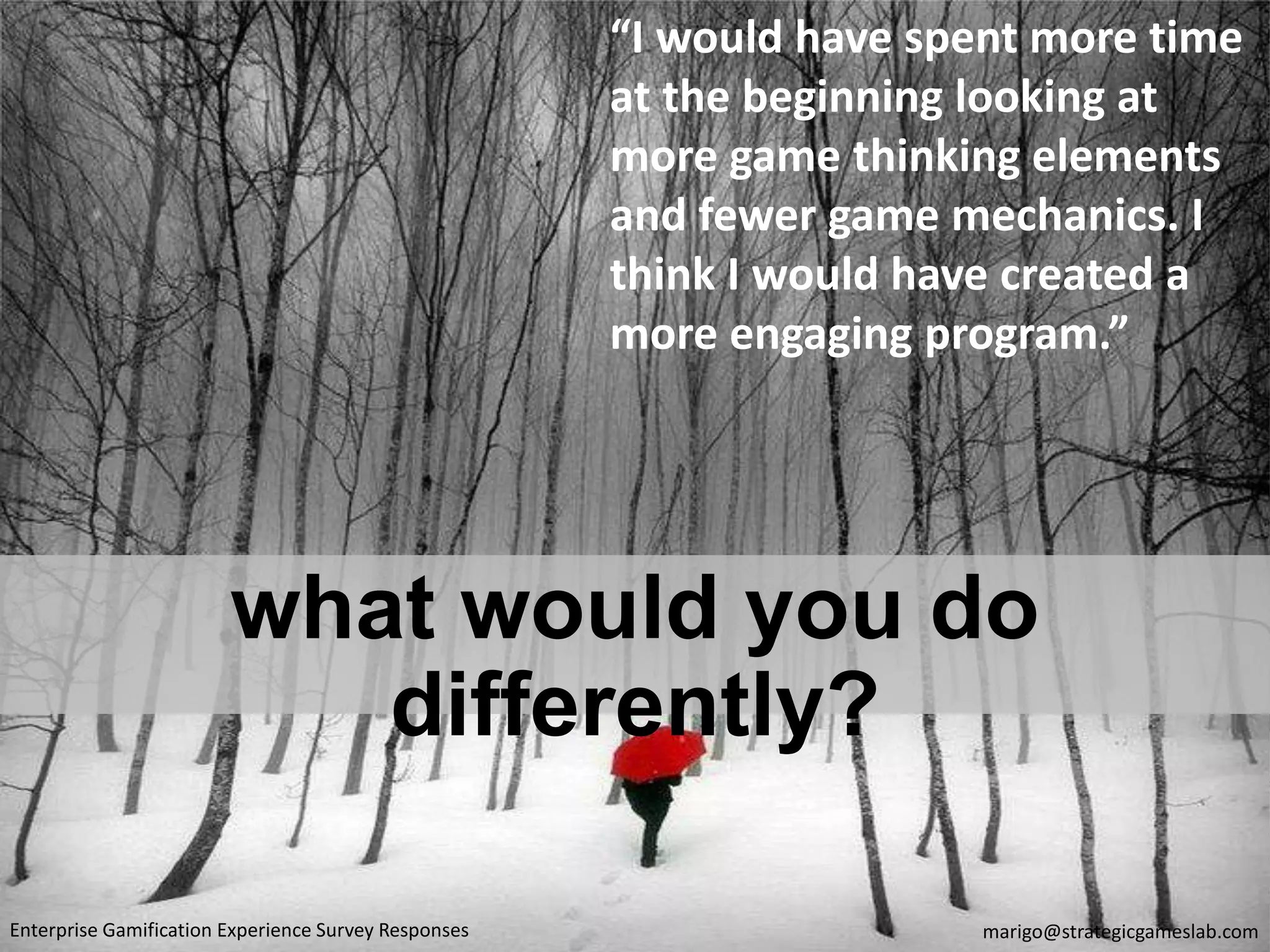
what would you do
differently?
“I would have spent more time
at the beginning looking at
more game thinking elements
and fewer game mechanics. I
think I would have created a
more engaging program.”
marigo@strategicgameslab.comEnterprise Gamification Experience Survey Responses
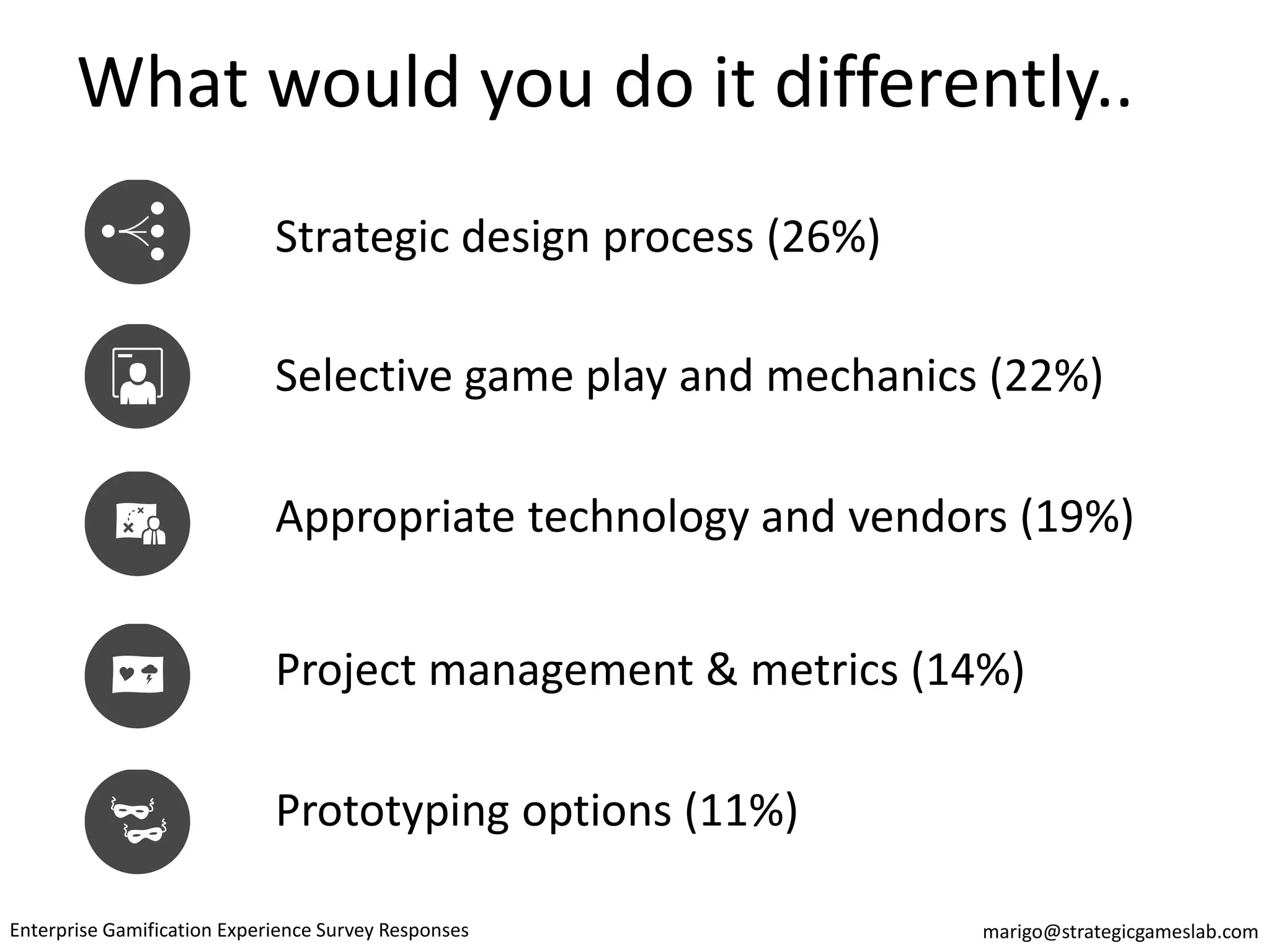
What would you do it differently..
Strategic design process (26%)
Selective game play and mechanics (22%)
Appropriate technology and vendors (19%)
Project management & metrics (14%)
Prototyping options (11%)
marigo@strategicgameslab.comEnterprise Gamification Experience Survey Responses
Find your best practice - Design
• Strategic design
process
• Design skills literacy
• Target audience
profiling
• Selective gameplay
and mechanics
• Prototyping options
marigo@strategicgameslab.com
Find your best practice - Technology
• The right platform
• Vendor capability
• Systems integration
• Data integrity
• Collaborative design
process
• Ongoing maintenance
marigo@strategicgameslab.com
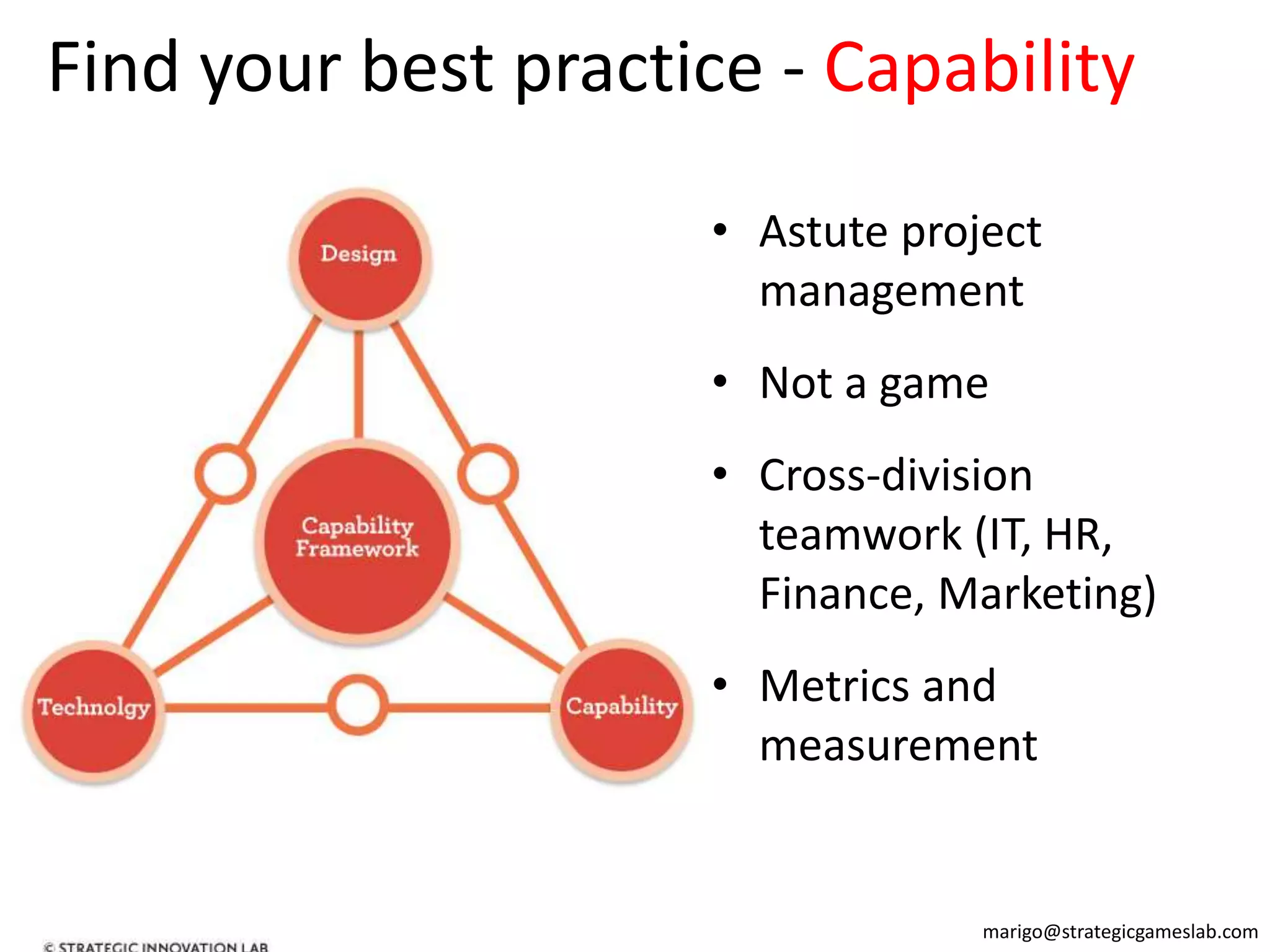
Find your best practice - Capability
• Astute project
management
• Not a game
• Cross-division
teamwork (IT, HR,
Finance, Marketing)
• Metrics and
measurement
marigo@strategicgameslab.com
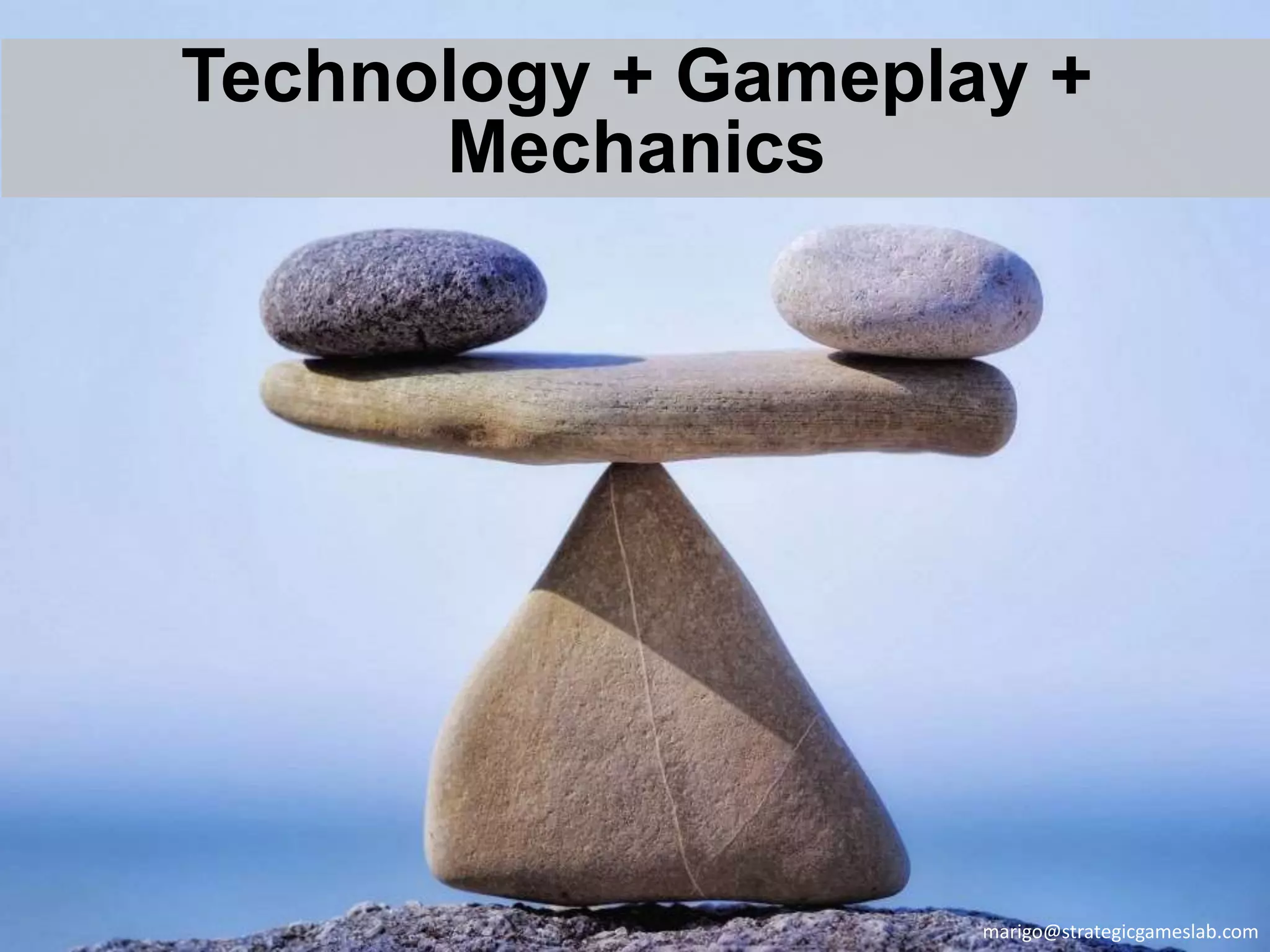
Technology + Gameplay +
Mechanics
marigo@strategicgameslab.com
Meaning
Learning
Engagement
Purpose
Connection
Keep it real
marigo@strategicgameslab.com
Thank you!
marigo@strategicgameslab.com
@marigo
Gamification in Human Resources, Vienna 2015

Gamification in Human Resources, Vienna 2015

  • 1.
    Gamification and theHuman Condition Marigo Raftopoulos
  • 2.
    Who am I? Reiss2000: 16 core desires marigo@strategicgameslab.com
  • 3.
    We are bored, disengaged& uninspired Engaged Disengaged Enrolled 20% 40% 40% Towers Perrin 2011; Gallup 2013; CEO Institute 2013
  • 4.
    People are bornwith intrinsic motivation, self respect, dignity, curiosity, and joy in learning. W. Edwards Deming Founder of TQM
  • 5.
    Our prevailing systemof management has destroyed our people. W. Edwards Deming Founder of TQM
  • 6.
    Think like agame designer.
  • 7.
    Carl Jung Modern Psychology WhoAm I Joseph Campbell Hero’s Journey Follow Your Bliss marigo@strategicgameslab.com
  • 8.
    This is whatgame designers know…
  • 9.
    7 examples, 7core desires marigo@strategicgameslab.com
  • 10.
  • 11.
  • 12.
  • 13.
  • 14.
  • 15.
  • 16.
  • 17.
    How do youcreate experiences that make people FEEL something?
  • 18.
    Human “Resources” Human “Capital” Howdoes that make people “FEEL”?
  • 19.
    The HR Challenge: Whatjourney are we creating? What experiences are we offering? How do we want our staff to feel?
  • 20.
    Game thinking inHR In the future of work, you are experience designers You create possibility spaces Experiences that facilitate learning, performance, productivity & innovation marigo@strategicgameslab.com
  • 21.
    Part 2: EnterpriseGamification Research Time to level up marigo@strategicgameslab.com
  • 22.
    Gamification in theenterprise Literature review - Critique - Design Methodology Survey 304 global case studies - Taxonomy In-depth survey 24 leading organisations – Enablers/Barriers marigo@strategicgameslab.com Doctoral researcher: Marigo Raftopoulos
  • 23.
    Enterprise Gamification Technology Strategy Games & Simulations Mobile apps Gaming platforms Browser based Platforms Vendor Supplied Selfbuilt Product/Servi ce Modifications Minor modsMajor mods Playful Experiences Low/no tech High tech Technology options are wide & impact design decisions differently n=304 + Secondary technologies: • Augmented reality • Virtual reality • Social media 25% 47% 24% 23% 20% 8% https://www.academia.edu/11951428/How_enterprises_play_Towards_a_taxonomy_for_enterprise_gamification
  • 24.
    That which createsvalue, also destroys value https://www.academia.edu/9882613/Towards_Gamification_Transparency_A_conceptual_framework_for_the_development_of_responsible_gamified_systems
  • 25.
    Strategic Balance + DesignProcess + Integrated Capability https://www.academia.edu/11951428/How_enterprises_play_Towards_a_taxonomy_for_enterprise_gamification https://www.academia.edu/9882613/Towards_Gamification_Transparency_A_conceptual_framework_for_the_development_of_responsible_gamified_systems
  • 26.
    Success “Careful mapping oftarget audience, use of the right game elements, use of the right analytics.” “Analysis of the players.” “Designing non-manipulative game mechanics” marigo@strategicgameslab.comEnterprise Gamification Experience Survey Responses
  • 27.
    Gamification Critical SuccessFactors Astute project management (24%) Design skills and design process (24%) Profiling of target audience (12%) Teamwork (IT, HR, Marketing, Finance) 12% The right technology (10%) marigo@strategicgameslab.comEnterprise Gamification Experience Survey Responses
  • 28.
    “Barriers were primarily withtechnology. I do not believe vendor solutions are mature enough yet.” “Meaningless and arbitrary use of game mechanics.” “Sometimes I felt like I was playing the wrong game.” Failures marigo@strategicgameslab.comEnterprise Gamification Experience Survey Responses
  • 29.
    Gamification Failures Wrong technology(38%) Poor project management (26%) Unsuitable game play and mechanics (16%) Poor design (12%) Inadequate measures (8%) marigo@strategicgameslab.comEnterprise Gamification Experience Survey Responses
  • 30.
    A closer lookat technology limits • Vendor capability • Platform restrictions • Data integrity issues • Limited reporting capabilities • Vendors do not know the target market • On time delivery • Scalability issues • Adoption of the platform marigo@strategicgameslab.comEnterprise Gamification Experience Survey Responses
  • 31.
    what would youdo differently? “I would have spent more time at the beginning looking at more game thinking elements and fewer game mechanics. I think I would have created a more engaging program.” marigo@strategicgameslab.comEnterprise Gamification Experience Survey Responses
  • 32.
    What would youdo it differently.. Strategic design process (26%) Selective game play and mechanics (22%) Appropriate technology and vendors (19%) Project management & metrics (14%) Prototyping options (11%) marigo@strategicgameslab.comEnterprise Gamification Experience Survey Responses
  • 33.
    Find your bestpractice - Design • Strategic design process • Design skills literacy • Target audience profiling • Selective gameplay and mechanics • Prototyping options marigo@strategicgameslab.com
  • 34.
    Find your bestpractice - Technology • The right platform • Vendor capability • Systems integration • Data integrity • Collaborative design process • Ongoing maintenance marigo@strategicgameslab.com
  • 35.
    Find your bestpractice - Capability • Astute project management • Not a game • Cross-division teamwork (IT, HR, Finance, Marketing) • Metrics and measurement marigo@strategicgameslab.com
  • 36.
    Technology + Gameplay+ Mechanics marigo@strategicgameslab.com
  • 37.
  • 38.

Editor's Notes

  • #2 This presentation was made at the Gamification in HR Summit, Vienna, on 27 April 2015. Many thanks to my hosts Fleming Europe for the invitation to present my work. The presentation is made in two parts: The first is on the big picture of what makes a truly successful game, simulation or gamified application. The second part is on the findings of my independent research conducted as part of my PhD research on enterprise gamification. I have taken out the speaking notes in the presentation, so if you have any questions please contact me on marigo@strategicgameslab.com