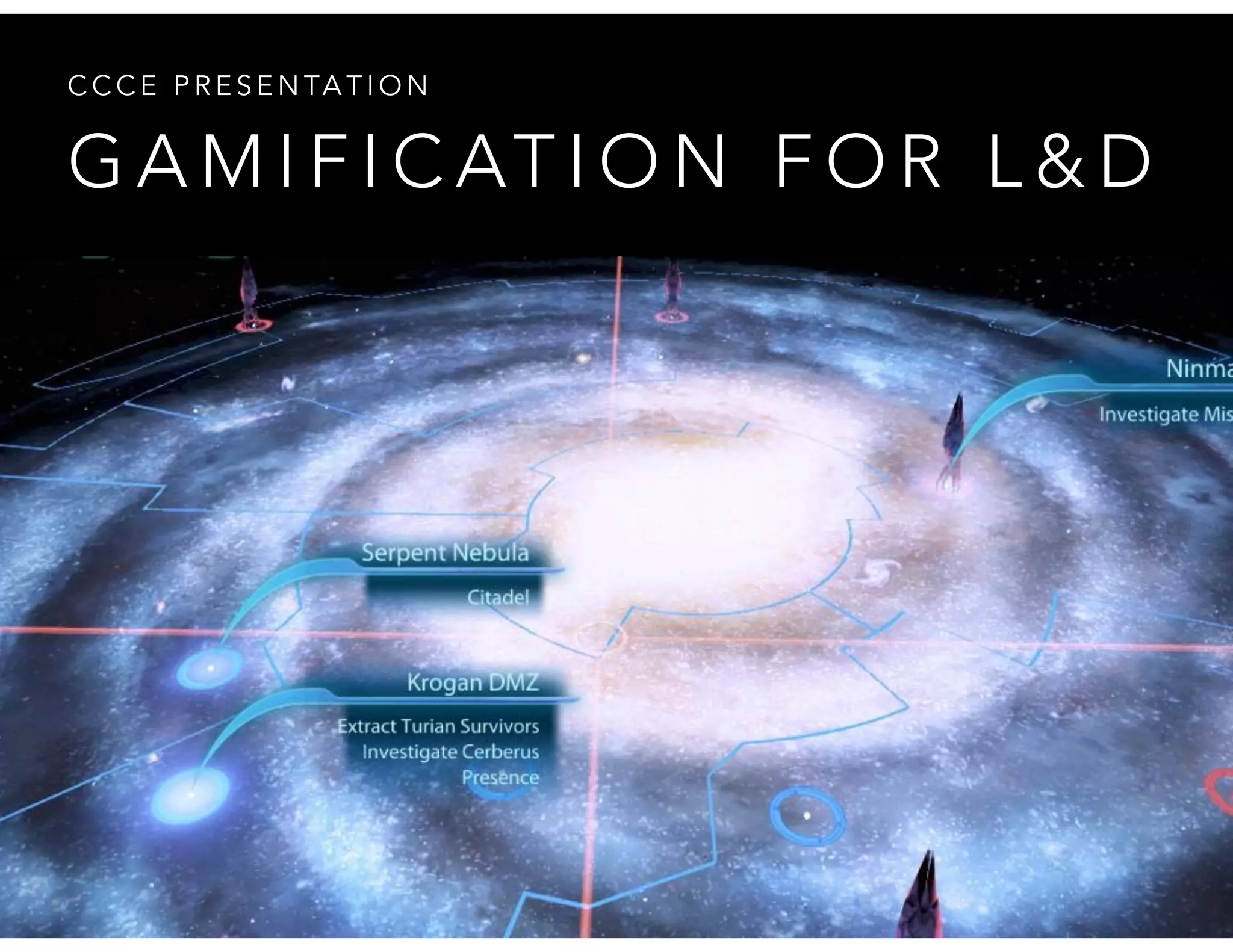
G A M I F I C AT I O N F O R L & D
C C C E P R E S E N TA T I O N
@ M R FA C E P L A N T
A D A M C L A R E M . E D
T H E 2 1 S T
C E N T U RY I S P L AY
• What is a game?
• What can and can’t games
do?
• How does one incorporate
games?
• What makes this a good
idea?
N O T G A M E T H E O RY
What is a game?
G A M E S :
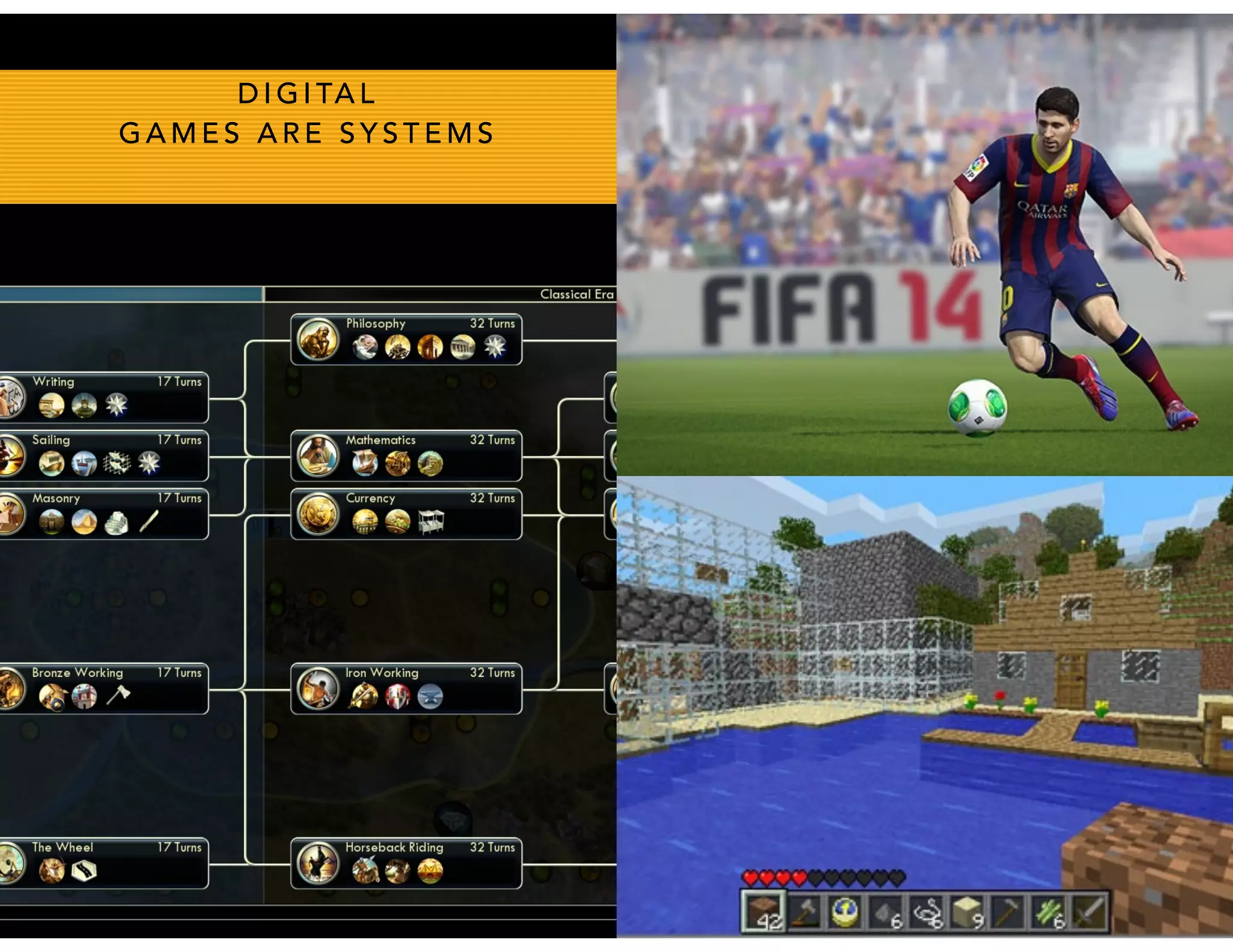
• Are systems
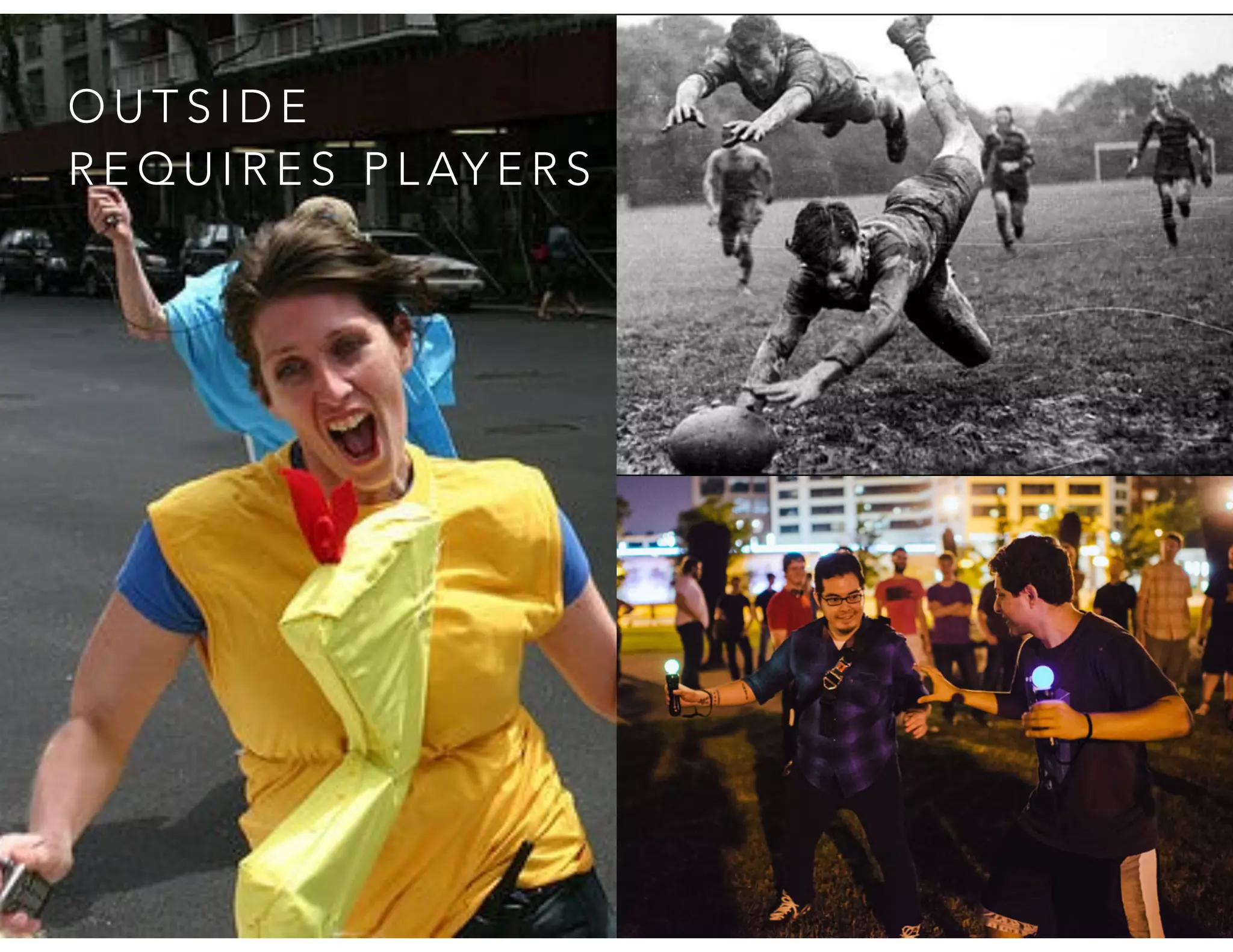
• Require players
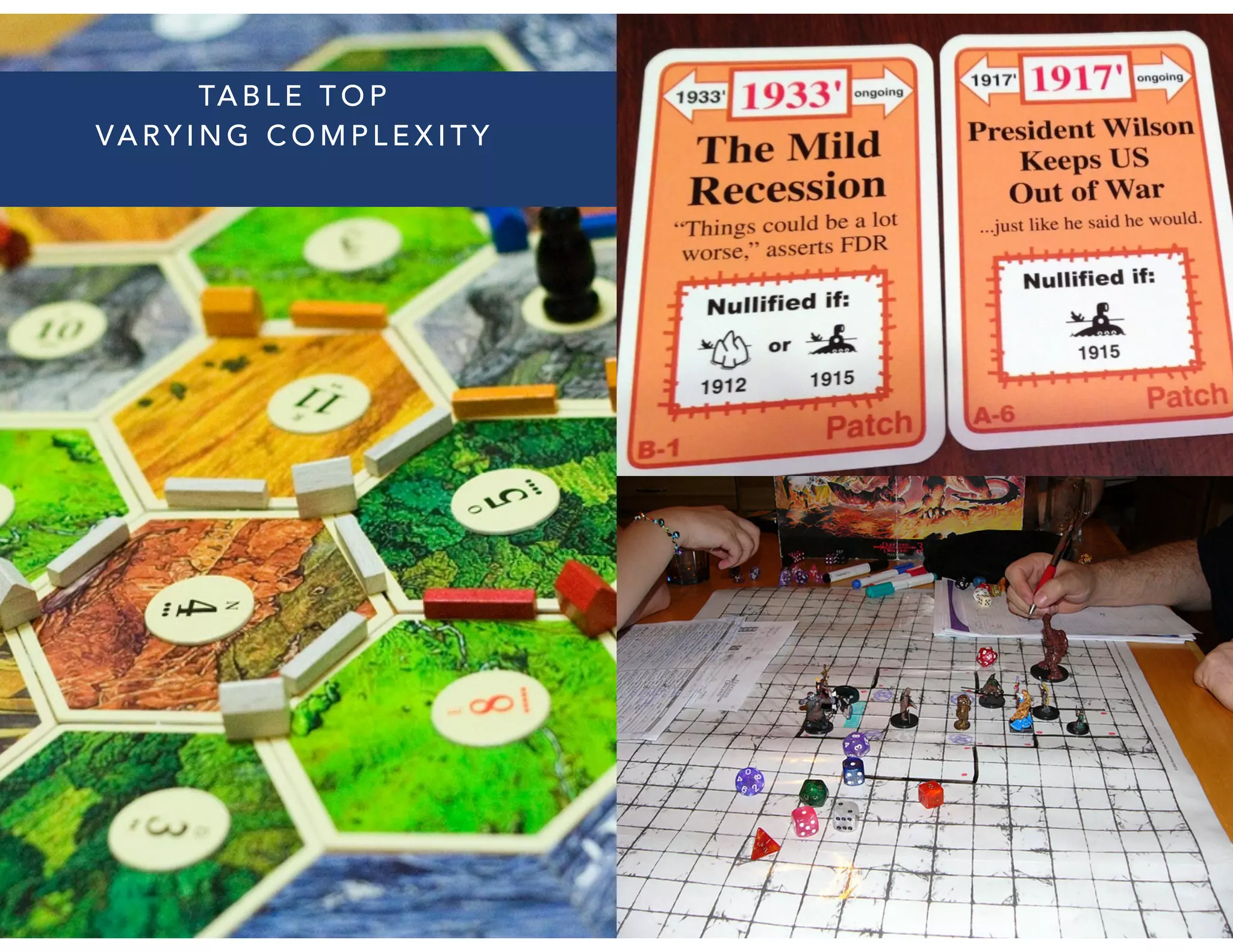
• Have varying levels of complexity
• Can be anywhere
O U T S I D E
R E Q U I R E S P L AY E R S
TA B L E T O P
VA RY I N G C O M P L E X I T Y
D I G I TA L
G A M E S A R E S Y S T E M S
A L M O S T A N Y T H I N G
What can games do?
G A M E S C A N ’ T:
• Change people’s thinking on their own
• Be a complete solution
• Be forced on people!
G A M E S C A N :
• Communicate ideas and values
• Reflect axioms in communities
• Change how people think
• Expose people to new scenarios
• More!
B E C A R E F U L
Incorporating Games
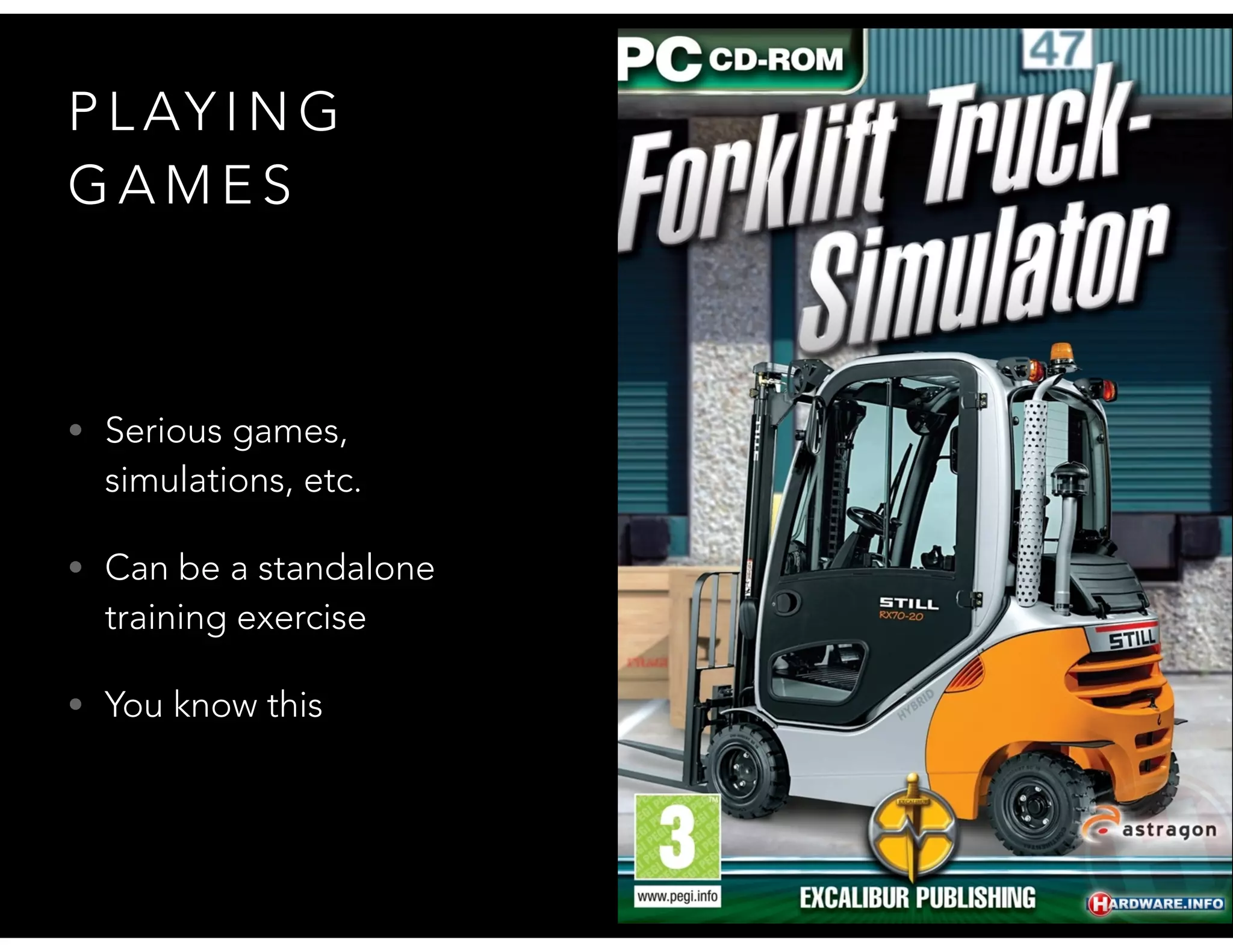
P L AY I N G
G A M E S
• Serious games,
simulations, etc.
• Can be a standalone
training exercise
• You know this
D O N O T U S E T H E G A M I F I C AT I O N
F O R C E
• Don’t expect more from people
• Add a layer without changing workflow
• Effectiveness comes from coaching
• Extrinsic motivation works 50% of the time
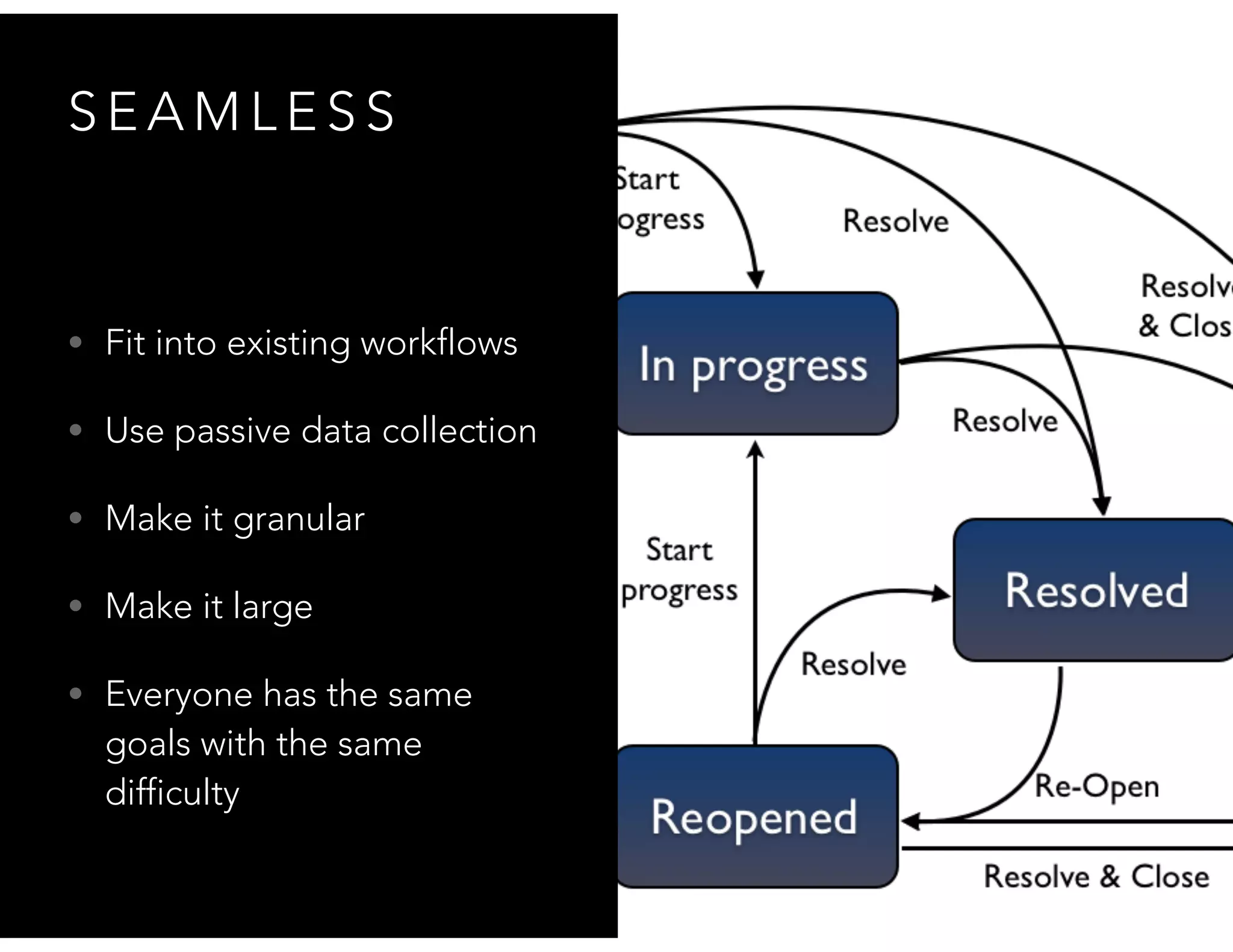
S E A M L E S S
• Fit into existing workflows
• Use passive data collection
• Make it granular
• Make it large
• Everyone has the same
goals with the same
difficulty
H AV E F U N !
B E C A U S E Y O U C A N !
Why do any of this?
• Provide realtime feedback
• Monitor and track progress & evaluate employees
• Omnipresence of technology
• Push boundaries in a safe way
• Adapt or die
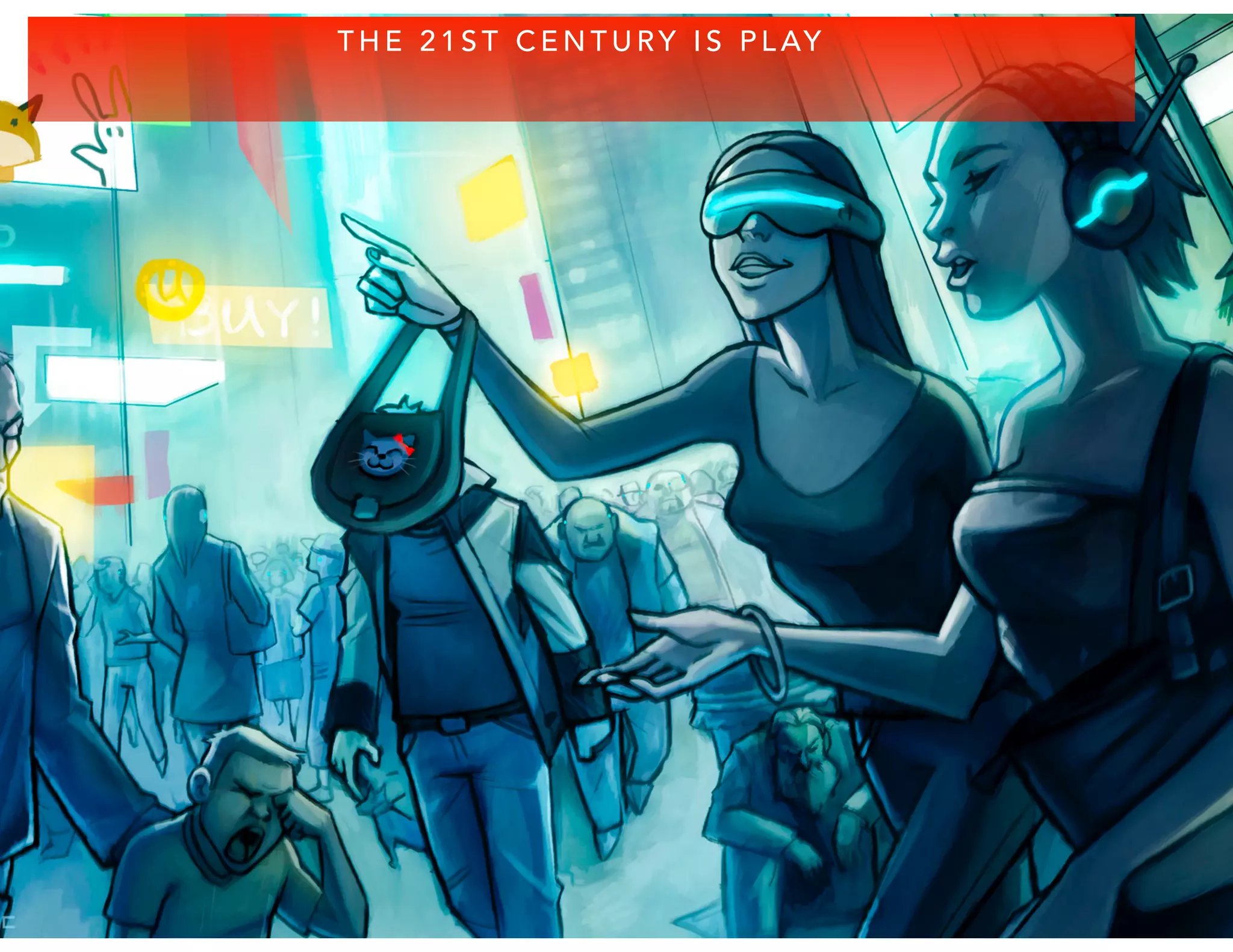
T H E 2 1 S T C E N T U RY I S P L AY
Q U E S T I O N S ?
Thanks!
@MrFacePlant
Adam@WeroCreative.com
RealityIsAGame.com
A D A M C L A R E M . E D

Gamification for Learning and Development (CCCE presentation)

  • 1.
    G A MI F I C AT I O N F O R L & D C C C E P R E S E N TA T I O N
  • 2.
    @ M RFA C E P L A N T A D A M C L A R E M . E D
  • 3.
    T H E2 1 S T C E N T U RY I S P L AY • What is a game? • What can and can’t games do? • How does one incorporate games? • What makes this a good idea?
  • 4.
    N O TG A M E T H E O RY What is a game?
  • 5.
    G A ME S : • Are systems • Require players • Have varying levels of complexity • Can be anywhere
  • 6.
    O U TS I D E R E Q U I R E S P L AY E R S
  • 7.
    TA B LE T O P VA RY I N G C O M P L E X I T Y
  • 8.
    D I GI TA L G A M E S A R E S Y S T E M S
  • 9.
    A L MO S T A N Y T H I N G What can games do?
  • 10.
    G A ME S C A N ’ T: • Change people’s thinking on their own • Be a complete solution • Be forced on people!
  • 11.
    G A ME S C A N : • Communicate ideas and values • Reflect axioms in communities • Change how people think • Expose people to new scenarios • More!
  • 12.
    B E CA R E F U L Incorporating Games
  • 13.
    P L AYI N G G A M E S • Serious games, simulations, etc. • Can be a standalone training exercise • You know this
  • 14.
    D O NO T U S E T H E G A M I F I C AT I O N F O R C E • Don’t expect more from people • Add a layer without changing workflow • Effectiveness comes from coaching • Extrinsic motivation works 50% of the time
  • 15.
    S E AM L E S S • Fit into existing workflows • Use passive data collection • Make it granular • Make it large • Everyone has the same goals with the same difficulty
  • 16.
    H AV EF U N !
  • 17.
    B E CA U S E Y O U C A N ! Why do any of this?
  • 18.
    • Provide realtimefeedback • Monitor and track progress & evaluate employees • Omnipresence of technology • Push boundaries in a safe way • Adapt or die
  • 19.
    T H E2 1 S T C E N T U RY I S P L AY
  • 20.
    Q U ES T I O N S ? Thanks!
  • 21.